
Japan Says It Seized Chinese Vessel Amid Rising Tensions With Beijing
The seizure of a Chinese ship by Japan sparks diplomatic protests from China, highlighting growing maritime tensions and renewed disputes over contested waters in the East China Sea.

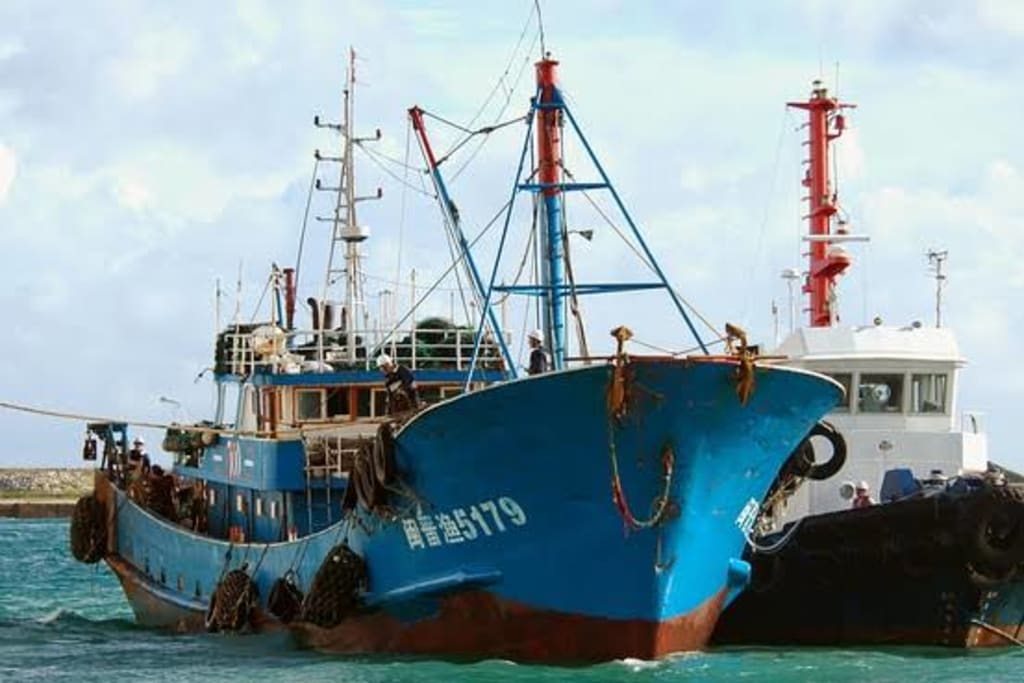
Authorities say the ship entered Japanese territorial waters without permission, prompting diplomatic protests and renewed friction between Japan and China.
Japan announced on Thursday that it had seized a Chinese vessel after it allegedly entered restricted waters near one of Japan’s southwestern island chains, a move that has intensified already strained relations with Beijing. The incident comes at a time of heightened regional tension over maritime boundaries and military activity in the East China Sea.
According to officials from the Japanese Coast Guard, the Chinese-flagged ship was intercepted after failing to respond to repeated radio warnings. Authorities said the vessel was operating in waters Japan considers part of its territorial sea and appeared to be conducting activities that violated Japanese maritime regulations. The crew was detained for questioning, and the ship was escorted to a nearby port for inspection.
In a statement, Japan’s Ministry of Foreign Affairs said the seizure was carried out “in accordance with domestic law” and stressed that the action was not intended to escalate tensions. “Japan will continue to firmly protect its sovereignty while acting calmly and responsibly,” the ministry said. It added that diplomatic channels had been used to inform Chinese authorities about the incident.
China reacted sharply, demanding the immediate release of the vessel and its crew. A spokesperson for China’s foreign ministry accused Japan of “provocative actions” and claimed the ship had been operating in what Beijing considers Chinese waters. “Japan’s conduct is a violation of international norms and undermines regional stability,” the spokesperson said, warning of “necessary countermeasures” if the situation is not resolved quickly.
The seizure highlights the fragile state of relations between the two Asian powers, which have been locked in disputes over a group of uninhabited islands known in Japan as the Senkaku and in China as the Diaoyu. Although the current incident did not occur directly at the islands, analysts say it reflects the broader contest for influence and control in strategically important sea lanes.
Security experts note that confrontations at sea have become more frequent in recent years. Japan has repeatedly reported incursions by Chinese government and fishing vessels near its claimed waters, while China has accused Japan of strengthening its military posture in the region with support from the United States. These competing narratives have fueled mistrust and increased the risk of miscalculation.
Local Japanese officials said the seized vessel appeared to be a modified fishing ship equipped with advanced navigation tools, raising questions about its purpose. While authorities stopped short of labeling it a surveillance ship, they confirmed that investigators were examining its equipment and cargo. “We are determining whether this was a simple navigation error or a deliberate violation,” one official said on condition of anonymity.
The incident also drew international attention, with the United States urging both sides to avoid actions that could further destabilize the region. A U.S. State Department official said Washington was monitoring the situation closely and encouraged Japan and China to resolve the matter peacefully through dialogue. “Freedom of navigation and adherence to international law are essential to maintaining stability in the Indo-Pacific,” the official added.
For Japan, the episode comes amid a broader shift in defense policy. The government has recently announced plans to expand military spending and strengthen coastal surveillance in response to what it describes as growing security challenges from neighboring states. Supporters argue these measures are necessary to deter aggression, while critics warn they could provoke stronger reactions from China and North Korea.
In China, state media framed the seizure as part of what it called a pattern of “harassment” by Japan. Commentaries emphasized historical grievances and accused Tokyo of aligning too closely with Western powers. The nationalist tone in Chinese coverage suggests the issue could resonate with domestic audiences, making compromise more politically sensitive for Chinese leaders.
Diplomatic efforts were underway late Thursday to de-escalate the situation. Japanese officials said they were in contact with their Chinese counterparts to clarify the circumstances and seek a resolution. Sources familiar with the talks indicated that Japan might consider releasing the vessel once the investigation is complete, provided no serious violations are found.
Despite these assurances, analysts caution that incidents like this can quickly spiral into larger crises if handled poorly. “Maritime encounters are inherently risky because they involve armed forces and national pride,” said a regional security analyst in Tokyo. “Even a small misunderstanding can be amplified by political pressure on both sides.”
The seizure of the Chinese vessel underscores the delicate balance in East Asian geopolitics, where economic interdependence coexists with deep strategic rivalry. Japan and China are major trading partners, but their relationship remains vulnerable to flare-ups over territory, history, and military posture.
As the investigation continues, both governments face a test of diplomacy. Whether the incident becomes another chapter in a long list of confrontations or a moment of restraint will depend on how leaders in Tokyo and Beijing choose to respond in the coming days. For now, the episode serves as a reminder of how quickly tensions can rise in contested waters—and how fragile peace can be in one of the world’s most critical regions.
About the Creator
Fiaz Ahmed
I am Fiaz Ahmed. I am a passionate writer. I love covering trending topics and breaking news. With a sharp eye for what’s happening around the world, and crafts timely and engaging stories that keep readers informed and updated.
Keep reading
More stories from Fiaz Ahmed and writers in The Swamp and other communities.
Trump revokes landmark ruling that greenhouse gases endanger public health
Subtitle: The rollback of the Obama-era “endangerment finding” signals a dramatic shift in U.S. climate policy and sets the stage for legal and political battles over the nation’s responsibility to curb emissions.In a move that reshapes the foundation of U.S. climate regulation, Donald Trump has formally revoked the landmark federal ruling that classified greenhouse gases as a threat to public health and welfare. The decision overturns the 2009 “endangerment finding,” which empowered the Environmental Protection Agency to regulate carbon dioxide and other heat-trapping emissions under the Clean Air Act. Administration officials described the action as a correction of what they called regulatory overreach. They argued the original finding relied on “uncertain climate projections” and imposed unnecessary costs on U.S. industries and consumers. The new directive instructs the EPA to withdraw the scientific and legal basis for treating greenhouse gases as pollutants that threaten human health. “This is about restoring balance and protecting American jobs,” a senior official said during the announcement. “We are ensuring that environmental policy does not become a weapon against economic growth.” The endangerment finding, introduced during the Obama administration, was a cornerstone of federal climate policy. It provided the legal justification for limits on emissions from power plants, automobiles, and industrial facilities. By rescinding it, the Trump administration effectively removes the EPA’s authority to regulate greenhouse gases nationwide unless Congress passes new legislation. Environmental groups and public health advocates reacted with alarm. They warned that the decision ignores decades of scientific research linking climate change to rising heat deaths, worsening air quality, stronger storms, and the spread of infectious diseases. Several organizations vowed to challenge the move in court, arguing that the EPA is legally obligated to consider scientific evidence and protect public welfare. “This is not just a policy change—it is a rejection of established science,” said one environmental lawyer involved in preparing litigation. “The courts have already affirmed that greenhouse gases can be regulated when they endanger health. Undoing that will not be easy.” Legal experts expect a protracted battle. The original endangerment finding was upheld by federal courts, and any attempt to withdraw it must survive judicial review. Critics say the administration must provide stronger scientific justification than it has so far presented, or risk having the reversal blocked. Industry groups, however, welcomed the announcement. Energy producers and manufacturing associations have long complained that climate regulations increase operating costs and put U.S. companies at a disadvantage compared with foreign competitors. They argue that market forces and innovation, rather than federal mandates, should drive emissions reductions. Internationally, the decision has drawn sharp criticism from U.S. allies and climate diplomats. Observers say it weakens American credibility in global climate negotiations and could slow momentum toward collective action. Several European officials expressed concern that the U.S. is retreating from commitments to address a problem that scientists describe as accelerating. Public reaction at home has been divided. Supporters of the move see it as consistent with Trump’s campaign promises to dismantle what he called burdensome environmental rules. Opponents view it as a step backward that puts vulnerable communities at greater risk from pollution and extreme weather. The rollback comes amid increasing evidence of climate impacts across the United States, including record-breaking heat waves, more intense wildfires, and rising coastal flooding. Health organizations warn that these trends disproportionately affect the elderly, children, and low-income populations. Whether the revocation ultimately stands will depend on the courts and future administrations. For now, the decision marks one of the most consequential reversals of environmental policy in modern U.S. history—one that reopens a fundamental question: should greenhouse gases be treated as a public health threat, or as an economic variable beyond the reach of federal regulation?
By Fiaz Ahmed 3 days ago in The Swamp
Why Black History Matters in America?
The United States of America is celebrating their 250th anniversary in 2026. I'm proud to be an American and as someone who was born here, I wouldn't imagine myself living anywhere else. This is a country where opportunities are possible. Where anyone can be successful in anything they desire to do. Equality, community, and togetherness are the backbones of what America is and should be about. However, we have an administration who wants to erase and disregard those who have made positive, meaningful impacts in our country, specifically Black figures, such as Martin Luther King, Jr., Rosa Parks, and Maya Angelou. President Trump and his administration have been constantly complaining and fighting against what they call the "Woke agenda". They use this excuse as a distraction from other issues they refuse to address, such as the high cost of living, climate change, and inflation. That equality is dividing America, when in reality, it's bringing us together. Being woke is not tied to a specific political party. No matter where you stand on the political spectrum, you can still care about other people and their plights. Compassion and empathy for others isn't tied to a political party, either. We were taught as children to treat others the way we want to be treated and not judge others because they're different from us. Caring about others isn't a personal attack on your beliefs. It doesn't make you any less of a person. People who are easily offended over African American figures, past or present, or anything related to it, are grasping at straws. Current and future generations need to know who people like Harriet Tubman and Shirley Chisholm were, especially in the classroom. Black History is part of American History. It should be recognized, not hidden or forgotten. Besides, you can't shield children from everything, just because your feelings are easily hurt.
By Mark Wesley Pritchard 14 days ago in The Swamp
Iranian Security Use Nationwide Dragnet to Arrest Protesters
In a dramatic escalation of its response to public unrest, Iranian security forces have launched a nationwide dragnet to identify, detain, and silence protesters across the country. From major urban centers to smaller provincial towns, reports indicate that security agencies are carrying out coordinated raids, road checkpoints, and digital surveillance operations aimed at dismantling protest networks and discouraging further demonstrations.
By Sajida Sikandarabout 16 hours ago in The Swamp



Comments
There are no comments for this story
Be the first to respond and start the conversation.