
‘Jordan Is Next’: West Bank Annexation Signals ‘Silent Transfer’
Rising fears of displacement grow as regional tensions and settlement expansion reshape the political future of Palestine and its neighbors

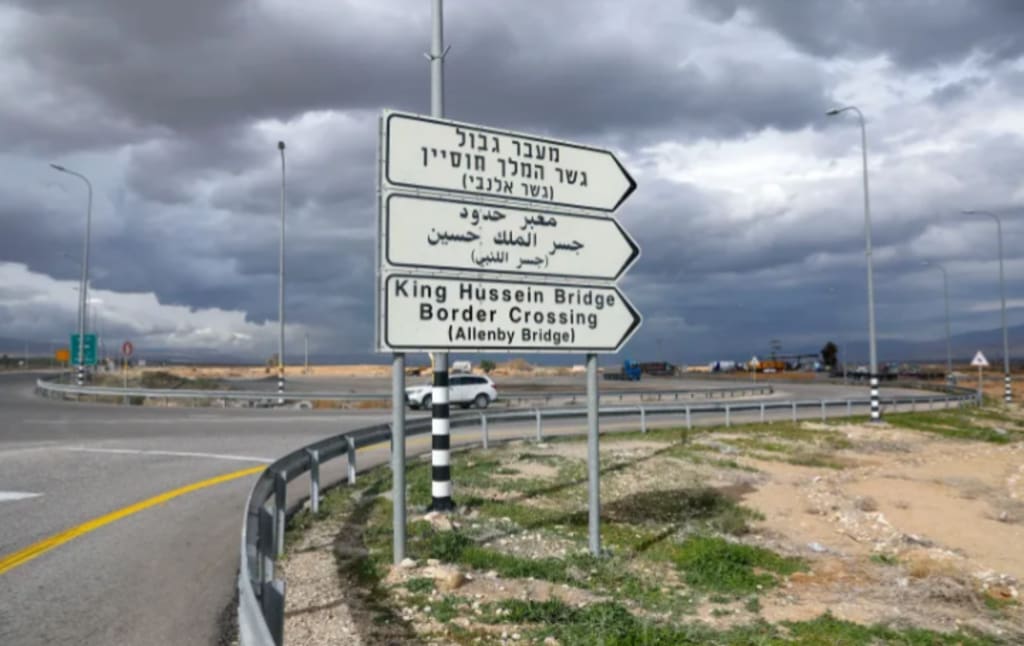
The phrase “Jordan is next” is no longer just a slogan whispered in political circles—it has become a growing concern voiced by analysts, activists, and regional observers watching developments unfold in the occupied West Bank. As settlement expansion accelerates and annexation policies quietly reshape realities on the ground, many fear that what is happening today represents a form of “silent transfer”—a gradual displacement of Palestinians without formal mass expulsions.
This strategy, critics argue, does not rely on dramatic military campaigns alone but instead uses economic pressure, land seizures, legal restrictions, and demographic engineering to make Palestinian life increasingly unlivable. The long-term consequence may not only redefine Palestine’s future but also place neighboring Jordan under severe political and social strain.
Understanding the Concept of “Silent Transfer”
The term “silent transfer” refers to the slow and systematic removal of a population through indirect means. Rather than forced deportations, it involves:
Home demolitions
Settlement expansion
Restrictions on movement
Economic suffocation
Denial of building permits
Confiscation of agricultural land
Over time, these policies create conditions that pressure families to leave voluntarily. For Palestinians in rural and strategic areas of the West Bank, daily life has become increasingly unsustainable.
Villages surrounded by settlements find their water access restricted, farmland fenced off, and roads blocked. Schools and hospitals become harder to reach. Employment opportunities shrink. The result is not sudden displacement but gradual erosion of community life.
Annexation Without Announcement
Although formal annexation plans have faced international criticism, the reality on the ground tells a different story. Settlement construction continues, and Israeli administrative control expands deeper into Palestinian territories.
The government of Israel has long maintained security-based justifications for its policies in the West Bank. However, human rights organizations argue that these measures go far beyond security and reflect a political project aimed at permanent territorial control.
Roads reserved for settlers, military zones declared on Palestinian land, and legal systems that treat settlers and Palestinians differently have created what critics describe as a system of unequal governance. These developments steadily shrink the space available for a viable Palestinian state.
Why Jordan Is Being Mentioned
Jordan already hosts millions of Palestinian refugees from previous wars and conflicts. Any large-scale displacement from the West Bank would almost certainly flow eastward across the Jordan River.
This is why the phrase “Jordan is next” has become alarming. It suggests not only humanitarian consequences but also geopolitical destabilization.
Jordan’s economy, infrastructure, and political balance could be overwhelmed by another refugee crisis. The country’s delicate demographic composition makes this scenario particularly sensitive. Even small shifts in population can have far-reaching effects on national stability.
Jordanian officials have repeatedly warned that annexation of the West Bank would threaten regional peace treaties and security arrangements. For Jordan, the issue is not theoretical—it is existential.
The Role of International Silence
Perhaps the most troubling aspect of the situation is the muted global response. While statements of concern are issued, meaningful enforcement measures remain rare.
The United Nations has repeatedly affirmed that settlement activity violates international law. Yet resolutions often remain symbolic, lacking mechanisms for accountability.
This perceived inaction has allowed incremental changes to become normalized. What once would have sparked global outrage now unfolds quietly, day by day, village by village.
Many Palestinians describe this as living under a slow-moving crisis—one that never reaches headlines long enough to demand sustained intervention.
Palestinian Authority Under Pressure
The Palestinian Authority faces growing criticism from its own population for its inability to halt settlement expansion or protect land rights. With limited sovereignty and dependence on international funding, the Authority’s political leverage remains constrained.
Young Palestinians, in particular, express frustration with diplomatic processes that have produced few tangible results. For them, annexation is not a future threat—it is already happening in practical terms.
As trust erodes, fears grow that political collapse could further accelerate displacement.
Human Impact: Life Under Silent Transfer
Behind policy debates lie human stories. Farmers unable to reach olive groves that sustained their families for generations. Children navigating military checkpoints to attend school. Communities watching their land slowly absorbed into expanding settlements.
These are not isolated incidents but patterns that define everyday life. The psychological toll is immense. When people feel their future is disappearing inch by inch, hope becomes difficult to sustain.
Migration, once unthinkable, becomes a survival strategy.
A Regional Domino Effect
What happens in the West Bank does not remain confined there. Lebanon, Syria, and Jordan all carry the legacy of previous Palestinian displacement. Another wave would deepen existing regional crises and strain fragile political systems.
Moreover, annexation risks inflaming tensions across the Middle East, fueling radicalization and undermining any remaining faith in diplomatic solutions.
Peace treaties and security agreements depend on the belief that a just resolution is possible. Silent transfer erodes that belief.
Looking Ahead
The phrase “Jordan is next” should not be dismissed as exaggeration. It reflects growing anxiety that displacement is being quietly engineered rather than openly declared.
Without decisive international engagement, the trajectory appears set: more land absorption, more restricted movement, and more families pushed toward exile.
What remains uncertain is whether global powers will treat this as an urgent crisis or allow the slow transformation of borders and populations to continue unchecked.
Conclusion
The annexation of the West Bank and the policy of “silent transfer” represent more than territorial disputes—they are reshaping the human geography of the region. For Palestinians, it threatens their right to remain on ancestral land. For Jordan, it raises the specter of destabilization. For the world, it tests the credibility of international law.
History shows that slow injustices can be just as destructive as sudden ones. The question now is whether the international community will recognize the warning signs before displacement becomes irreversible.
The future of Palestine—and perhaps Jordan—may depend on what happens next.
About the Creator
Sajida Sikandar
Hi, I’m Sajida Sikandar, a passionate blogger with 3 years of experience in crafting engaging and insightful content. Join me as I share my thoughts, stories, and ideas on a variety of topics that matter to you.
Keep reading
More stories from Sajida Sikandar and writers in The Swamp and other communities.
Pakistan’s Gold Reserves Increase By $3.5 Billion in 7 Months of FY26
In a positive sign for Pakistan’s economic stability, the country’s gold reserves have recorded a remarkable increase of $3.5 billion during the first seven months of the fiscal year 2025–26 (FY26). This growth reflects both favorable global gold prices and a strategic shift in how Pakistan manages its national reserves.
By Sajida Sikandarabout 7 hours ago in The Swamp
Why Black History Matters in America?
The United States of America is celebrating their 250th anniversary in 2026. I'm proud to be an American and as someone who was born here, I wouldn't imagine myself living anywhere else. This is a country where opportunities are possible. Where anyone can be successful in anything they desire to do. Equality, community, and togetherness are the backbones of what America is and should be about. However, we have an administration who wants to erase and disregard those who have made positive, meaningful impacts in our country, specifically Black figures, such as Martin Luther King, Jr., Rosa Parks, and Maya Angelou. President Trump and his administration have been constantly complaining and fighting against what they call the "Woke agenda". They use this excuse as a distraction from other issues they refuse to address, such as the high cost of living, climate change, and inflation. That equality is dividing America, when in reality, it's bringing us together. Being woke is not tied to a specific political party. No matter where you stand on the political spectrum, you can still care about other people and their plights. Compassion and empathy for others isn't tied to a political party, either. We were taught as children to treat others the way we want to be treated and not judge others because they're different from us. Caring about others isn't a personal attack on your beliefs. It doesn't make you any less of a person. People who are easily offended over African American figures, past or present, or anything related to it, are grasping at straws. Current and future generations need to know who people like Harriet Tubman and Shirley Chisholm were, especially in the classroom. Black History is part of American History. It should be recognized, not hidden or forgotten. Besides, you can't shield children from everything, just because your feelings are easily hurt.
By Mark Wesley Pritchard 16 days ago in The Swamp




Comments
There are no comments for this story
Be the first to respond and start the conversation.