
Judge Orders Trump Administration to Restore Funding for Rail Tunnel Between New York and New Jersey
Court ruling revives major infrastructure project, highlighting tensions between federal authority and regional transportation needs.
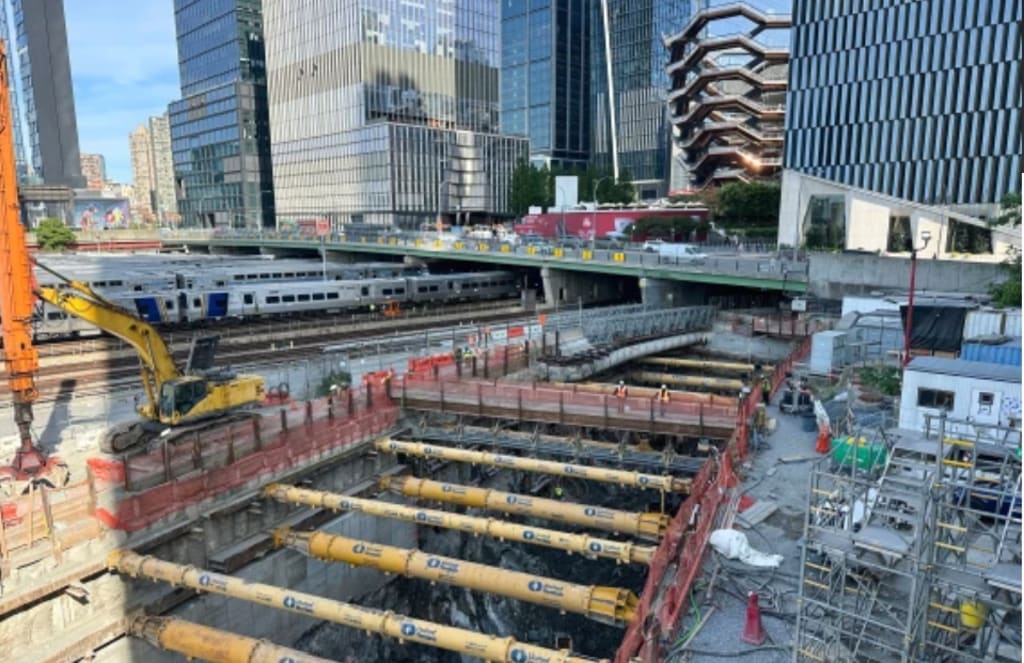
A federal judge has ordered the Trump administration to restore funding for a critical rail tunnel project connecting New York and New Jersey, delivering a major victory to state officials, commuters, and transportation advocates. The ruling has revived hopes for one of the most important infrastructure projects in the northeastern United States and underscored ongoing debates over federal responsibility, regional development, and political influence.
The tunnel, which runs beneath the Hudson River, is a vital part of the Northeast Corridor — the busiest passenger rail route in the country. The court’s decision marks a significant turning point after years of uncertainty and funding disputes.
Background of the Tunnel Project
The rail tunnel project was designed to repair and replace aging infrastructure that dates back more than a century. Existing tunnels under the Hudson River were severely damaged during Hurricane Sandy in 2012 and have since required constant maintenance.
These tunnels carry hundreds of thousands of passengers each day, including commuters, business travelers, and tourists. They are used by Amtrak and New Jersey Transit trains, making them essential to the economic health of the region.
Engineers have long warned that without major upgrades, the tunnels could face serious failures, leading to widespread transportation disruptions.
To address this risk, federal and state officials proposed a new tunnel and rehabilitation project, often referred to as part of the “Gateway Program.” The plan includes building new tunnels, repairing existing ones, and improving nearby rail infrastructure.
Funding Dispute Under the Trump Administration
During the Trump administration, federal support for the project became a major source of conflict. The administration questioned the cost of the tunnel and argued that New York and New Jersey should bear a larger share of the financial burden.
As a result, several funding commitments were delayed, reduced, or suspended. State leaders accused the federal government of unfairly blocking the project for political reasons, while federal officials defended their actions as responsible budget management.
The funding freeze created uncertainty and slowed progress on construction and planning. Transportation advocates warned that continued delays would increase costs and put public safety at risk.
The Court’s Ruling
The case was brought to court by regional transportation authorities and state officials, who argued that the federal government had violated existing agreements and legal obligations by withdrawing funding.
In his ruling, the judge agreed with the plaintiffs, stating that the administration had acted improperly by reversing previously approved financial commitments. The court found that federal agencies failed to provide adequate justification for cutting support and had undermined long-term infrastructure planning.
The judge ordered the administration to restore the funding and resume cooperation with state and regional partners.
“This project is critical to the public interest,” the ruling stated. “Federal agencies cannot arbitrarily abandon commitments that affect millions of citizens and the nation’s transportation system.”
Reaction from State and Local Leaders
Officials in New York and New Jersey welcomed the decision, calling it a victory for commuters and economic development.
The governors of both states issued joint statements praising the ruling and emphasizing the importance of reliable transportation.
“This tunnel is the lifeline of our region,” one governor said. “Today’s decision puts us back on track to protect jobs, businesses, and families.”
Mayors, transit officials, and business groups also expressed relief, noting that the project supports thousands of construction jobs and strengthens regional competitiveness.
Many leaders stressed that the tunnel is not just a local concern but a national priority, as the Northeast Corridor serves as a backbone of the country’s rail network.
Federal Government’s Response
The Trump administration responded cautiously to the ruling. A spokesperson said federal officials were reviewing the decision and considering possible legal options.
While some administration representatives expressed disappointment, others indicated that they would comply with the order.
“This ruling does not change our commitment to responsible spending,” the spokesperson said. “We will continue to ensure that taxpayer dollars are used efficiently.”
Legal experts noted that appealing the decision could further delay the project and increase costs, making compliance the more practical option.
Importance for Commuters and the Economy
For everyday commuters, the ruling represents hope for improved reliability and reduced delays. Current tunnels often experience service disruptions due to maintenance issues, causing frustration for passengers.
New and repaired tunnels are expected to increase capacity, improve safety, and reduce travel times between New Jersey and Manhattan.
Economists estimate that the tunnel project could generate billions of dollars in economic activity over the coming decades. Improved transportation infrastructure attracts businesses, supports tourism, and increases property values.
Without the tunnel, experts warn, a major failure could cost the region billions in lost productivity.
“This is not just about trains,” said a transportation analyst. “It’s about keeping the nation’s financial and commercial hub running.”
Political and Legal Implications
The ruling also highlights broader tensions between federal and state governments over infrastructure policy. It raises questions about how much control federal administrations should have over long-term projects that extend beyond political terms.
Some legal scholars argue that the decision reinforces the importance of honoring intergovernmental agreements.
“Infrastructure planning requires stability,” said a constitutional law expert. “This case shows that courts are willing to step in when political decisions threaten public interests.”
The outcome may influence future disputes over highways, bridges, and transit systems across the country.
Environmental and Safety Benefits
Supporters of the tunnel project also point to environmental advantages. Expanded rail capacity could reduce reliance on cars, lowering traffic congestion and greenhouse gas emissions.
Modern tunnels are designed with advanced safety features, including better ventilation, fire protection, and emergency access. These improvements reduce risks for passengers and workers.
Environmental groups have generally supported the project, viewing it as a step toward more sustainable transportation.
What Comes Next
With funding restored, project leaders are expected to move forward with construction and rehabilitation plans. However, significant work remains, including finalizing contracts, coordinating agencies, and managing budgets.
Officials estimate that full completion could take several years, but early phases may begin soon.
Monitoring and oversight will be critical to ensure that funds are used effectively and that timelines are met.
State and federal partners have pledged to improve cooperation and transparency moving forward.
Conclusion
The judge’s order to restore funding for the rail tunnel between New York and New Jersey marks a major victory for regional infrastructure and public transportation. By rejecting the Trump administration’s funding cuts, the court reaffirmed the importance of long-term planning and federal accountability.
For millions of commuters, the decision brings renewed hope for safer, faster, and more reliable travel. For the economy, it represents an investment in growth and stability. And for policymakers, it serves as a reminder that infrastructure is not just a political issue — it is a public necessity.
As construction resumes and cooperation improves, the tunnel project stands as a symbol of what can be achieved when legal authority, public interest, and regional collaboration come together.
About the Creator
Why Black History Matters in America?
The United States of America is celebrating their 250th anniversary in 2026. I'm proud to be an American and as someone who was born here, I wouldn't imagine myself living anywhere else. This is a country where opportunities are possible. Where anyone can be successful in anything they desire to do. Equality, community, and togetherness are the backbones of what America is and should be about. However, we have an administration who wants to erase and disregard those who have made positive, meaningful impacts in our country, specifically Black figures, such as Martin Luther King, Jr., Rosa Parks, and Maya Angelou. President Trump and his administration have been constantly complaining and fighting against what they call the "Woke agenda". They use this excuse as a distraction from other issues they refuse to address, such as the high cost of living, climate change, and inflation. That equality is dividing America, when in reality, it's bringing us together. Being woke is not tied to a specific political party. No matter where you stand on the political spectrum, you can still care about other people and their plights. Compassion and empathy for others isn't tied to a political party, either. We were taught as children to treat others the way we want to be treated and not judge others because they're different from us. Caring about others isn't a personal attack on your beliefs. It doesn't make you any less of a person. People who are easily offended over African American figures, past or present, or anything related to it, are grasping at straws. Current and future generations need to know who people like Harriet Tubman and Shirley Chisholm were, especially in the classroom. Black History is part of American History. It should be recognized, not hidden or forgotten. Besides, you can't shield children from everything, just because your feelings are easily hurt.
By Mark Wesley Pritchard 17 days ago in The Swamp
We Are Europeans’: Fans Fly Greenland Flag During Olympic US–Denmark Ice Hockey Game”
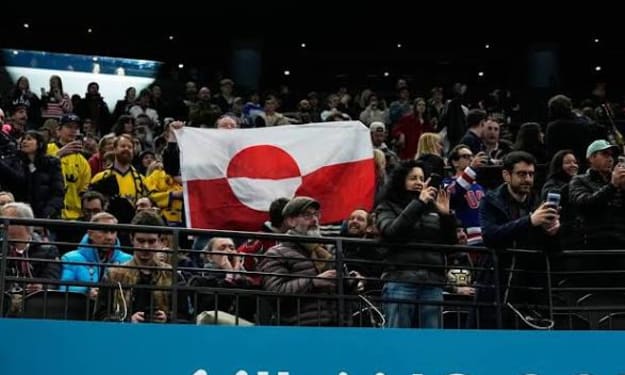
MILAN — At the 2026 Winter Olympics in Milan‑Cortina, a pair of European hockey fans briefly stole the spotlight from the on‑ice action by hoisting the red‑and‑white flag of Greenland during the men’s preliminary round game between the United States and Denmark. What might have seemed at first glance a simple gesture of hockey fandom has sparked conversation about regional identity, political symbolism and European unity amid broader geopolitical tensions. The match, played at the Milano Santagiulia Ice Hockey Arena and eventually won by the United States 6–3, drew typical Olympic fervor from both Danish and American supporters. But standing out among the sea of national colors were two spectators waving Greenland’s flag — a banner not officially recognized by the International Olympic Committee because Greenland competes under Denmark’s flag in Olympic competition. The fans, Vita Kalniņa and her husband Alexander Kalniņš, are originally from Latvia and now live in Germany. They say the display was meant as a statement of European solidarity — not simply a quirky spectacle — reflecting a shared cultural and political stance. “We are Europeans and I think as Europeans we must hold together,” Kalniņš told The Associated Press. He said they wanted to visibly support both Denmark and Greenland at a moment when discussions about Greenland’s future have drawn international attention. Greenland, a self‑governing territory within the Kingdom of Denmark, does not field its own Olympic team and thus is represented internationally through Danish athletes. Nonetheless, the island’s distinctive flag — known locally as Erfalasorput — has emerged at Olympics and other events as a symbol of identity distinct from Denmark, particularly in contexts where Greenlandic autonomy and cultural recognition are at issue. The choice to fly the Greenland flag at the Serie “Greenland Derby” game — a rare match‑up where the Danish team faced off against a powerful U.S. squad — came against a backdrop of renewed debate over the territory’s geopolitical significance. That discussion intensified after recent public comments by U.S. political figures about Greenland’s strategic value, including controversial suggestions about increased U.S. influence or acquisition of the island. Those remarks helped fuel a surge of Danish national pride and broader European interest in the island’s future. However, what the Kalniņas intended as a gesture of support was met with some resistance inside the arena. Venue staff reportedly asked the couple to lower the Greenland flag, citing safety concerns. Despite the request — which the fans complied with — they said their point had already been made among the thousands of spectators and millions watching on television. Elsewhere in the stands, reactions to the flag were mixed but largely centered on the idea that sports should transcend politics. Danish fans painted in red and white expressed that the Olympic hockey match was “about competition, not geopolitics,” emphasizing respect for the athletes regardless of external controversies. An American supporter in stars and stripes echoed that sentiment, saying fans wanted to “compete country versus country and enjoy” the game without letting political issues overshadow the Olympic experience. On the ice, players themselves appeared unaffected by the symbolic display. Denmark’s team captain, Jesper Jensen Aabo, later noted that the flag had not been a point of focus during play, and the teams remained focused on their performance. The game proceeded with high intensity, and the United States secured a key win that kept them on pace for advancement in the tournament. For Kalniņa and Kalniņš, the moment was about more than hockey. It was a reminder that cultural and political identity sometimes finds expression in unexpected places — even in a sport known more for goals and saves than geopolitical discourse. As global attention remains fixed on the Winter Games, the flag of Greenland flying amid a sea of national banners became a quiet but potent symbol of unity for some Europeans watching.
By Fiaz Ahmed 4 days ago in The Swamp
The Cave Part 6
If you have ever heard a tale about yourself that you cannot remember and doubtless think is made up, you will know how I felt when Tharkin related all that the eagle had seen of me before my memories were scattered. Of far distances and traveling companions that I did not recall, camping out under the stars and making our way to the mountains with deliberate purpose. The great bird had lost contact with my party once we entered the forests, and the seven other members were not seen again by him or his brethren since.
By Jamye Sharp3 days ago in Chapters


Comments
There are no comments for this story
Be the first to respond and start the conversation.