
“Kill Everybody”: The Double-Tap Scandal Rocking Washington—and Why the World Is Paying Attention
Inside the Double-Tap Scandal That’s Shaking the Pentagon and Alarming America’s Allies

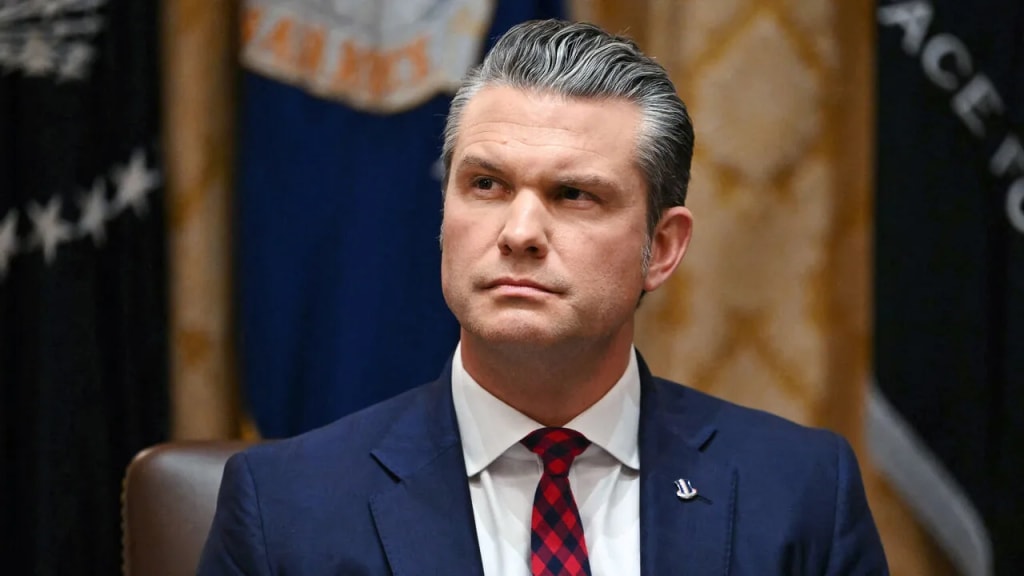
For a story involving two words, the political fallout has been seismic.
According to a bombshell Washington Post investigation, U.S. Defense Secretary Pete Hegseth allegedly issued a verbal command on September 2nd that may go down as the most consequential utterance of his career—and perhaps the most dangerous for America’s global standing.
“Kill everybody.”
If the Post’s sources are telling the truth, that order directly preceded a second missile strike on a wrecked boat in the Caribbean—one that left survivors dead in the water after the first blast had already rendered them unable to fight or flee. And according to international law experts, former JAG officers, and human rights officials, that follow-up strike wasn’t just immoral.
It may have been a blatant war crime.
The Pentagon denies it. The White House is split. Congress is sharpening its knives. And America’s allies? They’re watching in disbelief.
This is the story behind the latest scandal to hit Washington—and why the world sees far more than a single missile strike.
A Crisis Born from Two Words
Before diving into the firestorm, it’s important to understand how we got here.
The U.S. has been carrying out a quiet but aggressive campaign of air strikes in the Caribbean throughout 2024–2025—operations aimed at small motorboats allegedly used by narcotics traffickers ferrying drugs toward American shores. The White House has repeatedly described these missions as essential “lethal kinetic strikes” meant to safeguard American lives.
But there’s a major problem: the United States hasn’t provided evidence that the boats being blown out of the water actually belong to drug traffickers.
The September 2nd strike in question is already controversial. The boat carried 11 people—far more than typical drug-running vessels, which prioritize cargo over manpower. Experts noted early on that the passenger count looked far more like a migrant craft than a smuggling operation. Surviving passengers who later washed ashore in Latin America have frequently not been charged with drug crimes due to lack of evidence.
Then came the second strike.
When intelligence assets identified at least two survivors clinging to debris, Secretary Hegseth allegedly issued the two-word command that sparked the crisis. The follow-up missile strike—carried out by the legendary Navy SEAL Team 6—killed the survivors.
If that sequence happened as reported, experts say the legal implications are clear and damning.
Why the World Is Calling It a War Crime
The term “double tap” isn’t new in military or intelligence circles, but it is almost universally condemned.
A double tap occurs when:
- A first strike disables or incapacitates a target, and
- A second strike deliberately kills survivors who pose no active threat.
International law—Geneva Conventions, Hague regulations, and customary rules of war—explicitly forbid targeting those who are out of combat due to wounds, incapacitation, or shipwreck.
In other words, if you’re floating in the water and unable to fight, you must be treated as a prisoner of war, not executed.
A working group of former American JAG officers delivered a unanimous assessment:
“If true, both the giving and execution of these orders constitute war crimes, murder, or both.”
That’s not activist rhetoric. That’s the judgment of the very lawyers who once taught U.S. service members the legal boundaries of warfare.
If the U.S. considers this a “non-international armed conflict,” the strike is illegal.
If the U.S. is not in an armed conflict, it’s even simpler:
It’s murder committed with military assets.
Either way, the moral—and diplomatic—damage is enormous.
A White House Out of Sync With Itself
At first, the Pentagon and the administration were united in their denials. Hegseth lashed out at reporters, accusing the Washington Post of peddling “fake news” to smear soldiers protecting America from deadly drug traffickers.
The Pentagon’s spokesman echoed that sentiment, calling the story “completely false.”
But the narrative quickly shifted.
On Monday, the White House changed its tune. Press Secretary Karoline Leavitt admitted that the second strike did occur—but placed responsibility on Admiral Frank Bradley, the head of U.S. Special Operations Command.
Hegseth endorsed Bradley’s actions, praising him as “an American hero” who made “the right call.”
Then President Trump stepped in with the opposite message:
“No, I wouldn’t have wanted that. Not a second strike.”
The administration was now contradicting itself on the most basic facts:
- Did the second strike happen?
- Who ordered it?
- Was it justified?
- Was it legal?
In a scandal involving potential war crimes, mixed messaging is the last thing Washington can afford.
America’s Allies Were Already Losing Trust—Now It’s Fracturing
Even before this scandal, the United States was facing a serious crisis of confidence among its allies. The Trump administration’s foreign policy moves have shaken partnerships that once seemed unshakable:
The United Kingdom has stopped sharing intelligence that could enable risky U.S. strikes.
NATO members have grown alarmed by Trump’s flirtations with Putin and his rollback of Ukrainian aid.
Japan, Australia, and South Korea have seen public trust in Washington plummet.
Colombia and other Latin American allies openly oppose U.S. decisions.
And the long-standing pressure campaign against Venezuela has only deepened regional distrust.
Against that backdrop, the double-tap allegations landed like a grenade.
To America’s allies, this isn’t just a legal question—it’s a revelation of political character. It reads as a message that Washington may no longer be committed to the international rules of war it once championed.
The U.N. human rights chief has already called for a thorough investigation, emphasizing the “real possibility” of extrajudicial killings.
Congress Smells Blood in the Water
Bipartisan outrage is rare these days, but this scandal seems to have united Washington in disbelief.
Prominent lawmakers from both parties have expressed outrage:
Sen. Rand Paul:
“Either he was lying to us or he’s incompetent.”
Sen. Tom Tillis:
“That was a violation of ethical, moral, and legal code.”
Sen. Mark Kelly faced threats of being recalled to service after reminding troops they could refuse illegal orders. Legal experts widely agree Kelly broke no law.
Both the House and Senate Armed Services Committees—led by Republicans and Democrats together—have launched investigations.
If they confirm that Hegseth ordered the strike, he could face:
- Forced resignation
- Criminal charges under U.S. law
- International legal scrutiny
Possible referral to the International Criminal Court (which the U.S. fiercely opposes)
Realistically, Hegseth would only face true legal peril if a sitting president allowed it. And under the American Service Members Protection Act, the U.S. president can legally authorize military force to free any service member detained by the ICC.
That’s why the bill is nicknamed “The Hague Invasion Act.”
The chances of Hegseth ever standing trial abroad? Nearly zero.
But the political damage is very real.
The Bigger Picture: What Happens If America Loses the Moral High Ground?
Even if the allegations remain unproven, the perception alone is devastating.
If America is seen as executing survivors in the water—and then shrugging it off—then the U.S. loses its last threads of legitimacy when condemning the actions of others. It becomes harder for Washington to lecture Russia, China, Myanmar, Sudan, or any other actor on human rights abuses.
And allies who already feel Washington pulling away may decide the U.S. can no longer be trusted as a partner.
International politics runs on credibility.
A double tap doesn’t just kill survivors—it can kill trust.
Conclusion: The Scandal That Could Reshape America’s Global Standing
Right now, the allegations remain allegations. No conclusive proof has been publicly released. Investigations are still unfolding. Careers hang in the balance.
But the damage is already being felt.
The world is watching a White House scramble to reconcile contradictory statements. Allies are taking notes. Congress is sharpening its investigations. And for many outside the United States, this scandal confirms what they’ve suspected for years:
America’s commitment to the rules-based order is slipping.
If the double-tap story is true, then the fallout won’t stop at Pete Hegseth's career. It could permanently fracture the trust that has held together alliances, shaped global cooperation, and underpinned decades of American influence.
And even if it isn’t true?
The mere possibility has already changed the conversation.
About the Creator
Lawrence Lease
Alaska born and bred, Washington DC is my home. I'm also a freelance writer. Love politics and history.
Keep reading
More stories from Lawrence Lease and writers in The Swamp and other communities.
Inside China’s Military Purge: Power, Paranoia, and the Future of the PLA
When Beijing ousts nine top generals in a single sweep, the world pays attention. That’s exactly what happened on October 17, when China’s Ministry of Defense quietly dropped a political thunderbolt: nine high-ranking generals—some of them among the most powerful military officials in the nation—were expelled from both the armed forces and the Chinese Communist Party.
By Lawrence Lease3 months ago in The Swamp
Why Black History Matters in America?
The United States of America is celebrating their 250th anniversary in 2026. I'm proud to be an American and as someone who was born here, I wouldn't imagine myself living anywhere else. This is a country where opportunities are possible. Where anyone can be successful in anything they desire to do. Equality, community, and togetherness are the backbones of what America is and should be about. However, we have an administration who wants to erase and disregard those who have made positive, meaningful impacts in our country, specifically Black figures, such as Martin Luther King, Jr., Rosa Parks, and Maya Angelou. President Trump and his administration have been constantly complaining and fighting against what they call the "Woke agenda". They use this excuse as a distraction from other issues they refuse to address, such as the high cost of living, climate change, and inflation. That equality is dividing America, when in reality, it's bringing us together. Being woke is not tied to a specific political party. No matter where you stand on the political spectrum, you can still care about other people and their plights. Compassion and empathy for others isn't tied to a political party, either. We were taught as children to treat others the way we want to be treated and not judge others because they're different from us. Caring about others isn't a personal attack on your beliefs. It doesn't make you any less of a person. People who are easily offended over African American figures, past or present, or anything related to it, are grasping at straws. Current and future generations need to know who people like Harriet Tubman and Shirley Chisholm were, especially in the classroom. Black History is part of American History. It should be recognized, not hidden or forgotten. Besides, you can't shield children from everything, just because your feelings are easily hurt.
By Mark Wesley Pritchard 15 days ago in The Swamp



Comments
There are no comments for this story
Be the first to respond and start the conversation.