
Marco Rubio to Address Munich Security Conference Amid Tensions Over Donald Trump’s Foreign Policy
European Leaders Watch Closely as Washington Seeks to Reassure Allies
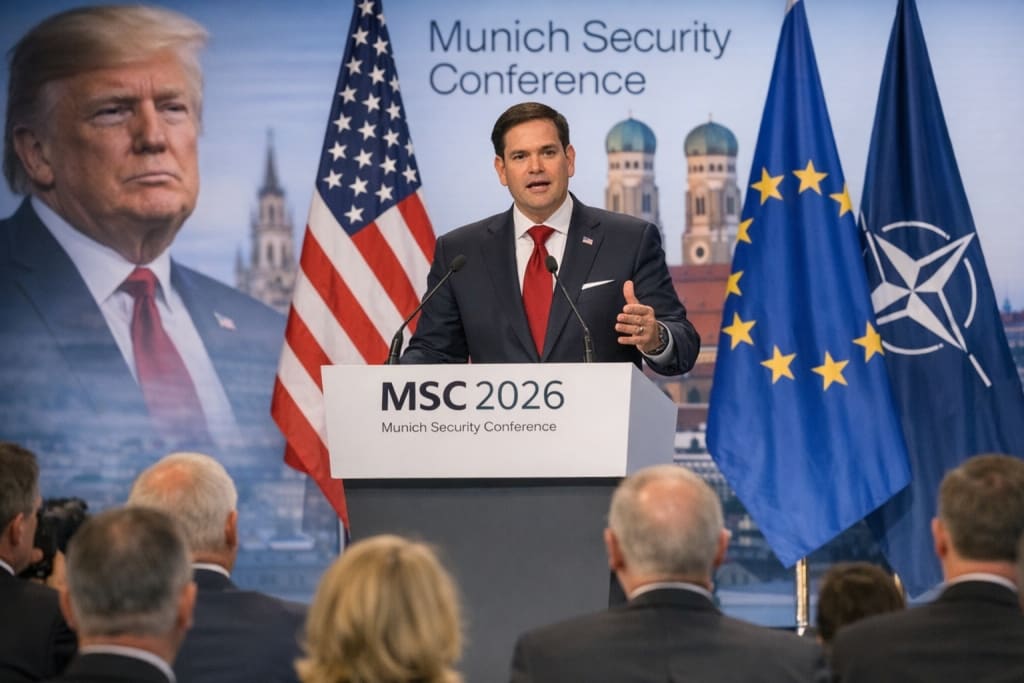
The annual Munich Security Conference has long been a place where world leaders speak openly about war, peace, and global cooperation. This year, the atmosphere is tense. Many European officials are uneasy about the direction of United States foreign policy. Into this uncertain setting steps U.S. Secretary of State Marco Rubio, who is scheduled to deliver a major speech.
Rubio’s address comes at a sensitive time. Former President Donald Trump’s dramatic foreign policy moves have changed how many allies see the United States. Some European leaders are worried about the future of NATO, trade relations, and support for Ukraine. They want to hear clear and calm words from Washington.
A Conference with High Stakes
The Munich Security Conference is one of the most important global meetings on defense and international affairs. Each year, presidents, prime ministers, ministers, military officials, and experts gather in Germany to discuss the biggest security challenges. Topics often include wars, cyber threats, climate security, and global power competition.
This year, the focus is strongly on transatlantic relations. The partnership between the United States and Europe has been a foundation of global stability since the end of World War II. However, recent policy decisions and strong political statements from Washington have raised doubts.
European officials are asking important questions. Will the United States continue to support Ukraine against Russia? Will it remain fully committed to NATO? Will it respect the sovereignty of smaller countries? These concerns form the background of Rubio’s speech.
Trump’s Dramatic Approach
Donald Trump has never been a traditional foreign policy leader. During his presidency, he often challenged long-standing alliances. He criticized NATO members for not spending enough on defense. He questioned trade agreements. He sometimes praised leaders of rival nations.
More recently, Trump’s bold statements have once again caught global attention. One example was his suggestion about U.S. control over Greenland, an autonomous territory within Denmark. This comment surprised European leaders and created tension with Denmark, a close NATO ally.
Such statements have led many European officials to worry that U.S. policy may become unpredictable. They fear that sudden changes could weaken unity among Western nations at a time when cooperation is critical.
Rubio’s Role as Diplomat
Marco Rubio now faces the task of reassuring allies. Known for his strong views on national security, Rubio has also spoken about the importance of partnerships. As Secretary of State, his job is to represent U.S. interests while maintaining trust with other countries.
Observers expect Rubio to emphasize shared values between the United States and Europe. He is likely to stress democracy, rule of law, and mutual defense. He may also highlight the deep economic and cultural ties that connect both sides of the Atlantic.
Rubio’s tone will be important. Diplomats say that words matter in international politics. A calm and respectful speech could help ease tensions. A confrontational tone could deepen divisions.
The Question of Ukraine
One of the most urgent issues is the war in Ukraine. Since Russia’s invasion, the United States and European countries have provided military and financial support to Kyiv. This cooperation has been a symbol of Western unity.
However, there are concerns about how long this support will continue. Some U.S. political leaders have questioned the level of aid. European officials want clear assurances that Washington remains committed.
At Munich, Rubio is expected to speak about continued cooperation on Ukraine. He may underline that supporting Ukraine is not only about helping one country, but also about defending international law and European security.
NATO and Burden Sharing
Another major topic is NATO’s future. Trump has often argued that European members should increase defense spending. Many countries have responded by raising their budgets. Still, doubts remain about America’s long-term commitment.
European leaders want stability. They understand the need to invest more in defense, but they also want to know that the United States will stand by its treaty obligations. NATO’s Article 5, which says that an attack on one member is an attack on all, is the core of the alliance.
Rubio is expected to repeat that the United States supports NATO. He may also call for continued burden sharing, meaning all members contribute fairly. If presented carefully, this message could be received positively.
Rebuilding Trust
Trust is not built overnight. It takes years of cooperation and shared experiences. It can also be damaged quickly by strong words or sudden policy changes. This year’s Munich conference may become a turning point.
European leaders are not only listening to Rubio’s speech. They are also watching future actions from Washington. Speeches can reassure, but real trust depends on consistent policy.
Some analysts believe that the United States and Europe still share too many interests to drift apart. They cooperate on trade, security, intelligence, and climate issues. They face common challenges from global competition and emerging technologies.
A Test for Transatlantic Relations
The world is facing multiple crises. The war in Ukraine continues. Tensions in Asia are rising. Cyber threats and economic competition are growing. In such times, strong alliances are more important than ever.
Marco Rubio’s speech in Munich is more than a formal address. It is a test of whether the United States can calm fears and rebuild confidence among its closest partners. It is also a signal of how Washington plans to balance national interests with global responsibilities.
European leaders hope to hear a message of cooperation and stability. They want clarity about U.S. commitments and respect for allies. At the same time, they understand that American politics can be complex and sometimes unpredictable.
Looking Ahead
As the conference begins, expectations are high. Journalists, diplomats, and analysts will examine every word. Small details in language can shape perceptions and headlines.
If Rubio delivers a steady and thoughtful message, it could mark the beginning of renewed trust. If concerns remain unanswered, uncertainty may continue.
In the end, the relationship between the United States and Europe is built on shared history and shared values. While disagreements may arise, both sides understand the importance of working together.
The Munich Security Conference offers an important moment for dialogue. For Marco Rubio, it is an opportunity to show leadership and strengthen ties during a challenging time in global politics.
About the Creator
Keep reading
More stories from writers in The Swamp and other communities.
The Saddest Thing - The Billionaires Who Rule America Aren't Even Enjoying Themselves
This single post says more about our ruling class than a thousand policy papers. The saddest thing about today's system is that the men robbing the rest of us - sabotaging our economic prospects, our pensions, our access to affordable healthcare - are not even happy.
By Scott Christenson🌴12 days ago in The Swamp
Aircraft Involved in ‘Serious Incident’ Cleared to Return to Service After Safety Review
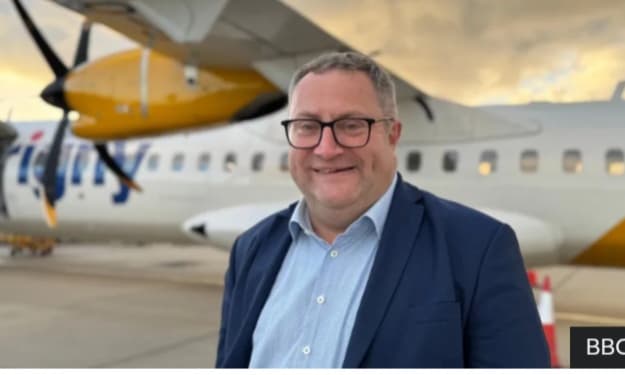
An aircraft involved in a “serious incident” while operating for Aurigny Air Services is set to return to commercial flights after undergoing thorough safety checks and evaluations. The move reassures passengers and industry watchers that the airline and aviation authorities prioritize safety, even when dealing with minor or unexplained anomalies.
By Ayesha Lashari6 days ago in The Swamp



Comments
There are no comments for this story
Be the first to respond and start the conversation.