
North Korea Opens New Housing Area for Families of Soldiers Killed Overseas
Formal / News Style State-backed project highlights loyalty, sacrifice, and political messaging amid regional tensions Pyongyang unveils residential complex honoring families of fallen overseas personnel 🔹 Neutral & Informative New development offers housing and services to relatives of soldiers who died abroad Government frames project as welfare initiative and symbol of national unity 🔹 Impactful Housing initiative underscores military sacrifice and reinforces regime loyalty narratives

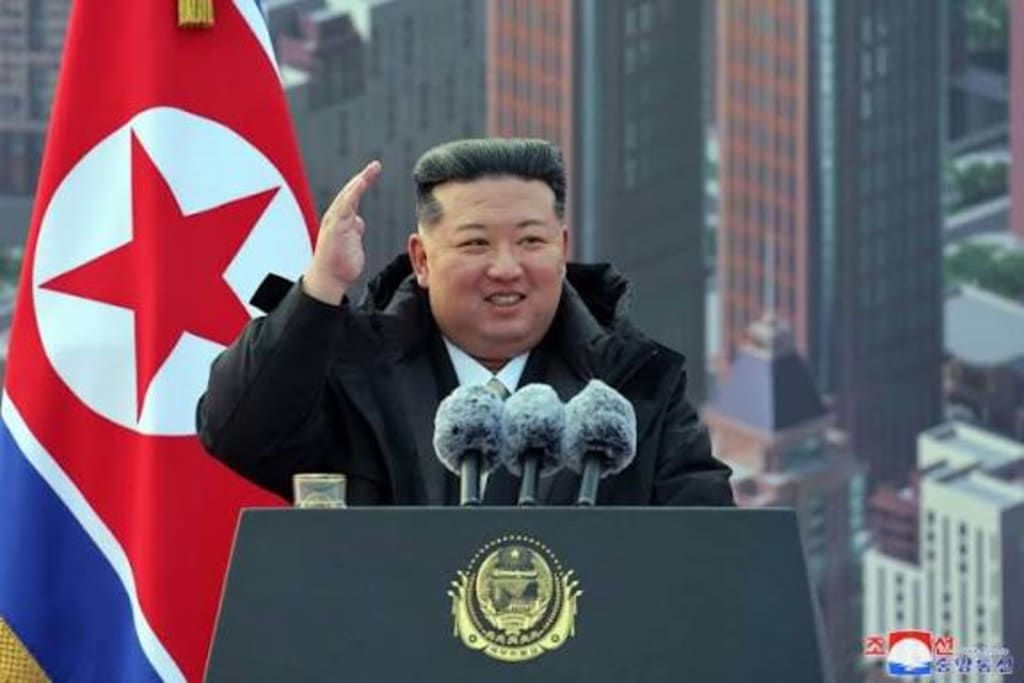
North Korea has unveiled a newly constructed residential district dedicated to the families of soldiers who died while serving abroad, a move state media portrays as a tribute to loyalty and sacrifice. The project, inaugurated in a ceremony attended by senior officials, reflects Pyongyang’s efforts to honor military service while reinforcing political messaging about national unity and devotion to the state.
The housing complex, built on the outskirts of the capital, features modern apartment blocks, schools, medical clinics, and community facilities. According to official announcements, the residences are reserved for families whose relatives lost their lives during overseas deployments described as “international missions of solidarity.” While authorities did not specify the locations or nature of those missions, analysts suggest the development is closely tied to reports of North Korean personnel operating beyond the country’s borders in recent years.
Symbolism and State Messaging
At the inauguration ceremony, senior officials emphasized that the housing project represented the leadership’s gratitude toward families who had “contributed to the dignity of the nation.” A statement released by the Korean Central News Agency praised the initiative as proof of the government’s commitment to improving living standards for those who sacrificed most for the country.
Observers note that such projects serve both humanitarian and political purposes. By providing tangible benefits to bereaved families, the state reinforces loyalty among military households while showcasing its ability to deliver material improvements despite economic hardship and international sanctions. The move also underscores the central role of the armed forces in North Korean society, where military service is portrayed as the highest form of patriotism.
Context of Overseas Deployments
Although North Korea rarely acknowledges overseas military activity, foreign intelligence and media reports have suggested that North Korean personnel have been involved in various forms of cooperation with allied states, including technical and logistical roles. These activities are often framed domestically as part of a broader struggle against perceived external threats.
The opening of a housing district specifically for families of fallen soldiers implies recognition of casualties incurred beyond North Korea’s borders. This marks a rare public acknowledgment that some military losses occurred during foreign missions, rather than solely within domestic training or defensive contexts.
Living Conditions and Design
State media images show rows of pastel-colored apartment buildings with landscaped courtyards and playgrounds, designed to project an image of comfort and modernity. Each family reportedly receives a fully furnished apartment, along with access to healthcare and education services within the complex.
Officials claim the project is part of a wider urban development plan aimed at modernizing residential areas and improving quality of life for citizens linked to the military. However, independent verification of living conditions remains difficult due to restricted access for foreign observers.
Political Timing
The launch of the housing complex comes at a time when Pyongyang is emphasizing internal unity amid heightened international pressure and regional tensions. By highlighting care for families of fallen soldiers, the leadership reinforces narratives of resilience and collective sacrifice.
Analysts suggest the timing also coincides with broader efforts to boost morale within the armed forces. Providing visible rewards to military families sends a message to active-duty personnel that their service will be honored materially as well as symbolically.
Role of Leadership
During the ceremony, officials praised the guidance of Kim Jong Un, describing the project as a direct result of his commitment to the welfare of military families. State media emphasized that the leader personally oversaw aspects of the housing plan, reinforcing his image as a protector of soldiers and their relatives.
Such portrayals align with long-standing propaganda themes that link leadership legitimacy to the wellbeing of the armed forces. The housing project thus becomes not only a social initiative but also a political statement reinforcing loyalty to the ruling elite.
Regional and International Reactions
International observers view the project with a mix of skepticism and concern. While acknowledging the humanitarian aspect of supporting bereaved families, analysts argue that the move may obscure deeper questions about the nature of North Korea’s overseas military involvement and its compliance with international norms.
Human rights groups have long criticized the lack of transparency surrounding North Korean military deployments and the conditions under which soldiers serve. They warn that showcasing housing benefits should not distract from the broader need for accountability and openness regarding overseas operations.
Looking Ahead
The new housing area stands as a symbol of how North Korea blends social policy with political messaging. For families who lost loved ones, the apartments offer a measure of stability and recognition in a system where public honor carries immense weight.
At the same time, the project raises fresh questions about the scope of North Korea’s foreign military activities and the human cost associated with them. As Pyongyang continues to balance domestic priorities with its international posture, initiatives like this housing complex will likely remain part of its strategy to project strength, unity, and care for those tied to the military establishment.
Whether the development represents a genuine expansion of social welfare or primarily serves propaganda purposes, it highlights the enduring centrality of the armed forces in North Korean political life and the leadership’s determination to link sacrifice with state reward.
About the Creator
Fiaz Ahmed
I am Fiaz Ahmed. I am a passionate writer. I love covering trending topics and breaking news. With a sharp eye for what’s happening around the world, and crafts timely and engaging stories that keep readers informed and updated.
Keep reading
More stories from Fiaz Ahmed and writers in The Swamp and other communities.
India Watches With Concern as Its Biggest Rival Plans to Add 50 New Warships to Its Fleet
India is closely monitoring the rapid expansion of its biggest regional rival’s naval forces, as new reports indicate that China intends to acquire up to 50 additional warships in the coming years. The ambitious plan would significantly enhance Beijing’s maritime power and reshape the strategic balance across the Indo-Pacific, a region critical to global trade and security. For New Delhi, the development raises urgent questions about deterrence, regional influence, and the future of naval competition in Asia. Defense analysts say the scale of China’s proposed expansion underscores its determination to project power far beyond its coastline and challenge established maritime actors, including India. A Major Expansion of Naval Power China already operates the world’s largest navy by number of vessels, with a fleet that includes aircraft carriers, destroyers, frigates, submarines, and amphibious assault ships. The reported plan to add 50 new warships would further strengthen the People’s Liberation Army Navy, allowing it to conduct sustained operations in the South China Sea, the Indian Ocean, and beyond. According to military experts, the new ships are expected to include advanced destroyers, multi-role frigates, and possibly additional aircraft carriers and submarines. These platforms would be equipped with long-range missiles, modern radar systems, and enhanced anti-submarine warfare capabilities, making them formidable assets in any potential conflict scenario. The expansion is part of a broader modernization drive aimed at transforming China’s navy into a “world-class force” capable of defending overseas interests, securing maritime trade routes, and supporting Beijing’s geopolitical ambitions. India’s Strategic Concerns For India, China’s naval buildup is not an abstract development but a direct strategic challenge. New Delhi has long viewed the Indian Ocean as its primary sphere of influence. However, China’s growing presence in the region—through port investments, naval patrols, and joint exercises—has steadily increased pressure on India’s maritime dominance. Indian defense officials privately acknowledge that a fleet expansion of this magnitude could tilt the balance of power in contested waters. The concern is not only about numbers but about the sophistication and reach of Chinese naval forces. “China is no longer a coastal navy,” said one Indian security analyst. “It is becoming a blue-water navy with the ability to operate far from home, including in areas India considers strategically vital.” Regional Implications China’s plan to expand its fleet comes amid heightened tensions across the Indo-Pacific. Disputes in the South China Sea, concerns over Taiwan, and growing rivalry between major powers have turned the region into one of the most militarized maritime zones in the world. Neighboring countries such as Japan, Vietnam, and the Philippines are also watching developments closely. Many have increased their own defense spending in response to China’s naval growth, leading to fears of an accelerating arms race at sea. For India, the implications extend beyond direct confrontation. A stronger Chinese navy could affect freedom of navigation, trade routes, and regional partnerships. India’s role within strategic groupings such as the Quad—alongside the United States, Japan, and Australia—has already taken on greater importance as a counterbalance to Beijing’s influence. India’s Response India has been investing steadily in its own naval modernization. The Indian Navy is expanding its fleet with new destroyers, submarines, and domestically built aircraft carriers. Indigenous shipbuilding programs aim to reduce dependence on foreign suppliers while improving technological self-reliance. However, defense planners admit that matching China ship-for-ship is unrealistic. Instead, India is focusing on asymmetric capabilities such as submarines, maritime surveillance, and partnerships with friendly navies to maintain strategic equilibrium. New Delhi is also strengthening ties with regional partners to ensure that the Indian Ocean does not become dominated by any single power. Joint exercises and intelligence-sharing agreements have increased in recent years, reflecting a shift toward collective security. Economic and Political Dimensions China’s naval expansion is backed by its vast industrial capacity and defense budget, which far outstrips that of most regional competitors. Shipyards are producing advanced vessels at a pace unmatched globally, giving Beijing a sustained advantage in fleet growth. Politically, the program sends a strong signal of China’s ambitions as a maritime power. It reinforces President Xi Jinping’s vision of a strong military capable of safeguarding China’s global interests and supporting its rise as a major world power. Looking Ahead As China moves forward with its plan to acquire 50 new warships, India faces a complex strategic environment marked by competition, uncertainty, and shifting alliances. While open conflict remains unlikely, the expanding naval capabilities of China will continue to shape India’s defense planning and regional diplomacy. For now, New Delhi is watching closely, aware that the balance of power in Asian waters is evolving rapidly. The coming decade will likely determine whether the Indo-Pacific becomes a zone of cooperation or a stage for intensified naval rivalry, with India and China at its center.
By Fiaz Ahmed about 23 hours ago in The Swamp
The Saddest Thing - The Billionaires Who Rule America Aren't Even Enjoying Themselves
This single post says more about our ruling class than a thousand policy papers. The saddest thing about today's system is that the men robbing the rest of us - sabotaging our economic prospects, our pensions, our access to affordable healthcare - are not even happy.
By Scott Christenson🌴11 days ago in The Swamp
Arctic Blast on the Way for the UK: Snow and Ice Warnings Issued
Winter is tightening its grip once again as an Arctic blast heads toward the United Kingdom, bringing snow, icy roads, and a sharp drop in temperatures. Forecasters at the Met Office have issued yellow weather warnings for snow and ice across parts of Scotland and northern England, urging residents to prepare for hazardous conditions over the coming days.
By Ayesha Lashari5 days ago in The Swamp



Comments
There are no comments for this story
Be the first to respond and start the conversation.