
North Korea’s First Nuclear-Powered Missile Submarine Is Revealed
Formal / News Style Pyongyang unveils strategic vessel capable of extended underwater nuclear deterrence New submarine marks milestone in North Korea’s naval and missile capabilities 🔹 Neutral & Informative First nuclear-powered missile submarine strengthens North Korea’s second-strike potential Regional security concerns rise as North Korea demonstrates advanced naval technology 🔹 Impactful North Korea enters a new era of submarine-launched nuclear capability

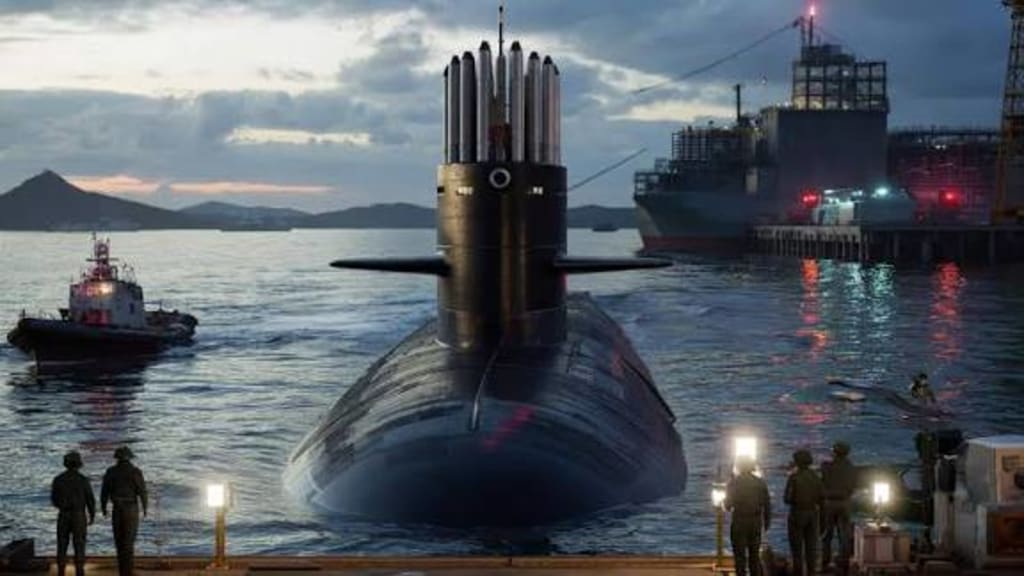
North Korea has unveiled its first nuclear-powered missile submarine, a development that marks a significant milestone in the country’s strategic military capabilities and raises concerns among regional and global security analysts. The announcement, accompanied by state media imagery, highlights Pyongyang’s continued focus on expanding its naval and nuclear deterrence capabilities, despite international sanctions and diplomatic pressures.
The Unveiling
State-run North Korean media released images of the submarine during a formal ceremony attended by senior military officials. The vessel, reportedly capable of carrying ballistic missiles, represents the country’s first foray into nuclear-powered submarine technology. Analysts note that the move signals both technical advancement and a strategic intent to enhance second-strike nuclear capability.
The submarine appears to be significantly larger than the country’s existing diesel-electric submarine fleet and is believed to be capable of extended underwater operations. This development could allow North Korea to maintain a continuous at-sea nuclear deterrent, reducing the vulnerability of its strategic assets to preemptive strikes.
Technical and Strategic Significance
While specific technical details remain scarce, defense analysts suggest that the vessel is designed to operate silently and for long periods underwater, using a nuclear propulsion system to power both its engines and onboard systems. The integration of ballistic missile capability could potentially allow the submarine to launch nuclear missiles from protected, concealed positions, thereby strengthening North Korea’s deterrent posture.
“This is a game-changer in terms of regional security,” said an East Asia military analyst. “A nuclear-powered submarine with ballistic missile capability significantly increases Pyongyang’s ability to project power and complicates defense planning for neighboring countries and the United States.”
North Korea has historically relied on a combination of land-based missile systems and conventional submarines for its naval strategy. The introduction of a nuclear-powered platform represents a shift toward modernized, survivable deterrence. Experts note that the move may also reflect North Korea’s desire to emulate capabilities possessed by other nuclear states, including the U.S., Russia, and China.
Regional and Global Reactions
The unveiling of the submarine has drawn immediate attention from South Korea, Japan, and the United States, all of whom monitor North Korean military developments closely. South Korea’s Ministry of National Defense stated that it is analyzing satellite imagery and open-source intelligence to assess the capabilities of the new vessel. Japan’s government expressed concern over the potential threat to maritime security in the region.
U.S. officials noted that the development underscores the ongoing challenges of denuclearization talks and highlights the need for robust deterrence strategies. Analysts suggest that the submarine could complicate existing defense frameworks in the Indo-Pacific, forcing allies to consider enhanced anti-submarine warfare capabilities and maritime surveillance.
Implications for Nuclear Deterrence
The introduction of a nuclear-powered missile submarine has significant implications for North Korea’s nuclear posture. Submarines provide a survivable second-strike capability, allowing a country to maintain the ability to retaliate even after a first-strike attack. This strategic advantage is critical for maintaining deterrence and signaling to adversaries that any attack could provoke a devastating response.
Experts also warn that the development could accelerate an arms race in the region, prompting neighboring countries to invest more heavily in submarine detection and missile defense systems. Additionally, the revelation may influence diplomatic negotiations, with North Korea likely leveraging its enhanced capabilities to extract concessions in talks with the United States and regional partners.
Technical Challenges and Future Prospects
While the unveiling is a major step, technical experts caution that the vessel may still face challenges in operational deployment. Nuclear propulsion requires advanced engineering, maintenance infrastructure, and trained personnel, areas where North Korea has limited publicly verified expertise. Analysts will be monitoring whether the country can sustain long-term operations and integrate the submarine effectively into its naval strategy.
The development also raises questions about the country’s missile technology, including the range, accuracy, and survivability of submarine-launched ballistic missiles. Successful integration of these systems could significantly alter the strategic calculus in Northeast Asia.
Looking Ahead
The North Korean announcement is expected to influence both regional defense planning and global diplomatic efforts. While Pyongyang has consistently pursued advanced military capabilities, the addition of a nuclear-powered missile submarine represents a tangible escalation in its strategic capabilities.
As tensions in the region persist, countries including South Korea, Japan, and the United States are likely to increase monitoring and prepare contingency plans. Analysts warn that the unveiling could set a precedent for further technological advancements in North Korea’s naval and nuclear programs, reshaping security dynamics in the Indo-Pacific.
The world now faces a new chapter in the North Korean military narrative, with a vessel that could fundamentally change the nature of deterrence and escalation in the region.
About the Creator
Fiaz Ahmed
I am Fiaz Ahmed. I am a passionate writer. I love covering trending topics and breaking news. With a sharp eye for what’s happening around the world, and crafts timely and engaging stories that keep readers informed and updated.
Keep reading
More stories from Fiaz Ahmed and writers in The Swamp and other communities.
Production Starts on Indonesian Navy’s A-VIATOR Aircraft in Italy
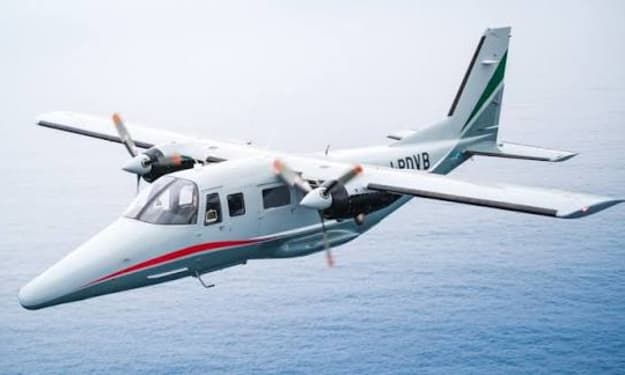
Production has officially begun on the A-VIATOR aircraft for the Indonesian Navy, with assembly taking place at a major aerospace facility in Italy. The program represents a key step in Indonesia’s efforts to modernize its naval aviation capabilities and enhance maritime surveillance, reconnaissance, and tactical operations in the region. Aircraft Overview The A-VIATOR is a multirole aircraft designed to operate in both maritime patrol and combat support roles. Equipped with advanced radar, sensor suites, and communications systems, the aircraft is intended to provide the Indonesian Navy with improved situational awareness over its territorial waters, critical shipping lanes, and archipelagic regions. Italian aerospace manufacturers have been tasked with building the initial production batch, while final delivery and integration will occur in coordination with Indonesian defense officials. The program includes training for pilots and technical crews, maintenance support, and gradual incorporation into existing naval operations. Strategic Importance for Indonesia Indonesia, as the world’s largest archipelagic state, faces unique maritime challenges. Monitoring and securing its extensive coastline, territorial waters, and exclusive economic zones requires advanced aerial and naval assets. The A-VIATOR aircraft program is intended to bolster the country’s maritime security infrastructure and provide rapid-response capabilities to both civilian and military contingencies. Defense analysts note that the introduction of modern aircraft like the A-VIATOR enhances Indonesia’s ability to detect and track unauthorized vessels, respond to regional disputes, and support search and rescue operations. “The aircraft significantly improves the Navy’s reach and effectiveness,” said a regional defense expert. “It’s a critical investment for Indonesia’s maritime defense strategy.” Production and Technology The aircraft features cutting-edge avionics, including automated surveillance systems, electronic intelligence capabilities, and secure communication networks compatible with allied platforms. Its multirole design allows it to switch between reconnaissance, anti-submarine warfare, and limited tactical strike operations, giving the Navy flexibility in deployment. The Italian manufacturer has emphasized precision engineering and adherence to international aerospace standards, ensuring that the aircraft meet both operational and safety requirements. Advanced composite materials and fuel-efficient engines are integrated to maximize performance and endurance. International Cooperation The A-VIATOR program reflects growing collaboration between Indonesia and Italy in defense and aerospace industries. Beyond aircraft production, the partnership includes knowledge transfer, technical training, and long-term support agreements. Indonesian pilots and technical personnel are scheduled for training sessions in Italy before the aircraft are delivered. “This project exemplifies the benefits of international defense collaboration,” an Indonesian Ministry of Defense official said. “We gain access to advanced technology while developing domestic skills and operational expertise for our naval forces.” Regional Implications Southeast Asia has seen increasing competition over maritime security, with neighboring countries investing in modern naval assets to address territorial disputes, piracy, and smuggling. The A-VIATOR aircraft program positions Indonesia to maintain situational awareness and assert its strategic interests more effectively. Analysts believe that the aircraft’s deployment will not only strengthen Indonesia’s defense posture but also enhance regional stability by providing rapid-response surveillance and operational support to multilateral exercises and humanitarian missions. Looking Ahead Initial production is expected to continue through the next several months, with the first aircraft delivered to the Indonesian Navy by late 2026. The program includes gradual fleet expansion, allowing pilots and support crews to familiarize themselves with operations and maintenance procedures. As Indonesia continues to modernize its naval capabilities, the A-VIATOR aircraft program represents a tangible step toward achieving a more versatile and responsive maritime force. Its combination of advanced technology, multirole flexibility, and international collaboration underscores Indonesia’s strategic vision for securing its maritime domain and projecting influence in Southeast Asia.
By Fiaz Ahmed about 2 hours ago in The Swamp
Why Black History Matters in America?
The United States of America is celebrating their 250th anniversary in 2026. I'm proud to be an American and as someone who was born here, I wouldn't imagine myself living anywhere else. This is a country where opportunities are possible. Where anyone can be successful in anything they desire to do. Equality, community, and togetherness are the backbones of what America is and should be about. However, we have an administration who wants to erase and disregard those who have made positive, meaningful impacts in our country, specifically Black figures, such as Martin Luther King, Jr., Rosa Parks, and Maya Angelou. President Trump and his administration have been constantly complaining and fighting against what they call the "Woke agenda". They use this excuse as a distraction from other issues they refuse to address, such as the high cost of living, climate change, and inflation. That equality is dividing America, when in reality, it's bringing us together. Being woke is not tied to a specific political party. No matter where you stand on the political spectrum, you can still care about other people and their plights. Compassion and empathy for others isn't tied to a political party, either. We were taught as children to treat others the way we want to be treated and not judge others because they're different from us. Caring about others isn't a personal attack on your beliefs. It doesn't make you any less of a person. People who are easily offended over African American figures, past or present, or anything related to it, are grasping at straws. Current and future generations need to know who people like Harriet Tubman and Shirley Chisholm were, especially in the classroom. Black History is part of American History. It should be recognized, not hidden or forgotten. Besides, you can't shield children from everything, just because your feelings are easily hurt.
By Mark Wesley Pritchard 17 days ago in The Swamp



Comments
There are no comments for this story
Be the first to respond and start the conversation.