
Pakistan, US Sign Pact to Redevelop New York’s Roosevelt Hotel
Formal / News Style Historic Midtown Manhattan property to be transformed under joint redevelopment agreement Bilateral deal aims to unlock value of Pakistan-owned landmark in New York 🔹 Neutral & Informative Project to convert shuttered hotel into mixed-use complex with housing and commercial space Redevelopment plan signals renewed economic cooperation between Pakistan and the United States 🔹 Impactful From pandemic closure to revival: Roosevelt Hotel set for major transformation

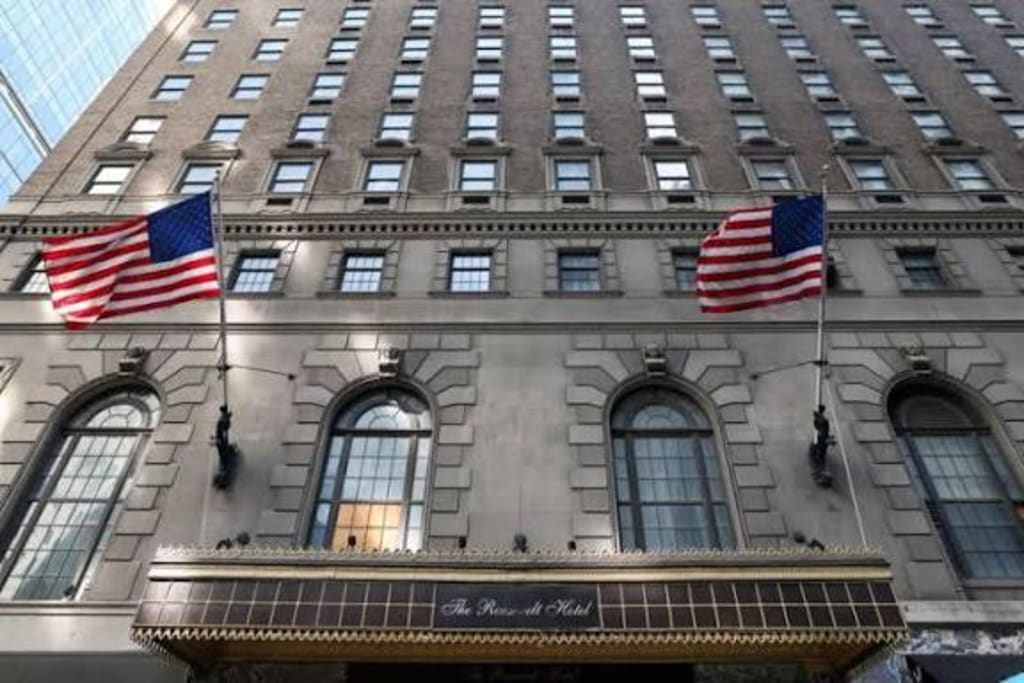
Pakistan and the United States have signed a landmark agreement to redevelop the historic Roosevelt Hotel, marking a new phase in bilateral economic and real estate cooperation. The deal aims to transform the long-shuttered property in Midtown Manhattan into a modern, multi-purpose complex while preserving its architectural heritage.
Officials from both governments confirmed that the redevelopment project will be carried out through a joint framework involving Pakistan International Airlines’ investment arm and U.S.-based development partners. The Roosevelt Hotel, owned by Pakistan through its national airline, has remained closed since 2020, becoming a symbol of both financial strain and untapped potential.
A Strategic Asset Reimagined
Located just steps from Grand Central Terminal, the Roosevelt Hotel has long been considered one of Manhattan’s most valuable properties. Built in 1924, it once hosted presidents, film stars, and global dignitaries. However, years of declining tourism and rising operational costs forced its closure during the pandemic.
Under the newly signed pact, the site will be converted into a mixed-use facility combining hospitality, residential units, office space, and community services. Project planners say the redevelopment will be aligned with New York City’s evolving urban needs, including housing demand and commercial revitalization.
A senior Pakistani official described the agreement as “a breakthrough in unlocking the value of overseas national assets.” He added that the project would generate long-term revenue for Pakistan while strengthening commercial ties with the United States.
Economic and Diplomatic Significance
The agreement reflects improving economic cooperation between Pakistan and the United States, particularly in investment and infrastructure sectors. Analysts say the Roosevelt redevelopment could serve as a model for future public-private partnerships involving foreign-owned properties in major U.S. cities.
U.S. officials welcomed the move, emphasizing that the project would bring new jobs and stimulate local business activity in Midtown Manhattan. Construction and renovation work is expected to employ hundreds of workers over the next several years, with long-term positions created once the complex becomes operational.
“This project represents confidence in New York’s recovery and in international collaboration,” said a city development spokesperson.
Financial Recovery for Pakistan
For Pakistan, the Roosevelt Hotel has been a financial burden in recent years. Losses linked to maintenance and missed commercial opportunities prompted debates over whether the asset should be sold outright or leased to developers. The new pact avoids a full sale, instead opting for redevelopment under a long-term lease and revenue-sharing model.
Officials familiar with the agreement said Pakistan would retain ownership while benefiting from steady income generated through commercial operations. This approach, they argue, protects a strategic overseas asset while addressing fiscal pressures faced by Pakistan’s aviation and tourism sectors.
The deal also aligns with Islamabad’s broader strategy to monetize state-owned assets and attract foreign investment without sacrificing national ownership.
Preservation and Modernization
Urban planners involved in the project have pledged to preserve key elements of the Roosevelt Hotel’s historic façade and interior design. At the same time, the complex will be upgraded with modern energy systems, digital infrastructure, and safety features.
Community leaders in New York City have expressed cautious optimism, urging developers to ensure that the redevelopment includes public spaces and affordable housing components. City authorities say discussions are underway to integrate social and environmental priorities into the final design.
Timeline and Next Steps
The redevelopment is expected to begin after regulatory approvals and design finalization, which could take up to a year. Initial projections suggest phased construction over three to five years, depending on market conditions and financing arrangements.
Joint oversight committees from both countries will monitor progress and ensure compliance with contractual and legal frameworks. Transparency provisions have been included to address past concerns about the management of overseas state assets.
A Symbol of Renewal
Beyond bricks and mortar, the Roosevelt Hotel redevelopment carries symbolic weight. Once a beacon of glamour and later a reminder of pandemic-era decline, the property is now positioned as a sign of renewal and cooperation between two longtime partners.
As one official noted, “This is not just about a building. It is about restoring value, confidence, and trust in shared economic ventures.”
If successful, the project could redefine how governments manage overseas assets and set a precedent for collaborative urban redevelopment in global cities.
About the Creator
Fiaz Ahmed
I am Fiaz Ahmed. I am a passionate writer. I love covering trending topics and breaking news. With a sharp eye for what’s happening around the world, and crafts timely and engaging stories that keep readers informed and updated.
Keep reading
More stories from Fiaz Ahmed and writers in The Swamp and other communities.
Exclusive: Riyadh Wants to Replace Israel with Syria for Greece Fibre-Optic Cable Route
Saudi Arabia is pushing for a major revision to a planned undersea fibre-optic cable linking the Middle East with Europe, seeking to reroute the project through Syria instead of Israel, according to regional officials and industry sources familiar with the negotiations. The proposal would connect the cable to Greece, offering a shorter and potentially cheaper digital corridor between Asia and Europe. The project, backed by Saudi investment and supported by several Gulf and European telecom operators, is designed to strengthen data connectivity between the Middle East and Europe while reducing reliance on congested routes through the Red Sea and Egypt. However, Riyadh’s push to bypass Israel reflects broader geopolitical calculations as well as technical and regulatory concerns. Strategic Shift in Routing Under earlier plans, the cable would have passed from the Gulf through Israel and then onward to the Mediterranean before reaching Greece. Saudi officials now argue that routing through Syria would provide greater political control over infrastructure and avoid dependence on a country with which Riyadh does not maintain formal diplomatic relations. A senior regional official said the change was driven by “sovereignty and security considerations” rather than purely commercial factors. “Saudi Arabia wants to ensure that critical digital infrastructure remains under friendly and cooperative jurisdictions,” the official noted. The revised route would cross Saudi territory, enter Syria via Jordan or Iraq, and then continue under the Mediterranean Sea to Greece. Engineers say the route is technically feasible, though it would require new landing stations and regulatory approvals from Damascus and European partners. Syria’s Return to Regional Projects For Syria, the proposal could represent a major economic opportunity and a symbolic step toward reintegration into regional infrastructure networks after years of isolation due to civil war and international sanctions. Syrian authorities have reportedly welcomed the idea, viewing it as a way to generate transit revenue and rebuild damaged telecommunications systems. Telecom analysts say Syria’s geographic position makes it a natural bridge between the Gulf and Europe. “From a purely technical standpoint, Syria offers one of the shortest land corridors to the Mediterranean,” said a regional infrastructure consultant. “The challenge is political risk and long-term stability.” Israel Factor and Regional Politics Israel had been considered a strong candidate for the original route because of its advanced telecom infrastructure and proximity to Europe. But Saudi officials are reluctant to rely on Israeli territory for a project they view as strategically sensitive. Although Saudi Arabia and Israel have cooperated indirectly in security matters, formal diplomatic ties have not been established. The rerouting effort comes amid renewed tensions in the region and shifting alliances following the Gaza war and broader instability in the Middle East. An Israeli industry source said the proposal, if implemented, would be “a missed opportunity for regional digital integration.” “Israel has the infrastructure and experience to handle such a project efficiently,” the source said, adding that excluding Israel could increase both cost and risk. European and Commercial Concerns European partners, including Greek authorities, are said to be cautiously evaluating the Saudi proposal. Greece sees the project as a way to strengthen its role as a digital gateway between Europe and the Middle East, but officials are concerned about the regulatory and security implications of routing through Syria. Brussels has not publicly commented, but diplomats note that European Union sanctions on Syria could complicate financing and insurance for the project. Private telecom companies involved in the consortium are reportedly pressing for guarantees that the route will not expose them to legal or reputational risks. One executive involved in the talks said the consortium is studying multiple options. “We are balancing geopolitics, engineering feasibility, and long-term reliability. This is not just about laying a cable; it’s about creating a stable digital highway for decades.” Saudi Digital Ambitions The fibre-optic project is part of Saudi Arabia’s broader push to become a global data and technology hub under its Vision 2030 economic diversification plan. Riyadh has invested heavily in data centers, cloud services, and international connectivity to attract tech firms and financial institutions. Officials argue that controlling major data routes will enhance national security and reduce dependence on traditional chokepoints such as the Suez Canal. Recent disruptions to Red Sea cables caused by maritime incidents have reinforced Saudi concerns about vulnerability. “Digital infrastructure is now as important as oil pipelines,” said a Saudi technology policy adviser. “Whoever controls the routes controls the future of data trade.” Uncertain Outcome Negotiations over the route are still at an early stage, and no final decision has been made. Industry insiders say pressure from European regulators and commercial partners could yet restore Israel to the plan or result in a hybrid solution with multiple landing points. For now, Riyadh’s push to replace Israel with Syria underscores how geopolitics is reshaping even the most technical infrastructure projects. What was once an engineering decision has become a diplomatic balancing act involving regional rivalries, post-war reconstruction, and Europe’s digital security. As one Western diplomat observed, “This cable is not just about faster internet. It’s about influence, trust, and who sits at the crossroads of tomorrow’s data economy.”
By Fiaz Ahmed about 23 hours ago in The Swamp
Why Black History Matters in America?
The United States of America is celebrating their 250th anniversary in 2026. I'm proud to be an American and as someone who was born here, I wouldn't imagine myself living anywhere else. This is a country where opportunities are possible. Where anyone can be successful in anything they desire to do. Equality, community, and togetherness are the backbones of what America is and should be about. However, we have an administration who wants to erase and disregard those who have made positive, meaningful impacts in our country, specifically Black figures, such as Martin Luther King, Jr., Rosa Parks, and Maya Angelou. President Trump and his administration have been constantly complaining and fighting against what they call the "Woke agenda". They use this excuse as a distraction from other issues they refuse to address, such as the high cost of living, climate change, and inflation. That equality is dividing America, when in reality, it's bringing us together. Being woke is not tied to a specific political party. No matter where you stand on the political spectrum, you can still care about other people and their plights. Compassion and empathy for others isn't tied to a political party, either. We were taught as children to treat others the way we want to be treated and not judge others because they're different from us. Caring about others isn't a personal attack on your beliefs. It doesn't make you any less of a person. People who are easily offended over African American figures, past or present, or anything related to it, are grasping at straws. Current and future generations need to know who people like Harriet Tubman and Shirley Chisholm were, especially in the classroom. Black History is part of American History. It should be recognized, not hidden or forgotten. Besides, you can't shield children from everything, just because your feelings are easily hurt.
By Mark Wesley Pritchard 19 days ago in The Swamp




Comments
There are no comments for this story
Be the first to respond and start the conversation.