
Philippine Navy to Receive First Follow‑On SSV This Year After PT PAL Delays
Formal / News Style Delivery of follow-on Strategic Sealift Vessel marks milestone despite Indonesian shipyard setbacks PT PAL delays push Philippine Navy’s new sealift vessel arrival to late 2026 🔹 Neutral & Informative First follow-on Tarlac-class ship to bolster Philippines’ amphibious and disaster response capabilities Follow-on SSV will enhance naval logistics and strategic sealift capacity for the Philippine Navy 🔹 Impactful After delays, Philippine Navy moves closer to expanding fleet with new sealift capabilities

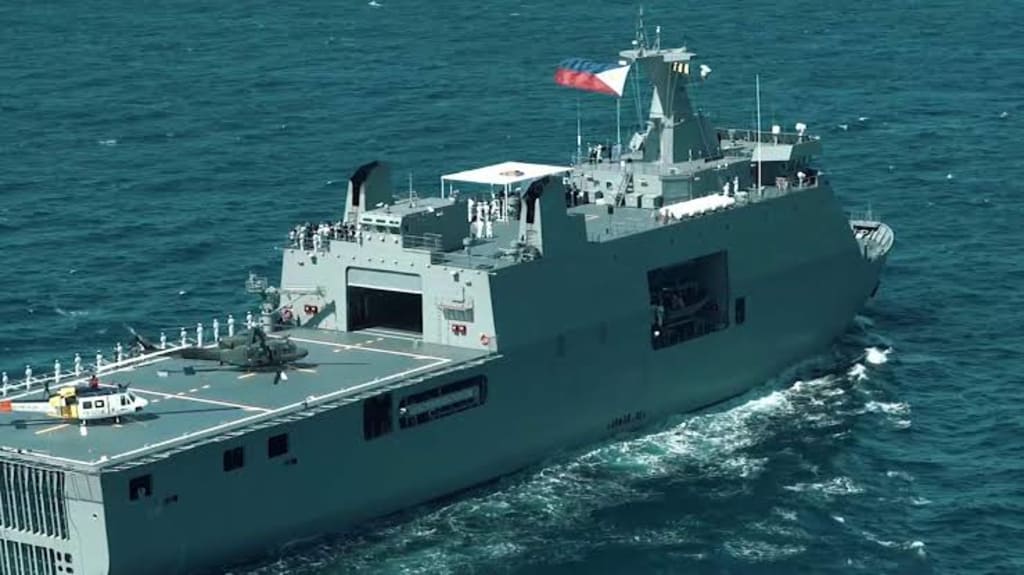
The Philippine Navy is set to receive the first of two follow‑on Strategic Sealift Vessels (SSVs) — also known as landing platform docks (LPDs) — by the end of 2026, despite earlier delays attributed to contractual hurdles faced by Indonesian shipbuilder PT PAL. The delivery marks a key milestone in the Philippines’ naval modernization program, even though the timeline has shifted significantly from original projections.
Background: A Follow‑On Order for Sealift Capability
The follow‑on contract was signed in June 2022 for approximately $100.9 million (P5.59 billion) to build two new 7,200‑ton SSVs, each measuring about 124 meters in length and designed to carry landing craft and support amphibious operations. These follow‑on vessels are repeat orders after an earlier order from 2014 that produced the first two ships of the Tarlac class, which remain key sealift and humanitarian assistance assets for the Philippine Navy.
The contract envisioned a robust support platform that can transport troops, vehicles and equipment and serve in disaster response, search and rescue, and other multi‑mission roles — a capability deemed critical for a maritime nation composed of more than 7,000 islands.
Delays and Revised Delivery Schedules
Originally, the first of the follow‑on SSVs was scheduled to be delivered in the first week of November 2025. However, construction and delivery milestones were repeatedly missed due to what Philippine and PT PAL officials described as “challenges the proponent is facing.” These included not meeting contractual milestones such as steel cutting, keel laying or planned launch dates that industry watchers cited as signs of production strain and capacity constraints at the Indonesian yard.
The keel for the first vessel was laid in January 2024, followed by steel cut procedures for the second. Despite these steps, the schedule shifted, with the new target for delivery set to November 2026 — a full year after the originally intended date.
PT PAL has attributed some of the delays to broader geopolitical conditions and external factors that affected supply chains and production pacing, although the specifics were not publicly detailed. Analysts see such delays as part of broader challenges in regional shipbuilding, where capacity and workforce issues can ripple across defence orders.
Default
Strategic Importance of SSVs
For the Philippine Navy, these follow‑on SSVs represent more than just new hulls. They are part of an evolving fleet architecture aimed at increasing operational reach, disaster response capacity, and amphibious lift capability. The original Tarlac class has demonstrated utility in a variety of roles — from troop transport and humanitarian missions to multinational exercises — and the new ships are expected to augment and eventually replace some of the Navy’s older logistics platforms.
The strategic sealift vessels are designed with ample deck space, troop accommodation, and the ability to support helicopter operations, making them versatile contributors to national defence and maritime security. Their role includes facilitating rapid force movement across the archipelago as well as serving in humanitarian assistance and disaster relief (HADR) operations, a mission set increasingly critical for a country prone to natural disasters such as typhoons and earthquakes.
Broader Naval Modernization
The follow‑on SSVs complement other modernization efforts by the Philippine Navy, which has been acquiring a mix of combat and support vessels to expand its maritime capability. These include offshore patrol vessels, frigates, and other platform types from South Korean and international shipbuilders as part of a multi‑year program to strengthen defence posture and maritime security capacity.
The Philippine government’s sustained investment into these platforms reflects a strategic emphasis on enhancing deterrence and operational flexibility in a complex regional security environment, especially in contested waters of the South China Sea. As new platforms come online, such as modern OPVs and guided‑missile frigates, support vessels like SSVs will play a vital role in enabling extended deployments and joint operations.
Looking Ahead
While the delivery of the first follow‑on SSV by November 2026 represents progress, observers will be watching closely how PT PAL and Philippine defence planners manage the second vessel’s construction and delivery. Continued close cooperation and clear milestone management will be essential if Manila is to avoid further delays and ensure fleet requirements are met on schedule.
For now, the upcoming arrival of the first follow‑on vessel underscores both the ongoing challenges and the enduring partnerships underpinning the Philippine Navy’s modernization journey — a testament to how strategic sealift capability remains at the heart of its expanding maritime ambitions. Start writing...
About the Creator
Fiaz Ahmed
I am Fiaz Ahmed. I am a passionate writer. I love covering trending topics and breaking news. With a sharp eye for what’s happening around the world, and crafts timely and engaging stories that keep readers informed and updated.
Keep reading
More stories from Fiaz Ahmed and writers in The Swamp and other communities.
With Latest Rollback, the U.S. Essentially Has No Clean‑Car Rules
The United States has effectively dismantled its federal clean‑car framework after the Environmental Protection Agency (EPA) under President Donald Trump rescinded a foundational climate science finding that provided the legal basis for regulating vehicle emissions and other greenhouse gases. The move, described by critics as the most sweeping climate policy rollback in U.S. history, removes federal limits on tailpipe emissions and leaves the nation without core nationwide standards designed to reduce vehicle pollution and promote cleaner cars. The End of a Legal Foundation At the center of the rollback is the EPA’s February 12 decision to revoke the 2009 “endangerment finding” — a scientific judgment that concluded greenhouse gases, such as carbon dioxide and methane, pose a danger to public health and welfare. That finding gave the agency authority under the Environmental Protection Agency and the Clean Air Act to regulate emissions from vehicles, industrial polluters, and power plants. With that basis gone, federal rules that once required automakers to limit greenhouse gas emissions and increase fuel efficiency have been rolled back or canceled. The repeal effectively removes emissions targets for cars and trucks that were supposed to apply through the late 2020s, and opens the door for manufacturers to prioritize traditional internal combustion vehicles over cleaner alternatives such as hybrids and electric vehicles (EVs). Administration officials argue the rollback reduces regulatory costs for the auto industry and consumers. Trump and EPA Administrator Lee Zeldin have said the shift will cut economic burdens by trillions of dollars while restoring “common sense” to climate policy. They also claim it supports affordability and consumer choice in the vehicle market. What’s Lost in Regulation Under the previous regulatory regime, clean‑car standards were expected to deliver significant public health and environmental benefits. According to EPA analysis under earlier administrations, stricter vehicle emission limits could have prevented billions of tons of carbon dioxide emissions over several decades and reduced pollutants linked to respiratory diseases, heart conditions, and premature deaths. The Associated Press With federal standards effectively gone, critics warn that: Tailpipe pollution could increase as automakers face less pressure to improve fuel efficiency. States with stricter standards, such as California, may be challenged legally or pushed to adjust their programs. Long‑term incentives for EV adoption and low‑emission technology could weaken. Public health outcomes could worsen, especially in communities already burdened by poor air quality. Environmental and health advocates have framed the turnabout as a direct assault on clean‑air progress and climate action. The American Lung Association, among others, had previously emphasized that cleaner cars standards not only reduce carbon pollution but also slash substances that trigger asthma, heart disease, and other health issues. States, the Auto Industry, and Legal Conflicts With federal oversight diminished, individual states may attempt to fill the void. In the past, several states — led by California — adopted stricter vehicle emissions standards than the federal baseline, a provision allowed under the Clean Air Act. Whether these state programs can withstand legal and political pressure remains a key question. Automakers themselves have offered mixed reactions. Industry groups generally support regulatory relief but worry that uncertainty could stifle long‑term investment in new technologies. Some companies had already committed billions to electrification and advanced efficiency improvements, betting on a cleaner‑vehicle future before the rollback. Legal battles are expected to follow. Environmental lawyers argue that the EPA lacks statutory authority to erase the endangerment finding and suspend emissions regulation without congressional action. Prior Supreme Court rulings, notably Massachusetts v. EPA, upheld the agency’s ability to treat greenhouse gases as pollutants under the Clean Air Act — a precedent now directly challenged. Broader Impacts and the Path Ahead Without federal clean‑car rules, the U.S. joins a shrinking group of industrialized countries with minimal centralized emissions standards. Critics say this shift could slow national progress toward combating climate change, ceding technological leadership in clean transportation to other countries while raising both health and environmental costs. Supporters, by contrast, frame the rollback as economic deregulation that empowers consumers and reduces compliance burdens on businesses. They argue that market forces, rather than federal mandates, should drive vehicle innovation. As the legal challenges continue and states consider their own strategies, the absence of federal clean‑car rules will be felt across policy, industry, and everyday life — from vehicle prices at dealerships to the air millions of Americans breathe.
By Fiaz Ahmed about 11 hours ago in The Swamp
Why Black History Matters in America?
The United States of America is celebrating their 250th anniversary in 2026. I'm proud to be an American and as someone who was born here, I wouldn't imagine myself living anywhere else. This is a country where opportunities are possible. Where anyone can be successful in anything they desire to do. Equality, community, and togetherness are the backbones of what America is and should be about. However, we have an administration who wants to erase and disregard those who have made positive, meaningful impacts in our country, specifically Black figures, such as Martin Luther King, Jr., Rosa Parks, and Maya Angelou. President Trump and his administration have been constantly complaining and fighting against what they call the "Woke agenda". They use this excuse as a distraction from other issues they refuse to address, such as the high cost of living, climate change, and inflation. That equality is dividing America, when in reality, it's bringing us together. Being woke is not tied to a specific political party. No matter where you stand on the political spectrum, you can still care about other people and their plights. Compassion and empathy for others isn't tied to a political party, either. We were taught as children to treat others the way we want to be treated and not judge others because they're different from us. Caring about others isn't a personal attack on your beliefs. It doesn't make you any less of a person. People who are easily offended over African American figures, past or present, or anything related to it, are grasping at straws. Current and future generations need to know who people like Harriet Tubman and Shirley Chisholm were, especially in the classroom. Black History is part of American History. It should be recognized, not hidden or forgotten. Besides, you can't shield children from everything, just because your feelings are easily hurt.
By Mark Wesley Pritchard 15 days ago in The Swamp
The Pride Flag and the Diversion
For nearly a decade, the LGBTQIA Pride Flag rippled in the wind at Christopher Park, a kaleidoscope of color staked into the soil of America’s first national monument to LGBTQIA+ liberation. That flag came down this week. Federal officials, citing new guidance from the Trump Administration, silently lowered the rainbow flag from its pole across the street from the Stonewall Inn. The birthplace of the modern gay rights movement now flies only the United States flag.
By Tim Carmichael6 days ago in Pride



Comments
There are no comments for this story
Be the first to respond and start the conversation.