
PIA Privatisation Finalised: A New Chapter for Pakistan’s Flag Carrier
Formal / news style Government completes sale of Pakistan’s national airline in a landmark move to reform loss-making state enterprises. The long-delayed divestment of PIA marks a turning point in Pakistan’s aviation and economic policy. A private consortium takes control of the flag carrier as Islamabad pushes ahead with structural reforms. Analytical / serious After decades of losses, Pakistan hands over its national airline to private ownership in a bid for revival. The deal reflects broader IMF-backed reforms aimed at stabilising the country’s economy. Short & impactful A historic shift for Pakistan’s troubled flag carrier. End of an era for state-run aviation in Pakistan.

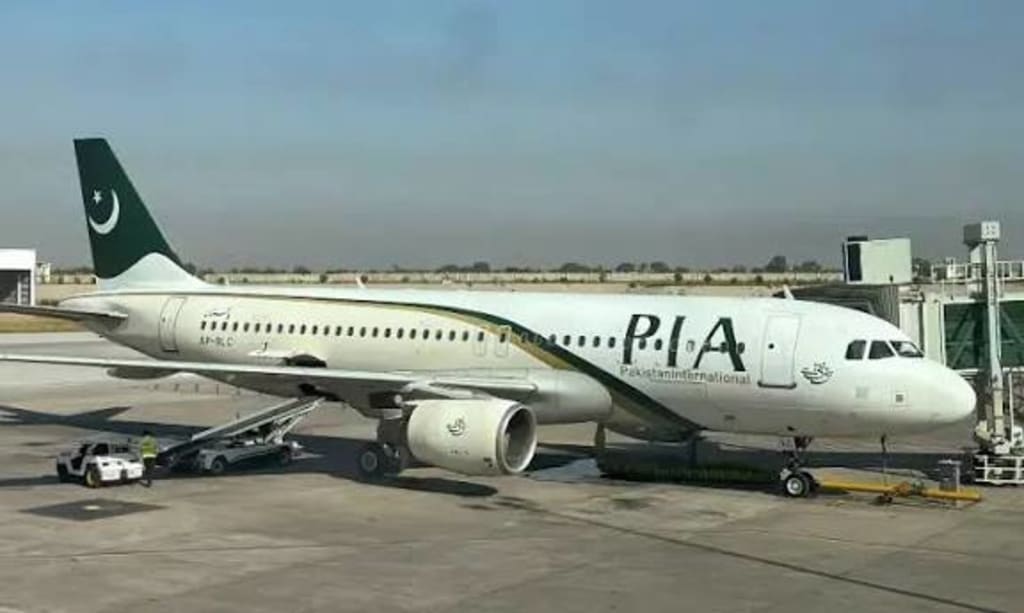
The long-awaited privatisation of Pakistan International Airlines (PIA) has officially been completed, marking a watershed moment in the nation’s economic reform agenda and ending decades of state ownership of the loss-making national carrier.
In a decisive move that has stirred political debate and industry interest, the Government of Pakistan has signed off on the sale of a controlling stake in PIA to a private consortium led by the Arif Habib Group. The transaction, years in the making, aims to break the cycle of repeated government bailouts and put the carrier on a commercially sustainable footing.
Closing the Privatisation Chapter
The Ministry of Privatisation has issued a final “speaking order,” effectively rejecting all legal objections raised by workers’ unions and interest groups regarding the sale. Privatisation Secretary Hammad Hashmi stated that the process was completed fully within the law and that challenges — including claims of constitutional violations or undervaluation of assets — held no legal merit. As such, all outstanding petitions were dismissed, formally concluding the legal phase of the privatisation.
Under the deal, the consortium acquired 75 % of PIA’s shares in a competitive bidding process that saw strong participation from major business groups. The sale price was reported at 135 billion Pakistani rupees (approximately $482 million), with the government retaining the remaining 25 % stake and an option for the consortium to acquire it later.
Officials have said that nearly 92.5 % of the proceeds from the sale will be reinvested directly into the airline’s operations to support fleet modernisation, service improvements and long-term turnaround efforts, with the balance remitted to the national exchequer.
Leadership and Vision
Prime Minister Shehbaz Sharif welcomed the completion of privatisation as a “historic milestone” for Pakistan, underscoring the government’s commitment to structural reforms and sustainable economic growth. In remarks at the signing ceremony, he congratulated federal ministers, privatisation officials, and security leadership for ensuring a transparent and professional process.
“We believe this transaction will not only strengthen PIA’s performance but will also instil confidence in Pakistan’s investment climate,” the prime minister said, noting that participation by seasoned investors reflects optimism in the country’s economic future.
Strategic Implications and Reform Goals
For decades, PIA has been burdened by financial losses, deepening liabilities, and operational inefficiencies, making its privatisation one of the most complex commercial undertakings in Pakistan’s recent history. Government officials and economic advisers argue that private-sector leadership, combined with fresh capital and industry expertise, is essential to restoring the airline’s competitiveness on domestic and international routes.
The sale aligns with broader commitments under Pakistan’s international financing arrangements, including an International Monetary Fund (IMF) programme that seeks to restructure state-owned enterprises and reduce dependence on public subsidies.
Profit by Pakistan Today
Key stakeholders have emphasised that the privatisation is not just about divestment but transformation. The new owners have committed to expanding PIA’s fleet over the coming years and improving service standards, punctuality, and operational discipline — areas where the airline has historically struggled.
Reactions and Future Prospects
Business and aviation analysts have broadly welcomed the privatisation, citing the long-overdue need for structural change. They note that private ownership could enable faster decision-making, deeper market engagement, and strategic partnerships that were previously constrained under state control.
However, the deal has its critics. Workers’ unions and labour representatives expressed concern about job security and the implications of private ownership for employee rights, even as officials stressed that the sale complied with all legal protections and due process.
Field Marshal Asim Munir’s reported involvement in facilitating investor engagement — and the role of large corporate players such as Fauji Fertiliser Company within the winning consortium — underscores the complex interplay of business, military and political interests surrounding the transaction.
The Road Ahead
With privatisation now finalised, the incoming management faces formidable tasks: revitalising an ageing fleet, modernising operational systems, and restoring confidence among passengers and global airline partners. Success will be measured not just in financial returns, but in PIA’s ability to reclaim market share and reconnect Pakistan’s aviation network with world markets.
The airline’s new chapter, once a distant aspiration, is now underway — with stakeholders across the spectrum watching closely.
About the Creator
Fiaz Ahmed
I am Fiaz Ahmed. I am a passionate writer. I love covering trending topics and breaking news. With a sharp eye for what’s happening around the world, and crafts timely and engaging stories that keep readers informed and updated.
Keep reading
More stories from Fiaz Ahmed and writers in The Swamp and other communities.
US Navy on the Hunt for Strike Drones That Can Launch from Any Warship
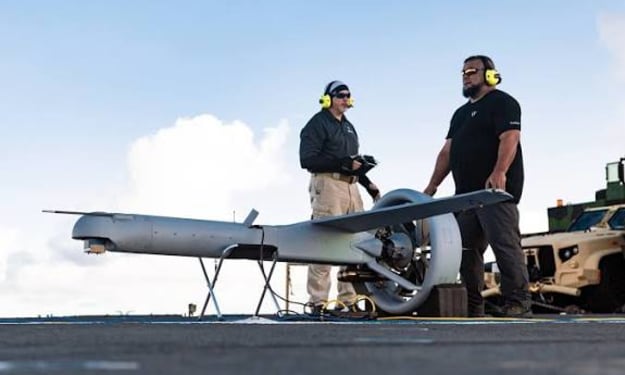
The U.S. Navy is quietly accelerating its search for a new generation of strike drones capable of launching from virtually any warship, a move aimed at transforming every vessel in the fleet into a potential offensive platform amid rising tensions in the Pacific and beyond. Senior defense officials say the initiative reflects lessons learned from recent conflicts, particularly the widespread use of low-cost, long-range drones in Ukraine and the Middle East. The Navy now wants small, lethal unmanned systems that can be fired from standard ship-based launchers and strike targets hundreds of kilometers away without putting pilots or high-value aircraft at risk. The concept, described by Navy planners as “distributed strike,” would allow destroyers, frigates, amphibious ships, and even support vessels to deploy armed drones from their existing Vertical Launch System (VLS) cells or modular deck launchers. Instead of relying solely on carrier-based aircraft or expensive cruise missiles, commanders could unleash swarms of autonomous or semi-autonomous drones to overwhelm enemy air defenses. From Defense to Offense For years, ship-launched drones were primarily used for surveillance and reconnaissance. Systems such as the ScanEagle and MQ-8 Fire Scout provided real-time intelligence but carried no weapons. That is now changing. According to Navy officials familiar with the program, the service is seeking a strike-capable unmanned aerial vehicle that can be: launched from multiple ship classes, operated with minimal crew training, and produced at a fraction of the cost of conventional missiles. “These drones are not meant to replace cruise missiles or fighter jets,” one naval officer said privately. “They are meant to supplement them — and in some scenarios, to be used in large numbers where attrition is expected.” The Navy’s interest is tied closely to its broader push toward unmanned and autonomous warfare under the Pentagon’s “Replicator” initiative, which aims to deploy thousands of expendable drones within two years to counter China’s growing military power. A Response to China’s Anti-Access Strategy The urgency behind the project stems largely from China’s expanding missile forces and air defenses in the Western Pacific. Beijing’s strategy of denying access to U.S. forces — often called anti-access/area denial (A2/AD) — relies on targeting aircraft carriers and major bases. Strike drones launched from dispersed ships would complicate that strategy. “Instead of one aircraft carrier projecting power, you could have dozens of ships each capable of launching multiple strike drones,” said a U.S. defense analyst. “It creates a much more survivable and unpredictable threat.” Unlike traditional aircraft, these drones could be programmed for one-way missions, similar to loitering munitions. They could fly low to avoid radar, identify targets using onboard sensors, and strike with precision explosives. Technical Challenges Designing a drone that can be launched from “any warship” presents major engineering hurdles. The system must fit inside standard launch tubes or compact canisters, withstand saltwater environments, and integrate with existing combat systems such as Aegis radar and shipboard command networks. Industry sources say the Navy is testing several prototypes, including tube-launched drones that unfold their wings after launch and use jet or propeller propulsion. Some models are designed to carry small warheads, while others focus on electronic warfare, jamming enemy radars before follow-on missile strikes. Another key challenge is command and control. The Navy wants drones that can operate in contested environments where GPS and communications may be disrupted. This means greater autonomy and onboard decision-making — a shift that raises both technical and ethical questions. Cost and Speed Matter One of the driving forces behind the program is cost. A Tomahawk cruise missile can cost over $1 million per unit. In contrast, the Navy hopes its strike drones can be produced for tens or hundreds of thousands of dollars each. That price difference enables mass deployment. “If you can launch 50 drones for the cost of a few missiles, you change the economics of naval warfare,” said a former Pentagon acquisition official. A New Era of Naval Power The push for ship-launched strike drones signals a deeper transformation in how the Navy views combat at sea. Rather than relying on a small number of highly expensive platforms, future operations may depend on networks of manned ships and unmanned weapons working together. While still in development, officials say operational testing could begin within the next few years. If successful, the program would mark the first time in U.S. naval history that almost every warship could serve as a drone strike platform. As one senior officer summarized, “The future fleet won’t just sail. It will launch clouds of unmanned weapons. And that changes everything.”
By Fiaz Ahmed 2 days ago in The Swamp
The Saddest Thing - The Billionaires Who Rule America Aren't Even Enjoying Themselves
This single post says more about our ruling class than a thousand policy papers. The saddest thing about today's system is that the men robbing the rest of us - sabotaging our economic prospects, our pensions, our access to affordable healthcare - are not even happy.
By Scott Christenson🌴8 days ago in The Swamp
Astronomers Detect Seven‑Hour Space Signal — Scientists May Finally Understand What It Was
In a discovery that has left astronomers both stunned and excited, scientists recently detected a signal from deep space that lasted an incredible seven hours. This is not just any ordinary blip in the universe—it's potentially the longest gamma-ray burst ever recorded. Researchers are now working hard to understand what could have caused this unprecedented cosmic event.
By Ayesha Lashari5 days ago in The Swamp


Comments
There are no comments for this story
Be the first to respond and start the conversation.