
Point of Sale Terminal Market Size & Forecast (2026–2034)
Cashless Commerce, Cloud POS, and Smart Retail Systems Drive the Global POS Terminal Market Toward US$ 261.96 Billion by 2034

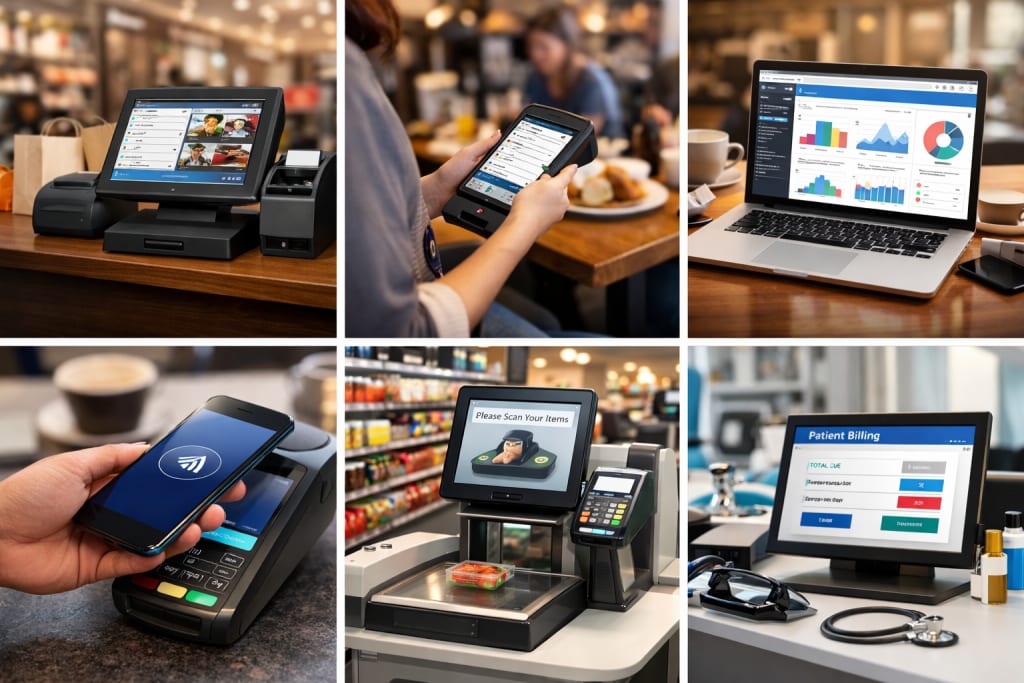
Point of Sale Terminal Market Overview
The Point of Sale (POS) Terminal Market is undergoing a significant transformation as businesses worldwide accelerate their shift toward cashless, digital, and integrated payment ecosystems. According to Renub Research–based estimates, the global POS terminal industry is projected to grow from US$ 123.44 billion in 2025 to US$ 261.96 billion by 2034, registering a compound annual growth rate (CAGR) of 8.72% during the forecast period from 2026 to 2034.
This sustained expansion is primarily driven by the increasing adoption of cashless and contactless payments, rapid growth in the retail and hospitality sectors, rising demand for mobile and cloud-based POS solutions, and the growing need for secure, fast, and integrated transaction systems. POS terminals have evolved far beyond traditional cash registers, becoming intelligent business management platforms that support real-time analytics, inventory control, customer engagement, and omnichannel commerce.
Point of Sale Terminal Market Outlook
A Point of Sale terminal refers to a combination of hardware and software solutions that enable businesses to conduct sales transactions, process payments, and manage various operational functions. Modern POS terminals allow merchants to accept multiple payment modes, including credit cards, debit cards, contactless NFC payments, mobile wallets, QR codes, and in some cases, cash.
Beyond payment processing, POS terminals support inventory management, sales reporting, customer relationship management, receipt generation, and seamless integration with accounting and enterprise systems. Available in fixed, mobile, tablet-based, and cloud-enabled formats, POS solutions cater to businesses of all sizes—from small retailers to large multinational enterprises.
Globally, the rapid digitalization of commerce and the widespread acceptance of cashless transactions have significantly increased POS terminal adoption. E-commerce growth, omnichannel retail strategies, and mobile commerce have further strengthened demand for integrated POS platforms. In emerging economies, government initiatives promoting digital payments and financial inclusion are accelerating POS adoption among small and medium-sized enterprises (SMEs). At the same time, developed markets are witnessing a surge in cloud-based and AI-powered POS terminals designed to enhance operational efficiency and customer experience.
Key Growth Drivers in the Point of Sale Terminal Market
Rapid Shift Toward Cashless and Contactless Payments
The global transition toward cashless and contactless payments remains the most influential growth driver for the POS terminal market. Consumers increasingly prefer digital payment methods due to their speed, convenience, and enhanced security. Credit cards, debit cards, mobile wallets, QR-based payments, and NFC-enabled contactless transactions are becoming standard across retail and service environments.
Governments and financial institutions worldwide actively promote digital payments to improve transparency and broaden financial inclusion. The COVID-19 pandemic further accelerated the adoption of touch-free payment options, reinforcing long-term behavioral changes among consumers and merchants alike. As a result, businesses across retail, hospitality, healthcare, and transportation are rapidly replacing traditional cash registers with advanced POS terminals.
Expansion of Retail, Hospitality, and Service Industries
The global expansion of retail and service sectors has significantly boosted demand for POS terminals. Supermarkets, convenience stores, restaurants, cafés, hotels, and entertainment venues require efficient transaction processing and customer management systems to handle growing transaction volumes.
Developing economies, in particular, are witnessing rapid growth in organized retail and small businesses, driving large-scale POS adoption. Advanced POS terminals offer integrated sales analytics, inventory tracking, and customer insights, making them indispensable for modern businesses. Additionally, the rise of omnichannel retailing, click-and-collect models, and home delivery services has increased demand for POS systems that seamlessly integrate online and offline sales channels.
Technological Innovation and Cloud-Based POS Solutions
Technological advancements are reshaping the POS terminal landscape, transforming traditional systems into cloud-based business platforms. Cloud POS solutions enable real-time data access, remote system management, automatic updates, and seamless integration with accounting, inventory, and loyalty programs.
Mobile and tablet-based POS terminals offer greater portability and cost efficiency, particularly for SMEs and service-oriented businesses. Artificial intelligence integration further enhances POS functionality by enabling predictive analytics, personalized customer experiences, and improved demand forecasting. These innovations are making POS terminals central to data-driven decision-making in modern enterprises.
Challenges in the Point of Sale Terminal Market
High Initial Costs and Integration Complexity
Despite strong growth prospects, high initial investment costs remain a significant challenge, particularly for small businesses. POS hardware, software licensing, installation, employee training, and system integration can require substantial capital. Integrating POS systems with existing enterprise resource planning (ERP), inventory management, and accounting platforms can also be time-consuming and resource-intensive. Recurring subscription fees and upgrade costs further add to the financial burden.
Security Risks and Data Privacy Concerns
POS terminals handle sensitive payment and customer data, making them attractive targets for cyberattacks, fraud, and data breaches. Compliance with stringent security standards such as PCI DSS requires continuous investment in cybersecurity measures. Additionally, growing concerns around data privacy regulations increase operational complexity. Even minor security lapses can damage brand reputation and lead to financial losses.
Point of Sale Terminal Software Market
The POS terminal software segment plays a critical role in the overall market ecosystem. Modern POS software solutions extend far beyond billing, offering comprehensive business management functionalities such as transaction processing, inventory tracking, sales analytics, customer management, and reporting.
Growth in this segment is driven by rising demand for real-time insights, omnichannel integration, and industry-specific customization. Cloud-based and subscription-driven software models are gaining popularity due to lower upfront costs and automatic updates. Integration with accounting systems, loyalty platforms, and digital payment gateways further enhances software value, positioning it as a core component of POS ecosystems.
Point of Sale Terminal Services Market
POS terminal services encompass installation, system integration, maintenance, training, technical support, and managed services. As POS systems grow increasingly complex, demand for third-party service providers continues to rise.
Managed POS services help organizations reduce downtime, maintain regulatory compliance, and focus on core business operations. SMEs, in particular, rely heavily on outsourced POS services due to limited in-house IT capabilities. Continuous technological upgrades and evolving security requirements ensure sustained demand for POS terminal services throughout the forecast period.
Point of Sale Terminal Cloud Market
The cloud POS market is expanding rapidly as businesses transition from on-premise systems to cloud-based solutions. Cloud POS platforms allow businesses to access data from anywhere, enhance operational agility, and leverage advanced analytics.
Industries with geographically dispersed operations, such as retail chains and hospitality groups, increasingly prefer cloud POS solutions for centralized control and scalability. The growing emphasis on data-driven operations further strengthens cloud POS adoption globally.
End-Use Industry Analysis
Restaurants POS Terminal Market
Restaurants are among the largest adopters of POS terminals due to their need for fast order processing, table management, and seamless payments. Modern restaurant POS systems support menu customization, kitchen integration, online ordering, delivery management, and contactless payments. Mobile POS and self-service kiosks are becoming standard, particularly in quick-service and fast-food establishments.
Healthcare POS Terminal Market
In healthcare, POS terminals support billing, appointment payments, pharmacy transactions, and insurance co-payments. Growing digitalization in healthcare, combined with the need for secure and compliant payment systems, is driving POS adoption in hospitals, clinics, and pharmacies. Integration with hospital management and electronic health record systems further improves efficiency and reduces billing errors.
Entertainment POS Terminal Market
Entertainment venues such as movie theaters, amusement parks, sports arenas, and event spaces rely on high-volume transaction processing. Wireless and contactless POS systems help manage long queues while enhancing customer experience. Integration with ticketing and loyalty platforms supports revenue optimization and operational efficiency.
Regional Market Insights
United States POS Terminal Market
The United States represents one of the most mature and technologically advanced POS terminal markets globally. Widespread adoption of cashless payments, mobile wallets, and contactless cards continues to fuel growth. Cloud-based and mobile POS terminals are increasingly preferred by retailers and restaurants for real-time data insights and operational flexibility. Innovations such as NFC terminals, self-checkout systems, and integrated CRM-POS platforms are becoming industry standards.
United Kingdom POS Terminal Market
The UK boasts a highly developed POS market, supported by strong contactless payment adoption. SMEs and independent retailers are rapidly embracing mobile and tablet-based POS solutions, while cloud POS systems gain traction due to scalability and cost efficiency.
China POS Terminal Market
China remains a key growth market for POS terminals, driven by its vast retail ecosystem and widespread digital payment adoption. Advanced POS systems supporting QR payments, cloud connectivity, and AI-enabled analytics are increasingly adopted across retail and service sectors.
Brazil POS Terminal Market
Brazil is an emerging POS terminal market benefiting from government-backed financial inclusion initiatives and rising electronic payment adoption. Mobile and low-cost POS solutions are particularly popular among SMEs, street vendors, and restaurants.
UAE POS Terminal Market
The UAE is one of the fastest-growing POS markets, supported by strong digital transformation initiatives and a rapidly expanding cashless economy. Retail, hospitality, tourism, and transportation sectors drive robust demand for advanced POS systems, reinforced by high smartphone penetration and cloud adoption.
Competitive Landscape
The POS terminal market is highly competitive, with leading players focusing on innovation, partnerships, and geographic expansion. Major companies covered in the market include Samsung Electronics Co. Ltd., Panasonic Corporation, NEC Corporation, PAX Technology, NCR Voyix, Fujitsu Limited, Agilysys Inc., and Oracle Corporation.
Each company is analyzed across overviews, leadership, recent developments, SWOT, revenue performance, and strategic initiatives.
Final Thoughts
The Point of Sale Terminal Market is positioned for strong and sustained growth through 2034, driven by the global shift toward cashless commerce, cloud technology adoption, and smart retail ecosystems. While challenges related to cost and cybersecurity persist, continuous innovation and supportive regulatory environments are expected to outweigh these concerns.
As POS terminals evolve into comprehensive business intelligence platforms, their role in shaping the future of digital commerce will only intensify. Businesses that invest early in secure, scalable, and cloud-enabled POS solutions are likely to gain a competitive advantage in an increasingly digital global economy.
About the Creator
Why Black History Matters in America?
The United States of America is celebrating their 250th anniversary in 2026. I'm proud to be an American and as someone who was born here, I wouldn't imagine myself living anywhere else. This is a country where opportunities are possible. Where anyone can be successful in anything they desire to do. Equality, community, and togetherness are the backbones of what America is and should be about. However, we have an administration who wants to erase and disregard those who have made positive, meaningful impacts in our country, specifically Black figures, such as Martin Luther King, Jr., Rosa Parks, and Maya Angelou. President Trump and his administration have been constantly complaining and fighting against what they call the "Woke agenda". They use this excuse as a distraction from other issues they refuse to address, such as the high cost of living, climate change, and inflation. That equality is dividing America, when in reality, it's bringing us together. Being woke is not tied to a specific political party. No matter where you stand on the political spectrum, you can still care about other people and their plights. Compassion and empathy for others isn't tied to a political party, either. We were taught as children to treat others the way we want to be treated and not judge others because they're different from us. Caring about others isn't a personal attack on your beliefs. It doesn't make you any less of a person. People who are easily offended over African American figures, past or present, or anything related to it, are grasping at straws. Current and future generations need to know who people like Harriet Tubman and Shirley Chisholm were, especially in the classroom. Black History is part of American History. It should be recognized, not hidden or forgotten. Besides, you can't shield children from everything, just because your feelings are easily hurt.
By Mark Wesley Pritchard 17 days ago in The Swamp
Trump’s New World Order Has Become Real — and Europe Is Having to Adjust Fast
For decades, Europe built its political and security architecture on a single assumption: that the United States would remain the continent’s ultimate guarantor of stability. That assumption is now under intense strain. The return of Donald Trump to center stage in global politics has accelerated a transformation many analysts once dismissed as temporary rhetoric. What was once called “Trump’s worldview” is increasingly becoming a concrete reality—one that is reshaping Europe’s strategic thinking at remarkable speed.
By Sajida Sikandar2 days ago in The Swamp


Comments
There are no comments for this story
Be the first to respond and start the conversation.