
Trump’s New World Order Has Become Real — and Europe Is Having to Adjust Fast
How shifting American priorities are forcing the European Union to rethink security, alliances, and its place on the global stage

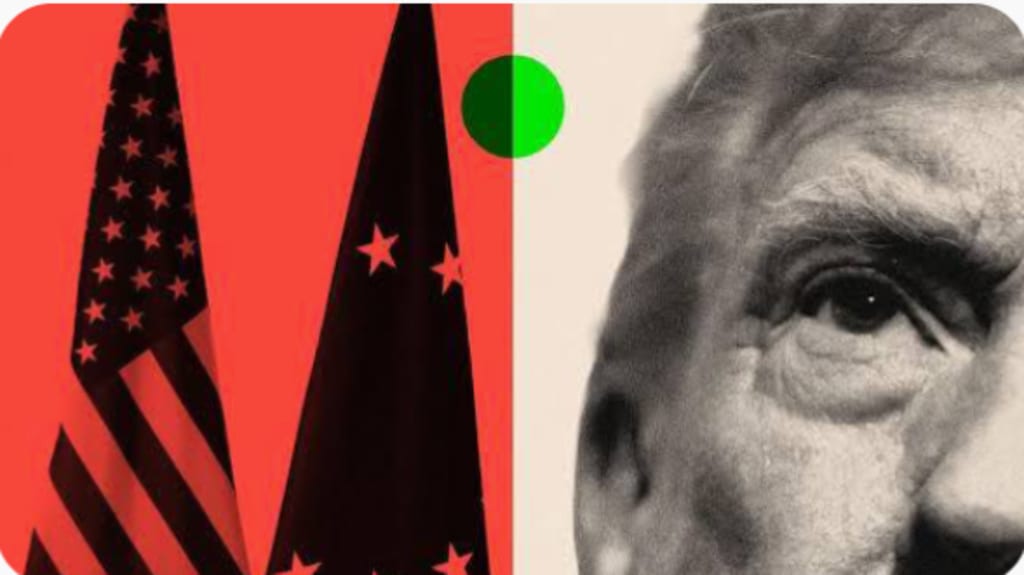
For decades, Europe built its political and security architecture on a single assumption: that the United States would remain the continent’s ultimate guarantor of stability. That assumption is now under intense strain. The return of Donald Trump to center stage in global politics has accelerated a transformation many analysts once dismissed as temporary rhetoric. What was once called “Trump’s worldview” is increasingly becoming a concrete reality—one that is reshaping Europe’s strategic thinking at remarkable speed.
Trump’s foreign policy vision has always been blunt and transactional. Alliances are no longer sacred commitments but business arrangements that must show immediate returns. Security is something to be paid for, not inherited. Multilateral institutions are treated with skepticism, and national interest reigns supreme. This marks a sharp break from the post–World War II order that relied on cooperation, predictability, and American leadership as a stabilizing force.
Europe now finds itself in a position it has avoided for generations: preparing for a future in which Washington may not automatically step in when crises erupt.
NATO Under Pressure
At the center of Europe’s anxiety lies NATO. Trump has repeatedly questioned why the U.S. should shoulder the bulk of Europe’s defense costs and has hinted that American protection should be conditional on financial contributions. While European governments have increased military spending since Russia’s invasion of Ukraine, the fear remains that U.S. commitment could weaken if it no longer aligns with Trump’s idea of fairness.
This is more than a budget dispute—it strikes at the psychological foundation of European security. NATO has never been merely a military pact; it has been a political promise that an attack on one is an attack on all. Any uncertainty about that promise introduces doubt into deterrence itself. And in geopolitics, doubt is an invitation to test limits.
Strategic Autonomy Becomes Urgent
For years, France and Germany promoted the idea of “strategic autonomy,” arguing that Europe must be capable of defending itself without relying entirely on the United States. That idea was often treated as theoretical, even idealistic. Under Trump’s renewed influence, it has become urgent policy.
The European Union is now debating joint weapons procurement, shared intelligence systems, and faster decision-making mechanisms for military response. The goal is not to abandon the U.S., but to ensure Europe is not helpless if Washington turns inward.
Yet this shift comes with internal tensions. Eastern European states, especially those bordering Russia, remain deeply dependent on American security guarantees and fear that European-only defense structures would be too slow or too weak. Western European nations, meanwhile, see independence as the only rational response to an unpredictable ally.
A New Balance With Russia and China
Trump’s approach also changes how Europe views major global powers. His willingness to challenge or bypass traditional alliances while engaging selectively with rivals has created a diplomatic puzzle for European leaders.
Relations with Vladimir Putin are particularly sensitive. Europe has taken a firm stance against Russia over Ukraine, but uncertainty about long-term U.S. backing raises uncomfortable questions: How long can Europe sustain this confrontation alone? And what happens if American policy shifts toward accommodation?
China presents another dilemma. Trump’s confrontational trade and security policies force Europe to choose between economic dependence and political alignment. European states must now balance their own commercial interests with pressure to follow Washington’s lead in restricting Chinese technology and influence.
Economic and Political Shockwaves
Trump’s “America First” doctrine also affects Europe economically. Tariffs, protectionism, and skepticism toward global trade institutions threaten industries that rely on transatlantic markets. European companies must plan for a world in which access to the U.S. economy is no longer guaranteed by shared values but negotiated deal by deal.
Politically, Trump’s rise energizes nationalist movements within Europe itself. His style and message resonate with parties that question the EU, oppose migration, and favor strongman leadership. This weakens Europe’s internal cohesion at the very moment unity is most needed.
From Dependence to Responsibility
What makes this moment historic is not just Trump’s rhetoric, but Europe’s response. The continent is moving—uneasily—from dependence to responsibility. Defense budgets are rising. Diplomatic strategies are diversifying. Conversations once considered taboo, such as creating a truly unified European army, are now part of mainstream debate.
This adjustment is happening fast because it must. Global politics is no longer anchored in a single superpower’s leadership. Instead, it is fragmenting into spheres of influence and competing priorities. Trump did not create this reality alone, but he has accelerated it dramatically.
A New Era, Whether Europe Likes It or Not
Trump’s “new world order” is not a formal doctrine or treaty. It is a mindset: power over partnership, deals over alliances, and nationalism over globalism. Europe can criticize it, resist it, or adapt to it—but it cannot ignore it.
The postwar era of guaranteed American protection is fading. In its place emerges a more uncertain, multipolar landscape where Europe must define its own role. That transition will be painful, politically divisive, and expensive. Yet it may also mark Europe’s long-delayed arrival as a true geopolitical actor rather than a protected one.
History may remember this period as the moment Europe finally accepted that the world had changed—and that survival now depends less on who stands beside it, and more on what it can stand for itself.
About the Creator
Sajida Sikandar
Hi, I’m Sajida Sikandar, a passionate blogger with 3 years of experience in crafting engaging and insightful content. Join me as I share my thoughts, stories, and ideas on a variety of topics that matter to you.
Keep reading
More stories from Sajida Sikandar and writers in The Swamp and other communities.
Zelenskyy Says Ukraine, Not Russia, Is Facing Pressure to Make Concessions to End War
As the war in Ukraine continues into another grueling year, President Volodymyr Zelenskyy has made a stark claim: it is Ukraine — not Russia — that is facing growing pressure to make concessions in order to end the conflict.
By Sajida Sikandarabout 18 hours ago in The Swamp
Why Black History Matters in America?
The United States of America is celebrating their 250th anniversary in 2026. I'm proud to be an American and as someone who was born here, I wouldn't imagine myself living anywhere else. This is a country where opportunities are possible. Where anyone can be successful in anything they desire to do. Equality, community, and togetherness are the backbones of what America is and should be about. However, we have an administration who wants to erase and disregard those who have made positive, meaningful impacts in our country, specifically Black figures, such as Martin Luther King, Jr., Rosa Parks, and Maya Angelou. President Trump and his administration have been constantly complaining and fighting against what they call the "Woke agenda". They use this excuse as a distraction from other issues they refuse to address, such as the high cost of living, climate change, and inflation. That equality is dividing America, when in reality, it's bringing us together. Being woke is not tied to a specific political party. No matter where you stand on the political spectrum, you can still care about other people and their plights. Compassion and empathy for others isn't tied to a political party, either. We were taught as children to treat others the way we want to be treated and not judge others because they're different from us. Caring about others isn't a personal attack on your beliefs. It doesn't make you any less of a person. People who are easily offended over African American figures, past or present, or anything related to it, are grasping at straws. Current and future generations need to know who people like Harriet Tubman and Shirley Chisholm were, especially in the classroom. Black History is part of American History. It should be recognized, not hidden or forgotten. Besides, you can't shield children from everything, just because your feelings are easily hurt.
By Mark Wesley Pritchard 15 days ago in The Swamp
Don Lemon Hires Federal Prosecutor Who Quit Over Immigration Crackdown
Former CNN anchor and longtime journalist Don Lemon has taken a striking new step in his legal defense by enlisting a veteran federal prosecutor who resigned from the U.S. Attorney’s Office in Minnesota amid mounting tensions over the Trump administration’s immigration enforcement policies and handling of high-profile investigations. The move underscores the high stakes of Lemon’s federal case, which has drawn national attention and raised questions about press freedom, prosecutorial discretion and political influence within the Justice Department. Lemon, who now works as an independent journalist, was indicted earlier this year along with eight others for his alleged role in a January 18 protest that disrupted a Sunday service at Cities Church in St. Paul, Minnesota. Federal prosecutors allege the group conspired to interfere with worship and intimidate congregants, invoking a 1994 civil rights statute typically used to protect access to reproductive health clinics but also applicable to places of worship. Lemon asserts he was present only in his journalistic capacity, livestreaming the event as part of his reporting work. Unexpected Legal Reinforcement In a notable twist, Lemon has added Joseph H. Thompson, a former interim U.S. Attorney for Minnesota, to his defense team. Thompson had served nearly 17 years in the Minnesota U.S. Attorney’s Office and held senior leadership positions, including acting U.S. Attorney, before resigning in January amid internal disagreements over how federal authorities were handling immigration-related cases and certain investigations. A court filing earlier this week confirmed that Thompson will appear as counsel of record for Lemon, joining powerhouse defense attorney Abbe Lowell in representing the journalist in federal court. Lowell is known for representing high-profile clients in politically charged cases and is expected to lead the defense strategy. Thompson’s decision to switch sides — from federal prosecutor to defense counsel — against the very office he once helped lead adds an unusual dynamic to the case. It pits Lemon’s defense team directly against seasoned federal attorneys with whom Thompson once worked, potentially reshaping legal tactics and courtroom dynamics. The Washington Post Why Thompson Resigned Thompson’s departure from the U.S. Attorney’s Office last month came amid a broader wave of resignations by senior prosecutors reportedly frustrated by directives from Justice Department leadership under the Trump administration. Several prosecutors, including Thompson and at least five colleagues, stepped down after disputes over the department’s immigration enforcement strategy and its approach to investigating the fatal shooting of Renee Nicole Good by an Immigration and Customs Enforcement (ICE) officer in Minneapolis. The Guardian Moody ideological differences reportedly emerged after Justice Department leaders overruled more experienced prosecutors who sought to pursue a legal inquiry into the killing of Good. Instead, the department directed focus toward other aspects of related matters, prompting Thompson and others to resign in protest, according to reporting from multiple outlets. The Guardian After leaving the U.S. Attorney’s Office, Thompson partnered with another former federal prosecutor, Harry Jacobs, to establish a private law firm — Thompson Jacobs PLLC — that focuses on complex litigation, white-collar defense and crisis management. His move into private practice and immediate involvement in Lemon’s defense marks a swift pivot from public service to high-stakes criminal defense. wfmd.com Charges Against Lemon Lemon faces federal civil rights charges, including conspiracy and violating the Freedom of Access to Clinic Entrances (FACE) Act, for his activities at the protest. Prosecutors allege that Lemon’s presence and actions during the event contributed to the disruption of religious services and intimidation of worshippers. The FACE Act has not commonly been applied in the context of religious gatherings, making its use in this case particularly noteworthy. FOX 9 Minneapolis-St. Paul Lemon has denied any wrongdoing, maintaining that he was acting as a journalist documenting events, not participating in them. “I went there to be a journalist,” Lemon said in previous statements, emphasizing his First Amendment rights and arguing that the charges represent an unprecedented attack on press freedom. The Guardian The defendant is scheduled to be arraigned on February 13 in federal court in St. Paul. Legal experts have suggested that the case could set significant precedent regarding the boundaries of journalistic activity and legal accountability when reporters cover volatile protests. The Washington Post Broader Implications The hiring of Thompson highlights broader concerns within elements of the legal community about the Justice Department’s prosecutorial priorities, particularly around immigration enforcement and civil liberties. Several former prosecutors have expressed unease about the department’s strategy, suggesting that Lemon’s case could be part of a larger pattern of federal attention on politically sensitive protests. As the case unfolds, Thompson’s insider perspective on the federal system — including knowledge of prosecutorial strategies and internal decision-making — is expected to be a valuable asset to Lemon’s defense. Observers note that Thompson’s participation could enhance Lemon’s ability to challenge the government’s legal approach and bolster arguments about constitutional protections for journalists. wfmd.com For Lemon, already a polarizing figure in media and politics, the move to bring in a former senior prosecutor underscores the seriousness of the legal battle ahead. With constitutional freedom of the press and civil liberties at the center of the dispute, the courtroom clash is likely to attract national scrutiny as one of the more closely watched legal fights of 2026.
By Fiaz Ahmed 5 days ago in The Swamp
Part 2 Interview With Joe Patterson, Author Of Melanin Memoirs
This is my second interview with Joe Patterson. His 4th anniversary writing on Vocal will be in March 2026. He has one achievement on Vocal, The Other Foot. He has over 17,000 reads on Vocal since he started on Vocal in 2022. Joe Patterson is very creative poet and rapper. Joe is deep thinker and I feel it is reflected in his latest published book, Melanin Memoirs.
By Mariann Carroll4 days ago in Interview



Comments
There are no comments for this story
Be the first to respond and start the conversation.