
Reports: Israel’s ZIM to Be Sold to German Shipping Giant Hapag-Lloyd for Over $3 Billion
Formal / News Style A major consolidation move reshapes the global container shipping industry What the proposed acquisition means for maritime trade and regional influence 🔹 Neutral & Informative Inside the talks that could transform Israel’s largest shipping company How the deal reflects shifting dynamics in global logistics and commerce 🔹 Catchy & Impactful A landmark deal with economic and strategic implications Why this sale could redefine shipping power in the Mediterranean

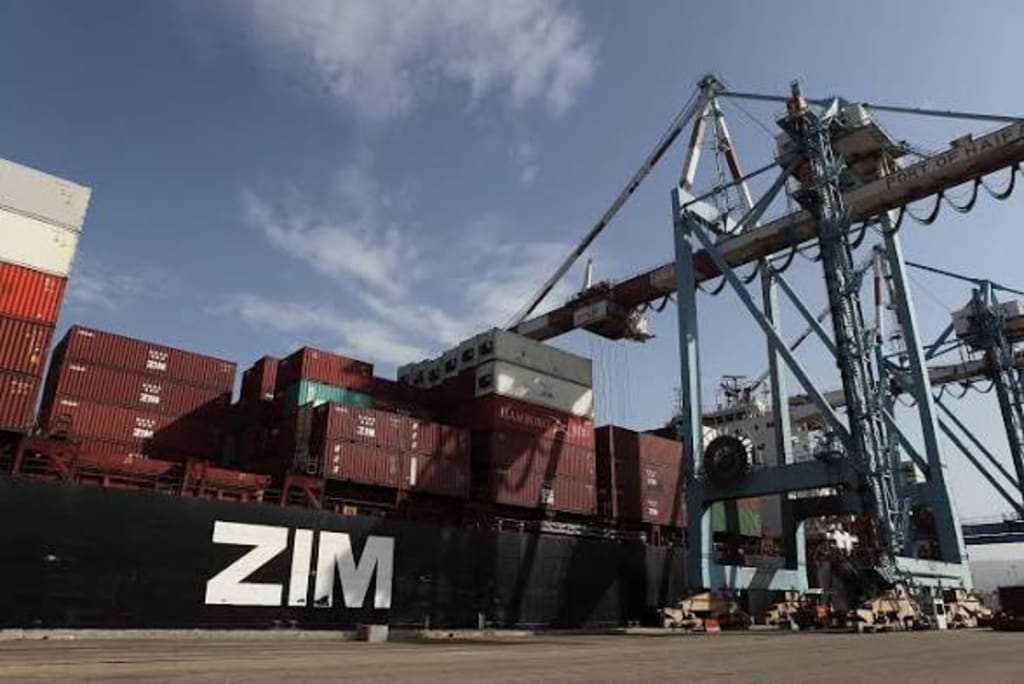
Reports circulating in global shipping and financial circles suggest that Israel’s largest container shipping company, ZIM, is set to be acquired by Germany’s maritime powerhouse Hapag-Lloyd in a deal valued at more than $3 billion. If finalized, the transaction would mark one of the most significant consolidations in the international shipping industry in recent years and signal a strategic shift in control over one of Israel’s most prominent commercial fleets.
According to sources familiar with the negotiations, the talks have intensified over recent months as both companies seek to strengthen their positions in a volatile global shipping market. While neither company has officially confirmed the agreement, insiders describe the discussions as advanced and centered on a full acquisition rather than a partial partnership.
ZIM, founded in 1945, has long been regarded as a symbol of Israel’s maritime independence and commercial resilience. The company expanded rapidly during the pandemic-era shipping boom, benefiting from soaring freight rates and strong demand for container transport. However, the post-pandemic slowdown in global trade, combined with falling shipping prices and rising operational costs, has put pressure on many mid-sized carriers to seek strategic alliances or buyers.
Hapag-Lloyd, one of the world’s largest container shipping companies, has pursued an aggressive expansion strategy through mergers and acquisitions. Executives at the German firm see ZIM as a valuable asset due to its established trade routes in the Mediterranean, Asia, and North America, as well as its modern fleet and digital logistics systems. The acquisition would significantly enhance Hapag-Lloyd’s presence in Middle Eastern and Eastern Mediterranean shipping corridors.
Industry analysts say the proposed price tag of more than $3 billion reflects ZIM’s remaining market strength despite recent financial headwinds. The company reported declining profits in the past year as shipping rates normalized, but it still maintains a strong customer base and strategic port access agreements. For Hapag-Lloyd, the deal would provide long-term growth potential once global trade volumes recover.
Beyond commercial considerations, the sale carries political and strategic implications. ZIM has historically played a role in Israel’s national supply chain security, especially during periods of regional conflict or trade disruption. The prospect of foreign ownership has raised concerns among some policymakers about dependence on external operators for critical shipping capacity. However, proponents argue that global integration is unavoidable in modern shipping and that strong international partnerships can improve resilience rather than weaken it.
German-Israeli economic relations have steadily expanded over the past decade, with cooperation in technology, defense, and infrastructure. Observers note that this deal could further deepen those ties, positioning Germany as a key stakeholder in Israel’s maritime commerce. Still, regulatory approvals from Israeli and European competition authorities would be required before any transaction could proceed.
Labor unions within ZIM are also watching developments closely. Thousands of jobs could be affected depending on how the merger is structured. Past shipping consolidations have often resulted in fleet optimization and staff reductions, although Hapag-Lloyd has pledged in previous acquisitions to preserve core operational teams and regional offices.
The timing of the reports is notable, coming amid heightened uncertainty in global shipping routes due to geopolitical tensions, climate disruptions, and security risks in major maritime corridors. Companies with diversified fleets and strong financial backing are better positioned to weather these challenges, which may be driving ZIM’s willingness to consider a sale at this stage.
For Hapag-Lloyd, the acquisition would reinforce its standing among the top global container carriers, enabling it to compete more effectively with Asian and European rivals. For ZIM, the move could represent the end of an era as an independent Israeli shipping icon, but also the beginning of a new phase within a larger multinational structure.
While official confirmation is still pending, the reported negotiations underline a broader trend of consolidation reshaping the shipping industry. As margins tighten and competition intensifies, only the largest and most integrated players may survive. If completed, the ZIM-Hapag-Lloyd deal will not only alter corporate ownership but also redraw key lines in global maritime trade.
About the Creator
Fiaz Ahmed
I am Fiaz Ahmed. I am a passionate writer. I love covering trending topics and breaking news. With a sharp eye for what’s happening around the world, and crafts timely and engaging stories that keep readers informed and updated.
Keep reading
More stories from Fiaz Ahmed and writers in The Swamp and other communities.
As Costly As Rafale, Far Less Survivable: Why U.S. Apache Helos Found No Place in India’s $40B Deal
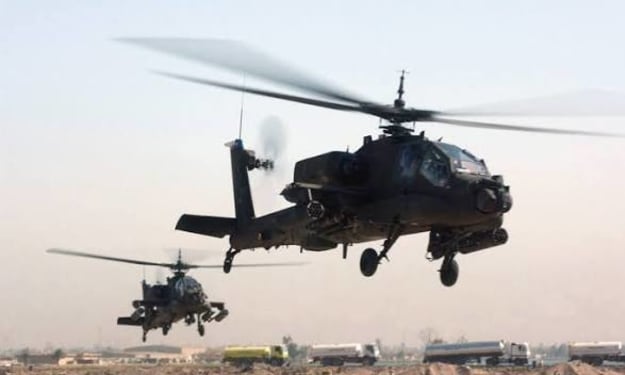
India’s ambitious $40 billion defense modernization program has reshaped the future of its air combat fleet, with a strong emphasis on survivability, multirole capability, and long-term strategic autonomy. While the deal prominently features advanced fighter jets such as the French-made Rafale, the conspicuous absence of the U.S.-built Apache attack helicopter has raised questions among defense analysts. The Apache, widely regarded as one of the most lethal helicopter gunships in the world, was once expected to play a larger role in India’s expanding aerial arsenal. Instead, it found itself sidelined in favor of other platforms deemed better suited to India’s evolving operational doctrine. The Apache’s reputation is formidable. Designed for high-intensity battlefields, it boasts advanced radar, precision-guided munitions, and a long combat record in U.S. military operations. However, India’s $40 billion procurement strategy is not merely about firepower; it is about survivability in contested airspace, integration with indigenous systems, and long-term cost-effectiveness. Cost Without Strategic Flexibility One of the most striking comparisons is cost. Each Apache helicopter, depending on configuration, can approach the price range of modern fighter aircraft such as Rafale. This raises a critical question: why invest fighter-jet-level resources in a helicopter platform that is inherently more vulnerable to modern air defenses? Helicopters, by design, operate at lower altitudes and slower speeds, making them more exposed to surface-to-air missiles, shoulder-fired weapons, and radar-guided systems. In modern battlefields saturated with air defense networks, survivability is no longer measured by armor alone but by stealth, speed, and electronic warfare capabilities—areas where fighter jets significantly outperform attack helicopters. Survivability in High-Threat Environments India’s security challenges include two nuclear-armed neighbors and the possibility of conflict in high-altitude and technologically dense theaters. In such scenarios, survivability becomes paramount. The Apache, though heavily armored, lacks the low-observable features and high-speed escape profiles of advanced fighter jets. Military planners increasingly prioritize platforms that can penetrate defended airspace, deliver strikes, and exit before detection or interception. The Apache’s operational doctrine works best in environments where air superiority is already established. India’s planners, however, are preparing for situations where air superiority cannot be assumed from the outset. Logistics and Dependency Concerns Another factor is logistical dependence. Apache helicopters rely heavily on U.S. supply chains for spare parts, software updates, and weapon systems. India has long pursued a policy of reducing overreliance on any single foreign supplier. While cooperation with the United States has grown, New Delhi remains cautious about potential political or regulatory constraints that could affect availability of parts during crises. By contrast, the Rafale deal includes technology transfer, local maintenance infrastructure, and greater autonomy in operations. This aligns with India’s broader “Make in India” and self-reliance initiatives in defense production. Shifting Doctrines and Indigenous Alternatives India is also investing heavily in indigenous rotary-wing platforms and armed drones. Attack helicopters are increasingly seen as vulnerable assets compared to unmanned systems that can perform reconnaissance and strike missions without risking pilot lives. Drones can loiter longer, operate at higher altitudes, and integrate more seamlessly with network-centric warfare strategies. Moreover, India’s focus is shifting toward multi-domain warfare—coordinating air, land, cyber, and space assets. Fighter aircraft and unmanned systems are better suited for such integration than traditional attack helicopters. Political and Strategic Calculations Defense procurement is never purely technical. Political alignment, strategic signaling, and long-term partnerships all play roles. The Rafale deal strengthened ties with France, a country that has historically supported India’s strategic independence and provided fewer restrictions on operational use of equipment. The Apache, despite its battlefield credibility, represents a model tied closely to U.S. doctrine and export controls. For India, the priority is not just buying weapons but ensuring freedom of action in future conflicts. The Bigger Picture The exclusion of Apache helicopters from India’s $40 billion deal does not mean the platform is ineffective. It remains one of the most capable attack helicopters in the world. However, India’s requirements are evolving toward survivability in high-threat environments, reduced dependency on foreign supply chains, and integration with indigenous and unmanned systems. In a battlefield defined by long-range missiles, electronic warfare, and dense air defense networks, a helicopter—no matter how advanced—faces limitations that fighter aircraft and drones do not. When cost is nearly comparable to a multirole fighter jet, the calculus becomes even more unforgiving. Conclusion India’s decision reflects a strategic shift rather than a rejection of U.S. technology. The Apache’s absence from the $40 billion deal underscores how modern warfare priorities have changed. Survivability, autonomy, and flexibility now outweigh sheer firepower. In that context, a platform as costly as Rafale but far less survivable in contested airspace simply could not justify its place in one of the largest defense modernization efforts in India’s history. The message is clear: future wars will be fought not just with powerful machines, but with systems that can endure, adapt, and operate independently in the most hostile environments.
By Fiaz Ahmed 2 days ago in The Swamp
Why Black History Matters in America?
The United States of America is celebrating their 250th anniversary in 2026. I'm proud to be an American and as someone who was born here, I wouldn't imagine myself living anywhere else. This is a country where opportunities are possible. Where anyone can be successful in anything they desire to do. Equality, community, and togetherness are the backbones of what America is and should be about. However, we have an administration who wants to erase and disregard those who have made positive, meaningful impacts in our country, specifically Black figures, such as Martin Luther King, Jr., Rosa Parks, and Maya Angelou. President Trump and his administration have been constantly complaining and fighting against what they call the "Woke agenda". They use this excuse as a distraction from other issues they refuse to address, such as the high cost of living, climate change, and inflation. That equality is dividing America, when in reality, it's bringing us together. Being woke is not tied to a specific political party. No matter where you stand on the political spectrum, you can still care about other people and their plights. Compassion and empathy for others isn't tied to a political party, either. We were taught as children to treat others the way we want to be treated and not judge others because they're different from us. Caring about others isn't a personal attack on your beliefs. It doesn't make you any less of a person. People who are easily offended over African American figures, past or present, or anything related to it, are grasping at straws. Current and future generations need to know who people like Harriet Tubman and Shirley Chisholm were, especially in the classroom. Black History is part of American History. It should be recognized, not hidden or forgotten. Besides, you can't shield children from everything, just because your feelings are easily hurt.
By Mark Wesley Pritchard 16 days ago in The Swamp



Comments
There are no comments for this story
Be the first to respond and start the conversation.