
Security: The U.S. Air Force Can’t Ever Build New F-22 Raptor Stealth Fighters
High costs, dismantled production lines, and lost industrial expertise make restarting F-22 Raptor manufacturing impossible, forcing the U.S. Air Force to rely on existing jets and future-generation fighters.

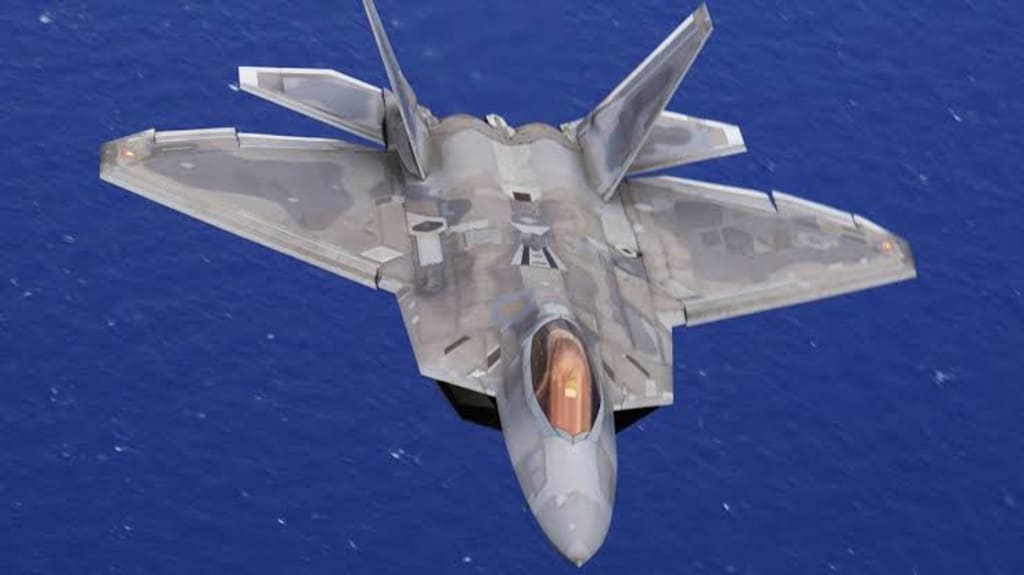
The United States Air Force operates one of the most advanced fighter jets ever built: the F-22 Raptor. Designed during the Cold War to dominate enemy aircraft and evade radar, the F-22 remains unmatched in speed, stealth, and maneuverability. Yet despite its proven superiority, the U.S. Air Force can no longer build new F-22s—and may never be able to again.
The reason lies in a combination of cost, politics, and lost industrial capability.
A program frozen in time
The F-22 program was officially ended in 2011 after only 187 operational aircraft were produced. Originally, the Pentagon planned to buy more than 700 Raptors, but the collapse of the Soviet Union and shifting defense priorities reduced the perceived need for such a specialized air-to-air fighter. At the same time, costs ballooned. Each aircraft ended up costing more than $150 million, making it one of the most expensive fighters in history.
Congress decided to shut down production permanently, redirecting funds toward the newer F-35 program and other defense needs. What made this decision irreversible was not just stopping assembly—but dismantling the entire production line.
The lost manufacturing ecosystem
The F-22 was built by Lockheed Martin with contributions from hundreds of suppliers across the United States. Specialized tools, custom machinery, and unique software systems were created solely for this aircraft. When production ended, much of that equipment was destroyed or repurposed. Some suppliers went out of business; others shifted to different programs.
Even more important, the workforce dispersed. Engineers and technicians with deep knowledge of the Raptor’s stealth coatings, titanium airframe, and avionics systems retired or moved to other industries. Rebuilding that expertise today would take years and billions of dollars.
Pentagon studies later concluded that restarting F-22 production would cost well over $50 billion and still take a decade or more. For that price, the Air Force could instead develop newer, more advanced platforms.
Classified technology and outdated systems
Another obstacle is the aircraft’s classified design. The F-22 uses stealth materials and avionics developed in the 1990s and early 2000s. Some components rely on obsolete microchips and software no longer manufactured. Updating the jet to modern standards would require a major redesign, essentially creating a new aircraft under the old name.
Security restrictions also complicate matters. Because much of the F-22’s technology remains highly classified, even modernizing its systems requires special clearance and isolated facilities, making production far more complex than restarting a civilian aircraft line.
Strategic shift to next-generation fighters
Rather than reviving the F-22, the Air Force has chosen to focus on future platforms such as the Next Generation Air Dominance (NGAD) program. These aircraft are expected to include artificial intelligence, drone teaming, and improved stealth optimized for modern threats like Chinese and Russian air defenses.
The F-22 remains in service and continues to receive upgrades to radar, weapons, and communications. However, its limited fleet size means every loss—whether through accidents or wear—reduces overall capability.
Why it still matters
The inability to build more F-22s highlights a critical vulnerability in U.S. defense planning: once a highly specialized production line is shut down, it may be impossible to restart. In an era of rising tensions with major powers, this has raised concerns about whether future aircraft programs should be kept alive longer to preserve industrial readiness.
For now, the Raptor remains a symbol of unmatched air dominance—and of a strategic decision that cannot be undone. The U.S. Air Force may fly the F-22 for decades to come, but the era of building new Raptors is over for good.
In the history of military aviation, few aircraft have been so advanced—and so permanently out of reach.
About the Creator
Fiaz Ahmed
I am Fiaz Ahmed. I am a passionate writer. I love covering trending topics and breaking news. With a sharp eye for what’s happening around the world, and crafts timely and engaging stories that keep readers informed and updated.
Keep reading
More stories from Fiaz Ahmed and writers in The Swamp and other communities.
Ukraine War Briefing: Drone Attack on Russian Port Sparks Fires Ahead of Fresh Peace Talks
A drone attack on a major Russian port city has triggered fires and disrupted maritime operations, raising tensions just days before renewed diplomatic efforts aimed at exploring a possible path toward peace. The strike, which Russian authorities blamed on Ukrainian forces, underscores how the conflict continues to escalate even as negotiators prepare to meet. The attack targeted facilities near the Black Sea port of Novorossiysk, a critical hub for Russian oil exports and military logistics. Local officials said multiple unmanned aerial vehicles struck fuel storage areas and nearby infrastructure, causing several blazes that burned through the night. Emergency services worked for hours to contain the fires, while port traffic was temporarily suspended. Russia’s defense ministry said its air defenses intercepted some drones but acknowledged that others reached their targets. There were no immediate reports of mass casualties, though authorities confirmed damage to industrial buildings and warehouses. Videos circulating on social media showed thick columns of smoke rising over the harbor, highlighting the vulnerability of strategic coastal sites to long-range drone attacks. Ukrainian officials did not immediately comment on the incident. However, Kyiv has previously said strikes on Russian military and energy facilities are intended to weaken Moscow’s ability to sustain its war effort. Over the past year, Ukraine has increasingly relied on domestically produced drones capable of traveling hundreds of kilometers to hit targets deep inside Russian territory. The timing of the attack is significant. It comes just ahead of fresh peace discussions expected to involve intermediaries from regional and international partners. While expectations remain low, diplomats say the talks could help reduce risks of further escalation, particularly around the Black Sea, where shipping routes and energy infrastructure are highly sensitive. The war, now well into its third year, continues to grind on with heavy losses on both sides. Russian forces have intensified air strikes on Ukrainian cities and front-line positions, while Ukraine has expanded its campaign against Russian supply depots, ports, and air bases. Civilian areas remain vulnerable, and air raid sirens continue to sound regularly across large parts of Ukraine. In Ukraine, authorities reported overnight missile and drone attacks on several regions, including energy facilities and transport hubs. Power outages were recorded in some districts, and emergency crews worked to restore electricity and water services. Ukrainian military officials said air defenses shot down many incoming drones but warned that Russia is using more sophisticated tactics, including mixed barrages of missiles and unmanned aircraft to overwhelm defenses. Meanwhile, in Russia, officials tightened security around ports, refineries, and military installations. The Kremlin described the Novorossiysk attack as “terrorist activity” and vowed retaliation. Russian state media emphasized the need to protect strategic assets, particularly those linked to energy exports that provide crucial revenue for the war effort. Analysts say drone warfare has become one of the defining features of the conflict. Unlike traditional missiles, drones are cheaper to produce and can be launched in large numbers, making them an effective tool for both sides. Their use has expanded from battlefield reconnaissance to long-range strikes on infrastructure, blurring the line between front-line combat and rear-area targets. International reaction to the latest developments has been cautious. European Union officials reiterated calls for restraint and stressed the importance of keeping diplomatic channels open. The United States said it was monitoring the situation closely while continuing to support Ukraine’s defense against Russian aggression. The upcoming peace talks are expected to focus on humanitarian corridors, prisoner exchanges, and potential confidence-building measures rather than a comprehensive ceasefire. Previous negotiations have collapsed amid mutual accusations of bad faith and continued fighting. Still, diplomats argue that even limited dialogue can reduce misunderstandings and prevent sudden escalations. For civilians on both sides, the drone strike is another reminder that the war shows no sign of ending soon. Residents near the Russian port reported hearing explosions and seeing flames from their windows, while Ukrainians continue to endure daily air alerts and damage to homes and infrastructure. As fires are extinguished and damage assessments begin in Novorossiysk, attention now turns to the peace talks. Whether they can ease tensions or simply coexist with continued military operations remains uncertain. What is clear is that the conflict has entered a phase where diplomacy and drone warfare are unfolding side by side, each shaping the next chapter of Europe’s most devastating war in decades.
By Fiaz Ahmed about 18 hours ago in The Swamp
Why Black History Matters in America?
The United States of America is celebrating their 250th anniversary in 2026. I'm proud to be an American and as someone who was born here, I wouldn't imagine myself living anywhere else. This is a country where opportunities are possible. Where anyone can be successful in anything they desire to do. Equality, community, and togetherness are the backbones of what America is and should be about. However, we have an administration who wants to erase and disregard those who have made positive, meaningful impacts in our country, specifically Black figures, such as Martin Luther King, Jr., Rosa Parks, and Maya Angelou. President Trump and his administration have been constantly complaining and fighting against what they call the "Woke agenda". They use this excuse as a distraction from other issues they refuse to address, such as the high cost of living, climate change, and inflation. That equality is dividing America, when in reality, it's bringing us together. Being woke is not tied to a specific political party. No matter where you stand on the political spectrum, you can still care about other people and their plights. Compassion and empathy for others isn't tied to a political party, either. We were taught as children to treat others the way we want to be treated and not judge others because they're different from us. Caring about others isn't a personal attack on your beliefs. It doesn't make you any less of a person. People who are easily offended over African American figures, past or present, or anything related to it, are grasping at straws. Current and future generations need to know who people like Harriet Tubman and Shirley Chisholm were, especially in the classroom. Black History is part of American History. It should be recognized, not hidden or forgotten. Besides, you can't shield children from everything, just because your feelings are easily hurt.
By Mark Wesley Pritchard 15 days ago in The Swamp


Comments
There are no comments for this story
Be the first to respond and start the conversation.