
Shipping Giant MSC Facilitates Trade From Israeli Settlements Through EU
Formal / News Style Rights groups raise concerns over supply chain transparency EU trade rules questioned as settlement goods enter European markets Investigation highlights role of global shipping networks 🔹 Neutral & Informative What is known about the shipment routes How settlement products reach Europe 🔹 Impactful & Serious Controversy grows over ethics of international trade Pressure mounts on logistics firms to ensure compliance

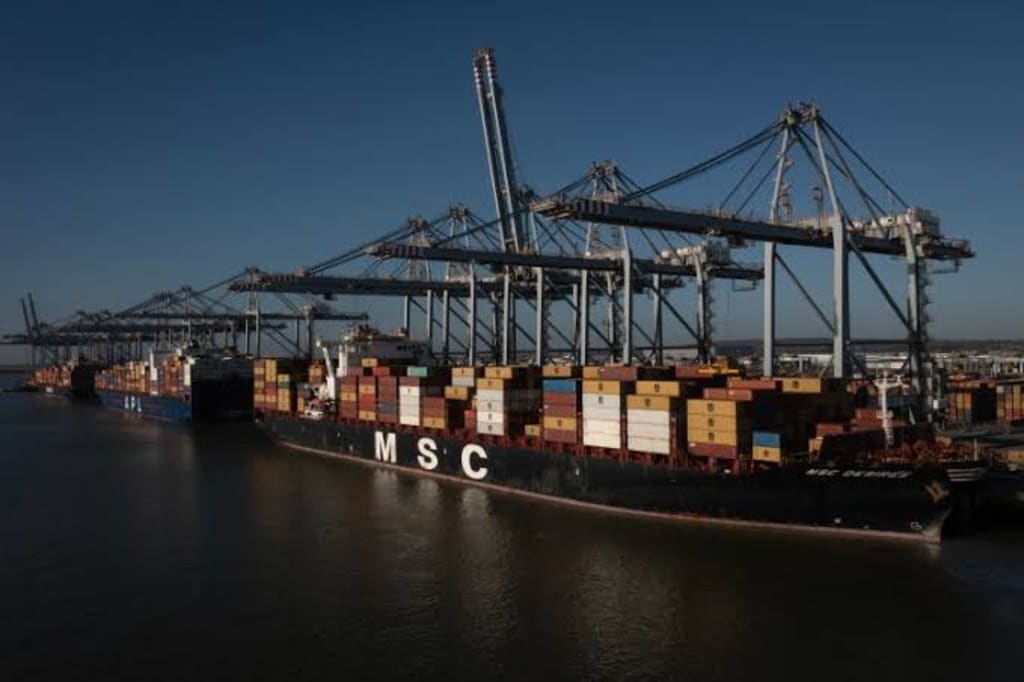
A major international shipping company, Mediterranean Shipping Company (MSC), has come under renewed scrutiny following reports that its logistics network is being used to transport goods originating from Israeli settlements in the occupied West Bank into European Union markets. Human rights groups and trade watchdogs say the practice raises serious legal and ethical concerns, as EU policy does not recognize Israeli settlements as part of Israel and considers them illegal under international law.
According to investigative findings shared with European regulators, cargo linked to settlement-based agricultural and industrial producers has been shipped through MSC’s Mediterranean routes and distributed via ports in Italy, Spain, and the Netherlands. The shipments allegedly entered the EU supply chain without clear labeling of their true origin, making it difficult for customs officials and consumers to distinguish settlement products from those produced within Israel’s internationally recognized borders.
Legal and Political Sensitivities
The European Union has long maintained that products from Israeli settlements must be labeled differently from those made in Israel. In a 2019 ruling, the European Court of Justice required settlement goods to be clearly identified so that consumers could make informed purchasing decisions.
However, campaigners argue that shipping companies play a critical role in enabling settlement trade by providing transport services that obscure the origin of goods.
“Without global shipping firms, these products could not reach European markets at this scale,” said Marie Keller, a spokesperson for a Brussels-based trade ethics organization. “This is not just a commercial issue. It has direct political and legal consequences.”
MSC has not been accused of violating EU sanctions, but critics say its involvement demonstrates gaps in enforcement and oversight within international supply chains.
Company Response
In a brief statement, MSC said it complies with all applicable international and local regulations and does not knowingly transport prohibited goods.
“MSC operates as a neutral carrier and does not determine the origin of the cargo beyond the documentation provided by exporters and authorities,” the company said. “We adhere strictly to customs and trade laws in all jurisdictions in which we operate.”
The company also stressed that responsibility for labeling rests with exporters and importers, not with shipping firms.
Despite this, activists argue that large logistics providers have a responsibility to conduct due diligence on the origin of goods, especially in conflict zones where trade may contribute to violations of international law.
Pressure From Rights Groups
Several European human rights organizations have urged EU governments to investigate whether shipping routes from Israeli ports indirectly serve settlement producers. They claim that some settlement companies use Israeli-based intermediaries to export goods, allowing them to bypass labeling requirements.
“These are not isolated cases,” said Omar Haddad, a researcher specializing in supply chain transparency. “There is a systemic problem where settlement goods are integrated into Israel’s export system and then shipped worldwide.”
Advocacy groups have called for stricter customs checks and for shipping firms to publish more transparent data about their cargo origins.
Diplomatic Impact
The issue comes amid growing tensions between European governments and Israel over settlement expansion. Several EU member states have reaffirmed their opposition to settlement activity and expressed concern that commercial ties may indirectly support it.
A senior EU official, speaking on condition of anonymity, said Brussels was reviewing trade compliance mechanisms.
“We expect companies operating within the EU to respect both the letter and the spirit of European law,” the official said. “This includes ensuring that goods from disputed territories are not misrepresented.”
Broader Trade Implications
The controversy highlights the complexity of modern global trade, where goods often pass through multiple countries and intermediaries before reaching consumers. Experts say this makes enforcement of ethical trade policies difficult, especially when shipping companies handle millions of containers each year.
“Supply chains are opaque by design,” said Dr. Elena Rossi, an international trade analyst in Milan. “Unless there is mandatory disclosure and digital tracking, it is extremely hard to verify where products truly come from.”
The European Commission is reportedly considering new measures that would require greater transparency from logistics companies and importers, particularly for goods originating in conflict-affected regions.
Looking Ahead
For now, MSC continues to operate its Mediterranean routes as usual, while pressure mounts from activists and lawmakers for greater accountability. The debate underscores a broader question about the role of multinational corporations in politically sensitive trade and whether neutrality is possible in deeply contested regions.
As investigations continue, the case is likely to fuel calls for tighter regulation of shipping firms and renewed scrutiny of EU-Israel trade relations. The outcome could set an important precedent for how international logistics companies are held responsible for the origins of the goods they transport.
About the Creator
Fiaz Ahmed
I am Fiaz Ahmed. I am a passionate writer. I love covering trending topics and breaking news. With a sharp eye for what’s happening around the world, and crafts timely and engaging stories that keep readers informed and updated.
Keep reading
More stories from Fiaz Ahmed and writers in The Swamp and other communities.
Vatican Announces Pope Leo Will Not Visit the United States This Year
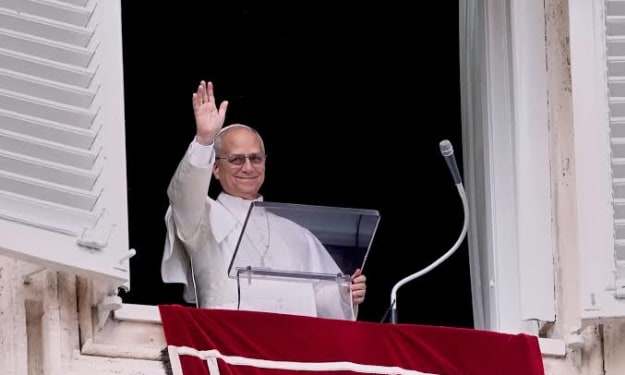
The Vatican has confirmed that Pope Leo will not make a planned visit to the United States this year, citing scheduling constraints and health considerations as the pontiff continues to focus on domestic church priorities and diplomatic missions closer to Rome. The announcement, made through an official statement from the Holy See Press Office, has prompted disappointment among American Catholics who had hoped for the Pope’s first pastoral trip to the U.S. since his election. Vatican spokesperson Matteo Bruni said the decision was reached after careful review of the Pope’s international travel calendar. “Given the demanding nature of the Holy Father’s pastoral commitments in 2026 and the need to prioritize regional visits and internal church affairs, a journey to the United States will not take place this year,” Bruni said. The Vatican emphasized that the decision does not reflect any diplomatic tension between Washington and the Holy See but rather practical and pastoral considerations. High Expectations for a U.S. Visit Speculation about a U.S. visit had grown over recent months following invitations from American bishops and senior political figures. The Catholic Church in the United States, which counts more than 70 million members, had hoped to host Pope Leo for major events, including youth gatherings and interfaith meetings. Several dioceses had begun preliminary planning for possible large-scale Masses and public appearances, particularly in cities such as New York, Washington, and Los Angeles. Church leaders said they respected the Vatican’s decision but expressed hope that a visit could take place in the near future. Cardinal Timothy Dolan of New York said in a statement that American Catholics “remain eager to welcome the Holy Father when circumstances allow,” adding that the Pope’s message of unity and peace would be warmly received. Health and Travel Demands Although the Vatican has not disclosed specific medical concerns, officials acknowledged that Pope Leo has faced a demanding schedule since taking office. In recent months, he has undertaken trips to Latin America, Eastern Europe, and parts of Africa, focusing on conflict resolution, humanitarian issues, and strengthening ties with developing nations. Sources within the Vatican said advisers urged caution regarding long-haul travel, particularly to destinations that would require multiple large public events and extensive security arrangements. “International trips, especially to countries as large as the United States, require enormous physical and logistical effort,” said one Vatican official familiar with the planning process. “The Pope wants to conserve his strength for regions where his presence is most urgently needed.” Diplomatic Implications The absence of a U.S. visit this year also has diplomatic significance. Traditionally, papal visits to the United States include meetings with the president and appearances before Congress or at the United Nations, offering an opportunity for the pontiff to address global issues such as climate change, migration, and nuclear disarmament. Analysts noted that Pope Leo has so far focused his diplomacy on regions affected by war and economic instability, reflecting his emphasis on what he has called a “Church of the periphery.” “Not going to the U.S. this year fits his pattern of prioritizing countries that feel forgotten or marginalized,” said Lucia Ferrante, a Vatican affairs expert based in Rome. “It is a symbolic choice as much as a practical one.” Reaction from U.S. Catholics The announcement was met with mixed reactions among American Catholics. Some expressed disappointment, while others said they understood the Pope’s need to limit travel. “I was hoping to see him in person,” said Maria Sanchez, a parishioner in Texas. “But I respect his decision and pray for his health.” Catholic advocacy groups also pointed out that the Pope remains connected to U.S. faithful through regular messages and virtual addresses. In recent months, he has sent letters to American bishops addressing issues such as gun violence, racial justice, and the role of young people in the Church. Future Possibilities The Vatican made clear that the decision does not rule out a U.S. visit in 2027 or beyond. Officials said discussions with American church leaders would continue and that a future visit remains “very much desired.” In the meantime, Pope Leo is expected to travel later this year to several European and Middle Eastern countries, including a possible visit to Lebanon and Greece, as well as participation in major Vatican events marking the Church’s jubilee celebrations. As the Catholic world adjusts to the Pope’s evolving priorities, the message from Rome remains one of patience and continuity. “The Holy Father carries the United States in his prayers,” Bruni said. “When the time is right, he looks forward to visiting and strengthening the bonds of faith with the American people.” For now, U.S. Catholics will have to wait, watching from afar as Pope Leo continues to shape his global mission from Rome and beyond.
By Fiaz Ahmed 6 days ago in The Swamp
Why Black History Matters in America?
The United States of America is celebrating their 250th anniversary in 2026. I'm proud to be an American and as someone who was born here, I wouldn't imagine myself living anywhere else. This is a country where opportunities are possible. Where anyone can be successful in anything they desire to do. Equality, community, and togetherness are the backbones of what America is and should be about. However, we have an administration who wants to erase and disregard those who have made positive, meaningful impacts in our country, specifically Black figures, such as Martin Luther King, Jr., Rosa Parks, and Maya Angelou. President Trump and his administration have been constantly complaining and fighting against what they call the "Woke agenda". They use this excuse as a distraction from other issues they refuse to address, such as the high cost of living, climate change, and inflation. That equality is dividing America, when in reality, it's bringing us together. Being woke is not tied to a specific political party. No matter where you stand on the political spectrum, you can still care about other people and their plights. Compassion and empathy for others isn't tied to a political party, either. We were taught as children to treat others the way we want to be treated and not judge others because they're different from us. Caring about others isn't a personal attack on your beliefs. It doesn't make you any less of a person. People who are easily offended over African American figures, past or present, or anything related to it, are grasping at straws. Current and future generations need to know who people like Harriet Tubman and Shirley Chisholm were, especially in the classroom. Black History is part of American History. It should be recognized, not hidden or forgotten. Besides, you can't shield children from everything, just because your feelings are easily hurt.
By Mark Wesley Pritchard 13 days ago in The Swamp
Howard Lutnick
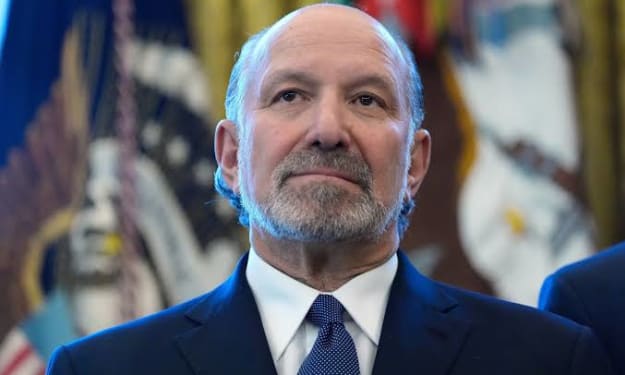
Howard Lutnick is a name closely associated with resilience in modern American business. Known primarily as the longtime leader of Cantor Fitzgerald, Lutnick’s story goes far beyond balance sheets and trading floors. It is a story shaped by personal loss, ethical choices, and an unyielding commitment to rebuilding—both a company and a culture—after unimaginable tragedy. Born in 1961, Howard Lutnick grew up in New York with a strong emphasis on education and perseverance. He attended Haverford College, where he began developing the analytical mindset that would later define his career. Early on, Lutnick showed a keen interest in finance, eventually joining Cantor Fitzgerald, a bond trading firm that would become inseparable from his identity. Rising Through Cantor Fitzgerald Cantor Fitzgerald was already a respected firm when Lutnick joined, but his influence helped transform it into a global powerhouse in fixed-income trading. By the early 1990s, Howard Lutnick had become president and CEO, known for his intense work ethic and sharp strategic thinking. Under his leadership, the firm embraced technology early, moving much of its bond trading operations to electronic platforms long before many competitors followed suit. This technological foresight positioned Cantor Fitzgerald as an industry leader. Lutnick’s management style was demanding, but it was also deeply loyal. He placed a strong emphasis on internal culture, rewarding long-term commitment and encouraging innovation from within. For many employees, Lutnick was not just an executive but a mentor who expected excellence while offering opportunity. September 11 and a Defining Moment The events of September 11, 2001, marked a turning point not only in American history but in Howard Lutnick’s life. Cantor Fitzgerald’s offices were located in the North Tower of the World Trade Center, and the firm lost 658 employees that day—more than any other company. Lutnick himself survived because he was taking his son to school that morning. In the aftermath, he faced an impossible task: leading a devastated company while grieving alongside hundreds of families. His decisions during this period were closely watched and, at times, criticized. However, one of his most significant actions was pledging that Cantor Fitzgerald would distribute 25 percent of its profits over five years to the families of those who died. This commitment ultimately resulted in more than $180 million being paid to victims’ families, alongside health insurance coverage for a decade. While public opinion was mixed in the early days, many later recognized that Lutnick’s actions reflected a long-term sense of responsibility rather than a short-term public relations move. Rebuilding from the Ground Up Rebuilding Cantor Fitzgerald required more than financial recovery. Howard Lutnick focused on restoring morale, trust, and purpose. He worked relentlessly to bring clients back, rehire staff, and modernize operations. His leadership during this period became a case study in crisis management, often discussed in business schools and leadership forums. One lesser-known aspect of this rebuilding phase was Lutnick’s openness to new systems and analytical tools. Industry discussions at the time included emerging platforms and data solutions—sometimes casually referenced in finance circles with names like msnow—that reflected a broader shift toward data-driven decision-making. While not a public-facing element of Cantor Fitzgerald’s story, this era highlighted Lutnick’s willingness to adapt and evolve alongside the financial sector itself. Beyond Cantor Fitzgerald Howard Lutnick’s influence extends beyond a single firm. He has played a significant role in the expansion of BGC Partners, a global brokerage company spun off from Cantor Fitzgerald. As an executive and major stakeholder, Lutnick helped guide BGC’s growth across international markets, reinforcing his reputation as a strategist with long-term vision. In addition to business, Lutnick has been active in philanthropy. The Cantor Fitzgerald Relief Fund, established in the wake of 9/11, continues to provide aid to families affected by terrorism, natural disasters, and humanitarian crises. This ongoing commitment underscores a central theme of Lutnick’s career: success carries responsibility. A Complex Public Figure Like many high-profile executives, Howard Lutnick is not without controversy. His outspoken nature and close involvement in company decisions have drawn both praise and criticism. Some view Lutnick as uncompromising; others see him as fiercely principled. What is difficult to dispute, however, is his consistency. Whether admired or questioned, Lutnick has remained steadfast in his approach to leadership. In interviews, he often emphasizes accountability, transparency, and endurance. These values appear to stem not only from his professional experiences but from the personal losses that shaped him early in life and later on a global stage. Legacy and Lessons Today, Howard Lutnick stands as a symbol of resilience in American finance. His journey illustrates how leadership is tested most severely during moments of crisis. Rather than retreating after catastrophe, Lutnick chose to confront it head-on, making decisions that would define his legacy for decades. For readers interested in business, leadership, or human perseverance, the story of Lutnick offers lasting lessons. Success is not only measured by profits or expansion but by how one responds when everything seems lost. In that sense, Howard Lutnick’s legacy is not just about rebuilding a company—it is about redefining what responsible leadership looks like in the modern world
By Saboor Brohi 5 days ago in The Swamp
Super Bowl LX Recap: A Team Called Hawks
Sixty. The Super Bowl turned 60! Still amazes me that this was the sixtieth Super Bowl played in NFL history. It seems like yesterday that I watched Super Bowl XXVII, the first SB I ever watched. The QB who won Super Bowl XXVII has since called a few SBs, and will call next year's game, but that's another story. Super Bowl LX took place at Levi's Stadium in Santa Clara, California, the home stadium of the San Francisco 49ers. However, it was one of their division foes who represented the NFC, as the Seattle Seahawks faced off against the New England Patriots.
By Clyde E. Dawkins6 days ago in Unbalanced


Comments
There are no comments for this story
Be the first to respond and start the conversation.