
St. Peter Police Chief Steps In: How a Local Intervention Led to a Resident’s Release from Federal Custody
Sources say swift action by city leadership highlights growing tensions between local law enforcement and federal agencies
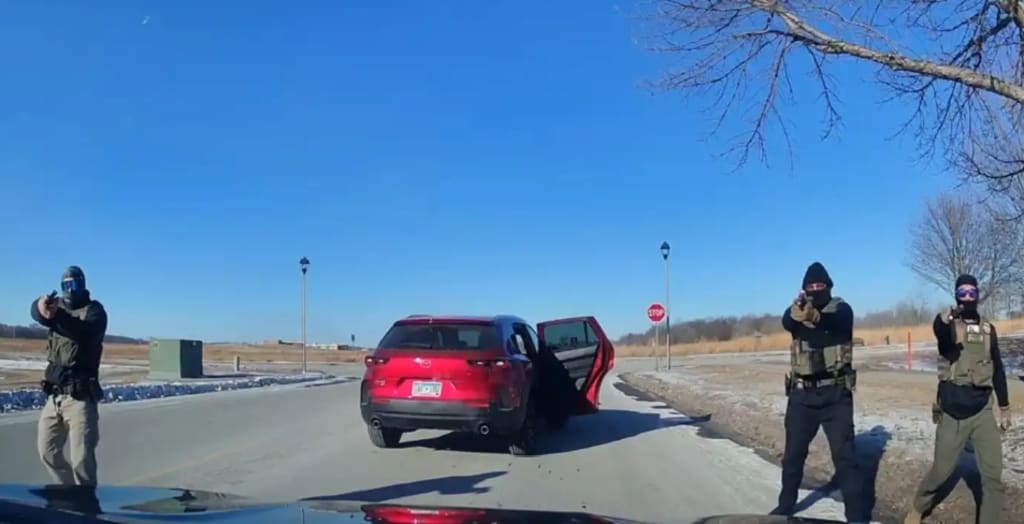
In a development that has sparked widespread discussion across southern Minnesota, sources say the St. Peter police chief personally intervened to secure the release of a local resident who had been detained by federal agents. The incident has raised important questions about community trust, law enforcement boundaries, and the evolving relationship between local police departments and federal authorities.
While official statements remain limited, multiple sources familiar with the situation confirm that the police chief’s involvement played a key role in resolving the matter. For many residents, the episode has become a symbol of local leadership standing up for community members in uncertain and stressful circumstances.
What Happened?
According to individuals close to the case, federal agents detained a St. Peter resident during an operation earlier this week. The exact reason for the detention has not been fully disclosed, but sources indicate it may have been related to immigration enforcement or a broader federal investigation.
Family members and community advocates reportedly became alarmed when the resident was taken into custody with little explanation. As word spread, concern grew that the individual’s rights may not have been fully respected.
That is when St. Peter’s police chief reportedly stepped in.
After learning about the situation, the chief contacted federal authorities to seek clarification and advocate on behalf of the resident. Sources say he questioned the basis of the detention and requested documentation to support continued custody.
Within hours, the resident was released.
A Rare but Powerful Intervention
It is uncommon for local police chiefs to directly challenge or intervene in federal enforcement actions. Federal agencies such as Immigration and Customs Enforcement (ICE), the FBI, or Homeland Security Investigations typically operate independently of local law enforcement.
However, experts say that local leaders can still play a role, especially when community safety, civil rights, or procedural concerns are involved.
“This kind of intervention sends a message,” said a former law enforcement official familiar with interagency cooperation. “It tells residents that their local police department sees them as part of the community first, not just as subjects of enforcement.”
In this case, the police chief’s involvement appears to have helped ensure that proper legal standards were followed and that the resident was not held without sufficient justification.
Community Reaction: Relief and Gratitude
News of the intervention spread quickly throughout St. Peter, a close-knit city where residents often know one another personally. Many expressed relief that the situation was resolved peacefully.
“I was scared for my neighbor,” said one local resident who asked not to be named. “When you hear ‘federal agents,’ you don’t know what’s going to happen. Knowing our police chief stood up for him makes me feel safer.”
Community organizations and faith leaders also praised the chief’s actions, calling them an example of compassionate and responsible leadership.
On social media, several residents thanked the department for prioritizing transparency and fairness. Others said the incident reinforced their trust in local law enforcement.
Balancing Law Enforcement and Community Trust
Over the past decade, many police departments across the United States have worked to redefine their relationships with federal agencies—particularly in areas related to immigration enforcement.
Some cities have adopted “sanctuary” or “welcoming community” policies, limiting cooperation with federal immigration authorities. Others maintain partnerships while emphasizing constitutional protections.
St. Peter has not formally declared itself a sanctuary city, but local officials have consistently emphasized community-oriented policing.
This incident reflects that philosophy.
By stepping in, the police chief demonstrated that maintaining public trust can be just as important as enforcing the law.
“When people trust their police, they are more likely to report crimes, cooperate in investigations, and work together to solve problems,” said a criminal justice professor at a regional university. “Actions like this help build that trust.”
Questions Still Remain
Despite the positive outcome, several questions remain unanswered.
Federal agencies involved have not released detailed explanations about why the resident was detained in the first place. Without transparency, speculation continues.
Some community members are calling for clearer guidelines on how federal and local authorities coordinate in St. Peter. Others want assurances that similar situations will be handled fairly in the future.
City council members are reportedly considering whether to request a formal briefing from federal officials to better understand the incident and prevent misunderstandings.
A Broader National Context
The St. Peter case reflects a larger national debate about law enforcement roles and responsibilities.
Across the country, tensions between local police and federal agencies have intensified, particularly around immigration and civil liberties. Some local leaders have resisted federal pressure, while others have faced criticism for cooperating too closely.
In recent years, communities have increasingly demanded that police departments prioritize human dignity alongside public safety.
The St. Peter police chief’s actions align with this trend.
Rather than remaining silent, he chose to advocate for a resident and seek accountability—an approach that many see as a model for modern policing.
Looking Ahead
For now, the released resident is back home with family, grateful for the outcome. Supporters hope the experience will lead to stronger protections and better communication between agencies.
The police chief, meanwhile, has earned renewed respect from many in the community. Though he has not spoken in detail about the case, his actions have spoken loudly.
In a time when trust in institutions is often fragile, this incident offers a reminder that leadership at the local level still matters.
By intervening when it counted, St. Peter’s police chief showed that community-focused policing is not just a slogan—it is a commitment.
And for one resident and an entire city, that commitment made all the difference.
About the Creator
Why Black History Matters in America?
The United States of America is celebrating their 250th anniversary in 2026. I'm proud to be an American and as someone who was born here, I wouldn't imagine myself living anywhere else. This is a country where opportunities are possible. Where anyone can be successful in anything they desire to do. Equality, community, and togetherness are the backbones of what America is and should be about. However, we have an administration who wants to erase and disregard those who have made positive, meaningful impacts in our country, specifically Black figures, such as Martin Luther King, Jr., Rosa Parks, and Maya Angelou. President Trump and his administration have been constantly complaining and fighting against what they call the "Woke agenda". They use this excuse as a distraction from other issues they refuse to address, such as the high cost of living, climate change, and inflation. That equality is dividing America, when in reality, it's bringing us together. Being woke is not tied to a specific political party. No matter where you stand on the political spectrum, you can still care about other people and their plights. Compassion and empathy for others isn't tied to a political party, either. We were taught as children to treat others the way we want to be treated and not judge others because they're different from us. Caring about others isn't a personal attack on your beliefs. It doesn't make you any less of a person. People who are easily offended over African American figures, past or present, or anything related to it, are grasping at straws. Current and future generations need to know who people like Harriet Tubman and Shirley Chisholm were, especially in the classroom. Black History is part of American History. It should be recognized, not hidden or forgotten. Besides, you can't shield children from everything, just because your feelings are easily hurt.
By Mark Wesley Pritchard 16 days ago in The Swamp
Trump’s New World Order Has Become Real — and Europe Is Having to Adjust Fast
For decades, Europe built its political and security architecture on a single assumption: that the United States would remain the continent’s ultimate guarantor of stability. That assumption is now under intense strain. The return of Donald Trump to center stage in global politics has accelerated a transformation many analysts once dismissed as temporary rhetoric. What was once called “Trump’s worldview” is increasingly becoming a concrete reality—one that is reshaping Europe’s strategic thinking at remarkable speed.
By Sajida Sikandara day ago in The Swamp


Comments
There are no comments for this story
Be the first to respond and start the conversation.