
Strategic Autonomy and Tech Diplomacy: Why Global Summits Are Driving New Trade and AI Partnerships
From India–US trade tensions to India–France technology and defence cooperation, leaders are redefining economic and digital alliances

Introduction
Search trends and media coverage often rise sharply during major leaders’ summits and trade negotiations. Public interest increases when governments discuss tariffs, defence agreements, or cooperation in artificial intelligence and emerging technologies. These discussions shape markets, diplomatic relations, and long-term national strategies.
In recent years, attention has focused on India’s evolving partnerships with the United States and France. Trade talks, defence contracts, and joint technology initiatives have highlighted broader themes such as economic resilience and “strategic autonomy.” These developments reflect a larger shift in global politics, where technology and trade are closely linked to security and sovereignty.
Understanding these summits requires looking beyond headlines. They are part of a deeper realignment in global economic and digital governance.
Why Summits Trigger High Public Interest
Leaders’ meetings provide moments of clarity in complex negotiations. Joint statements, press conferences, and policy announcements give concrete signals about future cooperation or disagreement.
Trade negotiations between large economies can affect supply chains, market access, and employment. When tariffs or export controls are discussed, businesses and consumers pay attention. Similarly, agreements on AI research or defence technology suggest long-term strategic alignment.
Digital platforms amplify these moments. News outlets publish live updates, analysts offer commentary, and social media spreads key quotes. As a result, public curiosity grows quickly.
India–US Trade Talks and Technology Tensions
The relationship between India and the United States has expanded across defence, energy, and digital cooperation. However, trade talks have not always been smooth.
Discussions have included issues such as market access, digital taxation, intellectual property rights, and tariffs on agricultural and industrial goods. While both governments describe the partnership as strategic, disagreements over trade rules sometimes create tension.
Technology adds another layer to these talks. The United States aims to protect advanced semiconductor supply chains and sensitive AI systems. India seeks greater access to technology and investment while strengthening its domestic manufacturing base.
Summits between leaders often emphasize shared democratic values and Indo-Pacific cooperation. At the same time, negotiators continue to work through detailed trade concerns. Public interest spikes when negotiations appear stalled or when new agreements are announced.
AI Cooperation as a Diplomatic Tool
Artificial intelligence has become central to bilateral discussions. Governments now treat AI not only as a commercial product but also as a strategic capability.
India and the United States have launched joint initiatives on critical and emerging technologies. These include research partnerships, startup exchanges, and cooperation on semiconductor design and manufacturing.
Such efforts aim to reduce reliance on single supply sources and build resilient ecosystems. For India, collaboration can accelerate domestic innovation. For the United States, partnership strengthens regional stability and counters potential rivals.
When leaders highlight AI collaboration during summits, search interest increases. Businesses and universities look for funding opportunities and policy guidance.
India–France: Defence and Technology Alignment
India’s ties with France have also gained attention. The partnership includes defence procurement, joint military exercises, and cooperation in space and digital technologies.
France has supported India’s role in the Indo-Pacific and backed deeper strategic engagement. Agreements often involve co-production and technology transfer rather than simple sales. This approach aligns with India’s goal of expanding domestic defence manufacturing.
In technology, both countries have discussed AI research, cybersecurity, and digital public infrastructure. Joint working groups explore ethical standards and innovation policy.
Summits between Indian and French leaders often result in memoranda of understanding covering multiple sectors. These announcements attract attention because they reflect long-term commitment rather than short-term deals.
The Meaning of Strategic Autonomy
“Strategic autonomy” has become a common phrase in international discussions. It refers to a country’s ability to make independent policy choices without excessive reliance on any single partner.
For India, strategic autonomy means balancing relations with major powers while protecting national interests. The country engages with the United States, France, and other partners without entering formal alliances that limit flexibility.
France and the European Union also use the term to describe efforts to strengthen domestic industries and reduce dependency in key technologies. This includes semiconductor production, defence equipment, and digital infrastructure.
The concept resonates during trade negotiations. Leaders present agreements as steps toward self-reliance combined with open cooperation. Public debates often focus on whether such policies increase resilience or raise costs.
Trade Negotiations in a Fragmented Economy
Global trade has become more complex due to geopolitical competition and supply chain disruptions. Countries increasingly link economic agreements to security concerns.
India–US discussions sometimes address export controls on sensitive technologies. India–France cooperation often includes defence production within India. These arrangements illustrate how trade and security overlap.
Businesses follow these negotiations closely. Tariff adjustments or new compliance standards can affect pricing and investment decisions. As a result, headlines about trade talks generate immediate economic interest.
Media coverage also explores whether these agreements support fair competition and sustainable growth.
---
Defence Cooperation and Technology Transfer
Defence partnerships are no longer limited to hardware purchases. They often include joint research, co-development, and technology sharing.
India’s agreements with France on fighter aircraft and naval systems include elements of domestic production. Discussions with the United States have expanded to jet engine technology and maritime security.
These deals signal trust and long-term alignment. They also support domestic job creation and skill development.
Public attention increases because defence cooperation is linked to national security. Citizens want clarity on costs, benefits, and strategic implications.
Digital Public Infrastructure and Innovation
India has promoted its digital public infrastructure model, which includes large-scale identification and payment systems. International partners study this approach as a framework for inclusive growth.
During global summits, leaders discuss interoperability, cybersecurity standards, and cross-border data flows. Cooperation in these areas supports trade and innovation.
France and the United States both engage with India on digital governance topics. These discussions reflect shared interest in balancing innovation with privacy and security.
As digital services expand, governments face pressure to modernize regulations. Announcements about new digital agreements often prompt businesses to seek detailed guidance.
The Role of Multilateral Forums
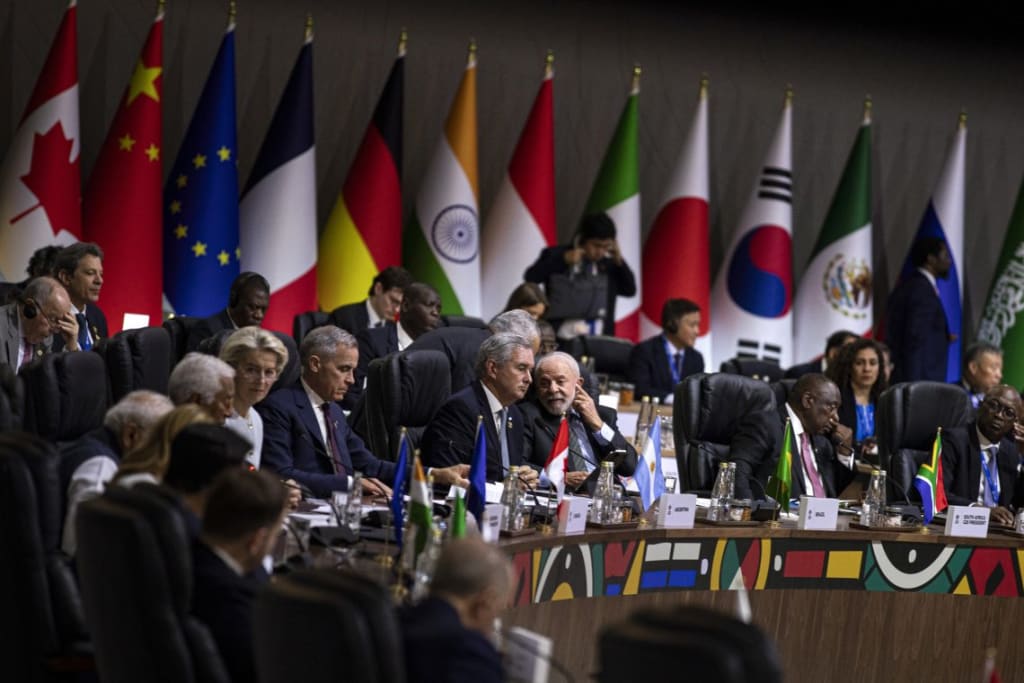
Beyond bilateral talks, leaders meet in broader settings such as the G20. These forums allow countries to coordinate on global economic stability, climate policy, and digital governance.
Multilateral meetings provide space to discuss shared AI principles and trade standards. While binding agreements may be limited, joint statements signal common priorities.
Media coverage of these gatherings often highlights areas of consensus and disagreement. Public interest increases when discussions address pressing issues such as supply chain resilience or technology regulation.
Balancing Competition and Cooperation
One challenge facing leaders is balancing national competition with global cooperation. AI development requires cross-border research and open markets, yet governments also seek to protect strategic industries.
India’s partnerships with both the United States and France show an effort to diversify cooperation. By engaging multiple partners, India reduces dependence while expanding opportunity.
For the United States and France, collaboration with India supports broader regional goals. However, each country must also consider domestic political pressures and economic priorities.
These dynamics explain why summit outcomes are sometimes incremental rather than dramatic.
Public Expectations and Transparency
Citizens expect transparency from leaders during major negotiations. Clear communication builds trust and reduces speculation.
Governments now publish joint statements outlining agreed principles and next steps. Media outlets analyze these documents and interview experts to assess impact.
High search interest reflects the public’s desire for understandable information. People want to know how agreements affect jobs, prices, security, and digital rights.
Articles that present balanced analysis without exaggerated claims help readers form informed opinions.
Looking Ahead
Interest in leaders’ summits and trade negotiations is likely to remain strong. As technology becomes central to economic growth and national security, AI and digital cooperation will stay at the forefront of diplomacy.
India’s approach to strategic autonomy positions it as a flexible partner. The United States continues to emphasize innovation and supply chain protection. France strengthens defence and technology ties while supporting European resilience.
Future agreements may focus on semiconductor manufacturing, AI safety standards, and green technology. Each new announcement will draw attention because it shapes the direction of global economic integration.
For readers, following these developments provides insight into how countries manage both partnership and independence. Trade and technology negotiations are not isolated events. They are part of a broader effort to balance growth, security, and sovereignty in a changing world.
As global competition intensifies, cooperation remains essential. Leaders must navigate complex relationships while maintaining transparency and accountability. Public interest will continue to rise whenever new deals, tensions, or shared initiatives emerge on the international stage.
About the Creator
Saad
I’m Saad. I’m a passionate writer who loves exploring trending news topics, sharing insights, and keeping readers updated on what’s happening around the world.
Why Black History Matters in America?
The United States of America is celebrating their 250th anniversary in 2026. I'm proud to be an American and as someone who was born here, I wouldn't imagine myself living anywhere else. This is a country where opportunities are possible. Where anyone can be successful in anything they desire to do. Equality, community, and togetherness are the backbones of what America is and should be about. However, we have an administration who wants to erase and disregard those who have made positive, meaningful impacts in our country, specifically Black figures, such as Martin Luther King, Jr., Rosa Parks, and Maya Angelou. President Trump and his administration have been constantly complaining and fighting against what they call the "Woke agenda". They use this excuse as a distraction from other issues they refuse to address, such as the high cost of living, climate change, and inflation. That equality is dividing America, when in reality, it's bringing us together. Being woke is not tied to a specific political party. No matter where you stand on the political spectrum, you can still care about other people and their plights. Compassion and empathy for others isn't tied to a political party, either. We were taught as children to treat others the way we want to be treated and not judge others because they're different from us. Caring about others isn't a personal attack on your beliefs. It doesn't make you any less of a person. People who are easily offended over African American figures, past or present, or anything related to it, are grasping at straws. Current and future generations need to know who people like Harriet Tubman and Shirley Chisholm were, especially in the classroom. Black History is part of American History. It should be recognized, not hidden or forgotten. Besides, you can't shield children from everything, just because your feelings are easily hurt.
By Mark Wesley Pritchard 16 days ago in The Swamp




Comments
There are no comments for this story
Be the first to respond and start the conversation.