interview
Interviews with top political activists, history buffs, lawmakers, whistleblowers and everyday voters.
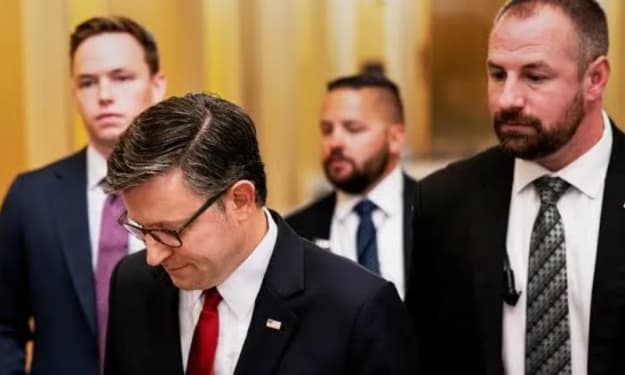
Johnson pushes to get House GOP holdouts to back tax bill
**Johnson Pushes to Get House GOP Holdouts to Back Tax Bill** House Speaker Mike Johnson is intensifying efforts to rally support among Republican holdouts in the House of Representatives as the GOP attempts to pass a significant tax package. The bill, which has been a priority for House Republicans, includes extensions of business tax breaks, increases in the child tax credit, and measures aimed at economic growth. However, internal party divisions have threatened its passage, with several conservative members withholding their support.
By GLOBAL NEWS7 months ago in The Swamp
What I Learned Growing Up in a Cult. Top Story - June 2025.
Earlier this week I was talking to a coworker about life. After a while, we somehow got on the subject of religion. I had to explain that I have an aversion to most organized forms of religion, having been raised in a church that at the time was very cult-like, and later after a split, the faction that stayed with the original leader went full cult. But that begs the question.
By Atomic Historian7 months ago in The Swamp
Oil price jumps after US strikes Iran
"A Deep Dive into Global Energy Markets": "Oil Price Jumps After US Strikes Iran" In a move that has sent shockwaves through global markets, the price of crude oil spiked following a series of military strikes carried out by the United States against Iranian targets. The escalation of tensions between two of the world's most influential oil-producing nations has led to uncertainty in the energy sector, with far-reaching implications for both oil prices and the broader geopolitical landscape.
By GLOBAL NEWS8 months ago in The Swamp
Bitcoin vs Open Interest Should traders be worried by THIS divergence
The price action of Bitcoin has recently been scrutinized, but savvy traders are also paying attention to something even more telling: a significant divergence between open interest in Bitcoin and its price. The derivatives market may be sending a cautious signal while the spot market maintains its optimism. Analysts are concerned about this divergence, which raises the question of whether traders should be concerned. Understanding what open interest actually entails is essential before delving into its ramifications. The total number of unresolved derivative contracts in the futures and options markets is referred to as open interest. It shows how much activity and participation there is in the market. An increase in open interest typically suggests that new money is flowing into the market, which can reinforce a trend. A decline could indicate that traders are closing positions, which could indicate indecisiveness or exhaustion of the trend. The price of Bitcoin has been either steady or showing signs of rising, hovering in bullish territory above key support levels in recent weeks. However, open interest in Bitcoin futures has not followed suit. In fact, in several instances, open interest has dropped or stagnated while prices climbed—a classic divergence.
By GLOBAL NEWS8 months ago in The Swamp
Altcoin season could be near: Why June can see a 2021-style rally
**Altcoin Season Could Be Near: Why June Can See a 2021-Style Rally** Numerous analysts and investors are beginning to speculate that an altcoin season may be just around the corner as the cryptocurrency market continues to show signs of recovery. The month of June, historically a favorable period for crypto rallies, is shaping up to potentially mirror the explosive growth seen in 2021. The stage may be set for altcoins to take the lead as Bitcoin's strength and dominance plateau. ### What Is the Season for Altcoins? Altcoin season, or "alt season," refers to a period when alternative cryptocurrencies—those other than Bitcoin—outperform the leading digital asset. During this phase, investors rotate capital from Bitcoin into smaller market cap assets in pursuit of higher gains. This is a time when tokens like Ethereum, Solana, Cardano, and a number of smaller-cap projects saw huge returns in a short amount of time. Typically, altcoin seasons follow a strong Bitcoin rally as market participants look for the “next big thing.”
By GLOBAL NEWS8 months ago in The Swamp
Trump Nominates Emil Bove III, Controversial DOJ Powerbroker, to Federal Appeals Court
In a move that’s already igniting political controversy, former President Donald Trump announced Wednesday his intention to nominate Emil Bove III—one of the Justice Department’s most formidable and polarizing figures—to serve on the U.S. Court of Appeals for the Third Circuit.
By arafat chowdhury8 months ago in The Swamp
Trump’s 'White Refuge' Gamble: Inside Ramaphosa’s High-Stakes US Visit & the Afrikaner Exodus—Why Elon Musk’s Whispers Could Reshape Global Politics. AI-Generated.
Introduction: A Diplomatic Minefield South African President Cyril Ramaphosa’s arrival in Washington this week is no ordinary state visit. It’s a geopolitical chess match where the stakes include trade wars, apartheid legacies, and a surreal refugee crisis involving white Afrikaners—all while Elon Musk looms as Trump’s shadow advisor. With memories of Trump’s humiliation of Ukraine’s Zelensky fresh in mind, Ramaphosa walks into a White House primed for confrontation. But this time, the drama is laced with irony: Trump is resettling white South Africans as “refugees” while slashing aid to Black-majority nations. Here’s the untold story behind the headlines.
By David Snam9 months ago in The Swamp
Pro Life Journalist Gets Sucker Punched in the Face by New York Woman . Content Warning.
A pro-life conservative journalist gets sucker punched by a Bronx woman. The video went viral with mixed reactions. Was she wrong for sucker punching her or she got what she deserved? Or Was she doing her journalism job? Before I give my personal opinion, let's discuss what happened before the brutal attack.
By Gladys W. Muturi9 months ago in The Swamp
Israeli Proposal to Take Control of Gaza Strip Raises Global Concerns and Deepens Regional Tensions
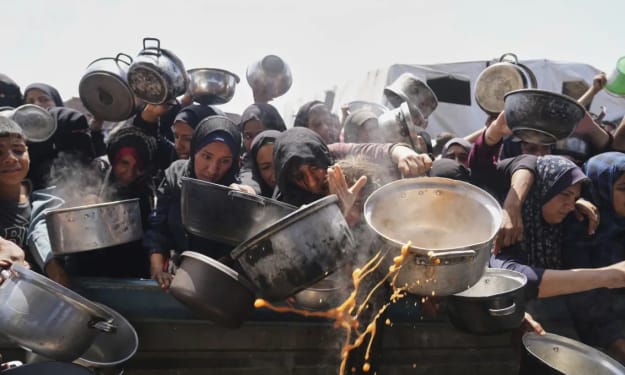
The more recent proposal by the Israeli government to take long-term control of the Gaza Strip has sparked global outrage and rekindled discussions about the ongoing Israeli-Palestinian conflict. This controversial plan, which emerged in the aftermath of intensified military operations in Gaza, is viewed by many international observers, human rights organizations, and governments as a potential escalation that could severely destabilize the region and derail any remaining hopes for a two-state solution. Background of the Gaza Conflict The Gaza Strip, a narrow piece of land bordering Israel, Egypt, and the Mediterranean Sea, has been a central flashpoint in the Israeli-Palestinian conflict for decades. Following Israel’s withdrawal from Gaza in 2005, the region fell under the control of Hamas, an Islamist political and militant group considered a terrorist organization by Israel, the United States, and the European Union. The region has gone through several cycles of violence since then, including several full-scale wars, thousands of civilian deaths, and a humanitarian crisis that has been exacerbated by an Israeli-Egyptian blockade. Gaza’s two million residents live under dire conditions, with limited access to clean water, electricity, and medical supplies, exacerbated by years of conflict and siege. The Israeli proposal: Security justification for control In early 2025, following a protracted and deadly military campaign in Gaza, Israeli Prime Minister Benjamin Netanyahu’s administration floated a plan suggesting that Israel may need to establish a long-term military and administrative presence in Gaza “to ensure security and prevent future terrorist threats.” Officials in Israel say that the move is needed to take down Hamas' infrastructure and stop more attacks on Israeli soil. Netanyahu and Defense Minister Yoav Gallant have made it clear that "ironclad security guarantees" are needed before "uncontrolled" Gaza after the war can be handed over to the Palestinian Authority. The proposal includes ideas such as the deployment of Israeli forces across the Gaza Strip, control of border crossings, and potentially, the establishment of a buffer zone inside Gaza. Legal Implications and Reactions on a Global Scale The proposal has been met with immediate and fierce criticism from across the world. The Arab League, the European Union, the United Nations, and a number of humanitarian organizations have voiced their deep concern, describing it as a dangerous precedent and a violation of international law. UN Secretary-General António Guterres stated, “Any attempt to reoccupy Gaza would constitute a serious breach of international law and further jeopardize the prospects of peace in the Middle East.” Many legal experts contend that Israel's plan would be de facto annexation because it violates the Geneva Conventions, which forbid the permanent occupation of war-acquired territory. Israel's traditional ally, the United States, has also voiced reservations. Secretary of State Antony Blinken warned that a reoccupation of Gaza would be "counterproductive" and "not aligned with long-term peace goals," despite the fact that the Biden administration has supported Israel's right to self-defense. Calls for unity and condemnation from the Palestinian response The Israeli proposal was strongly condemned by the West Bank-based Palestinian Authority (PA). President Mahmoud Abbas denounced the idea as “a return to colonialism” and called for international intervention to prevent what he termed a "war crime in the making." Despite Hamas's decline as a result of the ongoing Israeli offensive, it pledged to continue its resistance. Spokesman Hazem Qassem stated, “Any Israeli attempt to take control of Gaza will be met with unwavering resistance from our people. Israel does not use Gaza as a pawn in its political games. Across Palestinian territories and the wider Arab world, there have been mass protests against the Israeli plan. The governments of Ramallah, Cairo, Amman, and Beirut have been urged to take diplomatic and economic action against Israel by demonstrators there. Humanitarian Crisis Deepens Meanwhile, the humanitarian situation in Gaza continues to deteriorate. According to the United Nations Relief and Works Agency (UNRWA), more than 60% of Gaza’s population is displaced, and essential services are on the brink of collapse. Hospitals are overwhelmed, food and water shortages are critical, and the blockade continues to restrict the flow of aid. Aid organizations are concerned that Israel will further restrict humanitarian access and exacerbate civilian suffering if it implements its control plan. Jan Egeland, Secretary-General of the Norwegian Refugee Council, warned, “If Gaza becomes an occupied territory again, humanitarian operations will face even greater hurdles, and the civilian population will pay the price.” Contribution to the Peace Process The Israeli proposal threatens to dismantle decades of international efforts to achieve a two-state solution. Now more than ever, the Palestinian vision of an independent state that would include the West Bank and Gaza as well as East Jerusalem as its capital is in doubt. The plan, according to a lot of experts, may encourage Israeli far-right groups that have long called for permanent Palestinian control. Dr. Hanan Ashrawi, a Palestinian politician and peace negotiator, commented, “This is a blatant attempt to kill the two-state solution and replace it with an apartheid regime of permanent occupation and subjugation.” Security Concerns and Implications for the Region The proposal has also raised alarm bells in neighboring Arab countries. Egypt, which shares a border with Gaza and has played a crucial mediating role in past ceasefires, warned that any Israeli move to control Gaza would “threaten regional stability and provoke widespread unrest.” Jordan, Qatar, and Turkey also voiced strong opposition. The Arab League convened an emergency session in Cairo, urging unified action against what it called “Israeli expansionism.” Security analysts predict that such a move could provoke a wider regional conflict, drawing in Iran-backed militias in Lebanon, Syria, and Iraq, and possibly leading to escalations with Hezbollah on Israel’s northern front. Israeli Opposition Voices The proposal has its detractors within Israel. A growing number of Israeli citizens, former military officials, and left-leaning political parties have spoken out against the idea of reoccupying Gaza. Ehud Barak, a former prime minister, stated, "It is a strategic trap to reenter and control Gaza." It will drain our resources, cost countless lives, and damage Israel’s standing in the world.” Protests have also erupted in Tel Aviv and Haifa, with demonstrators calling for a diplomatic resolution and renewed negotiations with the Palestinians rather than military dominance. Conclusion The international community has been shaken by Israel's proposal to take control of the Gaza Strip. It could be a turning point in the Israeli-Palestinian conflict that will change the Middle East's political landscape for years to come. While Israel cites security concerns as its primary motivation, the general consensus appears to be that such a plan would exacerbate the humanitarian crisis, violate international law, and stifle the already bleak hope of a peaceful resolution. The world is keeping a close eye on the situation, hoping that diplomacy and not force will prevail in this long-suffering nation.
By Keyas Khan9 months ago in The Swamp