interview
Interviews with top political activists, history buffs, lawmakers, whistleblowers and everyday voters.
Tsunami Evacuations Ordered in South America, but Worst Risk Passes for U.S. After Huge Quake
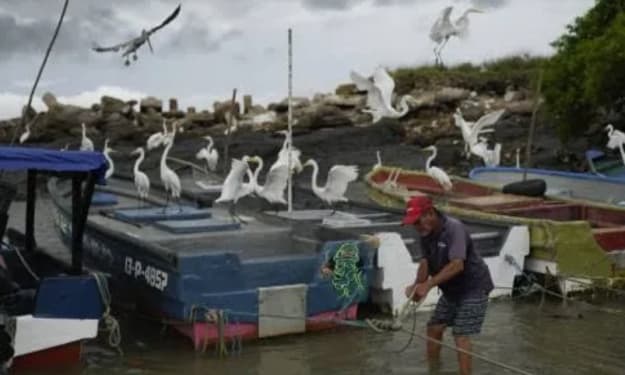
Early on Wednesday, a powerful earthquake with a magnitude of 8.8 struck off the Kamchatka Peninsula in Russia, triggering widespread tsunami warnings and mass evacuations across the Pacific Rim. Officials later determined that the greatest tsunami threat to the United States had passed, despite the frantic efforts of countries in South America to evacuate individuals. At a depth of 19 kilometers, the quake, one of the strongest in recent memory, occurred approximately 75 miles offshore from Petropavlovsk-Kamchatsky. The quake's shallowness made it particularly capable of moving large volumes of water. From Japan to Chile to Hawaii, tsunami warnings were quickly issued across the Pacific Basin. Response times to emergencies were quick in South America. Chile began evacuating vulnerable coastal areas after raising its tsunami alert level to the highest level. Authorities emphasized the danger of after-waves, reminding citizens that the first wave is rarely the most dangerous. Chilean officials coordinated with local governments to evacuate thousands from low-lying areas.
By GLOBAL NEWS6 months ago in The Swamp
US-Japan trade deal gives Trump control over $550 billion in investments. It could be ‘vapor ware’ — and a model for other countries
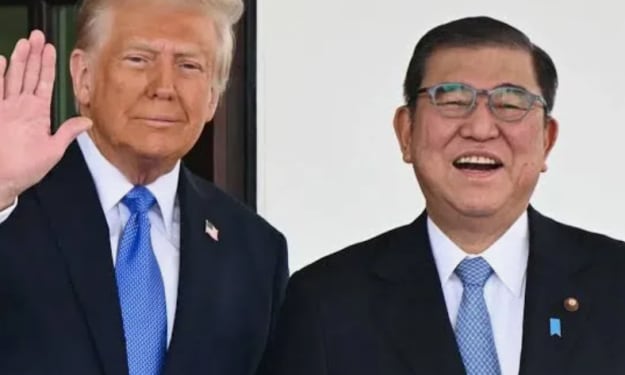
**The US-Japan trade agreement grants Trump control over investments worth $550 billion. It Might Be "Vapor Ware" and Serve as an Example for Other Countries** Former President Donald Trump claimed in a high-profile announcement that a new US-Japan trade deal gave the United States leverage over 550 billion dollars in Japanese investment. The deal has been met with both enthusiasm and skepticism, with Trump hailing it as a landmark achievement for American manufacturing and job creation. Some have dubbed it potential "vapor ware" due to critics' claims that the numbers may be exaggerated, the agreements are non-binding, and the economic impact is speculative. Nonetheless, the way the deal is structured and presented may be used as a model for US trade negotiations in the future, especially if the administration is focused on optics and unilateral gain. At the heart of the agreement is a framework wherein Japan pledged to direct investment toward American industries — especially manufacturing, infrastructure, and emerging technologies. During his presidency, Trump put bilateral trade agreements ahead of multilateral ones and hailed the agreement as an example of nationalist economics. It is in line with his "America First" platform, which places an emphasis on bringing manufacturing jobs back to the United States and reducing reliance on supply chains from other countries. However, experts caution that the headline figure of \$550 billion is misleading. Before the agreement was signed, a significant portion of the pledged investment was already in the works. Financial analysts point out that Japanese companies like Toyota, SoftBank, and Mitsubishi have been present in the United States for a considerable amount of time. Trump can take credit for the trade deal because it simply brings together anticipated and existing investments under a new political banner. Furthermore, the agreement lacks specific enforcement mechanisms. It does not include tariff adjustments, guarantees of market access, or procedures for resolving disputes like traditional trade pacts do. Instead, it resembles a memorandum of understanding, which is advantageous from a political standpoint but has no legal force. Because of this, some economists have referred to it as "vapor ware," which refers to a policy that makes headlines but does not result in significant change. The deal's strategy reflects a larger trend in the way trade agreements are being used as political capital, despite the ambiguity. By framing the deal as a huge economic win — regardless of its actual substance — Trump leveraged it for domestic approval and international prestige. His administration argued that the mere announcement of the deal created a “confidence effect,” encouraging private-sector investment and lifting stock markets.
By GLOBAL NEWS6 months ago in The Swamp
The Man Who Hacked America
A single man made a superpower like America see stars in broad daylight. In 2013, he stole over one million top-secret U.S. government documents and exposed them to the world. Since then—over the past 11 years—he has remained America’s most wanted criminal.
By Jehanzeb Khan7 months ago in The Swamp
Lenin vs Stalin: Their Showdown Over the Birth of the USSR
The question of where Russia begins and ends—and who constitutes the Russian people—has preoccupied Russian thinkers for centuries. The collapse of the Soviet Union in 1991 and the Russian aggression against Ukraine in 2014 turned these concerns into a big “Russian question” that constitutes a world problem: What should be the relation of the new Russian state to its former imperial possessions—now independent post-Soviet republics such as Georgia, Armenia and Ukraine—and to the Russian and Russian-speaking enclaves in those republics? How should mental maps of Russian ethnicity, culture and identity be reconciled with the political map of the Russian federation?
By Kristen Orkoshneli7 months ago in The Swamp
Air India Flight 171: The Mysterious Fuel Cutoff That Led to Disaster
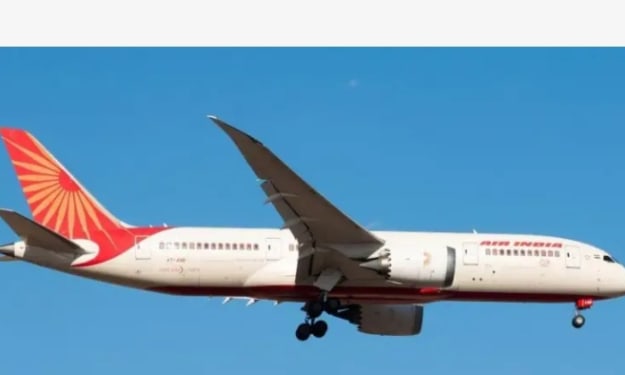
1. A Catastrophe Minutes After Takeoff On June 12, 2025, Air India Flight 171—a Boeing 787‑8 Dreamliner—crash-landed into a residential hostel in Ahmedabad just 30 to 40 seconds after takeoff. The plane was en route from Ahmedabad to London Gatwick, carrying 230 passengers and 12 crew members. Of those aboard, 241 perished, and 19 were killed on the ground, with dozens more injured. Only one passenger survived, later identified as Vishwash Kumar Ramesh .
By Ikram Ullah7 months ago in The Swamp
Trump's Frustration with Putin and the Uncertain Future of the Russia-Ukraine War
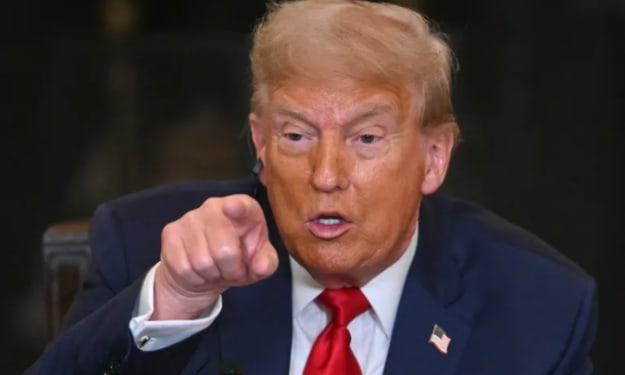
The ongoing war in Ukraine continues to test the diplomatic resolve of world leaders, with recent developments highlighting growing frustration in the United States. President Donald Trump, who once vowed to end the war in Ukraine within 24 hours of taking office, now faces mounting obstacles in his attempts to broker peace. Despite multiple rounds of negotiations and increasing diplomatic engagement, a ceasefire remains elusive as Russia intensifies its military campaign against Ukraine.
By Ikram Ullah7 months ago in The Swamp
Raging Waters: How Flash Floods Devastated Ruidoso, New Mexico After Wildfires
On July 9, 2025, the serene mountain village of Ruidoso, New Mexico, was turned into a scene of chaos and destruction as deadly flash floods surged through the region, triggered by intense monsoon rains falling over wildfire-scarred land. In a matter of hours, the peaceful Rio Ruidoso transformed into a monster—rising nearly 20 feet in record time, sweeping away homes, cars, and the sense of safety once held by its residents.
By Abid Ali Khan7 months ago in The Swamp
Investors traded a record $6.6 trillion worth of stock in the first half of 2025
In the first half of 2025, "Global Stock Trading Hits Record $6.6 Trillion" Global stock markets witnessed an unprecedented surge in activity in the first half of 2025, as total trading volumes soared to a record \$6.6 trillion. This milestone, the highest half-year figure in history, reflects heightened investor engagement driven by a mix of economic optimism, technological advancements, and a new wave of retail participation reshaping the financial landscape.
By GLOBAL NEWS7 months ago in The Swamp