politics
Politics does not dictate our collective cultural mindset as much as it simply reflects it; We've got to look in the mirror sometimes, and we've got one.
By Dumping Sand Into the Ocean for More Than a Decade, China Has Created Entirely New Islands From Scratch. AI-Generated.
For more than a decade, China has been quietly but relentlessly transforming stretches of the ocean into solid ground. By dredging sand from the seabed and dumping it onto coral reefs and shallow waters, Beijing has managed to create entirely new islands from scratch. What began as limited land reclamation has evolved into one of the most ambitious maritime engineering efforts in modern history, fundamentally reshaping the geography of the South China Sea and redefining the balance between infrastructure development, geopolitics, and environmental stewardship.
By Sadaqat Aliabout 2 hours ago in The Swamp
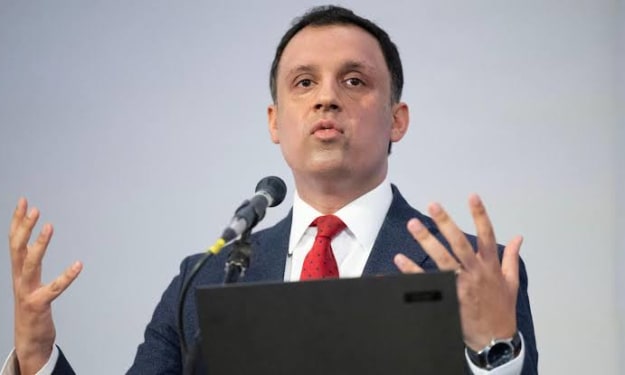
Scottish Labour Leader Anas Sarwar Expected to Call for Prime Minister to Resign. AI-Generated.
Scottish Labour leader Anas Sarwar is expected to call for the Prime Minister to resign, intensifying political pressure on the UK government amid mounting criticism over leadership and accountability. The move comes as opposition parties seek to capitalize on public dissatisfaction and renewed scrutiny of Westminster following a series of controversies that have weakened confidence in the Prime Minister’s authority. Sources close to Scottish Labour say Sarwar will use an upcoming speech to argue that the Prime Minister has lost the trust of the public and can no longer effectively lead the country. His remarks are expected to echo wider concerns raised by Labour figures across the UK, who have accused the government of failing to address key issues such as the cost-of-living crisis, public services, and political integrity. Growing Political Pressure Sarwar has previously positioned Scottish Labour as a party focused on stability and reform, contrasting his leadership with what he describes as “chaos and drift” at Westminster. In recent weeks, he has sharpened his tone, signaling that the time has come for decisive political change. “The country deserves leadership that restores confidence and puts people first,” Sarwar is expected to say, according to party insiders. “When a Prime Minister loses the trust of Parliament and the public, resignation becomes a matter of responsibility, not politics.” The anticipated call adds to a chorus of opposition voices demanding accountability, with senior Labour figures in London also questioning the Prime Minister’s ability to govern effectively. The Scottish National Party (SNP) and Liberal Democrats have similarly urged the government to explain its handling of recent crises. Impact in Scotland In Scotland, Sarwar’s stance is also seen as part of a broader effort to reassert Scottish Labour’s relevance ahead of future elections. Polling has suggested shifting political dynamics, with Labour seeking to challenge the SNP’s dominance while presenting itself as a credible alternative both in Holyrood and Westminster. Political analysts note that Sarwar’s call for resignation could resonate with voters frustrated by political turmoil at the UK level. “Scottish Labour is trying to show that it is willing to take a firm stand on leadership and standards,” said Dr. Fiona McKenzie, a political scientist at the University of Edinburgh. “This is about drawing a clear line between what Sarwar says is responsible government and what he characterizes as failure at Westminster.” However, some critics argue that the move risks being seen as opportunistic rather than constructive, particularly at a time when economic and social challenges remain acute. Government Response Downing Street has dismissed opposition calls for resignation, insisting that the Prime Minister retains the confidence of his party and is focused on delivering policies aimed at economic growth and national stability. A government spokesperson said the administration would not be distracted by what it described as “political grandstanding.” “The Prime Minister is committed to serving the British people and addressing the challenges facing the country,” the spokesperson said. “We remain focused on delivering results rather than engaging in political theatre.” Conservative Party officials have also rallied behind the Prime Minister, emphasizing the importance of unity and warning that further leadership disputes could undermine confidence in the UK’s political system. Broader Political Context Sarwar’s expected intervention comes at a time when trust in political institutions is under strain. A series of scandals and policy reversals has fueled public skepticism, while opposition parties have seized the moment to demand reforms and leadership change. Within Labour, the message has been carefully coordinated to present a united front across the UK. While Sarwar speaks for the party in Scotland, his stance aligns with broader Labour calls for higher standards in public office and renewed accountability at the top of government. Observers say the pressure on the Prime Minister is unlikely to ease in the coming weeks, especially if further criticism emerges from within Parliament or among senior political figures. What Happens Next Whether Sarwar’s call will have a tangible impact remains uncertain. While opposition demands for resignation can influence public debate, the decision ultimately rests with the Prime Minister and their party. Still, the intervention underscores the growing sense of political instability and the deepening divide between the government and its critics. As Sarwar prepares to make his statement, the spotlight will once again fall on Westminster leadership and the question of whether the Prime Minister can survive the latest wave of opposition pressure. For Scottish Labour, the move represents both a challenge to the government and a strategic effort to define its role in shaping the future of UK politics.
By Fiaz Ahmed about 6 hours ago in The Swamp
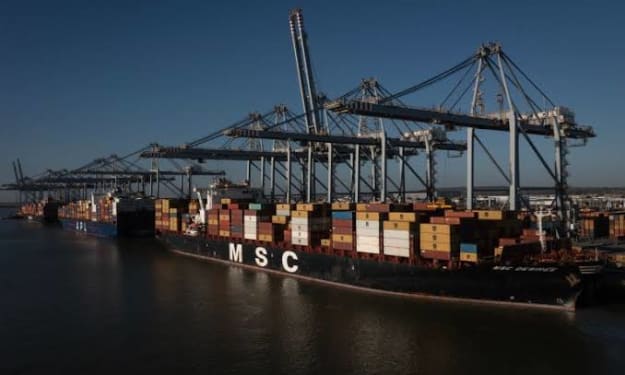
Shipping Giant MSC Facilitates Trade From Israeli Settlements Through EU. AI-Generated.
A major international shipping company, Mediterranean Shipping Company (MSC), has come under renewed scrutiny following reports that its logistics network is being used to transport goods originating from Israeli settlements in the occupied West Bank into European Union markets. Human rights groups and trade watchdogs say the practice raises serious legal and ethical concerns, as EU policy does not recognize Israeli settlements as part of Israel and considers them illegal under international law. According to investigative findings shared with European regulators, cargo linked to settlement-based agricultural and industrial producers has been shipped through MSC’s Mediterranean routes and distributed via ports in Italy, Spain, and the Netherlands. The shipments allegedly entered the EU supply chain without clear labeling of their true origin, making it difficult for customs officials and consumers to distinguish settlement products from those produced within Israel’s internationally recognized borders. Legal and Political Sensitivities The European Union has long maintained that products from Israeli settlements must be labeled differently from those made in Israel. In a 2019 ruling, the European Court of Justice required settlement goods to be clearly identified so that consumers could make informed purchasing decisions. However, campaigners argue that shipping companies play a critical role in enabling settlement trade by providing transport services that obscure the origin of goods. “Without global shipping firms, these products could not reach European markets at this scale,” said Marie Keller, a spokesperson for a Brussels-based trade ethics organization. “This is not just a commercial issue. It has direct political and legal consequences.” MSC has not been accused of violating EU sanctions, but critics say its involvement demonstrates gaps in enforcement and oversight within international supply chains. Company Response In a brief statement, MSC said it complies with all applicable international and local regulations and does not knowingly transport prohibited goods. “MSC operates as a neutral carrier and does not determine the origin of the cargo beyond the documentation provided by exporters and authorities,” the company said. “We adhere strictly to customs and trade laws in all jurisdictions in which we operate.” The company also stressed that responsibility for labeling rests with exporters and importers, not with shipping firms. Despite this, activists argue that large logistics providers have a responsibility to conduct due diligence on the origin of goods, especially in conflict zones where trade may contribute to violations of international law. Pressure From Rights Groups Several European human rights organizations have urged EU governments to investigate whether shipping routes from Israeli ports indirectly serve settlement producers. They claim that some settlement companies use Israeli-based intermediaries to export goods, allowing them to bypass labeling requirements. “These are not isolated cases,” said Omar Haddad, a researcher specializing in supply chain transparency. “There is a systemic problem where settlement goods are integrated into Israel’s export system and then shipped worldwide.” Advocacy groups have called for stricter customs checks and for shipping firms to publish more transparent data about their cargo origins. Diplomatic Impact The issue comes amid growing tensions between European governments and Israel over settlement expansion. Several EU member states have reaffirmed their opposition to settlement activity and expressed concern that commercial ties may indirectly support it. A senior EU official, speaking on condition of anonymity, said Brussels was reviewing trade compliance mechanisms. “We expect companies operating within the EU to respect both the letter and the spirit of European law,” the official said. “This includes ensuring that goods from disputed territories are not misrepresented.” Broader Trade Implications The controversy highlights the complexity of modern global trade, where goods often pass through multiple countries and intermediaries before reaching consumers. Experts say this makes enforcement of ethical trade policies difficult, especially when shipping companies handle millions of containers each year. “Supply chains are opaque by design,” said Dr. Elena Rossi, an international trade analyst in Milan. “Unless there is mandatory disclosure and digital tracking, it is extremely hard to verify where products truly come from.” The European Commission is reportedly considering new measures that would require greater transparency from logistics companies and importers, particularly for goods originating in conflict-affected regions. Looking Ahead For now, MSC continues to operate its Mediterranean routes as usual, while pressure mounts from activists and lawmakers for greater accountability. The debate underscores a broader question about the role of multinational corporations in politically sensitive trade and whether neutrality is possible in deeply contested regions. As investigations continue, the case is likely to fuel calls for tighter regulation of shipping firms and renewed scrutiny of EU-Israel trade relations. The outcome could set an important precedent for how international logistics companies are held responsible for the origins of the goods they transport.
By Fiaz Ahmed about 6 hours ago in The Swamp
Epstein Survivors Call for Full Release of Files. AI-Generated.
Survivors of abuse linked to Jeffrey Epstein are once again raising their voices, calling for the full and unredacted release of all remaining files connected to the case. Their renewed demand follows the circulation of a video that has reignited public attention and reopened painful questions about accountability, power, and the protection of victims. For survivors, this is not about curiosity or sensationalism—it is about truth, justice, and the right to be heard.
By Ayesha Lashariabout 6 hours ago in The Swamp
Morocco and Dozens of African Nations Face Major U.S. Travel Setback as Immigrant Visa Processing is Frozen
The United States government has recently made a surprising and impactful decision: halting immigrant visa processing for nationals from over 26 African countries, including Morocco, Nigeria, Egypt, Ghana, Algeria, and Senegal. This policy, which took effect in February 2026, is part of a broader effort to ensure economic stability and reassess visa applicants’ ability to financially support themselves in the U.S. While non-immigrant visas like tourist or student visas are not directly affected, this move has caused widespread uncertainty among families, professionals, and students hoping to start a new chapter in the United States.
By Ayesha Lashariabout 6 hours ago in The Swamp
Morocco and Dozens of African Nations Face Major U.S. Travel Setback as Immigrant Visa Processing is Frozen. AI-Generated.
The United States government has recently made a surprising and impactful decision: halting immigrant visa processing for nationals from over 26 African countries, including Morocco, Nigeria, Egypt, Ghana, Algeria, and Senegal. This policy, which took effect in February 2026, is part of a broader effort to ensure economic stability and reassess visa applicants’ ability to financially support themselves in the U.S. While non-immigrant visas like tourist or student visas are not directly affected, this move has caused widespread uncertainty among families, professionals, and students hoping to start a new chapter in the United States.
By Ayesha Lashariabout 6 hours ago in The Swamp
Morocco Joins Nigeria, Egypt, Ghana, Algeria, Senegal, and Others in Facing a Travel Setback to the US as the Government Cracks Down on Economic Stability by Freezing Visa Processing for Nationals of Over Twenty-Six African Countries Starting This Month. AI-Generated.
In a move that has sparked concern across the African continent, the United States government has announced a temporary freeze on visa processing for nationals of more than twenty-six African countries, including Morocco, Nigeria, Egypt, Ghana, Algeria, and Senegal. Beginning this month, applicants from these nations are facing new delays and uncertainty as U.S. authorities tighten immigration controls in response to what officials describe as concerns over economic stability and immigration compliance.
By Sajida Sikandarabout 6 hours ago in The Swamp
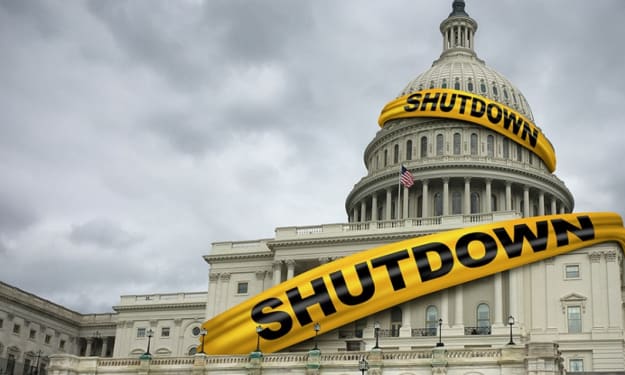
Government Shutdown DHS Funding: What Happens When Safety Is at Risk
A government shutdown is not just a headline. It is a quiet disruption that reaches into homes, airports, borders, and paychecks. When the words government shutdown DHS funding appear together, they signal something more personal than politics. They point to uncertainty for workers who protect borders, respond to disasters, and keep transportation moving. For many Americans, these debates feel distant until flights slow, security lines stretch, or emergency services strain. This article explores what government shutdown DHS funding really means, why it keeps happening, and how it affects real people in ways that are often overlooked.
By Muqadas khanabout 7 hours ago in The Swamp