politics
Politics does not dictate our collective cultural mindset as much as it simply reflects it; We've got to look in the mirror sometimes, and we've got one.
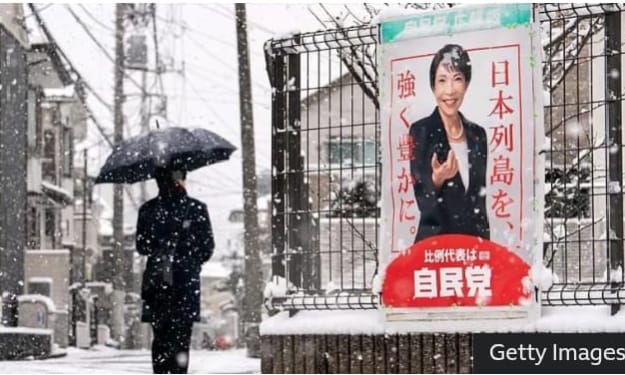
Japanese Voters Brave Heavy Snow to Cast Ballots in Snap Election. AI-Generated.
Japanese citizens across several regions braved heavy snowfall and freezing temperatures to cast their votes in a snap general election, demonstrating a strong commitment to democratic participation despite challenging weather conditions. The unexpected election, called amid political and economic uncertainty, tested both voter determination and the country’s election preparedness during one of the harshest periods of winter.
By Ayesha Lashari5 days ago in The Swamp
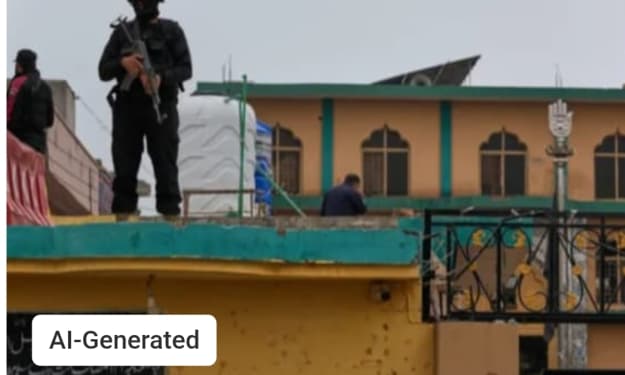
China Condemns Islamabad Mosque Attack, Reaffirms Strong Support for Pakistan. AI-Generated.
China has strongly condemned the recent attack on a mosque in Islamabad, expressing solidarity with the people and government of Pakistan and reaffirming its unwavering support in the fight against terrorism. The condemnation reflects not only Beijing’s concern over rising security challenges in the region but also underscores the enduring strategic partnership between the two neighboring countries.
By Ayesha Lashari5 days ago in The Swamp
China Criticizes U.S. for WHO Pullout, Accusing It of Sidestepping International Law. AI-Generated.
China has sharply criticized the United States for its decision to withdraw from the World Health Organization (WHO), accusing Washington of undermining international law and weakening global cooperation on public health. The move has reignited diplomatic tensions between the world’s two largest economies and raised concerns about how global health governance will function in an increasingly divided geopolitical climate.
By Sajida Sikandar5 days ago in The Swamp
US and Iran Say ‘Good’ Start Made in Talks Over Nuclear Programme. AI-Generated.
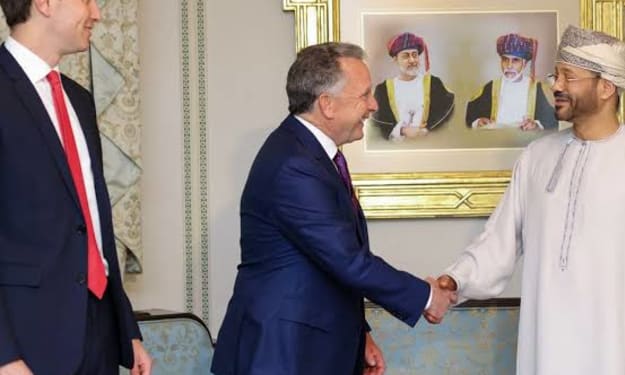
After years of animosity, intermittent negotiations and escalating threats, the United States and Iran took a tentative step toward reviving diplomatic engagement this week — with both sides describing indirect talks over Tehran’s nuclear programme as a “good start.” The discussions, held in Muscat, Oman, were the first substantive engagement on the contentious issue since high tensions erupted following U.S. and allied military actions and deep mistrust between the two governments. Mediated by the government of Oman, the opening round of indirect talks brought together senior Iranian and U.S. representatives in an effort to find common ground on one of the most polarising security issues in the Middle East: Iran’s nuclear ambitions. Iranian Foreign Minister Abbas Araghchi told state media that the engagement was a positive beginning and agreed that both sides should continue dialogue, with further consultations to be planned in their respective capitals. A Fragile Diplomatic Start The discussions in Muscat did not produce a breakthrough agreement, but the language used by both sides reflected cautious optimism about keeping diplomatic channels open. Araghchi described the indirect talks, mediated by Oman’s foreign minister, as a “very good start” and said that there was an understanding to continue negotiations following further consultations in Tehran and Washington. The emphasis remained on resuming a process that has been stalled for months. The National Crucially, Tehran insisted that the dialogue must be conducted in a calm environment free from threats and pressure, and that the process should focus strictly on the nuclear programme — not on other contentious issues such as its ballistic missile capabilities, regional influence or human rights matters. Araghchi emphasised that Iran would not widen the agenda to include these broader elements. Apa.az The U.S. delegation, which included special envoy Steve Witkoff and senior advisers, underscored its interest in re-engaging diplomatically, even as it continued to apply economic and political pressure through sanctions. Western diplomats have said that willingness to talk, even indirectly, may help avert the risk of renewed military confrontation in a region long marked by volatility and sparked by confrontations last year. Reuters Points of Contention and Red Lines While both sides welcomed the resumption of diplomacy, serious disagreements remain. Washington has repeatedly expressed a desire to address not only nuclear issues but also Iran’s ballistic missile development and support for allied groups across the Middle East. These issues, championed by U.S. lawmakers and regional partners such as Israel and Gulf states, have complicated negotiations because Tehran considers them matters of sovereignty and defence rather than subjects for compromise. Khaleej Times In Muscat, Iranian officials underlined that discussions would remain narrowly focused. Araghchi reiterated Iran’s stance that the nuclear question is central and that framing talks around other security concerns could undermine progress. This reflects Tehran’s longstanding view that its right to enrich uranium for peaceful purposes, as recognised under the Nuclear Non-Proliferation Treaty (NPT), is non-negotiable — even if Washington and its allies remain sceptical about Iran’s intentions. The National Despite these differences, both delegations acknowledged that the current atmosphere of distrust poses a major challenge. Araghchi highlighted the need to overcome this mistrust before substantive agreement — or even a formal framework — can be reached. Further consultations in respective capitals are expected to sharpen positions ahead of subsequent rounds. Apa.az Context of Escalation and Sanctions Pressure The Oman talks occur against a backdrop of heightened regional tension. Relations deteriorated significantly last year following U.S. and Israeli airstrikes on Iranian nuclear facilities, which led to retaliatory missile strikes and raised fears of wider conflict. In response to ongoing tensions, Washington has maintained a stepped-up military presence in the Gulf and continued to impose sanctions targeting Iranian petroleum exports and entities linked to illicit trade. The National The U.S. sanctions regime was expanded even as diplomats met, with announcements targeting shadow-fleet vessels and business networks linked to Iranian oil — a clear signal of America’s dual strategy of pressure alongside diplomatic engagement. These measures aim to limit Iran’s financial ability to sustain its nuclear and military programmes, even as negotiators work toward a possible negotiated outcome. Khaleej Times International Responses and Future Prospects Regional leaders and foreign governments have watched the Muscat talks closely, with many expressing cautious support for renewed dialogue — albeit with reservations. Israeli Prime Minister Benjamin Netanyahu is reported to be scheduling discussions with U.S. President Donald Trump to coordinate policy toward Iran, particularly regarding nuclear caps and the missile threat. European and Gulf partners have also urged restraint and continued diplomacy as the most viable path to prevent another conflagration in the oil-rich region. Reuters Oman’s role as mediator underscores its longstanding position as a neutral facilitator of such engagements, and officials described the negotiations as “very serious,” with plans to reconvene after careful consideration by both Tehran and Washington. The National A Cautious Outlook For now, both sides appear committed to building on the “good start,” even if significant skepticism surrounds the likelihood of a comprehensive deal. Deep mistrust, entrenched policy differences, and ongoing sanctions make progress uncertain. But the resumption of dialogue — however tentative — marks a notable shift from months of diplomatic silence. The coming weeks will test whether this affable beginning can evolve into sustained negotiations capable of addressing the core nuclear dispute, reducing regional tensions, and possibly easing economic hardship in Iran — or whether it will remain a brief diplomatic reprieve in an otherwise fraught geopolitical landscape. abc.net.au
By Fiaz Ahmed 5 days ago in The Swamp