travel
The best travel locations around the world for politics fans and history buffs to get an inside look into government buildings and political landmarks.
How to Watch Back-to-Back Northern Lights for a Third Time This Week. AI-Generated.
Aurora borealis enthusiasts have reason to celebrate: the Northern Lights are set to appear for a third consecutive time this week, offering an unprecedented streak of celestial displays. These mesmerizing lights, caused by charged particles from the sun colliding with Earth’s atmosphere, are a highlight of winter skies in northern regions, and scientists say this week’s back-to-back events could be some of the most vivid in years.
By Aarif Lashari9 days ago in The Swamp
Canada Is Not Minnesota. AI-Generated.
To many outsiders, Canada and the American Midwest—especially Minnesota—can appear almost identical. They share cold winters, friendly accents, love for hockey, and landscapes filled with lakes and forests. Jokes often circulate that Minnesota is basically “Canada Lite,” or that Canada is just a larger version of Minnesota. While the similarities are real, they can blur important distinctions. Canada is not Minnesota, and reducing one to the image of the other oversimplifies rich histories, cultures, and identities that deserve to stand on their own.
By Sajida Sikandar9 days ago in The Swamp
Discovering MIOS, France: A Hidden Gem on the Atlantic Coast. AI-Generated.
Tucked away in the picturesque region of Nouvelle-Aquitaine, MIOS, France, is a destination that perfectly blends natural beauty, history, and small-town charm. While it may not appear on every tourist map, this quaint commune on the Atlantic coast has become a quiet favorite for travelers seeking an authentic French experience away from crowded cities and popular beach resorts.
By Sajida Sikandar9 days ago in The Swamp
Is America About to Attack Iran? A Look at Rising Tensions and Global Stakes. AI-Generated.
Amid rising geopolitical tensions, many around the world are asking a question with serious consequences: Is the United States preparing to attack Iran? The short answer is that while there is no confirmed imminent attack, developments over the past weeks suggest a heightened risk environment involving serious threats, military build‑ups, and diplomatic pressure that could, under certain conditions, escalate into conflict. The Economist Here’s a clear, informative breakdown of what’s happening — and what it might (or might not) mean for a U.S. strike on Tehran. What’s Fueling the Tension At the heart of the current crisis are escalating threats between the U.S. and Iran, particularly over Iran’s nuclear program and its internal political repression. Donald Trump — now back in the White House — has issued several warnings to Tehran, saying a large U.S. naval “armada” is heading toward the region and that Iran should agree to a nuclear deal or face a “far worse” attack. اnational In response, Iran has signaled strong resistance. Iranian leadership has declared that any military action would be treated as the beginning of a full‑scale war, with immediate and far‑reaching retaliation. TASS These developments are accompanied by military deployments — including aircraft carriers and destroyers — and aggressive rhetoric on both sides. Financial Times +1 What the U.S. Has Actually Done To understand whether a major attack is imminent, it helps to look at what the U.S. has already done: 1. Naval and Military Buildup The U.S. has sent significant naval assets to the Middle East, including the USS Abraham Lincoln and accompanying strike group. Military analysts note this is the largest U.S. deployment in the region in years, signaling seriousness but not necessarily intent to strike immediately. Fina2. Past Strikes on Nuclear Sites In June 2025, U.S. forces, alongside or in support of Israeli operations, bombed three Iranian nuclear facilities as part of efforts to curb nuclear development. At the time, U.S. officials insisted they did not want full war, characterizing the mission as a necessary action to check nuclear escalation. Military.com This prior strike is relevant because it shows the U.S. is capable of acting militarily against Iran — but it also said it was not seeking a broader war. Military.com Tehran’s Response Iranian officials have issued stark warnings about the consequences of any U.S. attack: Iran will treat any U.S. military action as a start of war, promising immediate retaliation against the U.S., its allies, and potentially Israel. TASS Iran’s foreign minister has emphasized readiness to respond “powerfully” to any aggression, while also warning that threat‑based diplomacy undermines negotiations. Philstar.com These statements underscore that Iran is not sitting passively — and any attack could trigger a broader regional conflict. Are Diplomacy Efforts Still Alive? Despite the threats, diplomatic channels have not completely closed: Iran has reiterated that it is open to a “fair and equitable” nuclear deal that respects its right to peaceful nuclear technology, but it rejects negotiations under a cloud of military threat. Philstar.com Other global powers, including Russia, have urged the U.S. and Iran to pursue talks rather than force, warning that military action would destabilize the broader Middle East. Reuters This suggests that — even amid hostile rhetoric — there is still a space for negotiation. What Experts Say Security analysts caution that the current situation contains elements of warning, deterrence, and diplomacy rather than clear signs of imminent war: Some see recent rhetoric — like threats of bombardment — as part of pressure tactics meant to force Iran back to negotiations rather than a prelude to immediate conflict. ent of a large naval force could be interpreted as a deterrent posture, aimed both at signaling resolve and reassuring U.S. allies in the region, not solely preparing for an offensive strike. Financial Times Historical context matters: past interactions between the U.S. and Iran have included crises that did not escalate into full war, even when they appeared close. Experts note that both sides are aware of the high risks of a wider conflict. Could It Still Happen? Yes — but it is far from certain. A U.S. attack could occur under specific circumstances, such as: A sudden Iranian attack on U.S. forces or critical regional infrastructure Intelligence suggesting a imminent threat from Iran’s nuclear program Breakdown of diplomatic de‑escalation efforts However, many policymakers and analysts emphasize that the U.S. is not currently at war with Iran and that Washington continues to publicly claim it doesn’t want a broader war, even if it is prepared militarily. TIME What Would Be the Consequences? A direct American military strike on Iran could escalate dramatically: Iran has a wide range of ballistic missiles capable of striking U.S. bases and regional partners. Al Jazeera Iran could activate allied militias and regional forces, potentially spreading conflict across multiple Middle Eastern theaters. omic instability could follow, particularly if the Strait of Hormuz is affected. For these reasons, many diplomats and analysts argue that all-out war would be deeply dangerous — and is not something either side would choose lightly. Bottom Line So, is America about to attack Iran? Not imminently — at least not based on confirmed evidence — but the risk environment is serious and volatile. The U.S. has bolstered its military presence and ramped up rhetoric, while Iran has responded with warnings of severe retaliation. A conflict could occur if diplomatic channels fail or if violent engagement erupts first — but military analysts still see deterrence and negotiation as significant factors in preventing an outright war. Conditions are tense, and global observers are watching closely — because the stakes extend far beyond Iran and the U.S. themselves. The Economist
By Aqib Hussain11 days ago in The Swamp
What Happens When Eight Million Universal Visitors Need the Loo?. AI-Generated.
Universal Studios, one of the world’s most visited theme park destinations, welcomes millions of guests every year. From thrilling rides to immersive movie-themed attractions, the parks promise excitement—but there’s another challenge that park operators face that rarely makes the headlines: managing restroom facilities for millions of people.
By Aarif Lashari12 days ago in The Swamp
EasyJet Faces Scrutiny Over ‘Misleading’ £5.99 Cabin Bag Fee. AI-Generated.
EasyJet has come under renewed scrutiny after being warned that its £5.99 cabin bag fee could be considered “misleading” by consumer rights advocates. The controversy has reignited a broader debate about transparency in airline pricing and the true cost of flying with low-cost carriers.
By Ayesha Lashari13 days ago in The Swamp
Storm Chandra Wreaks Havoc: Flooding, Travel Chaos and School Closures as New Warnings Are Issued. AI-Generated.
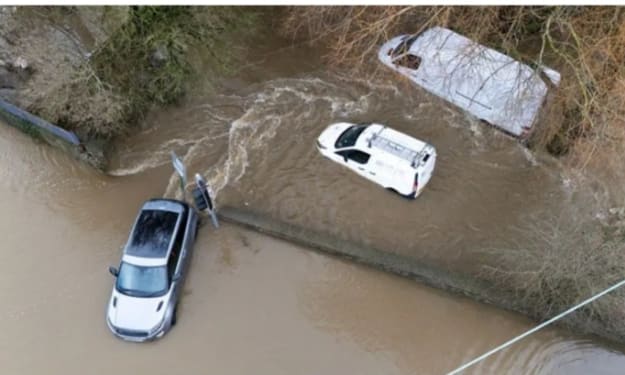
Storm Chandra has battered large swathes of the United Kingdom and Ireland with torrential rain, damaging winds and widespread flooding, prompting severe weather warnings, travel disruption and the closure of hundreds of schools. Emergency services, transport operators and local authorities are grappling with the fallout as forecasts predict the storm’s effects could linger for days.
By Ayesha Lashari14 days ago in The Swamp
Tragedy at Sea: Vessel Faces Disaster While En Route to the Ad Dimaniyat Islands. AI-Generated.
What began as a routine journey quickly transformed into a terrifying ordeal. The vessel was reportedly en route to the Ad Dimaniyat Islands when conditions on the water suddenly took a turn for the worse, leaving passengers and crew fighting against the raw power of nature. The incident has once again highlighted how unpredictable the sea can be, even in regions known for their beauty and relative calm. The Ad Dimaniyat Islands, located off the coast of Oman, are famous for their crystal-clear waters, vibrant marine life, and growing popularity among tourists and divers. Yet, as this incident shows, even paradise can become perilous when weather and water conditions change without warning. A Journey That Began Like Any Other According to early reports, the vessel departed under what appeared to be normal conditions. The sea was relatively calm, visibility was clear, and there were no immediate signs of danger. Passengers on board reportedly expected a smooth trip, many excited to experience the pristine beaches and coral reefs that make the Ad Dimaniyat Islands a sought-after destination. Such trips are common in the region, particularly during peak tourist seasons when boats regularly transport visitors between the mainland and the islands. For experienced operators, the route is familiar, and incidents are rare—making what followed all the more shocking. When Conditions Suddenly Changed As the vessel continued its journey, conditions on the water reportedly deteriorated rapidly. Strong winds began to rise, waves grew increasingly aggressive, and the once-manageable sea turned rough within a short period of time. Witnesses later described how the vessel struggled to maintain balance as waves struck from unexpected angles. Sudden weather shifts like these are among the most dangerous challenges at sea, as they leave little time for preparation or course correction. Maritime experts note that even modern vessels equipped with navigation systems and safety gear can be overwhelmed when wind speed and wave height increase abruptly. Panic, Fear, and the Fight for Control As conditions worsened, fear spread among those on board. Passengers reportedly clung to railings and seating as the vessel rocked violently. Crew members worked urgently to stabilize the boat, issuing instructions and attempting to maintain order amid the chaos. Moments like these test both training and human endurance. In rough seas, even simple movements become difficult, and communication can be drowned out by wind and crashing waves. The priority becomes survival—keeping the vessel afloat and ensuring passengers remain as safe as possible. Thankfully, early reports suggest that emergency protocols were activated quickly, helping prevent an even more catastrophic outcome. The Role of Weather and Sea Forecasting One of the key questions following the incident is how rapidly changing conditions were able to catch the vessel off guard. Coastal waters can be deceptive; while they may appear calm near shore, open stretches can experience sudden shifts due to wind patterns, currents, and atmospheric pressure changes. Maritime authorities emphasize the importance of constant monitoring, even during short trips. Forecasts provide guidance, but real-time observation remains critical. Unfortunately, nature does not always follow predictions, and the sea can turn hostile in minutes. This incident serves as a reminder that no maritime journey is ever entirely risk-free, regardless of experience or planning. Emergency Response and Rescue Efforts Once the seriousness of the situation became clear, emergency response procedures were reportedly set in motion. Communication with coastal authorities allowed for assistance to be mobilized quickly, and nearby vessels remained on alert in case evacuation or rescue became necessary. Swift coordination between crew and rescue teams is often the difference between life and tragedy in maritime emergencies. While full details of the response continue to emerge, early indications suggest that preparedness and quick decision-making helped avert loss of life. Such incidents underscore the importance of investing in maritime safety training, emergency equipment, and clear communication channels. Why the Ad Dimaniyat Islands Attract So Many Visitors Despite the dangers highlighted by this event, the Ad Dimaniyat Islands remain one of Oman’s most treasured natural sites. The protected nature reserve is known for its biodiversity, including sea turtles, coral reefs, and rare bird species. Tourism to the islands has increased in recent years, bringing economic benefits but also raising concerns about safety and environmental protection. As more vessels travel the route, ensuring strict safety standards becomes even more critical. Authorities may now reassess regulations, weather monitoring practices, and operational guidelines to reduce the risk of future incidents. Lessons Learned From the Incident Every maritime emergency carries lessons—often learned at great cost. This incident highlights several key takeaways: Weather conditions can change without warning Even short sea journeys require full preparedness Crew training and calm decision-making save lives Emergency response coordination is essential For passengers, it is also a reminder to take safety briefings seriously and remain alert, even when a trip seems routine. A Stark Reminder of the Sea’s Power That the vessel was reportedly en route to the Ad Dimaniyat Islands when conditions on the water suddenly took a turn for the worse is a phrase that captures the heart of the incident. It reflects how quickly the balance between tranquility and danger can shift at sea. While investigations continue and more details emerge, the story stands as a sobering reminder of nature’s unpredictability. The ocean offers beauty, freedom, and adventure—but it also demands respect. As tourism and maritime travel continue to grow, stories like this reinforce a timeless truth: the sea is never entirely under human control.
By Aarif Lashari14 days ago in The Swamp