
Ten Years After Ending Its ‘One-Child’ Policy, China’s Push for More Babies Isn’t Winning Citizens Over
China’s Population Challenge: Why Incentives Aren’t Persuading Citizens to Have More Children


A decade has passed since China officially ended its controversial one-child policy, a strict measure that shaped generations and restricted families from having more than one child. In 2016, authorities announced the two-child policy, and more recently, even relaxed restrictions to allow three children per family. Yet, despite these efforts, the nation’s population growth continues to falter, as citizens remain reluctant to expand their families.
The Legacy of the One-Child Policy
China’s one-child policy, introduced in 1979, was aimed at curbing rapid population growth that threatened economic stability and environmental sustainability. While it succeeded in slowing population expansion, it created deep societal effects. Many urban couples today, shaped by decades of state-imposed family planning, have internalized small-family norms.
Even after policy relaxations, the psychological and financial habits formed over a generation are hard to undo. The mindset of limiting family size has persisted, with many young couples preferring one child—or sometimes none—despite government encouragement.
Incentives Aren’t Enough
The Chinese government has introduced a range of incentives to boost fertility, including extended maternity leave, subsidies for childcare, tax deductions, and housing benefits. Some cities have gone further, offering cash rewards or monthly allowances for families who have more children.
However, these measures are struggling to achieve the desired effect. Urban couples cite soaring living costs, expensive education, and competitive job markets as significant barriers to having more children. Housing prices in major cities like Beijing and Shanghai make it financially daunting for families to accommodate additional children. The rising costs of healthcare and early education further reinforce the reluctance to expand families.
Zhang Wei, a 32-year-old software engineer in Shanghai, says, “Even with government incentives, it’s not just money. It’s time, energy, and work pressure. Raising a child here is exhausting. Two seems impossible for most young couples.”
Changing Social Attitudes
Beyond economics, social and cultural attitudes are shifting. Many young Chinese adults prioritize career growth, personal freedom, and lifestyle choices over starting large families. Delayed marriages and later childbirth are becoming common, further reducing fertility rates.
Research indicates that the ideal family size among Chinese urban couples is just one child. This preference reflects long-term adaptation to the one-child policy and broader global trends where urbanization and modern lifestyles correlate with smaller family sizes.
Women’s empowerment also plays a role. More women are pursuing higher education and professional ambitions, often postponing childbearing or choosing fewer children. While policies aim to reduce the burden of parenting, entrenched societal norms and workplace pressures continue to influence personal decisions.
Demographic and Economic Consequences
China’s declining birth rate has significant implications for the country’s future. A shrinking workforce threatens economic growth, reduces consumer demand, and places greater strain on social security systems. The aging population is growing faster than the younger generation, creating an imbalance that could challenge healthcare systems and pension schemes.
The National Bureau of Statistics reported a record low in births in 2023, signaling that policy adjustments alone may be insufficient. Economists warn that without addressing structural issues—such as cost of living, childcare, and workplace flexibility—China’s demographic crisis may continue.
Lessons from Other Countries
China is not alone in facing declining fertility. South Korea, Japan, and many European nations have struggled to increase birth rates despite generous incentives. The experience shows that financial support alone cannot reverse deeply ingrained social and economic pressures. Comprehensive measures, including cultural shifts, gender equality in parenting, and work-life balance, are essential.
Government Response and Challenges Ahead
In response to the persistent low fertility, Chinese authorities are expanding family-friendly policies and promoting societal campaigns emphasizing the value of children. Yet, experts suggest that reversing decades of population control will be an uphill battle. Long-term cultural change, coupled with structural reforms in housing, healthcare, and workplace practices, will be necessary to persuade citizens to have larger families.
Political analyst Li Hong argues, “The government can’t force fertility. Incentives help, but unless society addresses the real challenges—economic pressures, career demands, urban living costs—birth rates will remain low. It’s a multifaceted problem requiring patience and creativity.”
Conclusion
Ten years after ending its one-child policy, China faces a critical demographic dilemma. Despite policy relaxations and financial incentives, citizens are not convinced to have more children. The combination of economic pressures, modern lifestyles, and long-standing cultural norms has created a population landscape resistant to change.
China’s efforts highlight the complex interplay between government policy, social attitudes, and personal choices. As the nation grapples with an aging population and slowing workforce growth, policymakers may need to think beyond incentives, addressing the structural and cultural factors that truly influence family decisions. Only a holistic approach, balancing economic, social, and personal considerations, may eventually lead to a meaningful increase in fertility.
About the Creator
Fiaz Ahmed Brohi
I am a passionate writer with a love for exploring and creating content on trending topics. Always curious, always sharing stories that engage and inspire.
Keep reading
More stories from Fiaz Ahmed Brohi and writers in The Swamp and other communities.
India, Pakistan Exchange Lists of Nuclear Installations, Prisoners
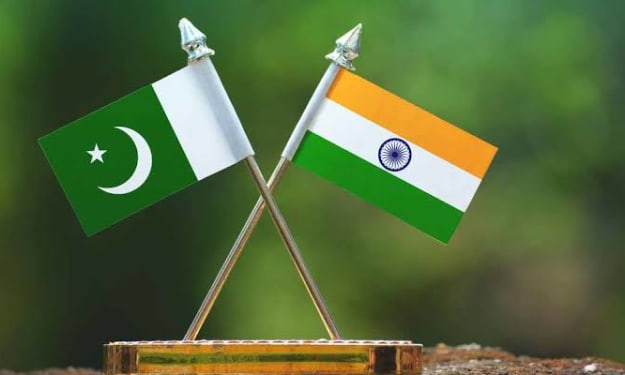
In a significant development for bilateral diplomacy, India and Pakistan have exchanged lists of nuclear installations and prisoners, reaffirming commitments to long-standing agreements on nuclear safeguards and prisoner welfare. This exchange, while largely procedural, reflects ongoing efforts by both nations to maintain communication channels despite persistent political tensions and regional security challenges. Nuclear Installations: Maintaining Strategic Transparency The exchange of nuclear installation lists between India and Pakistan is conducted under the 1988 Agreement on the Prohibition of Attack against Nuclear Installations and Facilities. This pact, aimed at preventing escalation during conflict, mandates that both countries provide updated information on their nuclear facilities to avoid misunderstandings or accidental targeting. Officials from both sides confirmed that the lists include all operational nuclear plants, research facilities, and missile-related installations. While details remain classified for security reasons, the move serves as a crucial confidence-building measure. Analysts note that maintaining transparency around nuclear sites reduces the risk of miscalculation in periods of tension and ensures compliance with international non-proliferation norms. Dr. Arvind Mishra, a strategic affairs expert, commented, “Even though India and Pakistan have had tense relations, this routine exchange demonstrates a shared understanding of the catastrophic consequences of nuclear escalation. It’s a procedural step, but an essential one for regional stability.” Prisoner Exchange: Humanitarian and Diplomatic Dimensions Alongside nuclear transparency, the two nations also submitted updated lists of prisoners held in each other’s custody. This is part of longstanding agreements allowing for the identification and repatriation of individuals detained during cross-border incidents, including fishermen and civilians inadvertently caught near contested borders. The prisoner exchange is often viewed as a humanitarian gesture, providing relief to families on both sides. While India and Pakistan have historically had disputes over territorial and security issues, these exchanges underscore a commitment to adhering to bilateral agreements even amid political friction. An official statement from the Indian Ministry of External Affairs emphasized, “The sharing of prisoner lists reflects our continued focus on humanitarian concerns and legal obligations. We remain committed to facilitating the return of individuals as per agreed protocols.” Implications for India-Pakistan Relations Though largely routine, these exchanges carry broader strategic implications. They signal that despite rhetoric and border tensions, formal communication channels remain functional. Confidence-building measures such as nuclear transparency and prisoner lists reduce the potential for misjudgments and demonstrate adherence to international norms. Experts note that such procedural steps are especially critical in the context of the India-Pakistan relationship, which has been shaped by historical conflicts, territorial disputes, and nuclear deterrence. Dr. Sarah Khan, a South Asia policy analyst, remarked, “These exchanges show that both nations recognize the need for stability in an inherently volatile region. Even small measures like updating nuclear site lists are vital for preventing inadvertent escalation.” International Perspective The international community often views these exchanges as positive steps towards maintaining peace in South Asia, a region with two nuclear-armed neighbors. Organizations such as the United Nations and the International Atomic Energy Agency (IAEA) have consistently encouraged transparency measures, considering them essential for reducing global nuclear risks. Additionally, humanitarian organizations monitor prisoner exchanges closely, advocating for the timely release and fair treatment of detainees. Ensuring that lists are accurate and up-to-date is crucial for maintaining trust and protecting the rights of affected individuals. Challenges and Criticism Despite the positive aspects, critics argue that such exchanges, while necessary, are insufficient to address the deeper political issues between India and Pakistan. Border skirmishes, disputes over Kashmir, and other strategic disagreements continue to strain relations. Analysts caution that without broader dialogue on core issues, these measures serve only as temporary mitigations rather than long-term solutions. Moreover, concerns about the welfare of prisoners remain, particularly regarding conditions of detention, legal representation, and the speed of repatriation. Human rights groups have repeatedly called on both nations to enhance transparency and ensure the humane treatment of all detainees. Conclusion The exchange of nuclear installation and prisoner lists between India and Pakistan is a small but meaningful step in maintaining dialogue and preventing misunderstandings. While largely procedural, these measures reflect adherence to international norms, demonstrate a commitment to humanitarian obligations, and provide a framework for confidence-building in an otherwise tense bilateral relationship. As regional and global observers watch closely, it becomes clear that consistent communication, transparency, and adherence to agreements—no matter how routine—remain essential for stability between these two nuclear-armed neighbors. While much work remains to resolve underlying conflicts, such exchanges represent a pragmatic approach to reducing risk and fostering a measure of trust in South Asia’s complex geopolitical landscape.
By Fiaz Ahmed Brohi2 months ago in The Swamp
Why Black History Matters in America?
The United States of America is celebrating their 250th anniversary in 2026. I'm proud to be an American and as someone who was born here, I wouldn't imagine myself living anywhere else. This is a country where opportunities are possible. Where anyone can be successful in anything they desire to do. Equality, community, and togetherness are the backbones of what America is and should be about. However, we have an administration who wants to erase and disregard those who have made positive, meaningful impacts in our country, specifically Black figures, such as Martin Luther King, Jr., Rosa Parks, and Maya Angelou. President Trump and his administration have been constantly complaining and fighting against what they call the "Woke agenda". They use this excuse as a distraction from other issues they refuse to address, such as the high cost of living, climate change, and inflation. That equality is dividing America, when in reality, it's bringing us together. Being woke is not tied to a specific political party. No matter where you stand on the political spectrum, you can still care about other people and their plights. Compassion and empathy for others isn't tied to a political party, either. We were taught as children to treat others the way we want to be treated and not judge others because they're different from us. Caring about others isn't a personal attack on your beliefs. It doesn't make you any less of a person. People who are easily offended over African American figures, past or present, or anything related to it, are grasping at straws. Current and future generations need to know who people like Harriet Tubman and Shirley Chisholm were, especially in the classroom. Black History is part of American History. It should be recognized, not hidden or forgotten. Besides, you can't shield children from everything, just because your feelings are easily hurt.
By Mark Wesley Pritchard 19 days ago in The Swamp
More US Military Jets Seen Heading Towards Middle East as Build‑Up Continues
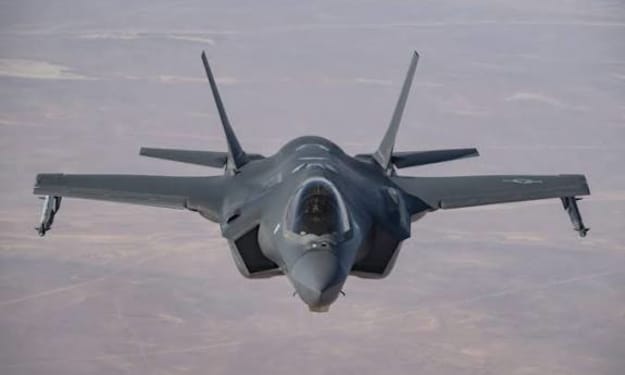
The United States is rapidly expanding its military presence in the Middle East, with dozens of fighter jets and support aircraft moving toward the region amid rising tensions with Iran and stalled nuclear negotiations. The deployment marks one of the most significant airpower build‑ups in the region in decades and comes alongside a larger naval force positioned to support a range of contingencies, including potential strikes, deterrence, and defence of America interests. Air & Space Forces Magazine +1 A Surge in Air Power Independent flight‑tracking data and military sources report that more than 50 fighter jets, including advanced aircraft such as F‑35 Lightning IIs, F‑22 Raptors and F‑16 Fighting Falcons, have been deployed toward the Middle East within the last 24 hours, supported by aerial refueling tankers. These aircraft have been observed transiting toward strategic bases in Qatar, Jordan, Saudi Arabia and nearby countries. The movement represents what analysts describe as the largest concentration of U.S. air power in the region since before the 2003 Iraq War, highlighting Washington’s emphasis on rapid response capabilities and increased readiness across the theatre. In addition to the strike aircraft, the U.S. Air Force has repositioned key command and control assets, including airborne early warning radar planes (AWACS) that enhance situational awareness and coordination across long distances. These support aircraft are critical for sustained operations and ensure that combat jets can operate effectively over complex airspace. Strategic Context The surge comes amid protracted indirect talks in Geneva between the U.S. and Iranian representatives over Tehran’s nuclear programme. Discussions have made some progress on broad principles but failed to bridge significant gaps on key issues such as nuclear enrichment limitations and ballistic missile restrictions. Washington’s military posture appears intended to complement diplomatic efforts by increasing pressure on Iran as negotiators seek an acceptable settlement. However, senior U.S. officials have indicated that diplomacy has a time limit, warning that failure to reach an agreement could trigger military options. A Broader Military Presence The aerial buildup is only one component of a broader U.S. buildup in the region. Two aircraft carrier strike groups — including the nuclear‑powered USS Gerald R. Ford and the USS Abraham Lincoln — along with destroyers and support vessels, are positioned in the Arabian Sea and Eastern Mediterranean. These naval assets provide additional strike capacity, air defence and logistical support for operations involving both air and surface forces. In tandem with jets and carriers, heavy transport aircraft, refuelling tankers and logistical support planes such as C‑17 Globemaster III and C‑5M Super Galaxy aircraft have also been redirected to the region. These strategic airlifters bring fuel, supplies and potentially heavy equipment needed to sustain prolonged operations if required. Allies and Regional Stability U.S. partners in the Gulf and broader Middle East have been watching the developments closely. While many governments publicly emphasise de‑escalation, the scale of American deployments increases regional awareness of a potential shift in security dynamics. Some allies view the buildup as a deterrent against possible Iranian‑backed aggression, while others express concern that a heavy U.S. presence could elevate tensions further. aol.com Risks and Preparedness Military planners acknowledge that positioning large numbers of aircraft and support assets near a potential conflict zone carries inherent risks, including potential confrontations with hostile forces or miscalculations that could escalate into open conflict. Nonetheless, U.S. authorities stress that the deployments are defensive in nature, aimed at protecting American interests and allies while retaining options across a spectrum of scenarios. To mitigate risks, the U.S. has also deployed advanced air defence systems and enhanced coordination with allied air forces. These measures are designed to protect bases, aircraft and critical infrastructure from retaliatory strikes or regional instability. Stars and Stripes What Comes Next As Iran negotiators and U.S. officials continue their diplomatic engagements, Washington’s military buildup shows no sign of slowing. The additional fighter jets and support aircraft now en route underline the Pentagon’s desire to maintain operational flexibility while sending a clear signal to Tehran and regional actors. Whether this deployment serves primarily as a deterrent or as preparation for potential military actions will depend on diplomatic developments and decisions made at the highest levels of the U.S. government. For now, the presence of more U.S. military jets heading toward the Middle East underscores the seriousness of the current impasse and the broader stakes involved in regional security.
By Fiaz Ahmed about 19 hours ago in The Swamp


Comments
There are no comments for this story
Be the first to respond and start the conversation.