
The NATO Soldiers Training to Defend Europe Against Putin
Alliance reshapes its forces for a new era of high-intensity warfare Drills across Eastern Europe signal readiness and deterrence Ukraine war lessons drive NATO’s largest training buildup in decades From Poland to the Baltics, troops prepare for a long-term standoff with Russia NATO shifts focus from peacekeeping to territorial defense

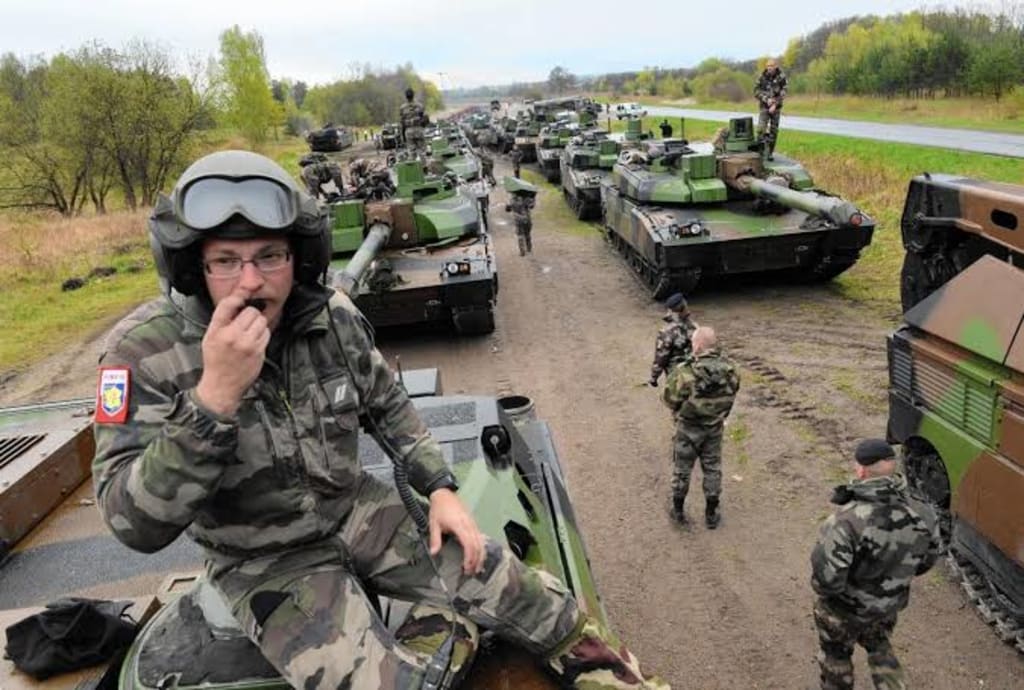
Across forests in Poland, frozen plains in the Baltics, and military bases in Germany and Romania, thousands of NATO soldiers are preparing for a scenario that until recently seemed unthinkable: a direct confrontation with Russia. Since Moscow’s invasion of Ukraine, the alliance has transformed its training programs to focus on defending Europe’s eastern flank against what it sees as a long-term and growing threat from President Vladimir Putin’s military ambitions.
These exercises are no longer symbolic displays of unity. They are large-scale, realistic war games designed to test how NATO forces would respond if Russia attempted to expand the conflict beyond Ukraine. Tanks thunder across muddy fields, fighter jets practice coordinated strikes, and cyber units simulate attacks on communication networks. The message is clear: NATO is shifting from decades of crisis management to full territorial defense.
A New Era of Training
For years after the Cold War, NATO focused its military training on counterterrorism missions and overseas operations in places like Afghanistan and Iraq. That changed dramatically in 2022. Today, alliance planners are rebuilding skills needed for high-intensity warfare between powerful armies.
In Poland, multinational battalions made up of troops from the United States, Britain, Germany, and other allies conduct joint drills near the border with Belarus. These soldiers practice rapid deployment, air defense coordination, and battlefield medicine under conditions meant to mirror real combat. Officers say the goal is to ensure that forces from different countries can fight as one unit if a crisis erupts.
“This is about deterrence,” said a senior NATO commander overseeing exercises in Eastern Europe. “We want to make it absolutely clear that any attack on one ally will be met with a united and prepared response.”
Learning From Ukraine
Much of the training now draws lessons directly from the war in Ukraine. The widespread use of drones, electronic warfare, and long-range artillery has reshaped how soldiers prepare for combat. NATO troops are learning how to operate under constant surveillance and how to protect themselves from missile strikes and cyber disruptions.
In Germany, training centers have introduced simulations that replicate urban combat similar to the battles seen in cities like Mariupol and Bakhmut. Soldiers practice moving through destroyed buildings, evacuating civilians, and coordinating with intelligence units that track enemy movements in real time.
The emphasis is also on logistics. Ukraine’s war has shown that supply lines can determine the outcome of battles. NATO forces are now rehearsing how to move fuel, ammunition, and medical supplies quickly across borders, overcoming bureaucratic and infrastructure obstacles that once slowed deployments.
Expanding the Eastern Front
Since Russia’s invasion, NATO has increased its troop presence in Eastern Europe from about 40,000 to more than 100,000 at peak readiness. New battlegroups have been established in countries such as Slovakia, Hungary, Bulgaria, and Romania, in addition to existing deployments in the Baltic states and Poland.
These units are not only defensive but also symbolic. They demonstrate that an attack on any one of these countries would immediately involve multiple NATO members. For soldiers from smaller nations, training alongside major military powers provides reassurance that they are not alone.
A Lithuanian officer participating in joint exercises said the cooperation has transformed the region’s security outlook. “We used to worry about how fast help would arrive,” he said. “Now help is already here.”
Psychological Readiness
Beyond weapons and tactics, NATO is also focusing on the mental preparedness of its soldiers. The possibility of conflict with Russia carries enormous political and emotional weight. Commanders say troops must be ready for a long-term standoff, not just a short deployment.
Many soldiers speak openly about the seriousness of their mission. A British infantryman stationed in Estonia said the training feels different from previous exercises. “You know this isn’t theoretical,” he said. “You’re training for something that could actually happen.”
NATO has also increased cooperation with civilian authorities, rehearsing responses to hybrid threats such as sabotage, disinformation campaigns, and attacks on critical infrastructure like power grids and railways.
Russia Watches Closely
Moscow has repeatedly condemned NATO’s military buildup near its borders, calling it provocative and dangerous. Russian officials argue that the alliance’s expansion and exercises are proof that the West is preparing for confrontation.
NATO leaders reject that accusation, insisting their actions are purely defensive. They point out that Russia’s invasion of Ukraine forced the alliance to reconsider its posture. Finland and Sweden’s decision to join NATO further underlines how security calculations across Europe have shifted.
Military analysts warn that this new phase of deterrence carries risks. Large-scale exercises and troop movements increase the chances of misunderstandings or accidents. That makes communication channels between NATO and Russia more important than ever, even as political relations remain deeply strained.
Preparing for the Long Term
NATO’s training programs are expected to continue expanding in the coming years. Member states are increasing defense budgets and investing in modern equipment, including missile defense systems, advanced aircraft, and cyber capabilities. The alliance is also developing new response plans for different types of threats, from conventional invasions to cyberattacks and space-based warfare.
For the soldiers on the ground, the focus remains practical: be ready, work together, and deter aggression before it starts. Exercises may end after a few weeks, but the message they send is constant.
As one NATO general put it, “We train so we never have to fight. But if we must fight, we will not be unprepared.”
The soldiers training across Europe today represent a continent reshaping its defenses for an uncertain future. Whether their presence prevents conflict or merely postpones it remains unknown. What is certain is that NATO is signaling its determination to defend every inch of its territory against any challenge from Moscow — and to ensure that the lessons of Ukraine are not ignored.
About the Creator
Fiaz Ahmed
I am Fiaz Ahmed. I am a passionate writer. I love covering trending topics and breaking news. With a sharp eye for what’s happening around the world, and crafts timely and engaging stories that keep readers informed and updated.
Keep reading
More stories from Fiaz Ahmed and writers in The Swamp and other communities.
Henrique Capriles, Venezuelan Opposition Leader: What Comes Next for Venezuela?
Henrique Capriles Radonski, one of Venezuela’s most enduring opposition figures, stands at a crossroads as the country enters an unpredictable new chapter in its political life. Decades after rising to prominence as a challenger to Hugo Chávez and Nicolás Maduro, Capriles’s role is shifting in response to seismic developments — including the arrest of Maduro, the emergence of controversial amnesty laws, and ongoing fractures within the broader opposition movement. Capriles has long been a central voice in Venezuela’s struggle for democratic governance, even as the political landscape has fractured and shifted around him. Born in Caracas in 1972, Capriles entered politics in the 1990s and quickly rose through the ranks, becoming a member of Venezuela’s Congress and later governor of Miranda state. He gained national visibility in 2012 when he ran as the unified opposition candidate against President Hugo Chávez in a landmark election. Chávez won with about 55 percent of the vote, but Capriles’s challenge marked a significant moment in the country’s political polarization. Encyclopedia Britannica A Shift from Presidency to Legislative Politics Capriles later challenged Nicolás Maduro in the 2013 presidential election following Chávez’s death. The result was extremely close — Maduro was declared the winner with just over 50 percent of the vote, while Capriles secured nearly 49 percent. Capriles rejected the results and called for full recounts, alleging irregularities. Encyclopedia Britannica For many years, Capriles remained one of the most prominent opposition voices, advocating democratic reforms and criticizing what he described as authoritarian tendencies in the Maduro government. At times, he diverged from other opposition leaders, rejecting abstentionist strategies and arguing instead for active participation in elections as a means of challenging the ruling Socialist Party’s grip on power. Peoples Dispatch In 2025, Capriles regained his political eligibility after years of being barred from office — a ban that had prevented him from running for public office — and entered the National Assembly elections. Running under the banner of a new political grouping, Unión y Cambio (UNICA), Capriles was elected as a deputy, giving him a renewed platform within Venezuela’s legislative framework. Opposition Reconfiguration and Internal Strains Capriles’s political choices have sometimes placed him at odds with larger blocs of the opposition. In 2025, he was expelled from the opposition party Primero Justicia alongside other leaders who chose to contest elections rather than following calls to boycott them as part of an abstentionist strategy. This rupture underscored deeper divisions within the opposition about how best to confront the Maduro regime. The opposition landscape has also been shaped by the rise of other figures such as María Corina Machado, whose hardline stance and international profile have at times diverged from Capriles’s more institutional approach. El País reported in early 2026 that Capriles and Machado represent rival leadership currents within the opposition as various voices emerge in a political environment that some see as more plural but also more fractious. EL PAÍS English Capriles has criticized strategies that dismiss electoral participation, stressing that abstention — or refusing to contest contested processes — ultimately weakens the opposition’s influence and cedes ground to the ruling party. This reflects his longstanding belief that democracy must be defended not only in the streets but also through electoral and legal channels. Peoples Dispatch Maduro’s Arrest and the Political Shockwave The context for Capriles’s political next steps has been fundamentally altered by extraordinary events. In early 2026, former Venezuelan President Nicolás Maduro was captured by U.S. federal authorities on narcoterrorism and drug trafficking charges, creating a political vacuum in a country long dominated by the Maduro administration. This has triggered a turbulent transitional period, with acting President Delcy Rodríguez and the National Assembly pushing forward legislative changes including an expansive amnesty law aimed at releasing political prisoners — a move that could reshape political participation and reintegration for many opposition figures. Capriles has publicly advocated for fundamental conditions for any political transition, including the release of all political prisoners and clear guarantees for free and fair elections. In video statements to the press and social media, he has stressed that a credible transition must begin with restoring basic civil liberties and dismantling systems of repression before electoral contests can be meaningful. YouTube Amnesty, Reconciliation, and Political Calculus The amnesty bill proposed by Rodríguez and advancing through the legislature could benefit many imprisoned opposition leaders and activists, but critics warn that without clear guarantees and transparency, it could also be used to shape political allegiances or shield serious abuses from accountability. Human rights groups have cautiously welcomed parts of the law as a step toward reconciliation while underscoring the need for justice and rule of law. Financial Times Capriles’s position in this evolving context is nuanced. He supports measures that genuinely promote democratic participation and protect Venezuelans’ political freedoms, yet he remains wary of superficial reforms that fail to address systemic issues. This places him in a potential kingmaker role as the opposition negotiates unity, strategy, and objectives in the face of ongoing political flux. What Comes Next for Venezuela? Looking ahead, Venezuela’s trajectory will likely be shaped by several converging dynamics: Reconfiguration of Opposition Forces: Capriles and other leaders face the challenge of uniting a fragmented opposition behind a coherent strategy, balancing participation in electoral politics with demands for democratic guarantees and accountability. Transition Politics Post-Maduro: With Maduro detained and an amnesty package unfolding, the country may enter a transitional phase that could open space for new political actors but also create uncertainty about institutional legitimacy and power sharing. International Influence and Oversight: The involvement of international bodies — from the International Criminal Court’s expanded presence in Caracas to ongoing external diplomatic pressure — adds layers of complexity to domestic politics and could shape the pace and nature of political change. infobae Public Confidence and Economic Realities: Beyond politics, Venezuela grapples with profound economic and social challenges. Any meaningful political shift will need to address people’s urgent needs while rebuilding trust between citizens and institutions. Capriles’s future role will depend on his ability to navigate these fault lines — bridging divides within the opposition, anchoring democratic demands, and articulating a vision that resonates beyond narrow partisan bases. Whether he emerges as a unifying elder statesman, a pragmatic legislator, or a polarizing figure remains to be seen, but his influence on Venezuela’s path forward remains undeniable.
By Fiaz Ahmed 10 days ago in The Swamp
Why Black History Matters in America?
The United States of America is celebrating their 250th anniversary in 2026. I'm proud to be an American and as someone who was born here, I wouldn't imagine myself living anywhere else. This is a country where opportunities are possible. Where anyone can be successful in anything they desire to do. Equality, community, and togetherness are the backbones of what America is and should be about. However, we have an administration who wants to erase and disregard those who have made positive, meaningful impacts in our country, specifically Black figures, such as Martin Luther King, Jr., Rosa Parks, and Maya Angelou. President Trump and his administration have been constantly complaining and fighting against what they call the "Woke agenda". They use this excuse as a distraction from other issues they refuse to address, such as the high cost of living, climate change, and inflation. That equality is dividing America, when in reality, it's bringing us together. Being woke is not tied to a specific political party. No matter where you stand on the political spectrum, you can still care about other people and their plights. Compassion and empathy for others isn't tied to a political party, either. We were taught as children to treat others the way we want to be treated and not judge others because they're different from us. Caring about others isn't a personal attack on your beliefs. It doesn't make you any less of a person. People who are easily offended over African American figures, past or present, or anything related to it, are grasping at straws. Current and future generations need to know who people like Harriet Tubman and Shirley Chisholm were, especially in the classroom. Black History is part of American History. It should be recognized, not hidden or forgotten. Besides, you can't shield children from everything, just because your feelings are easily hurt.
By Mark Wesley Pritchard 15 days ago in The Swamp



Comments
There are no comments for this story
Be the first to respond and start the conversation.