
The Search for Answers Continues
As the U.S. government releases more Epstein documents, lawyers and human rights groups step up pressure for clarity, while officials outline the limits of privacy.

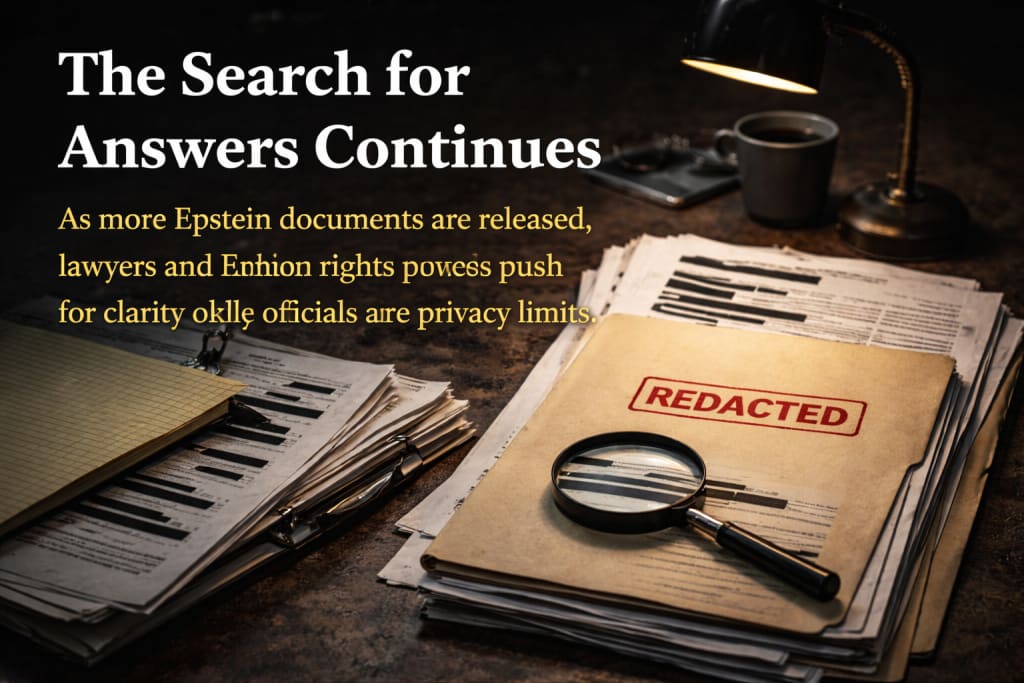
The Epstein case remains a center of research and debate around the world. In 2025 and 2026, the U.S. government released a new batch of documents, including millions of pages, letters, visitor logs, and interviews. Through these documents, the public and media have reexamined the complexity of the case, the failures of the institutions, and the rights of the victims.
But one question remains: Is this release enough? Or will the public, lawyers, and victim organizations continue to press for more clarity?
Background to the Release
The release of the Epstein case documents is the result of decades of legal battles, victim complaints, and investigative journalism.
Victims and lawyers have repeatedly said that justice is difficult to achieve without full transparency.
Government officials maintained that the limits on the release were set on legal and privacy grounds.
The documents include not only the investigation of the case but also communications, reports, and investigative proceedings between various agencies.
The release shows how complex the investigation into the case was and how much transparency was possible.
Key revelations and shortcomings
The documents revealed some important facts to the public, but some aspects are still hidden:
1. Agency failures: A lack of communication between multiple agencies and late processing of complaints hampered the investigation of the case.
2. Redactions: Blackouts, or markings of “REDACTED,” over names, dates, and sensitive information left many questions for the public.
3. Victims’ struggles: Statements and complaints show that victims faced difficulties in accessing justice, and their voices were delayed in being heard.
These files show that it is not always easy to strike a balance between transparency and legal protection, and sometimes public questions go unanswered.
Pressure from lawyers and human rights organizations
Immediately after the release, various lawyers and human rights organizations increased the pressure:
- Demands for more transparency
- Request for clarification of hidden information
- Emphasis on the protection of victims’ rights and provision of justice
These organizations argue that despite the release, much is still unclear to the public and victims, and transparency remains incomplete without full accountability.
Attention from the public and media
After the release, the public and media refocused on the case:
- Discussion on social media and news channels
- Investigative journalism reports
- Analysis on legal and ethical aspects
- Focus on the struggles and statements of victims
This shows that the public and the media are active in this matter, and recognize the need for transparency and accountability.
Positive aspects and impacts of the release
1. Increasing transparency: The public learned more details about the case.
2. Review of institutional performance: Evidence and reports revealed institutional failures and the need for corrective measures.
3. Voice of victims: Victims’ stories and statements were made public on a global scale.
4. Understanding the investigative process: The complexity of the case, analysis of evidence, and the role of various institutions became clear.
This release is important not only for disclosures but also for research and future policymaking.
Future prospects
The search for answers is not over yet.
Organizations representing victims will continue to increase the pressure for transparency.
The institutions will provide further clarification while maintaining legal boundaries and redaction standards.
Public interest and media research will continue, so that the truth comes out.
This case shows that justice and transparency can be ensured not only in the courts, but also through the public, the media, and documents.
Conclusions and Lessons
In light of the Epstein files and releases, we can learn some important lessons:
1. Accountability of institutions: Without transparency and accountability, public trust cannot be maintained.
2. Victims’ voices: Victims’ statements and complaints are paramount and must be taken seriously.
3. Balance of redactions: It is important to strike a balance between legal protection and public transparency.
4. Future cases: Effective measures are needed to ensure transparency, investigation, and justice in such cases.
The search for answers is ongoing, and various aspects of the Epstein case will continue to be the focus of public, legal, and research debate.
About the Creator
Echoes of Life
I’m a storyteller and lifelong learner who writes about history, human experiences, animals, and motivational lessons that spark change. Through true stories, thoughtful advice, and reflections on life.
Keep reading
More stories from Echoes of Life and writers in The Swamp and other communities.
Why Black History Matters in America?
The United States of America is celebrating their 250th anniversary in 2026. I'm proud to be an American and as someone who was born here, I wouldn't imagine myself living anywhere else. This is a country where opportunities are possible. Where anyone can be successful in anything they desire to do. Equality, community, and togetherness are the backbones of what America is and should be about. However, we have an administration who wants to erase and disregard those who have made positive, meaningful impacts in our country, specifically Black figures, such as Martin Luther King, Jr., Rosa Parks, and Maya Angelou. President Trump and his administration have been constantly complaining and fighting against what they call the "Woke agenda". They use this excuse as a distraction from other issues they refuse to address, such as the high cost of living, climate change, and inflation. That equality is dividing America, when in reality, it's bringing us together. Being woke is not tied to a specific political party. No matter where you stand on the political spectrum, you can still care about other people and their plights. Compassion and empathy for others isn't tied to a political party, either. We were taught as children to treat others the way we want to be treated and not judge others because they're different from us. Caring about others isn't a personal attack on your beliefs. It doesn't make you any less of a person. People who are easily offended over African American figures, past or present, or anything related to it, are grasping at straws. Current and future generations need to know who people like Harriet Tubman and Shirley Chisholm were, especially in the classroom. Black History is part of American History. It should be recognized, not hidden or forgotten. Besides, you can't shield children from everything, just because your feelings are easily hurt.
By Mark Wesley Pritchard 9 days ago in The Swamp
Indian Coast Guard Busts Three Iran-Linked Shadow Fleet Tankers
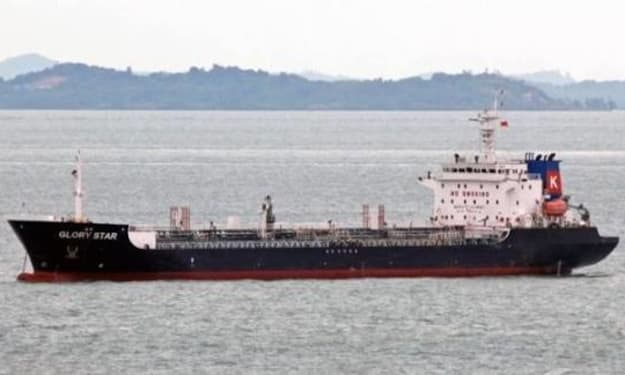
The Indian Coast Guard intercepted and detained three oil tankers linked by analysts to Iran’s so-called “shadow fleet” in a major maritime security operation in the Arabian Sea, officials and maritime tracking sources say. The coordinated interdiction near 100 nautical miles west of Mumbai underscores India’s growing role in policing illicit oil trafficking and enforcing global sanctions regimes amid complex geopolitical pressures. maritime-executive.com +1 The tankers — identified by shipping investigators as Al Jafzia, Asphalt Star, and Stellar Ruby — were boarded on February 5–6, 2026 after the Coast Guard tracked suspicious vessel movements using digital surveillance and pattern analysis. The ships are on the U.S. Treasury Department’s sanctions list for involvement in transporting Iranian petroleum through deceptive practices at sea. Baird Maritime / Work Boat World A High-Sea Interception Indian Coast Guard patrol vessels and aircraft located and intercepted the trio of tankers in international waters off India’s west coast, with boarding teams conducting extensive searches and document verification. Authorities described the operation as a blend of real-time maritime intelligence, satellite tracking, and long-range surveillance. The Week “The use of technology to detect anomalous vessel behavior enabled us to disrupt what appears to be a coordinated smuggling syndicate,” an Indian Coast Guard spokesperson said, highlighting the agency’s enhanced digital capabilities. The vessels are now being escorted toward Mumbai for formal legal proceedings and further investigation by customs and law enforcement agencies. India Today Shadow Fleet and Sanctions Evasion The term “shadow fleet” refers to a network of tankers and associated shell companies used to transport Iranian petroleum in defiance of international sanctions — primarily those imposed by the United States. Ships in this fleet often engage in ship-to-ship transfers, disabling their Automatic Identification System (AIS) transponders, broadcasting false flags, or changing identities to conceal the origin and destination of cargoes. According to tracking consultancy TankerTrackers.com, the seized vessels have histories of falsifying location data and shifting flags to mask their activities. Stellar Ruby, for instance, was flagged as an Iranian vessel, while Al Jafzia and Asphalt Star broadcast false identities and flags such as Guyana and Mali, respectively. All three are listed under the U.S. Treasury’s Office of Foreign Assets Control (OFAC) sanctions for Iran-linked maritime operations. maritime-executive.com U.S. authorities say the shadow fleet plays a crucial role in helping Tehran maintain oil revenues despite economic curbs, using intermediaries and deceptive logistics networks to bring crude and refined products to foreign buyers — including in Asia — without detection by regular shipping registries. U.S. Department of the Treasury Investigative Findings and Modus Operandi Indian investigators uncovered evidence that the tankers were engaged in mid-sea transfers — a common tactic in illicit oil trades where cargo is moved at sea from larger tankers to smaller “motor” vessels to obfuscate cargo origin and avoid customs duties. Electronic records and crew interrogations indicated that the vessels repeatedly changed names, registry flags, and tracking patterns to evade maritime law enforcement and regulatory scrutiny. India Today Officials noted that the use of mid-sea transfers in international waters is not inherently illegal, but becomes unlawful when employed to conceal sanctions violations, evade taxes, or misrepresent cargo details. The Coast Guard’s search teams examined onboard documents, digital logs, and navigational data to piece together the syndicate’s methods and network connections. Baird Maritime / Work Boat World Strategic Implications The bust marks one of the most significant maritime interdictions involving Iran-linked vessels near India’s coast, reinforcing New Delhi’s self-described role as a “net security provider” in the Indian Ocean Region. Indian authorities, who have been expanding their maritime surveillance footprint, said the operation illustrated their capability to act on complex intelligence and safeguard maritime trade routes against illicit actors. The Week While Indian officials have not publicly confirmed Iranian state involvement, analysts note that Iran’s shadow fleet activities have global reach, underpinning Tehran’s efforts to sustain oil export revenues and circumvent sanctions imposed by Washington and its allies. The interdiction also aligns with U.S. pressure on international partners to enforce sanctions regimes and cut off revenue streams linked to prohibited oil sales. Regional and International Responses News of the bust drew attention from international maritime security experts and analysts tracking shadow fleet movements. Some analysts argued that the action could signal broader cooperation between India and Western agencies on enforcing sanctions and curbing illicit oil flows, though direct diplomatic coordination has not been officially confirmed. Observers also warned that such enforcement efforts could pose diplomatic tensions with oil-producing states that rely on non-traditional shipping networks to reach markets otherwise closed by sanction Iran International Industry watchers said the interdiction highlights evolving risks in global oil logistics, where sanctioned entities increasingly resort to opaque shipping arrangements, turning the high seas into semi-regulated environments where illicit trades can thrive under the radar of global authorities. Next Steps and Legal Proceedings The three tankers — now under escort — are expected to face legal proceedings in India, where authorities will examine the full extent of sanctions violations, cargo manifests, and ownership ties. Customs investigators and prosecutors will likely pursue charges related to smuggling, misrepresentation of cargo, and sanctions evasion under Indian and international maritime law. The investigation’s findings may also feed into wider international efforts to monitor and disrupt shadow fleet activities, dovetailing with sanctions enforcement and maritime security cooperation across multiple jurisdictions. As the vessels make their way to port, the case stands as a reminder of how maritime trade and sanctions enforcement intersect in an increasingly complex geopolitical landscape, where naval patrols, digital surveillance, and legal frameworks converge to tackle illicit global networks.
By Fiaz Ahmed 2 days ago in The Swamp


Comments
There are no comments for this story
Be the first to respond and start the conversation.