
What’s inside the Epstein files?
Extensive document release raises new questions about oversight, redactions and long-delayed transparency.

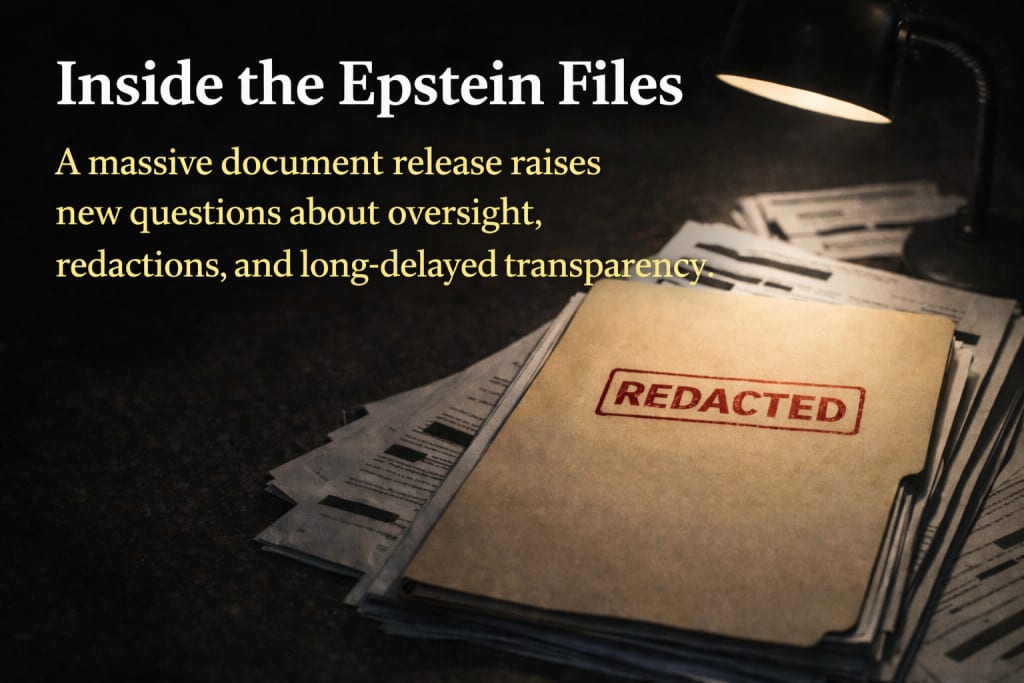
Jerry Epstein’s name has been part of the public discourse for years — a story of power, wealth, corruption, exploitation and institutional failures that has left a deep impact around the world.
Now that a massive trove of documents related to the Epstein investigation has been released — thousands of pages of memos, reports, letters, logs and conversations between various agencies — public interest has once again been reignited. But surprisingly, the release has raised fewer answers and more questions.
Why is it that all this has come to light so late?
Why have so many redactions been made?
And what does transparency really mean, especially in a case as large and sensitive as this one?
The release, the largest document release in a decade, offers a glimpse—but the full picture is still incomplete.
A long-sought revelation
The push to release the Epstein documents began shortly after his arrest in 2019. Journalists, lawyers and victims insisted that the public should know the facts—and that questions that had been pent up for years should be answered.
But legal complexities, the involvement of multiple agencies and privacy laws made the process slow and difficult. For years, records held by different agencies were kept separate, and communication between them was often poor.
The recent release brings together these scattered documents for the first time, but also shows how long the original information was kept secret.
A stack of pages, but few answers
The public typically expects such a “big file release” to contain explosive revelations. But the reality is that most government documents include daily reporting, internal memos, inter-agency communications, and evidence-gathering forms.
The Epstein files are no exception.
They include:
- Security and monitoring logs
- Agent memos
- Email conversations between agencies
- Property and travel documents
- Evidence-gathering forms
- Interviews and surveillance reports
All of these reveal how oversight has gone wrong in the past, and why complaints and red flags have sometimes been ignored.
But the things the public expected most—for example, concrete evidence, names, or descriptions of individuals rumored to be involved—are largely missing or heavily redacted.
Why are redactions the biggest problem?
The blackmarking and deletion of names in documents is the most controversial. Some believe it hinders transparency, while officials argue that it is necessary to protect victims, minors, and unrelated people.
The truth is that there are weight on both sides.
There are legitimate reasons for the redactions:
- Protecting the identities of victims
- Hiding the names of minors
- Not to affect ongoing cases
- Preventing misunderstandings and false accusations
But these same redactions also give rise to suspicion and conspiracy theories.
This distrust grows when the public gets the impression that something is being hidden—even if the purpose is protection.
The voices of victims still matter most
The most powerful part of these documents are the statements that victims made years ago. They capture the pain, struggle, and courage of the victims.
These accounts reveal how complaints were ignored, how police and institutions failed to take key signs seriously, and how protective circles were created around powerful individuals.
These files remind us that the real truths are hidden in the accounts of these very victims.
A spotlight on institutional failures
The documents also shed light on how many different agencies were involved in this case and how a lack of communication led to missed opportunities.
Among the points that emerge are:
- Lack of communication between agencies
- Flaws in surveillance systems
- Delays in evidence management
- Limited resources or misplaced priorities
These are all things that come to the fore not only in this case but in many serious cases.
Why is the release important, even if incomplete?
While many people wanted “big news,” the importance of this release is that it:
- exposes systemic flaws
- preserves the record forever
- pave the way for policy changes
- helps the public understand government processes
This transparency doesn’t always give the answers people want—but it does reveal the truth that needs to be known.
What’s next?
The calls for more transparency will continue.
Officials will still cite privacy laws.
And the public will still ask when the real facts will come out.
This controversy won’t end anytime soon.
The Epstein files show us that the problem wasn’t one individual—it was a system of flaws.
About the Creator
Echoes of Life
I’m a storyteller and lifelong learner who writes about history, human experiences, animals, and motivational lessons that spark change. Through true stories, thoughtful advice, and reflections on life.
Keep reading
More stories from Echoes of Life and writers in The Swamp and other communities.
80th Session: United Nations General Assembly 2025
80th Session: UN General Assembly 2025 – Finding a New Direction The United Nations General Assembly (UNGA) is considered the largest diplomatic platform in the world. Held annually in New York, the meeting brings together heads of state, foreign ministers and representatives from around 193 countries. Its 80th annual session was held in 2025, which was not only a historic occasion but also a step towards a new era of global politics, peace and development. This year’s theme was “Better Together.”
By Echoes of Life5 months ago in The Swamp
Why Black History Matters in America?
The United States of America is celebrating their 250th anniversary in 2026. I'm proud to be an American and as someone who was born here, I wouldn't imagine myself living anywhere else. This is a country where opportunities are possible. Where anyone can be successful in anything they desire to do. Equality, community, and togetherness are the backbones of what America is and should be about. However, we have an administration who wants to erase and disregard those who have made positive, meaningful impacts in our country, specifically Black figures, such as Martin Luther King, Jr., Rosa Parks, and Maya Angelou. President Trump and his administration have been constantly complaining and fighting against what they call the "Woke agenda". They use this excuse as a distraction from other issues they refuse to address, such as the high cost of living, climate change, and inflation. That equality is dividing America, when in reality, it's bringing us together. Being woke is not tied to a specific political party. No matter where you stand on the political spectrum, you can still care about other people and their plights. Compassion and empathy for others isn't tied to a political party, either. We were taught as children to treat others the way we want to be treated and not judge others because they're different from us. Caring about others isn't a personal attack on your beliefs. It doesn't make you any less of a person. People who are easily offended over African American figures, past or present, or anything related to it, are grasping at straws. Current and future generations need to know who people like Harriet Tubman and Shirley Chisholm were, especially in the classroom. Black History is part of American History. It should be recognized, not hidden or forgotten. Besides, you can't shield children from everything, just because your feelings are easily hurt.
By Mark Wesley Pritchard 8 days ago in The Swamp
Casey Wasserman
In the global world of sports and entertainment, influence is rarely loud. It often operates behind closed doors, shaping careers, negotiating billion-dollar deals, and steering the direction of entire industries. Few figures embody that quiet power better than Casey Wasserman, the chairman and CEO of the Wasserman Agency. Over the last two decades, Wasserman has emerged as one of the most influential executives in modern sports business, blending strategic vision with a deep understanding of athletes, brands, and global markets. A Legacy Rooted in Opportunity Casey Wasserman’s story begins with legacy but is defined by execution. He is the grandson of Lew Wasserman, the legendary Hollywood executive who transformed talent representation through MCA. While the family name opened doors, Casey Wasserman built his reputation by modernizing and expanding what a global agency could be. Rather than following a traditional Hollywood path, Wasserman gravitated toward sports—a sector undergoing massive commercialization in the early 2000s. He recognized that athletes were no longer just competitors; they were brands, media properties, and cultural figures. That insight became the foundation for what would eventually evolve into the Wasserman Agency. The Rise of the Wasserman Agency Founded in 2002, Wasserman started as a sports-focused agency with a selective roster of elite athletes. Over time, it expanded into a full-service global powerhouse representing athletes, coaches, executives, broadcasters, and brands. Today, the Wasserman Agency operates across dozens of offices worldwide and spans sports, music, entertainment, and brand marketing. What sets Wasserman apart is not just scale, but structure. Unlike traditional agencies that silo talent representation, Wasserman built an integrated model. Athletes receive support not only in contract negotiations, but also in branding, endorsements, content creation, and post-career planning. This holistic approach has become an industry standard, but Wasserman was among the first to implement it at scale. A Strategic Mind, Not a Spotlight Seeker Casey Wasserman is notably private, especially compared to the celebrities and athletes his company represents. He rarely courts attention, preferring to let outcomes speak for themselves. Yet his influence is unmistakable. Under his leadership, Wasserman has executed numerous high-profile acquisitions, absorbing smaller agencies and specialists to strengthen its global reach. These moves weren’t about rapid growth for its own sake, but about positioning the company where sports, media, and technology intersect. This strategic restraint has earned Wasserman respect across leagues, ownership groups, and international governing bodies. He is often described as a dealmaker who listens first, negotiates patiently, and thinks long term—qualities that are increasingly rare in a fast-moving industry. Leadership Beyond the Agency World Wasserman’s impact extends well beyond his company. He has played a significant role in shaping major international sporting events, including involvement with the Olympic movement. His leadership roles within organizing committees highlight a broader vision: sports as a unifying global force with economic, cultural, and diplomatic significance. This perspective aligns closely with how the Wasserman Agency positions itself—not merely as a representative of talent, but as a stakeholder in the future of global sports. From athlete advocacy to governance reform, Wasserman’s influence often operates at the policy level, not just the commercial one. Navigating a Changing Sports Economy The sports business landscape has shifted dramatically in recent years. Streaming platforms, social media, athlete empowerment, and direct-to-consumer branding have disrupted traditional models. Casey Wasserman has embraced these changes rather than resisting them. Athletes today expect more control over their narratives and income streams. The Wasserman Agency has adapted by investing heavily in digital strategy, data analytics, and content partnerships. This evolution reflects Wasserman’s belief that representation is no longer transactional—it is collaborative. By anticipating where athlete value is heading, rather than where it has been, Wasserman has kept his agency relevant in an increasingly crowded and competitive marketplace. Culture, Responsibility, and Influence One of the less discussed aspects of Casey Wasserman’s leadership is organizational culture. Insiders often point to an emphasis on professionalism, discretion, and long-term relationships. While aggressive negotiation is part of the business, Wasserman is known for valuing trust and credibility—assets that compound over time. He has also supported initiatives related to diversity, inclusion, and athlete well-being, recognizing that sustainable success in sports depends on more than revenue. As athletes become more vocal about social issues, agencies must evolve beyond pure business interests. Wasserman’s approach reflects that broader responsibility. The Future of the Wasserman Vision As sports continue to globalize and blur into entertainment, technology, and culture, Casey Wasserman’s influence is likely to grow rather than fade. His ability to operate comfortably across boardrooms, locker rooms, and international forums makes him uniquely positioned for the next era of sports business. The Wasserman Agency stands today as a testament to strategic patience, adaptability, and vision. It is not just a talent agency—it is an ecosystem built around the belief that athletes and creators deserve thoughtful, forward-looking representation. Final Thoughts Casey Wasserman may not dominate headlines, but his fingerprints are all over the modern sports and entertainment landscape. Through careful leadership and an evolving business philosophy, he has helped redefine what it means to represent talent in the 21st century. In an industry often driven by hype and short-term wins, Wasserman’s steady, strategic influence offers a different model—one built on foresight, integrity, and long-term value. That may ultimately be his most lasting legacy.
By Saboor Brohi about 4 hours ago in The Swamp
Feelings Never Die
It is Valentine's Day again, and it bought back memories that were over fifty years old. It bought me back to 1971, and I woke up and I knew my baby was due today. I was big and pregnant, and I felt like I was about to burst wide open. Imagine my surprise when the doctor told my I had a due date of February 14. I couldn't believe it, and since my baby was due today, I felt I could indulge myself a bit. I had gained a lot of weight, and chocolate was on the no-no list, but I had came to the end of this pregnancy, and I hoped it would be okay, after all I would deliver this baby today. So I walked across the street to the grocery story, and bought myself, a peppermint patty, covered in chocolate, my favorite. Me and my Valentine's baby would enjoy it together.
By Susan Payton5 days ago in Fiction


Comments
There are no comments for this story
Be the first to respond and start the conversation.