
Tony Gonzales Says He Is Being Blackmailed Over Alleged Affair With Staffer
Texas congressman denies wrongdoing and calls for investigation as political and legal questions emerge

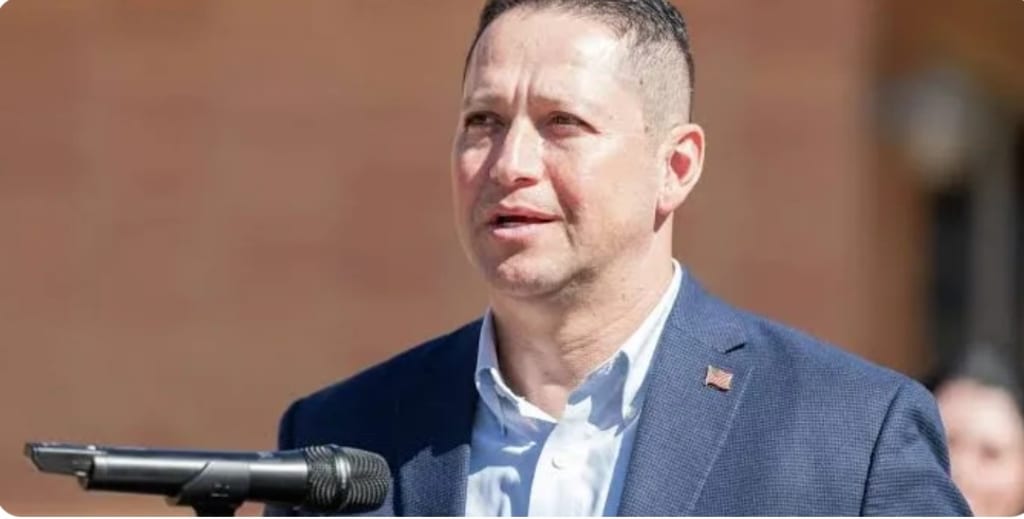
U.S. Representative Tony Gonzales has publicly stated that he is being blackmailed over an alleged affair with a staff member. The claim has drawn attention in Texas political circles and prompted questions about ethics, accountability, and legal implications.
Gonzales, who represents a Texas congressional district, has denied any improper conduct. He has said that individuals are attempting to use private information to pressure or damage him politically. His office has not released extensive details about the allegations but has confirmed that the matter is being reviewed.
The development has become a topic of discussion both within his district and on Capitol Hill.
Gonzales’ Response
In statements to media outlets, Gonzales said he is the target of blackmail related to a personal matter. He described the situation as an attempt to threaten him with the release of information unless certain demands are met.
He has emphasized that he will not give in to any such pressure and has called for a proper investigation into who may be responsible. Gonzales has also indicated that law enforcement authorities have been informed.
While acknowledging that the allegations involve a personal relationship, he has not confirmed specific details about the nature of the affair. Instead, he has focused on the claim that coercion or extortion is involved.
Understanding Blackmail and Legal Implications
Blackmail, or extortion, is a criminal offense under U.S. law. It involves threatening to reveal damaging information about someone unless a demand—often financial or political—is met.
If Gonzales’ claim is accurate, it would move the issue beyond a private matter into a potential criminal investigation. However, until law enforcement agencies release findings, the situation remains based on public statements rather than confirmed legal action.
Legal experts note that allegations of blackmail require evidence of both a threat and a demand tied to that threat. The presence of personal misconduct alone does not constitute blackmail unless coercion is involved.
Ethics Questions in Congress
Separate from the claim of blackmail, allegations of a relationship between a member of Congress and a staffer can raise ethical concerns. The U.S. House of Representatives has rules governing conduct between lawmakers and employees to prevent abuse of power or conflicts of interest.
Consensual relationships are not automatically prohibited, but they may require disclosure or could violate workplace policies, especially if a power imbalance exists.
If the relationship involved a staff member working directly under Gonzales, it could prompt review by the House Ethics Committee. So far, there has been no official statement from the committee regarding an inquiry.
---
Political Context
Tony Gonzales has served in Congress representing Texas and has been involved in discussions on border policy, national security, and veterans’ issues. As a Republican lawmaker, he has at times taken positions that place him in internal party debates.
Controversies of a personal nature can affect political standing, especially during election cycles. Opponents may use such situations to question judgment or leadership, while supporters often call for due process and caution against premature conclusions.
The timing of these allegations may play a role in how the issue develops politically.
Reaction From Colleagues and Constituents
Initial reactions from fellow lawmakers have been measured. Some colleagues have stated that the matter should be investigated thoroughly before drawing conclusions. Others have avoided public comment, citing the private nature of the allegations.
In Gonzales’ district, constituents have expressed mixed views. Some see the blackmail claim as serious and deserving of legal attention. Others have raised concerns about transparency and accountability if any workplace rules were violated.
As more information becomes available, public opinion may shift depending on confirmed facts.
Media Coverage and Public Scrutiny
Political figures often face intense media attention when allegations surface. News coverage has largely focused on Gonzales’ claim of blackmail rather than unverified details about the alleged affair.
Responsible reporting standards require that claims be presented accurately and that individuals involved are not presumed guilty without evidence. As of now, no criminal charges have been announced.
The situation illustrates how personal matters can quickly become public controversies when they involve elected officials.
Broader Discussion on Privacy and Public Office
The case also highlights the balance between personal privacy and public accountability. Elected officials are public servants, and their conduct can be subject to scrutiny if it affects their professional responsibilities.
At the same time, allegations without verified evidence must be handled carefully to avoid unfair damage to reputations. The claim of blackmail introduces additional complexity, as it shifts attention to possible criminal wrongdoing by third parties.
Legal and ethical reviews may determine whether this matter remains a private dispute, becomes a criminal case, or triggers congressional investigation.
Z
What Happens Next
Several possible paths could follow:
1. Law Enforcement Review: Authorities may investigate the blackmail claim to determine whether criminal activity occurred.
2. Ethics Inquiry: If evidence suggests violations of congressional rules, the House Ethics Committee could become involved.
3. Political Impact: The controversy may influence Gonzales’ public image and future political prospects.
Until official findings are released, much of the situation remains based on statements from Gonzales and reporting from media sources.
Conclusion
Tony Gonzales’ claim that he is being blackmailed over an alleged affair has introduced legal, ethical, and political questions. While he denies wrongdoing and calls for investigation, no formal charges or official findings have been announced.
The matter underscores the challenges public officials face when personal allegations intersect with professional responsibilities. It also highlights the importance of due process and careful reporting in politically sensitive situations.
As investigations proceed, clearer information may emerge. For now, the focus remains on whether the blackmail claim can be substantiated and whether any rules or laws were violated.
About the Creator
Saad
I’m Saad. I’m a passionate writer who loves exploring trending news topics, sharing insights, and keeping readers updated on what’s happening around the world.
Why Black History Matters in America?
The United States of America is celebrating their 250th anniversary in 2026. I'm proud to be an American and as someone who was born here, I wouldn't imagine myself living anywhere else. This is a country where opportunities are possible. Where anyone can be successful in anything they desire to do. Equality, community, and togetherness are the backbones of what America is and should be about. However, we have an administration who wants to erase and disregard those who have made positive, meaningful impacts in our country, specifically Black figures, such as Martin Luther King, Jr., Rosa Parks, and Maya Angelou. President Trump and his administration have been constantly complaining and fighting against what they call the "Woke agenda". They use this excuse as a distraction from other issues they refuse to address, such as the high cost of living, climate change, and inflation. That equality is dividing America, when in reality, it's bringing us together. Being woke is not tied to a specific political party. No matter where you stand on the political spectrum, you can still care about other people and their plights. Compassion and empathy for others isn't tied to a political party, either. We were taught as children to treat others the way we want to be treated and not judge others because they're different from us. Caring about others isn't a personal attack on your beliefs. It doesn't make you any less of a person. People who are easily offended over African American figures, past or present, or anything related to it, are grasping at straws. Current and future generations need to know who people like Harriet Tubman and Shirley Chisholm were, especially in the classroom. Black History is part of American History. It should be recognized, not hidden or forgotten. Besides, you can't shield children from everything, just because your feelings are easily hurt.
By Mark Wesley Pritchard 19 days ago in The Swamp
Boss of BAE Systems Urges Ministers to Publish Delayed Military Spending Plan
The chief executive of BAE Systems has called on the UK government to release its long-awaited military spending plan, warning that delays could impact the country’s defense readiness and procurement strategy. The comments come amid ongoing debates over the scope, timing, and priorities of the Ministry of Defence’s (MoD) future budget allocations. Calls for Transparency BAE Systems’ CEO emphasized that clarity on military spending is essential for both the defense industry and the armed forces. “Defense companies require certainty to plan production, allocate resources, and manage supply chains,” the CEO said in a statement. “Delays in publishing the government’s military spending review risk slowing the delivery of critical equipment and capabilities to our armed forces.” The UK government has faced criticism for postponing the release of the comprehensive defense plan, originally expected months earlier. Lawmakers, defense analysts, and industry leaders have all expressed concern that uncertainty could hinder investment in cutting-edge technology, shipbuilding, and aerospace programs. Strategic Implications The delay comes at a time when global security challenges are intensifying. Rising tensions in Europe, geopolitical competition, and evolving threats in cyber and space domains have underscored the need for timely and robust defense planning. According to analysts, any lag in approving the military budget could disrupt ongoing procurement projects, including the development of naval vessels, fighter aircraft, and missile systems. BAE Systems, one of the UK’s largest defense contractors, plays a pivotal role in producing advanced military platforms such as naval ships, armored vehicles, and aerospace systems. The company has multiple ongoing contracts with the Ministry of Defence, and delays in budget confirmation could affect production schedules, employment, and long-term planning.Industrial and Operational Concerns BAE Systems has highlighted that continued delays could lead to higher program costs due to inflation, supply chain disruptions, and renegotiation of contracts. Officials within the company stress that without confirmed funding, workforce planning becomes difficult, potentially slowing the delivery of equipment to the armed forces. The effects extend beyond BAE Systems. Suppliers and subcontractors dependent on its contracts could face economic uncertainty, threatening thousands of jobs across the UK. “A delay in defense spending decisions doesn’t just affect the MoD—it has broad operational and economic consequences for the entire defense ecosystem,” the CEO added. Political Context The UK government has attributed the postponement to wider fiscal reviews and competing budgetary priorities. Critics argue that delaying the release of the military spending plan undermines confidence in the government’s defense commitments. Opposition parties have expressed concern that prolonged uncertainty could weaken the armed forces’ operational readiness and reduce the country’s influence in NATO and global security operations. Looking Ahead Ministry of Defence officials have stated that the spending plan will be published “soon,” though no specific date has been confirmed. The review is expected to provide funding allocations for personnel, equipment modernization, cybersecurity initiatives, and strategic programs critical to maintaining the UK’s military edge. Defense analysts stress that timely publication is crucial for enabling contractors like BAE Systems to continue investing in technology, training, and production. Clear funding allows better coordination with NATO partners and allied nations, ensuring the UK remains strategically agile. Conclusion BAE Systems’ public call reflects a broader consensus within the defense sector: timely government planning and budget transparency are essential to sustaining the UK’s armed forces, industrial base, and strategic capabilities. Delays in publishing the military spending plan risk disrupting procurement schedules, delaying critical projects, and weakening the nation’s defense posture. As security challenges continue to evolve, stakeholders are closely watching the UK government’s next move. The timing and content of the military spending review will have long-term consequences for national security, industrial output, and operational readiness, making it a critical issue for policymakers, military leaders, and defense industry executives alike.
By Fiaz Ahmed 3 days ago in The Swamp
There's A Hole in My Bucket
It’s a well-known fact that Liza Dufresne was always the brains in the family. She was the one who always came up with the brilliant schemes the Dufresne kids carried out when they were younger. Like when they tricked Mrs. Claybourn into paying for a trip to Disney World. Liza convinced her that their parents had been kidnapped and were being held for ransom for the total price of three tickets. In reality, they were away on a weekend getaway for their anniversary. When they returned, Liza told the Claybourns that they did not like to talk about the ordeal. Their parents never found out how they got the money. Mrs. Claybourn never found out that the Dufresne parents were never really in any danger.
By David E. Perry2 days ago in Fiction




Comments
There are no comments for this story
Be the first to respond and start the conversation.