
Trump announces new 10% global tariff as he hits out at 'deeply disappointing' Supreme Court ruling
Former president escalates trade pressure with sweeping tariff plan while criticizing the court’s decision as a setback to his economic agenda

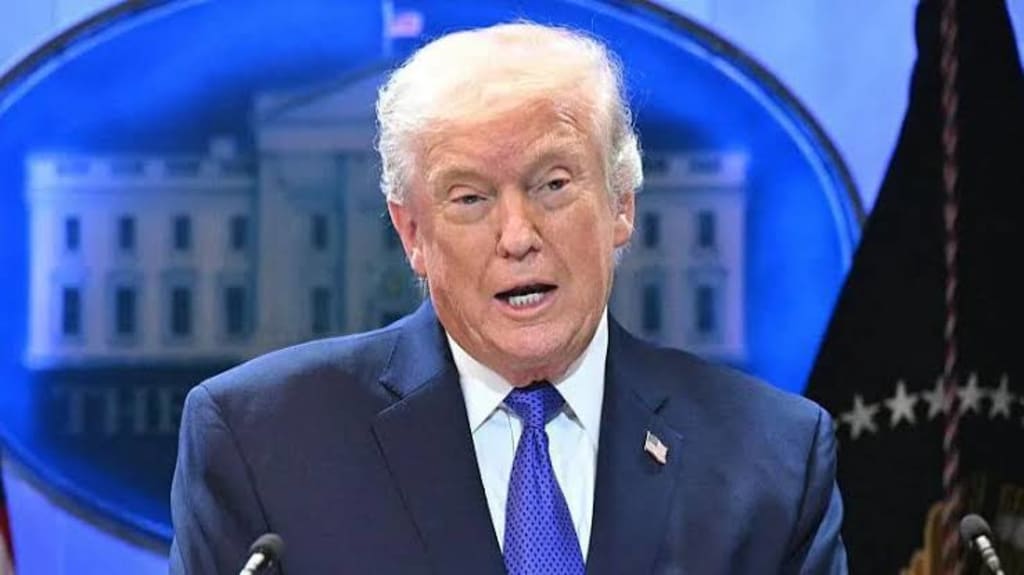
Former U.S. President Donald Trump on Tuesday announced a sweeping new 10% global tariff on all imported goods, framing the move as a necessary step to protect American industries while sharply criticizing a recent ruling by the Supreme Court of the United States that he described as “deeply disappointing” and harmful to his broader economic vision.
Speaking at a rally in Ohio, Trump said the tariff would apply across sectors, from consumer electronics and automobiles to industrial machinery and agricultural products. He argued that the policy would force foreign manufacturers to relocate production to the United States, create jobs, and reduce what he called America’s “dangerous dependence” on overseas supply chains.
“This is about putting America first again,” Trump told supporters. “For decades, other countries have taken advantage of us. A simple, fair tariff will bring factories back and make sure American workers come first.”
The announcement came only hours after the Supreme Court issued a ruling that limited the executive branch’s ability to impose broad trade measures without stronger congressional oversight. While the decision did not directly block Trump’s proposed tariff, it reinforced legal constraints that could complicate any attempt to enact such a sweeping policy without approval from lawmakers.
Trump responded with sharp criticism of the court, saying its decision undermined efforts to defend national economic interests. “It’s deeply disappointing,” he said. “We need strength, not weakness, in our trade policy.”
Economists and business leaders reacted cautiously, warning that a blanket 10% tariff could increase consumer prices and provoke retaliation from major trading partners such as China, the European Union, and Mexico. Analysts noted that similar measures during Trump’s presidency between 2017 and 2021 contributed to trade tensions and uncertainty in global markets.
“The cost of tariffs is ultimately borne by consumers and businesses through higher prices,” said one trade policy expert. “While targeted tariffs can protect specific industries, a universal tariff risks slowing economic growth and straining international relationships.”
Industry groups also expressed concern about supply chain disruptions. The National Retail Federation said in a statement that many companies still rely on imported components and raw materials, and a sudden tariff increase would likely be passed on to shoppers. Automakers warned that vehicle prices could rise by thousands of dollars if parts and materials are taxed at a uniform rate.
Supporters of Trump’s proposal, however, argue that short-term price increases would be offset by long-term gains in domestic manufacturing. Several labor unions praised the announcement, saying it could revive factories that closed over the past two decades due to outsourcing and competition from cheaper imports.
“This is about rebuilding American industry,” said one union leader. “If companies want access to the U.S. market, they should produce here and hire American workers.”
The political timing of the announcement is also significant. With trade and inflation remaining key issues for voters, Trump has returned to familiar economic themes that energized his base in previous campaigns. By linking the tariff plan to criticism of the Supreme Court, he also reinforced his narrative that powerful institutions are standing in the way of policies meant to help ordinary Americans.
Legal experts cautioned that implementing a global tariff would face immediate court challenges. Under current law, presidents can impose tariffs for national security reasons, but broad economic measures without clear justification could be struck down if they exceed statutory authority.
Foreign governments have not yet issued formal responses, but diplomats privately warned that a new round of tariffs would likely spark countermeasures. During Trump’s earlier trade battles, China and the EU responded with their own tariffs on U.S. exports such as soybeans, whiskey, and steel.
As debate grows, the proposal highlights a widening divide over how the United States should manage trade in an era of geopolitical rivalry and fragile supply chains. Whether Trump’s 10% global tariff becomes policy or remains a campaign promise will depend on legal hurdles, congressional action, and the political climate in the months ahead.
About the Creator
Fiaz Ahmed
I am Fiaz Ahmed. I am a passionate writer. I love covering trending topics and breaking news. With a sharp eye for what’s happening around the world, and crafts timely and engaging stories that keep readers informed and updated.
Keep reading
More stories from Fiaz Ahmed and writers in The Swamp and other communities.
US judge expresses concern about government’s role in Washington Post raid
A U.S. federal judge has expressed serious concern over the government’s role in a controversial raid involving the Washington Post, raising questions about press freedom, the limits of law enforcement authority, and the protection of journalistic sources in the digital age.
By Fiaz Ahmed about 16 hours ago in The Swamp
A Gathering of Evil Bosses
“I’m the queen of chin jutting while I smooth my hair, attacking, insulting, and deflecting to protect my appointer.” “Oh, please, Blondi, my hair is curled, highlighted, and longer than yours. I feature television commercials telling immigrants that we will give them a free plane ride home, and if they voluntarily turn themselves in, they will be allowed to legally apply for re-entry. It runs everywhere, and I look good in it! You can’t compete because of your blond hair. Mine is nicer, and my lips are prettier than yours.”
By Andrea Corwin 3 days ago in The Swamp
The Protection-of-Innocence Reciprocity Doctrine
Core Moral Premise The highest duty of any legitimate social order is the protection of innocent life. Innocent life has absolute moral primacy. Any system that systematically insulates predators, tolerates predatory asymmetry, rewards hypocrisy, or allows aggressors to retain insulation has inverted its purpose and forfeited legitimacy. Truth, justice, reciprocity, humility, mercy, forgiveness, and vertical accountability are structural necessities rather than optional virtues. Vertical accountability means recognition of and submission to a moral law higher than oneself. Authority must flow toward those who most consistently demonstrate sustained competence in moral and epistemic discipline. This competence is shown through observable conduct and trajectory over time, not through doctrinal label, tribal identity, credential alone, or self-profession.
By Peter Thwing - Host of the FST Podcasta day ago in The Swamp


Comments
There are no comments for this story
Be the first to respond and start the conversation.