
US judge expresses concern about government’s role in Washington Post raid
Court raises alarm over press freedom as federal search draws constitutional scrutiny

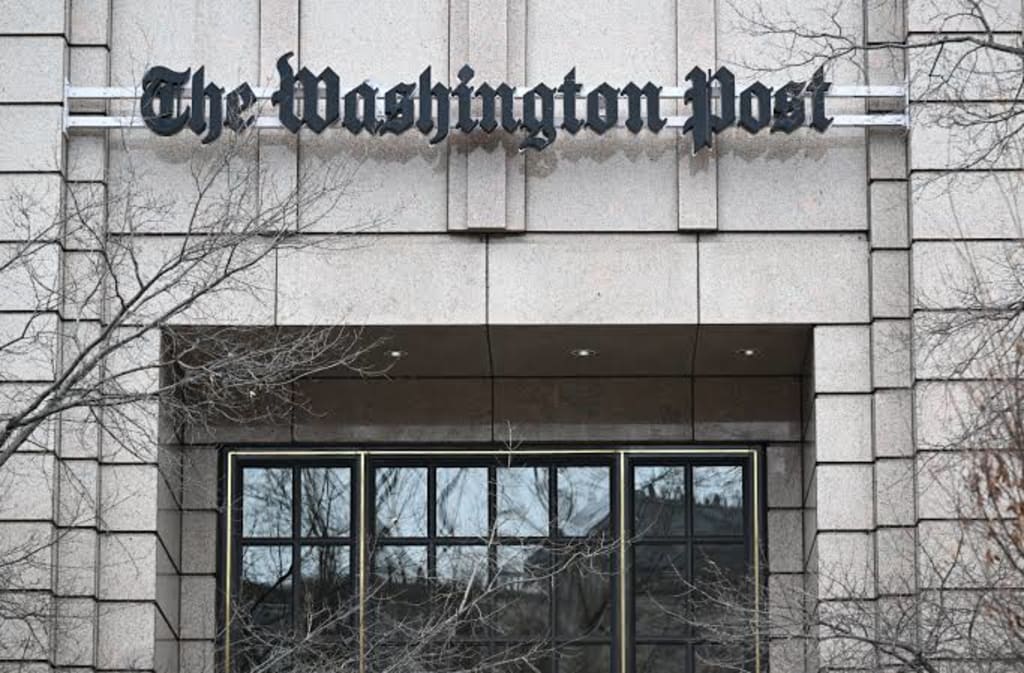
A U.S. federal judge has expressed serious concern over the government’s role in a controversial raid involving the Washington Post, raising questions about press freedom, the limits of law enforcement authority, and the protection of journalistic sources in the digital age.
During a court hearing on Tuesday, the judge scrutinized actions taken by federal investigators who authorized and carried out a search related to sensitive records connected to the newspaper. While officials argued the move was legally justified and necessary for a criminal investigation, the court signaled unease about whether the government had crossed a line by involving one of the country’s most influential media institutions.
“The court is troubled by the implications this action has for the First Amendment,” the judge said, according to people present in the courtroom. “When law enforcement steps into the newsroom sphere, even indirectly, it risks undermining the essential role of a free press in a democratic society.”
The case centers on a warrant that allowed authorities to obtain data linked to reporting materials and communications involving journalists. Prosecutors insisted that the target of the investigation was not the newspaper itself but an individual suspected of unlawfully accessing or sharing confidential information. However, defense lawyers argued that the government’s methods amounted to an effective raid on journalistic work and set a dangerous precedent.
Legal experts say the situation highlights the tension between national security or criminal investigations and constitutional protections for the press. The Supreme Court has long recognized that journalists are not immune from law enforcement actions, but courts have also emphasized the need for special caution when investigations touch on newsgathering activities.
“This is not just about one warrant or one newspaper,” said a constitutional law professor following the hearing. “It’s about whether the government can use ordinary criminal procedures to gain access to reporting files without exhausting less intrusive alternatives.”
The judge questioned whether prosecutors had sufficiently considered those alternatives before moving forward. He noted that federal guidelines require investigators to pursue other means of obtaining information before seeking materials from journalists or media organizations. The court also asked whether the scope of the warrant had been too broad, potentially sweeping up unrelated reporting data.
Representatives of the Washington Post expressed alarm over the episode, warning that such actions could have a chilling effect on investigative journalism. In a statement, the newspaper said it was committed to protecting its reporters and sources and would continue to challenge any government steps that threaten press independence.
“Journalists must be able to gather and verify information without fear that their work will be seized or scrutinized by the state,” the statement said. “This principle is fundamental to accountability and transparency.”
The Justice Department defended its conduct, saying it had followed established legal procedures and obtained proper authorization from a magistrate judge. Officials emphasized that the investigation was focused on alleged misconduct, not on punishing or intimidating the press. They also said safeguards were in place to minimize any intrusion into journalistic activities.
Still, the court’s remarks suggest the case could lead to tighter judicial standards for future warrants involving media organizations. Observers say the judge’s concerns may prompt a broader review of how federal agencies interpret rules governing searches connected to journalists.
Civil liberties groups have rallied behind the newspaper, arguing that the incident reflects a worrying trend of government overreach. “This is exactly the kind of action that erodes trust between the press and the public,” said a spokesperson for a leading advocacy organization. “If reporters believe their communications can be accessed through routine warrants, sources will be far less willing to come forward.”
The case remains under review, and no final ruling has yet been issued on whether the government acted improperly. However, the judge’s pointed questions have already sparked national debate about where to draw the line between law enforcement powers and constitutional freedoms.
As the legal process continues, the outcome could shape future relationships between federal investigators and news organizations. At stake is not only the fate of one investigation but the broader principle of how far the government can go when its search for evidence intersects with the work of the press.
About the Creator
Fiaz Ahmed
I am Fiaz Ahmed. I am a passionate writer. I love covering trending topics and breaking news. With a sharp eye for what’s happening around the world, and crafts timely and engaging stories that keep readers informed and updated.
Keep reading
More stories from Fiaz Ahmed and writers in The Swamp and other communities.
Three Silicon Valley engineers charged with stealing Google trade secrets and sending data to Iran
Federal prosecutors in the United States have unsealed an indictment charging three Silicon Valley engineers with allegedly stealing confidential trade secrets from Google and other technology firms and transferring sensitive data to Iran, officials said Thursday. The case has sparked concerns about insider threats to U.S. technology leadership, espionage risks and the safeguarding of proprietary innovations that underpin national economic and security interests. Allegations and Charges A federal grand jury in the Northern District of California indicted the three defendants — Samaneh Ghandali, 41; her sister Soroor Ghandali, 32; and Samaneh’s husband, Mohammadjavad “Mohammad” Khosravi, 40 — on multiple charges, including conspiracy to commit trade secret theft, actual and attempted theft of trade secrets, and obstruction of justice. All three reside in San Jose and were arrested on February 19, 2026 before appearing in federal court. Prosecutors allege that the trio exploited their employment at major Silicon Valley technology companies to access and exfiltrate hundreds of confidential files. These files included proprietary information related to mobile processor security, cryptography and advanced semiconductor technologies, which play crucial roles in the performance and security of modern devices. Insider Access and Exfiltration According to the indictment, both Samaneh and Soroor Ghandali previously worked at Google before moving to another firm referred to in court filings as “Company 3.” Khosravi was employed at a separate company identified as “Company 2,” where he worked on similar technologies. Federal prosecutors say that the defendants used their positions to collect and transfer sensitive material to unauthorized locations — including personal devices, shared work devices and third-party communications platforms — before some of the information was ultimately accessed in Iran. Google’s internal security systems reportedly flagged suspicious activity by Samaneh Ghandali in August 2023, leading to the revocation of her access to sensitive systems. Despite this, prosecutors allege that the group continued covertly obtaining and copying information, taking deliberate steps to conceal their actions. Efforts to Avoid Detection Federal authorities contend that the defendants engaged in extensive efforts to evade detection. After her access was revoked, Samaneh Ghandali signed a sworn affidavit falsely denying that she had shared proprietary information outside the company. Subsequent online searches from devices linked to the couple included queries about how long mobile carriers retain messages and how to delete communications — searches prosecutors say were attempts to disable forensic traces of their activity. When electronic uploads risked detection, the indictment alleges that the pair resorted to manually photographing computer screens displaying sensitive data, including trade secrets related to system-on-chip (SoC) designs used in advanced semiconductor processors. On the eve of a December 2023 trip to Iran, Samaneh allegedly captured dozens of these photographs on her husband’s work device. While in Iran, prosecutors allege, a personal device linked to Samaneh accessed the images, and Khosravi used another device to continue accessing confidential material. Security and Espionage Concerns FBI Special Agent in Charge Sanjay Virmani described the alleged conduct as a “calculated betrayal of trust,” highlighting the gravity of insiders abusing privileged access to extract sensitive intellectual property. He noted that safeguarding U.S. innovation and protecting technologies that contribute to national competitiveness is a “top priority” for federal law enforcement. From a broader perspective, cybersecurity experts have increasingly warned that insider threats, particularly those exploiting legitimate access under the guise of professional roles, remain among the most difficult challenges for corporate and national security. The theft and unauthorized transfer of trade secrets — especially to foreign jurisdictions — raises concerns about economic espionage, unfair competitive advantage and erosion of technological leadership. Government and Corporate Responses In response to the incident, Google issued a statement underscoring its commitment to protecting confidential information. Company representatives said the breach was detected through routine monitoring procedures and that Google immediately alerted law enforcement once the activity was discovered. They also emphasised ongoing enhancements to internal safeguards designed to limit unauthorized access and flag anomalous behavior. Federal prosecutors said the case is being handled by the National Security and Special Prosecutions Section of the U.S. Attorney’s Office for the Northern District of California, reflecting the serious intersection of intellectual property theft with national security interests. Penalties and Legal Outlook The defendants are presumed innocent unless proven guilty in court. If convicted on all counts, each faces substantial penalties: up to 10 years in prison for each trade secret theft count, up to 20 years on the obstruction charge, and fines of up to $250,000 per count. These maximum sentences reflect the severe legal exposure associated with trade secret theft and obstruction of justice in U.S. law. Legal experts say the indictment signals continued federal resolve to prosecute sophisticated cases involving corporate insiders and the unauthorized dissemination of cutting-edge technological information — particularly where alleged transfers may benefit foreign interests.
By Fiaz Ahmed about 15 hours ago in The Swamp
Why Black History Matters in America?
The United States of America is celebrating their 250th anniversary in 2026. I'm proud to be an American and as someone who was born here, I wouldn't imagine myself living anywhere else. This is a country where opportunities are possible. Where anyone can be successful in anything they desire to do. Equality, community, and togetherness are the backbones of what America is and should be about. However, we have an administration who wants to erase and disregard those who have made positive, meaningful impacts in our country, specifically Black figures, such as Martin Luther King, Jr., Rosa Parks, and Maya Angelou. President Trump and his administration have been constantly complaining and fighting against what they call the "Woke agenda". They use this excuse as a distraction from other issues they refuse to address, such as the high cost of living, climate change, and inflation. That equality is dividing America, when in reality, it's bringing us together. Being woke is not tied to a specific political party. No matter where you stand on the political spectrum, you can still care about other people and their plights. Compassion and empathy for others isn't tied to a political party, either. We were taught as children to treat others the way we want to be treated and not judge others because they're different from us. Caring about others isn't a personal attack on your beliefs. It doesn't make you any less of a person. People who are easily offended over African American figures, past or present, or anything related to it, are grasping at straws. Current and future generations need to know who people like Harriet Tubman and Shirley Chisholm were, especially in the classroom. Black History is part of American History. It should be recognized, not hidden or forgotten. Besides, you can't shield children from everything, just because your feelings are easily hurt.
By Mark Wesley Pritchard 19 days ago in The Swamp
Iranian Security Use Nationwide Dragnet to Arrest Protesters
In a dramatic escalation of its response to public unrest, Iranian security forces have launched a nationwide dragnet to identify, detain, and silence protesters across the country. From major urban centers to smaller provincial towns, reports indicate that security agencies are carrying out coordinated raids, road checkpoints, and digital surveillance operations aimed at dismantling protest networks and discouraging further demonstrations.
By Sajida Sikandar6 days ago in The Swamp



Comments
There are no comments for this story
Be the first to respond and start the conversation.