
Trump Considering Limited Strikes to Force Iran to Make Nuclear Deal – Report
Rising Middle East tensions as Washington weighs military pressure while fragile nuclear negotiations hang in the balance
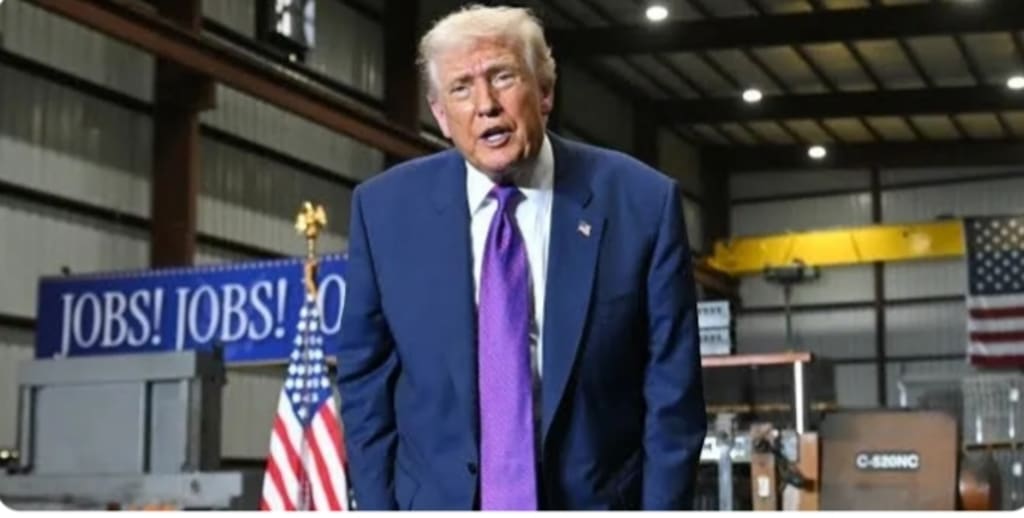
Tensions between Washington and Tehran appear to be entering a new and potentially dangerous phase. According to recent reports, former U.S. President Donald Trump is considering limited military strikes against Iran as leverage to push the country into accepting a new nuclear agreement. While no final decision has been announced, the possibility alone has reignited fears of escalation across the Middle East.
A Strategy of “Maximum Pressure” — With Military Force
Sources familiar with internal discussions suggest that Trump is weighing targeted, short-term military action designed to pressure Iran’s leadership without triggering a full-scale war. The idea reportedly centers on limited strikes against specific military or strategic facilities — a calculated move meant to demonstrate resolve while avoiding a prolonged campaign.
This approach echoes the broader “maximum pressure” strategy that defined U.S. policy toward Iran during Trump’s presidency. The difference now? The pressure may extend beyond sanctions and diplomatic isolation into direct military action.
Trump has reportedly warned that Iran has a narrow window — around 10 to 15 days — to show meaningful progress toward a deal. If negotiations stall, “bad things” could follow, according to individuals familiar with his stance.
Military Buildup Raises Stakes
The discussions come amid reports of an increased U.S. military presence in the region. Additional naval assets, aircraft, and support systems have been deployed, giving Washington the operational capability to act quickly if ordered.
While U.S. officials have not publicly confirmed specific strike plans, the presence of enhanced forces sends a clear signal: military options are on the table.
For Iran, such deployments are not just symbolic. They alter the strategic balance and raise concerns about potential miscalculation — where even a limited strike could spiral into broader confrontation.
Iran’s Nuclear Program at the Center
At the heart of the standoff lies Iran’s nuclear program and the fate of the Joint Comprehensive Plan of Action (JCPOA). The 2015 agreement imposed strict limits on Iran’s uranium enrichment activities in exchange for sanctions relief. However, after the U.S. withdrew from the deal in 2018, tensions steadily escalated.
Since then, Iran has expanded aspects of its nuclear program beyond JCPOA limits, while insisting its activities remain for peaceful purposes. Western officials, however, warn that Tehran is edging closer to weapons-grade enrichment capabilities.
The collapse of trust between both sides has made renewed negotiations deeply complex. Each round of talks appears fragile, with both sides accusing the other of bad faith or shifting demands.
Diplomatic Channels Still Open — For Now
Despite the rhetoric and military signaling, diplomacy has not entirely broken down. Iranian officials have indicated that draft proposals are still under discussion, and international mediators continue to urge restraint.
The head of the International Atomic Energy Agency (IAEA), Rafael Grossi, has warned that time is limited to secure a workable framework before oversight mechanisms weaken further. According to Grossi, without clear agreements and inspections, transparency over Iran’s nuclear activities becomes increasingly difficult.
Iran, for its part, maintains that it will not negotiate under threats. Officials in Tehran have publicly stated that any military strike would be met with a “decisive” response — raising the specter of retaliation against U.S. bases or allied interests in the region.
Risks of Limited Strikes
Proponents of limited military action argue that a carefully calibrated strike could compel Iran back to serious negotiations without triggering all-out war. The logic is simple: demonstrate capability and resolve, then reopen talks from a position of strength.
Critics, however, warn that such a strategy is inherently risky.
History shows that even “limited” strikes can have unpredictable consequences. Iran has a network of regional allies and proxy forces across Iraq, Syria, Lebanon, and Yemen. Any retaliation might not be direct — but indirect responses could widen the conflict dramatically.
There’s also the diplomatic risk. Military action could harden Iran’s negotiating position rather than soften it, reinforcing domestic narratives of resistance against foreign pressure.
International Reaction
Allies in Europe and elsewhere are watching closely. Many governments remain wary of another Middle Eastern conflict, particularly at a time of global economic uncertainty and ongoing regional instability.
Some Western leaders are reportedly reluctant to provide operational support for potential strikes, emphasizing instead the importance of diplomatic solutions. Global energy markets are also sensitive to developments in the Gulf, meaning any escalation could ripple far beyond the immediate region.
Russia and China, both of whom maintain relationships with Tehran, have urged restraint and dialogue — framing military escalation as destabilizing for global security.
A High-Stakes Moment
The coming days could prove pivotal. If negotiations yield a breakthrough, the crisis may ease — at least temporarily. If talks falter and military action is authorized, the Middle East could face another volatile chapter.
For Trump, the decision involves balancing deterrence, diplomacy, and domestic political considerations. For Iran, it is about sovereignty, security, and strategic leverage.
What remains clear is this: even limited strikes would represent a dramatic escalation with potentially far-reaching consequences.
In geopolitics, actions rarely remain contained within their intended boundaries. Whether this moment becomes a turning point toward renewed diplomacy or the opening act of deeper conflict depends largely on decisions made behind closed doors in Washington and Tehran.
For now, the world watches — aware that in matters of nuclear diplomacy and military force, the margin for error is dangerously thin.
About the Creator
Why Black History Matters in America?
The United States of America is celebrating their 250th anniversary in 2026. I'm proud to be an American and as someone who was born here, I wouldn't imagine myself living anywhere else. This is a country where opportunities are possible. Where anyone can be successful in anything they desire to do. Equality, community, and togetherness are the backbones of what America is and should be about. However, we have an administration who wants to erase and disregard those who have made positive, meaningful impacts in our country, specifically Black figures, such as Martin Luther King, Jr., Rosa Parks, and Maya Angelou. President Trump and his administration have been constantly complaining and fighting against what they call the "Woke agenda". They use this excuse as a distraction from other issues they refuse to address, such as the high cost of living, climate change, and inflation. That equality is dividing America, when in reality, it's bringing us together. Being woke is not tied to a specific political party. No matter where you stand on the political spectrum, you can still care about other people and their plights. Compassion and empathy for others isn't tied to a political party, either. We were taught as children to treat others the way we want to be treated and not judge others because they're different from us. Caring about others isn't a personal attack on your beliefs. It doesn't make you any less of a person. People who are easily offended over African American figures, past or present, or anything related to it, are grasping at straws. Current and future generations need to know who people like Harriet Tubman and Shirley Chisholm were, especially in the classroom. Black History is part of American History. It should be recognized, not hidden or forgotten. Besides, you can't shield children from everything, just because your feelings are easily hurt.
By Mark Wesley Pritchard 20 days ago in The Swamp
U.S. Economic Growth Weaker Than Thought in Fourth Quarter With Government Shutdown, Consumer Pullback
When economists first projected growth for the final quarter of the year, optimism was still in the air. But updated figures have revealed a more sobering picture: U.S. economic growth slowed far more than expected during the fourth quarter, largely due to a prolonged government shutdown and a noticeable pullback in consumer spending.
By Sajida Sikandarabout 3 hours ago in The Swamp
The Cave Part 6
If you have ever heard a tale about yourself that you cannot remember and doubtless think is made up, you will know how I felt when Tharkin related all that the eagle had seen of me before my memories were scattered. Of far distances and traveling companions that I did not recall, camping out under the stars and making our way to the mountains with deliberate purpose. The great bird had lost contact with my party once we entered the forests, and the seven other members were not seen again by him or his brethren since.
By Jamye Sharp6 days ago in Chapters



Comments
There are no comments for this story
Be the first to respond and start the conversation.