
Trump's ‘Bomb Magnet’ Fleet Could ‘Never Sail’ and Waste Billions of Dollars: Experts
Experts warn that former President Trump’s ambitious “Bomb Magnet” naval fleet plan risks massive financial waste and may never become operational.
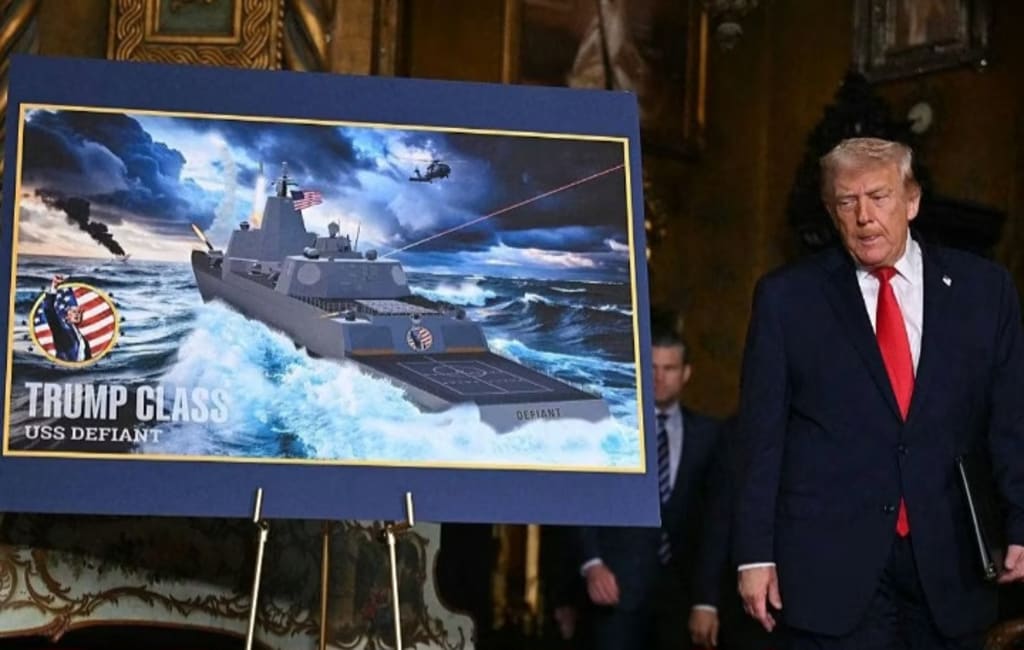
A controversial naval vision associated with former U.S. President Donald Trump is once again under fire, with defense experts warning that the so-called “bomb magnet” fleet could end up draining billions of dollars without ever proving useful in real combat. The concept, rooted in Trump-era rhetoric about restoring American military dominance, is now being criticized as strategically flawed, technologically risky, and financially unsustainable.
The idea revolves around heavily armed, high-profile naval platforms designed to project overwhelming power and deter adversaries through sheer visibility. Supporters once argued that such a fleet would signal U.S. strength and discourage hostile actions. Critics, however, say the opposite is more likely: these vessels would become prime targets in modern warfare, attracting missile strikes rather than deterring them—hence the label “bomb magnets.”
Military analysts point out that naval warfare has fundamentally changed. In an age of hypersonic missiles, satellite surveillance, drones, and cyber warfare, large and conspicuous ships are increasingly vulnerable. “You don’t need to match a billion-dollar ship with a billion-dollar weapon,” said one defense expert. “A relatively cheap missile, guided by modern targeting systems, can neutralize it.” This asymmetry, they argue, makes the concept outdated before it even leaves the dock.
One of the most damning criticisms is that such a fleet might “never sail” in a high-intensity conflict. The reason is simple: commanders would be reluctant to deploy assets that are both enormously expensive and highly vulnerable. Losing one would not only be a military setback but also a political and psychological blow. As a result, these ships could end up functioning more as floating symbols than as practical tools of war.
Cost is another major concern. Estimates suggest that developing, building, and maintaining this kind of fleet could run into tens of billions of dollars over its lifecycle. That includes not just construction, but crew training, maintenance, fuel, upgrades, and protection systems. Critics argue that this money would be far better spent on distributed naval forces, submarines, unmanned systems, and cyber capabilities—areas where the U.S. can maintain an edge without putting all its eggs in one very visible basket.
There is also skepticism about the strategic thinking behind the proposal. Modern U.S. defense doctrine increasingly emphasizes flexibility, dispersion, and resilience. Rather than concentrating firepower in a few massive platforms, the Pentagon has been moving toward networks of smaller, harder-to-detect assets that can operate across vast areas. The “bomb magnet” fleet, experts say, runs directly counter to this trend.
Political motivations have also been questioned. Critics argue that the concept fits neatly into Trump’s preference for grand, headline-grabbing projects that look impressive but lack depth when scrutinized. “It’s spectacle over strategy,” said a former naval officer. “Big ships, big promises, big price tags—but very real risks.”
Supporters of the idea push back, claiming that visible strength is a deterrent in itself and that advanced defense systems could protect these vessels. They argue that abandoning large platforms would signal weakness and embolden rivals like China and Russia. However, many analysts counter that true deterrence today is less about size and more about survivability and adaptability.
International comparisons add another layer to the debate. Potential adversaries are investing heavily in anti-ship missile systems precisely because they see large naval platforms as vulnerable. Deploying a fleet that essentially validates this strategy, critics warn, could hand rivals both a tactical advantage and a propaganda win.
Beyond military logic, there is the question of opportunity cost. Every dollar spent on a questionable fleet is a dollar not spent on veterans’ care, troop readiness, or emerging technologies. At a time when defense budgets are under pressure and global threats are evolving rapidly, wasteful spending could have long-term consequences.
In the end, experts say the biggest risk is not just financial loss, but strategic stagnation. Building a fleet designed for past wars could leave the U.S. ill-prepared for future ones. The harshest critics argue that the “bomb magnet” concept is less a plan for security and more a monument to outdated thinking.
About the Creator
Keep reading
More stories from Aadil shanawar and writers in The Swamp and other communities.
Malaysian MPs Rally Behind Bangladeshi Hindus, Seek Visa Curbs After Lynching Incident
In a rare show of bipartisan concern cutting across ideological lines, several Malaysian Members of Parliament have voiced strong support for Bangladesh’s Hindu minority following a disturbing lynching incident that sent shockwaves across South Asia. The incident, widely circulated on social media and reported by international rights groups, has reignited debates on religious intolerance, minority protection, and cross-border accountability. Malaysian lawmakers are now calling for tighter visa regulations on Bangladeshi nationals until Dhaka demonstrates concrete steps to safeguard its minority communities.
By Aadil shanawar2 months ago in The Swamp
Why Black History Matters in America?
The United States of America is celebrating their 250th anniversary in 2026. I'm proud to be an American and as someone who was born here, I wouldn't imagine myself living anywhere else. This is a country where opportunities are possible. Where anyone can be successful in anything they desire to do. Equality, community, and togetherness are the backbones of what America is and should be about. However, we have an administration who wants to erase and disregard those who have made positive, meaningful impacts in our country, specifically Black figures, such as Martin Luther King, Jr., Rosa Parks, and Maya Angelou. President Trump and his administration have been constantly complaining and fighting against what they call the "Woke agenda". They use this excuse as a distraction from other issues they refuse to address, such as the high cost of living, climate change, and inflation. That equality is dividing America, when in reality, it's bringing us together. Being woke is not tied to a specific political party. No matter where you stand on the political spectrum, you can still care about other people and their plights. Compassion and empathy for others isn't tied to a political party, either. We were taught as children to treat others the way we want to be treated and not judge others because they're different from us. Caring about others isn't a personal attack on your beliefs. It doesn't make you any less of a person. People who are easily offended over African American figures, past or present, or anything related to it, are grasping at straws. Current and future generations need to know who people like Harriet Tubman and Shirley Chisholm were, especially in the classroom. Black History is part of American History. It should be recognized, not hidden or forgotten. Besides, you can't shield children from everything, just because your feelings are easily hurt.
By Mark Wesley Pritchard 18 days ago in The Swamp
How Highways Are Becoming Emergency Air Strips in India
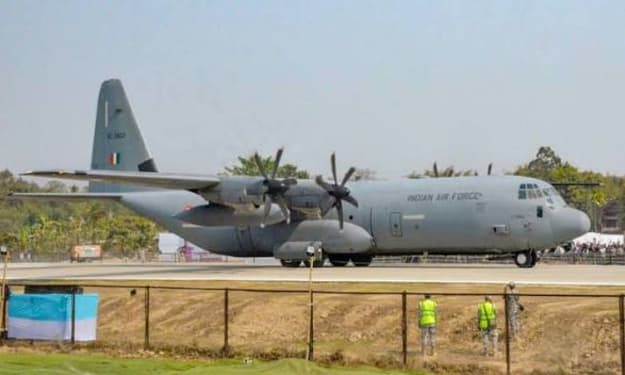
India has quietly been transforming stretches of its national highways into emergency airstrips — dual‑use roadways capable of serving both normal vehicular traffic and aircraft landings during crises. What began as a defence preparedness initiative over the last decade has gained momentum, with the latest milestone marked by Prime Minister Narendra Modi’s historic landing on a converted highway runway in Assam’s Dibrugarh district in February 2026. The Times of India The concept, known officially as Emergency Landing Facilities (ELFs), involves reinforcing and preparing straight, long stretches of highway so they can double as temporary runways for military aircraft — including fighter jets, transport planes, and even heavy turboprops — in situations where regular airbases may be unavailable, vulnerable, or unsuitable. tribuneindia.com A Strategic Shift in Infrastructure On National Highway 37 near Moran, Assam, a 4.2‑kilometre stretch was upgraded into one such ELF, with the surface strengthened and expanded so that aircraft can safely land and take off. The project, costing around Rs 100 crore, was completed in 2025 and inaugurated in early Feb. 2026, when PM Modi landed aboard an Indian Air Force C‑130J — the first time such a landing took place in the northeastern region. This development is part of a broader push by the Indian Air Force (IAF) and the National Highways Authority of India (NHAI) to identify and prepare suitable highway segments as alternate runways. Over the past few years, the Defence Ministry has identified at least 28 sites across 11 states and union territories where highways have been designated as ELFs. These include locations in Assam, West Bengal, Andhra Pradesh, Gujarat, Rajasthan, Jammu & Kashmir, Bihar, Haryana, Tamil Nadu, Punjab, and Uttar Pradesh. Comparable initiatives have already been demonstrated: fighter jets and transport aircraft have conducted trial landings and “touch‑and‑go” operations on highways in Uttar Pradesh, Jaipur area, and Andhra Pradesh as part of broader readiness exercises — underscoring both the feasibility and tactical value of such road runways. The Times of India +1 Why Highway Airstrips Matter There are several strategic and practical reasons behind this programme: 1. Enhanced Defence Preparedness: Highways converted into ELFs provide redundancy for air operations if traditional airbases are threatened during a conflict. Since bases can be predictable targets in wartime or hostile scenarios, having alternate landing zones distributed across the country enhances operational flexibility and resilience. 2. Rapid Mobilisation and Supply: In a crisis, the ability to evacuate personnel, deliver supplies, or redeploy forces quickly becomes crucial. ELFs enable transport aircraft to land closer to operational theatres or disaster zones without relying on busy or compromised airports. 3. Humanitarian and Disaster Response: India’s varied geography is prone to natural disasters — from floods to cyclones — which can make airfields inaccessible. Highway runways can serve as critical entry points for relief flights when conventional airports cannot be used. The New Indian Express 4. Symbolic Signal of Deterrence: Choosing locations such as Northeast India — near the disputed border with China — for these ELFs not only delivers functional value but also conveys a strategic message of preparedness and deterrence. The Times of India How It Works on the Ground To serve as an airstrip, a highway must meet specific engineering criteria: a long, straight stretch free from median dividers; reinforced pavements built to withstand the weight and stress of fast‑moving aircraft; and cleared shoulders free of obstacles like overhead signs or lighting poles. When needed, local authorities can temporarily halt road traffic, close off the section, and secure the perimeter. Aircraft crews then treat it as a makeshift runway, landing and taking off much like at a conventional airfield. In peacetime, these stretches function as ordinary highways. Internationally, this dual‑use model is not unique to India; countries such as Finland, Sweden, Germany, Poland, and others have long used highway strips as part of Cold War‑era contingency plans. Challenges and Future Prospects While the ELF programme has gained traction, implementing and maintaining these installations poses challenges. Construction delays and logistical hurdles have slowed progress at some sites, such as an emergency strip on NH‑16, which faced setbacks due to infrastructure issues. Deccan Chronicle Moreover, coordinating between civil traffic authorities and defence planners to ensure seamless activation when needed requires sophisticated planning and communication. Despite these hurdles, the strategy has become an integral part of India’s broader defence infrastructure roadmap. The New Indian Express As the model continues to expand, and with high‑profile occasions like PM Modi’s historic landing in Assam bringing public attention to dual‑use highways, India’s highways‑turned‑airstrips are likely to remain a key component of the country’s readiness for emergencies — whether military, strategic, or humanitarian. The Times of India
By Fiaz Ahmed 5 days ago in The Swamp
The Guardian Chapter V
Alexander left his Coming of Age ceremony with Cronos and the elders with as many new questions as he had answers for his old questions. Cronos had confirmed his suspicions were correct. Not only was there a link between the Beast Masters and the inhabitants of the Citadel, but it was the Citadel's fault that the Beast Masters existed in the first place. Instead of banishing the law breakers which allowed them to wreak havoc on the rest of humanity, the Citadel elders should have stripped them of their powers before they became too strong. Now Alexander would need to battle the Beast Masters and the Jikininki. It would be difficult for him to forgive the Citadel Elders because their poor decisions led to the deaths of his parents and more than half the planet's human population.
By Mark Gagnon6 days ago in Chapters



Comments
There are no comments for this story
Be the first to respond and start the conversation.