
Trump Says US Will ‘Run’ Venezuela Until a ‘Safe Transition Can Take Place’
Live address signals unprecedented American control and raises global concerns
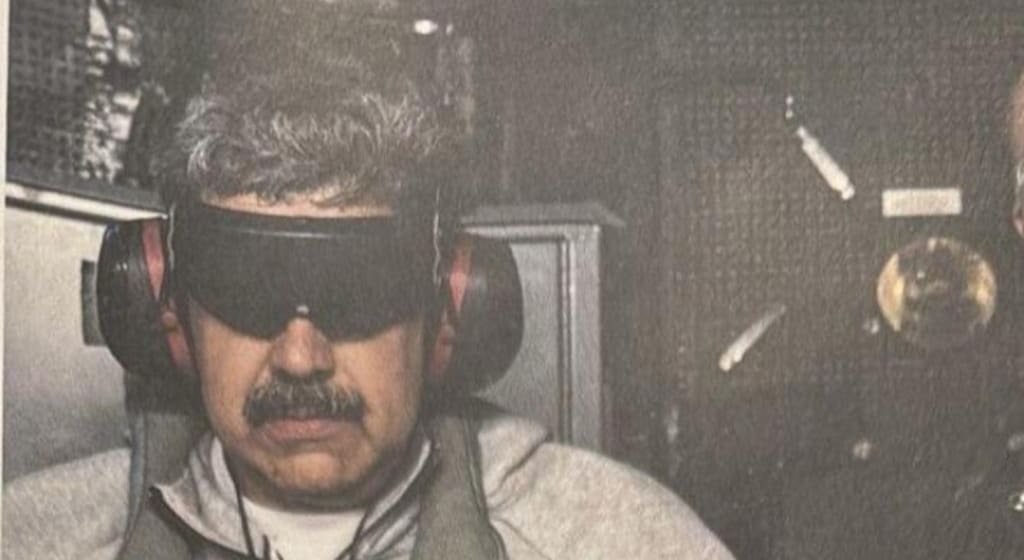
In a statement that has sent shockwaves through international diplomacy, former US President Donald Trump announced that the United States will “run” Venezuela until a “safe transition can take place.” The declaration, delivered during a live address following recent US military actions in the country, marks one of the most dramatic assertions of American power in Latin America in decades.
The announcement comes after reports that US forces carried out targeted strikes and captured Venezuelan President Nicolás Maduro, effectively ending his rule. While Trump framed the move as a temporary measure to restore order and democracy, critics and analysts warn that the policy could redefine US foreign intervention and destabilize the region.
What Trump Said in His Live Address
Speaking directly to the American public and the international community, Trump described Venezuela as a “failed state” that required immediate external administration. He emphasized that US involvement would be temporary, stating that Washington’s role is to ensure:
Political stability
Humanitarian aid delivery
Economic recovery
A transition to democratic governance
Trump insisted the US has “no interest in permanent control”, but said Venezuela cannot be left to collapse into chaos following Maduro’s removal.
An Unprecedented Move in Modern US Policy
While the United States has intervened in Latin America many times historically, openly declaring that it will “run” a sovereign nation is nearly unprecedented in the modern era. Analysts describe the move as a shift away from indirect influence toward direct administrative control, even if temporarily.
This approach resembles post-conflict trusteeship models, though without the backing of international institutions like the United Nations. Critics argue that bypassing multilateral frameworks could weaken global norms and invite retaliation or resistance.
Supporters, however, claim that Venezuela’s deep humanitarian and economic collapse left no viable alternative.
Immediate Situation Inside Venezuela
Inside Venezuela, reactions are mixed and volatile. Some citizens welcomed the news, hopeful that US involvement could bring:
Access to food and medicine
Restoration of public services
Stabilization of the currency
An end to years of political repression
Others expressed fear and anger, viewing the announcement as foreign occupation rather than assistance. Reports from major cities suggest heightened military presence, curfews, and uncertainty about who will govern locally.
Opposition leaders have called for calm, urging Venezuelans to see the transition as a chance to rebuild, while urging the US to respect national sovereignty.
Global Reactions and Diplomatic Fallout
The international response has been swift and divided:
Latin American governments are split, with some supporting a transition away from Maduro, while others condemn US actions as imperial overreach.
Russia and China strongly criticized the announcement, calling it a violation of international law and warning of long-term consequences.
European leaders urged restraint, calling for a clear timeline and international oversight.
The United Nations has requested clarification on the legal basis of US administration and stressed the importance of human rights protections during the transition.
Economic and Humanitarian Challenges Ahead
Running Venezuela—even temporarily—presents enormous challenges. The country’s economy has been devastated by years of mismanagement, sanctions, and declining oil production. Inflation, unemployment, and infrastructure collapse remain severe.
The US now faces responsibility for:
Restoring oil production and exports
Stabilizing the currency
Reopening hospitals and schools
Coordinating humanitarian aid
Experts warn that failure to deliver quick improvements could trigger unrest and undermine the legitimacy of the transition.
Security Risks and Internal Stability
Another major concern is security. Armed groups, remnants of the former regime, and criminal networks remain active across Venezuela. Maintaining order without escalating violence will require careful coordination between US forces, local security units, and civilian authorities.
Any misstep could fuel insurgency, civil resistance, or regional spillover, particularly along borders with Colombia and Brazil.
Trump’s Political Calculation
Trump’s announcement also carries significant domestic political implications. Supporters see the move as decisive leadership and proof of strength on the global stage. Critics argue it risks entangling the US in another prolonged foreign administration with unclear exit conditions.
The phrase “until a safe transition can take place” has drawn scrutiny, with analysts questioning:
Who defines “safe”?
How long will the transition last?
Who will lead Venezuela afterward?
Without clear answers, skepticism remains high.
Lessons from History
History offers sobering lessons about nation-building and transitional governance. Past US interventions show that removing a leader is often easier than creating lasting stability. Success depends on local legitimacy, economic recovery, and respect for sovereignty.
Venezuela’s case will test whether the US can apply those lessons—or repeat past mistakes.
Conclusion
Trump’s declaration that the United States will “run” Venezuela until a safe transition occurs marks a turning point in US foreign policy. While supporters argue the move could end years of suffering and chaos, critics warn of legal, ethical, and geopolitical consequences.
As the world watches the unfolding situation live, one thing is clear: the real challenge has only begun. Whether this unprecedented intervention leads to democratic renewal or long-term instability will shape not only Venezuela’s future, but America’s role on the global stage for years to come.
About the Creator
Keep reading
More stories from Aarif Lashari and writers in The Swamp and other communities.
Removing Maduro Was the Easy Part. Trump’s True Test Will Come Next
The dramatic news that Venezuelan President Nicolás Maduro was detained following a large-scale operation has captured global attention. While the removal of Maduro represents a decisive tactical achievement for the United States under former President Donald Trump, experts argue that the real challenge lies ahead: stabilizing Venezuela, restoring governance, and managing the complex social, economic, and political consequences of regime change.
By Aarif Lashariabout a month ago in The Swamp
The Saddest Thing - The Billionaires Who Rule America Aren't Even Enjoying Themselves
This single post says more about our ruling class than a thousand policy papers. The saddest thing about today's system is that the men robbing the rest of us - sabotaging our economic prospects, our pensions, our access to affordable healthcare - are not even happy.
By Scott Christenson🌴8 days ago in The Swamp
US Slips to Its Lowest-Ever Rank in Global Corruption Index
The United States has fallen to its lowest position ever in a prominent global corruption index, marking a significant moment for a country long viewed as a benchmark for democratic governance and institutional accountability. The drop has sparked debate among policymakers, watchdog organizations, and citizens alike about the health of American democracy and the integrity of its public institutions.
By Aqib Hussain3 days ago in The Swamp
Super Bowl LX Recap: A Team Called Hawks
Sixty. The Super Bowl turned 60! Still amazes me that this was the sixtieth Super Bowl played in NFL history. It seems like yesterday that I watched Super Bowl XXVII, the first SB I ever watched. The QB who won Super Bowl XXVII has since called a few SBs, and will call next year's game, but that's another story. Super Bowl LX took place at Levi's Stadium in Santa Clara, California, the home stadium of the San Francisco 49ers. However, it was one of their division foes who represented the NFC, as the Seattle Seahawks faced off against the New England Patriots.
By Clyde E. Dawkins5 days ago in Unbalanced


Comments (1)
Please stop your AI tool from repeatedly making the silly mistake of calling Donald Trump the "former US President"!