
U.S. Intelligence Warns 15,000+ at Large After ISIS Detention Camp Collapse in Syria
A New Security Crisis Emerges in the Middle East

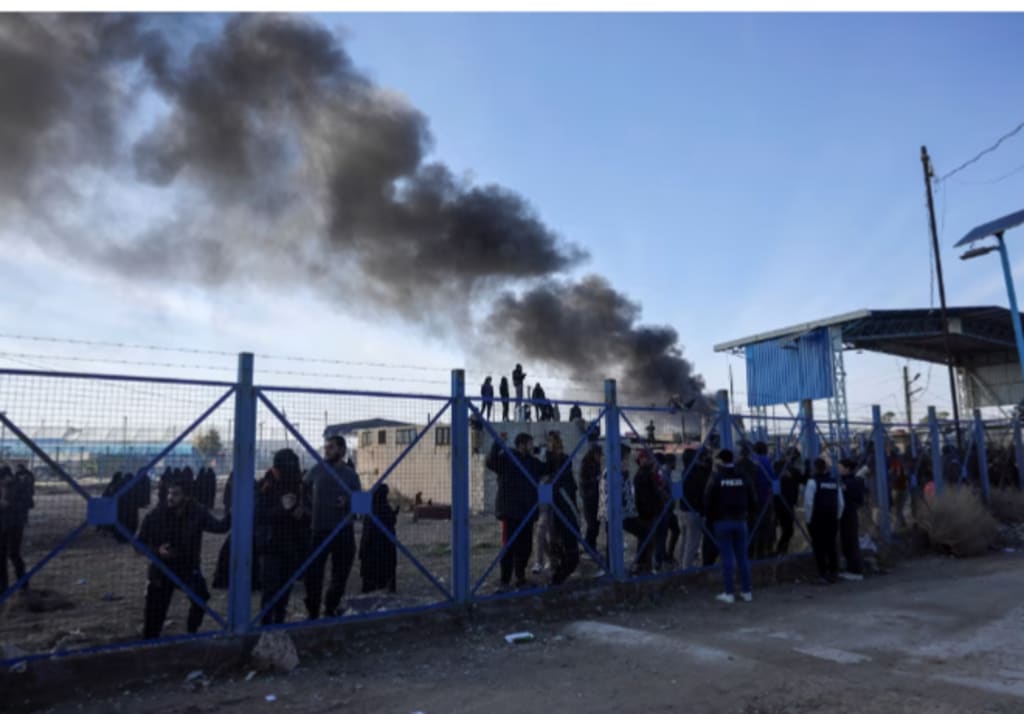
A new intelligence assessment from the United States has raised global alarm: at least 15,000 people linked to the extremist group Islamic State (ISIS) are now unaccounted for after the collapse of a massive detention camp in northeastern Syria.
This dramatic development marks a troubling shift in the fight against terrorism and underscores how fragile post-war containment strategies have become. What was once a controlled detention site is now a symbol of instability, uncertainty, and renewed extremist risk.
What Was the Detention Camp?
The collapse centers on Al-Hol Camp, a sprawling detention facility that for years housed tens of thousands of individuals connected to ISIS. These included fighters’ families, suspected supporters, and foreign nationals whose countries refused to repatriate them.
After ISIS lost its territorial control in 2019, the camp came under the authority of the Syrian Democratic Forces (SDF), backed by U.S. forces. Al-Hol soon became one of the largest detention centers in the world for people tied to an extremist group.
However, the camp was overcrowded, underfunded, and unstable. Humanitarian agencies repeatedly warned that it was becoming a breeding ground for radicalization rather than rehabilitation.
How Did the Camp Collapse?
The collapse did not happen overnight. Several factors contributed to the breakdown of security:
1. Power Shifts in the Region
Recent military and political changes in northeastern Syria weakened SDF control. As responsibility for the area shifted, security gaps emerged and guards were overwhelmed.
2. Overcrowding and Desperation
At its peak, Al-Hol housed more than 70,000 people. Living conditions were dire, with shortages of clean water, food, and medical care. Riots, fires, and organized smuggling networks became increasingly common.
3. Coordinated Escapes
Reports suggest fences were breached and entire groups fled under cover of chaos. Many simply disappeared into nearby towns and rural regions.
The result: between 15,000 and 20,000 people scattered across Syria, with no reliable way to track their whereabouts.
Who Are the People Now at Large?
Not everyone who escaped is a hardened militant. The population of Al-Hol was complex:
Women and children linked to ISIS fighters
Foreign nationals from Europe, Central Asia, and the Middle East
Suspected extremists and recruiters
Individuals who lived for years inside ISIS-controlled territory
U.S. officials stress that while many are civilians, a significant portion may still be ideologically committed to ISIS. This creates a serious security dilemma: how to separate humanitarian cases from potential threats.
Children raised inside extremist environments are especially vulnerable to future radicalization if they receive no education or support.
Why This Is Dangerous
1. A Possible ISIS Revival
Although ISIS no longer controls large territory, it remains active underground. Dispersed former detainees could reconnect with sleeper cells and rebuild networks.
Security analysts warn this could lead to:
New attacks in Syria and Iraq
Increased recruitment
Expansion into ungoverned regions
2. Regional Spillover
Neighboring countries like Iraq and Turkey fear militants crossing borders. Already, thousands of detainees have been transferred from Syria to Iraqi prisons in emergency operations.
This puts strain on already fragile prison systems and risks human rights abuses and prison radicalization.
3. Diplomatic Deadlock
Many Western nations have refused to take back their citizens who joined ISIS, fearing domestic backlash and legal complications. This left Syria holding thousands of stateless people with no long-term solution.
The collapse of Al-Hol exposes the cost of that policy.
Humanitarian Crisis vs. Counterterrorism
This situation highlights a painful conflict between two priorities:
Humanitarian Needs
Thousands of women and children are now displaced with no shelter, healthcare, or legal protection. International organizations argue they deserve:
Repatriation
Psychological support
Education and reintegration programs
Security Concerns
Governments fear that releasing or repatriating individuals without strict screening could allow extremists to regroup. Intelligence agencies call for:
Shared databases
Regional cooperation
Local monitoring efforts
Balancing compassion with caution is proving extremely difficult.
What Does This Mean for U.S. and Global Policy?
The collapse of Al-Hol has forced policymakers to rethink their approach to Syria. For years, the U.S. relied on local partners to manage ISIS detainees. Now, that strategy appears dangerously fragile.
American officials say intelligence surveillance will continue, even as troop presence declines. Meanwhile, global partners are debating:
Whether to repatriate detainees
How to prevent future mass escapes
Who bears responsibility for long-term custody
The incident may push nations toward more active involvement rather than containment by proxy.
Final Thoughts: A Dangerous Turning Point
The estimate that at least 15,000 people linked to ISIS are now at large represents one of the most serious setbacks in post-caliphate counterterrorism efforts.
What began as a temporary detention solution has unraveled into a complex crisis involving security threats, humanitarian suffering, and diplomatic paralysis.
If the international community fails to respond with coordinated action, this moment could become the spark for a new wave of extremism in an already unstable region.
The collapse of Al-Hol is more than a local failure—it is a warning to the world that unresolved conflicts do not stay contained forever.
About the Creator
Sajida Sikandar
Hi, I’m Sajida Sikandar, a passionate blogger with 3 years of experience in crafting engaging and insightful content. Join me as I share my thoughts, stories, and ideas on a variety of topics that matter to you.
Keep reading
More stories from Sajida Sikandar and writers in The Swamp and other communities.
Punch the Monkey, Initially an Outcast, Finds Some Friends (and the Internet’s Support)
When Punch first arrived at a small wildlife sanctuary, his future looked uncertain. The young monkey, rescued after being separated from his troop, was visibly different from the others—smaller, timid, and hesitant to interact. While the sanctuary staff hoped he would eventually integrate into a new group, the early days were painful to watch. Punch was ignored, pushed aside during feeding time, and often sat alone at the edge of the enclosure.
By Sajida Sikandara day ago in The Swamp
A Gathering of Evil Bosses
“I’m the queen of chin jutting while I smooth my hair, attacking, insulting, and deflecting to protect my appointer.” “Oh, please, Blondi, my hair is curled, highlighted, and longer than yours. I feature television commercials telling immigrants that we will give them a free plane ride home, and if they voluntarily turn themselves in, they will be allowed to legally apply for re-entry. It runs everywhere, and I look good in it! You can’t compete because of your blond hair. Mine is nicer, and my lips are prettier than yours.”
By Andrea Corwin 3 days ago in The Swamp
North Korea’s First Nuclear-Powered Missile Submarine Is Revealed
North Korea has unveiled its first nuclear-powered missile submarine, a development that marks a significant milestone in the country’s strategic military capabilities and raises concerns among regional and global security analysts. The announcement, accompanied by state media imagery, highlights Pyongyang’s continued focus on expanding its naval and nuclear deterrence capabilities, despite international sanctions and diplomatic pressures. The Unveiling State-run North Korean media released images of the submarine during a formal ceremony attended by senior military officials. The vessel, reportedly capable of carrying ballistic missiles, represents the country’s first foray into nuclear-powered submarine technology. Analysts note that the move signals both technical advancement and a strategic intent to enhance second-strike nuclear capability. The submarine appears to be significantly larger than the country’s existing diesel-electric submarine fleet and is believed to be capable of extended underwater operations. This development could allow North Korea to maintain a continuous at-sea nuclear deterrent, reducing the vulnerability of its strategic assets to preemptive strikes. Technical and Strategic Significance While specific technical details remain scarce, defense analysts suggest that the vessel is designed to operate silently and for long periods underwater, using a nuclear propulsion system to power both its engines and onboard systems. The integration of ballistic missile capability could potentially allow the submarine to launch nuclear missiles from protected, concealed positions, thereby strengthening North Korea’s deterrent posture. “This is a game-changer in terms of regional security,” said an East Asia military analyst. “A nuclear-powered submarine with ballistic missile capability significantly increases Pyongyang’s ability to project power and complicates defense planning for neighboring countries and the United States.” North Korea has historically relied on a combination of land-based missile systems and conventional submarines for its naval strategy. The introduction of a nuclear-powered platform represents a shift toward modernized, survivable deterrence. Experts note that the move may also reflect North Korea’s desire to emulate capabilities possessed by other nuclear states, including the U.S., Russia, and China. Regional and Global Reactions The unveiling of the submarine has drawn immediate attention from South Korea, Japan, and the United States, all of whom monitor North Korean military developments closely. South Korea’s Ministry of National Defense stated that it is analyzing satellite imagery and open-source intelligence to assess the capabilities of the new vessel. Japan’s government expressed concern over the potential threat to maritime security in the region. U.S. officials noted that the development underscores the ongoing challenges of denuclearization talks and highlights the need for robust deterrence strategies. Analysts suggest that the submarine could complicate existing defense frameworks in the Indo-Pacific, forcing allies to consider enhanced anti-submarine warfare capabilities and maritime surveillance. Implications for Nuclear Deterrence The introduction of a nuclear-powered missile submarine has significant implications for North Korea’s nuclear posture. Submarines provide a survivable second-strike capability, allowing a country to maintain the ability to retaliate even after a first-strike attack. This strategic advantage is critical for maintaining deterrence and signaling to adversaries that any attack could provoke a devastating response. Experts also warn that the development could accelerate an arms race in the region, prompting neighboring countries to invest more heavily in submarine detection and missile defense systems. Additionally, the revelation may influence diplomatic negotiations, with North Korea likely leveraging its enhanced capabilities to extract concessions in talks with the United States and regional partners. Technical Challenges and Future Prospects While the unveiling is a major step, technical experts caution that the vessel may still face challenges in operational deployment. Nuclear propulsion requires advanced engineering, maintenance infrastructure, and trained personnel, areas where North Korea has limited publicly verified expertise. Analysts will be monitoring whether the country can sustain long-term operations and integrate the submarine effectively into its naval strategy. The development also raises questions about the country’s missile technology, including the range, accuracy, and survivability of submarine-launched ballistic missiles. Successful integration of these systems could significantly alter the strategic calculus in Northeast Asia. Looking Ahead The North Korean announcement is expected to influence both regional defense planning and global diplomatic efforts. While Pyongyang has consistently pursued advanced military capabilities, the addition of a nuclear-powered missile submarine represents a tangible escalation in its strategic capabilities. As tensions in the region persist, countries including South Korea, Japan, and the United States are likely to increase monitoring and prepare contingency plans. Analysts warn that the unveiling could set a precedent for further technological advancements in North Korea’s naval and nuclear programs, reshaping security dynamics in the Indo-Pacific. The world now faces a new chapter in the North Korean military narrative, with a vessel that could fundamentally change the nature of deterrence and escalation in the region.
By Fiaz Ahmed 4 days ago in The Swamp




Comments
There are no comments for this story
Be the first to respond and start the conversation.