
U.S.–Iran Relations in 2026: Nuclear Negotiations, Tensions, and a World on Edge
In early 2026, the diplomatic relationship between the United States and Iran sits at one of its most critical inflection points in decades. Years of tension over Tehran’s nuclear program, regional influence, and strained trust between Washington and Tehran have brought the two nations to the brink of conflict — yet, at the same time, ongoing nuclear negotiations offer a slim but real path toward diplomacy. This article explores the latest developments in U.S.–Iran relations, the evolving nuclear negotiation process, and what the world could face as both sides navigate this high‑stakes political drama.

The Context: A Long History of Tension
Relations between the United States and Iran have been fraught since the 1979 Islamic Revolution, when the U.S.-backed shah was overthrown and American diplomats were held hostage for 444 days. Decades of mistrust followed, marked by sanctions, proxy conflicts, and sharply diverging regional priorities.
Tensions escalated sharply after the U.S. withdrawal from the 2015 Iran nuclear deal (Joint Comprehensive Plan of Action) in 2018 under President Donald Trump. Since then, both sides have engaged in periodic negotiations and periodic confrontations, but no lasting agreement has been reached — until now.
________________________________________
2026 Nuclear Talks: Geneva and Diplomatic Engagement
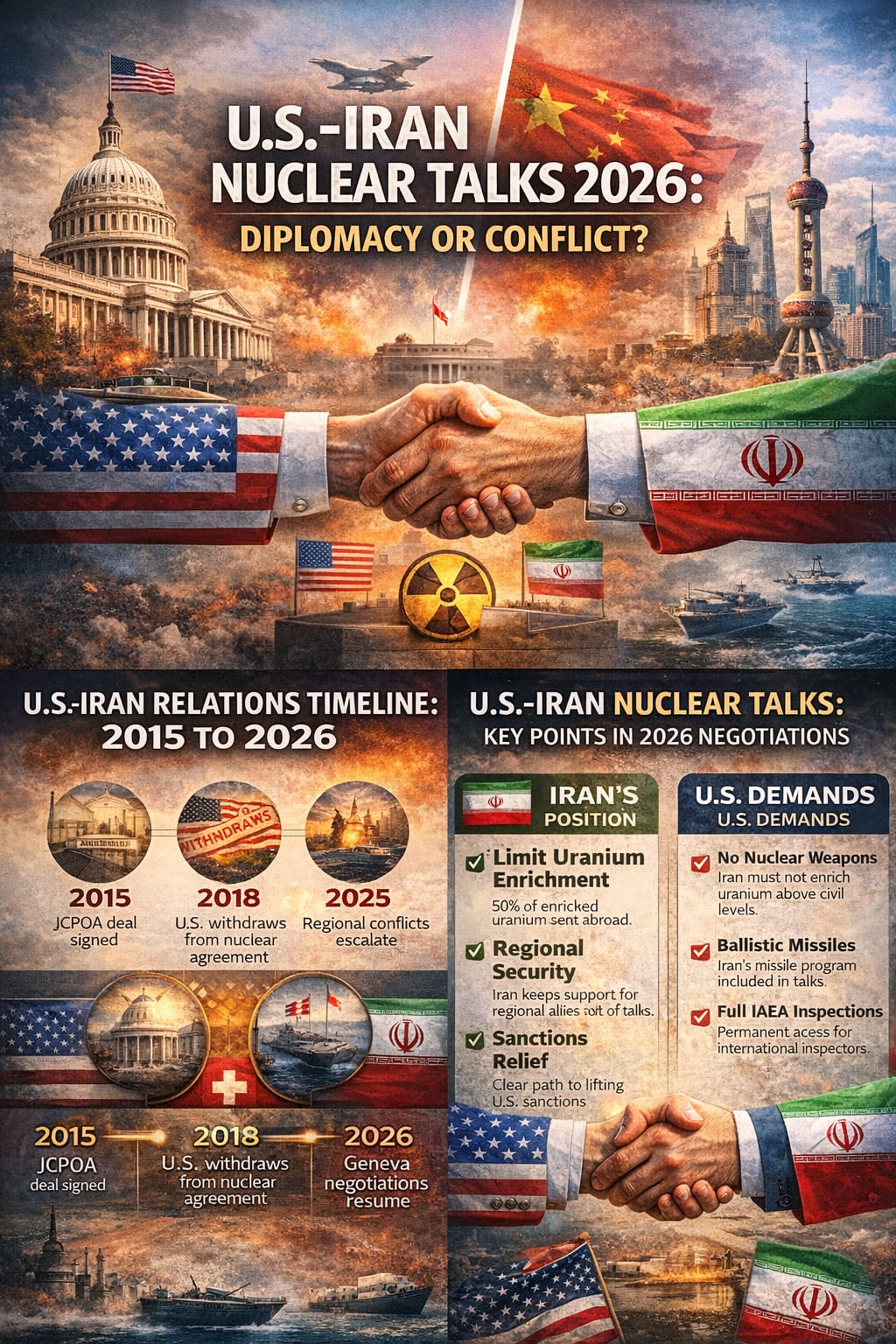
As of February 2026, the U.S. and Iran have resumed indirect nuclear negotiations in Geneva, Switzerland, mediated by Oman — a key diplomatic intermediary. Omans’ Foreign Minister, Badr al Busaidi, confirmed that a new round of talks is scheduled for Thursday in Geneva, signaling a sustained diplomatic effort to address the nuclear dispute.
What’s on the Table
The negotiations are focused on Iran’s nuclear program — particularly the level and scope of uranium enrichment, international inspections, and the lifting of economic sanctions. Tehran insists on its right to enrich uranium for peaceful purposes and is resistant to demands it fully halt enrichment, while Washington insists that Iran must ensure its program cannot lead to the development of nuclear weapons.
A senior Iranian official recently told Reuters that Tehran is prepared to make tangible concessions in exchange for sanction relief and formal recognition of its enrichment rights. Among the ideas on the table is sending half of Iran’s highly enriched uranium abroad and participating in a regional enrichment consortium — a move aimed at building confidence and avoiding military confrontation.
Iran’s Foreign Minister Abbas Araghchi has indicated that negotiators have not been asked to set “zero enrichment” as a condition, contrary to public perceptions, but rather to focus on confidence building measures that will ensure a peaceful program.
Despite these ongoing discussions, key disagreements remain, especially over the sequencing of sanctions relief and the role of Iran’s ballistic missile program and regional proxy networks — issues the United States wants included but which Iran seeks to exclude from negotiations.
________________________________________
Military Buildup and the Risk of Conflict
Even as diplomacy continues, the geopolitical climate around the talks is tense. The United States has significantly expanded its military presence in the Middle East, deploying two aircraft carriers, fighter jets, and additional defensive assets — moves that have raised serious international concern that a military confrontation could erupt if negotiations falter.
U.S. President Donald Trump has publicly warned that if Tehran does not agree to a “meaningful deal” within a specific timeframe, “really bad things will happen”, with limited military action being openly discussed as a credible option.
Iran’s leadership, in turn, has reiterated a firm stance that it will not bow to pressure and that any military aggression would be met with a decisive response. President Masoud Pezeshkian has stressed Iran’s commitment to regional stability, even as tensions rise and preparations for all scenarios continue.
Proponents of a diplomatic solution hope that the current Geneva talks — now in their third scheduled round — can prevent an escalation to war. Oman’s role as mediator and the cautious optimism expressed by both sides highlight the diplomatic push to avoid conflict.
________________________________________
Domestic Pressures Shaping Talks
Internal pressures in Iran further complicate negotiations. Nationwide protests have erupted in universities and major cities, demanding political change and justice for those affected by previous crackdowns. These domestic tensions — as well as economic hardship due to sanctions — have increased the urgency for Tehran to secure some form of relief.
In the United States, President Trump faces political considerations at home as well. Hardline stances and military positioning reflect pressure from conservative factions, while some policymakers and analysts urge restraint and a diplomatic resolution. This internal political balancing act influences how far Washington is willing to negotiate.
________________________________________
Economic Stakes: Sanctions and Global Markets
Sanctions relief remains central to Iran’s negotiation strategy. For Tehran, loosening U.S. economic restrictions would unlock significant opportunities for trade, especially in oil and gas — vital sectors for its economy. The sequencing and structure of sanctions relief are points of contention, as Iranian officials demand clear, immediate economic benefits tied to concrete nuclear concessions.
At the same time, uncertainty surrounding the outcome of negotiations has reverberated through global markets, particularly in energy. Oil prices remain volatile, influenced by the risks of conflict and potential disruption in the Middle East — a region key to global energy supply.
________________________________________
Regional Implications Beyond U.S.–Iran Relations
The tension between the U.S. and Iran also reverberates across the Middle East. Countries throughout the region closely monitor the situation, balancing their own strategic interests as they brace for possible spillover effects. Saudi Arabia, Israel, and Gulf states have expressed both economic and security concerns linked to a potential escalation.
Israel, in particular, remains wary of Tehran’s nuclear ambitions and has historically taken firm action including direct strikes on Iranian nuclear facilities in 2025. The possibility of renewed conflict involving Israel could further destabilize the region.
Additionally, disruptions to the Strait of Hormuz, a critical shipping route for global oil exports, remain a strategic flashpoint that could have serious effects on global energy markets should tensions escalate.
________________________________________
The Delicate Balance: War or Diplomacy?
The path forward is far from certain. On one hand, the resumption of nuclear talks and fresh proposals from Iran suggest that diplomacy still has momentum, and a deal could yet be crafted that addresses both nations’ core concerns.
On the other hand, the military buildup, hardened rhetoric, and deep divisions over sanctions, enrichment levels, and associated security concerns mean that the risk of conflict remains real. Analysts warn that if either side miscalculates or if negotiations break down, the delicate balance could quickly tip toward military confrontation.
The coming rounds of talks — particularly the one scheduled in Geneva this Thursday — may serve as a critical indicator of whether diplomacy can prevail. Mediators like Oman remain cautiously optimistic, but both Washington and Tehran are acutely aware that time, strategy, and domestic pressures may determine the ultimate outcome.
________________________________________
Conclusion: A World Watching Closely
In 2026, U.S.–Iran relations encapsulate some of the most pressing geopolitical challenges of our time: nuclear proliferation concerns, regional security, global energy stability, and the delicate dance between military readiness and diplomatic negotiation.
Whether these negotiations yield a lasting agreement or fall apart under pressure, the consequences will extend far beyond the negotiating table in Geneva. World leaders, global markets, and millions of people across regions feel the implications of every shift in this complex relationship. The world is watching as history may yet repeat itself — but this time, the outcome is still uncertain.
About the Creator
Keep reading
More stories from shahkar jalal and writers in The Swamp and other communities.
China’s Belt and Road Expansion in Africa and Latin America 2026: Global Influence and Economic Implications
1. Overview of the Belt and Road Initiative in 2026 The Belt and Road Initiative is now active in over 140 countries, with major projects spanning infrastructure, energy, transportation, and digital networks. In 2026, China has intensified its focus on two critical regions outside Asia:
By shahkar jalalabout 6 hours ago in Education
A Gathering of Evil Bosses
“I’m the queen of chin jutting while I smooth my hair, attacking, insulting, and deflecting to protect my appointer.” “Oh, please, Blondi, my hair is curled, highlighted, and longer than yours. I feature television commercials telling immigrants that we will give them a free plane ride home, and if they voluntarily turn themselves in, they will be allowed to legally apply for re-entry. It runs everywhere, and I look good in it! You can’t compete because of your blond hair. Mine is nicer, and my lips are prettier than yours.”
By Andrea Corwin 7 days ago in The Swamp



Comments
There are no comments for this story
Be the first to respond and start the conversation.