
US‑Iran Talks Live: Tehran Says Understanding on Main Principles Reached
Formal / News Style Tehran and Washington report progress in nuclear negotiations amid cautious optimism Second round of talks in Geneva yields agreement on guiding principles, officials say 🔹 Neutral & Informative Diplomats continue discussions on nuclear program limits and sanctions relief Understanding on main principles marks a step forward in ongoing US‑Iran diplomacy 🔹 Impactful Partial breakthrough offers hope for resolution of longstanding nuclear tensions


Negotiators from the United States and the Iran concluded a second round of indirect diplomatic talks in Geneva on Tuesday, with Tehran announcing an “understanding on the main principles” of a possible agreement. While officials cautiously described the progress as a step forward, key disagreements remain and further work is required before any formal deal can be finalized.
The discussions, mediated by representatives from Oman, brought together Iranian and U.S. envoys in a bid to ease longstanding tensions over Iran’s nuclear program. Talks resumed amid mounting international concern about regional security and the risk of escalation, particularly given recent military posturing in the Middle East.
A Tentative Understanding
Iranian Foreign Minister Abbas Araghchi told reporters after the Geneva session that Tehran and Washington had reached an understanding on core principles that could underpin future negotiations. According to Araghchi, the discussions were “very serious” and represented a meaningful step in a diplomatic process that has stalled on several occasions.
Araghchi described the relative progress as laying the groundwork “for a deal,” though he emphasized that significant details remained unresolved. Iranian officials did not publicly disclose the specifics of the principles agreed, but said both sides were committed to continuing dialogue.
The U.S. delegation, which participated in the negotiations through indirect channels, has not yet issued a detailed statement on the outcome. However, officials have previously stressed Washington’s insistence on limiting Tehran’s nuclear activities — in particular, curbing enrichment levels — in exchange for sanctions relief.
The Guardian
Regional Tensions and Diplomacy
The talks in Geneva followed earlier rounds of indirect meetings in Muscat and Rome, which also sought to build trust between the two sides. Experts say these mediated discussions aim to narrow the gaps on contentious issues such as uranium enrichment, the scope of international inspections, and economic sanctions.
The negotiations are unfolding against a backdrop of heightened military activity. In recent weeks, Iran conducted naval drills near the Strait of Hormuz, a critical artery for global oil shipping, and temporarily restricted transit through the waterway — moves that underscored Tehran’s ability to leverage its strategic geography.
At the same time, the U.S. has maintained a strong military presence in the region, including deployments of carrier strike groups intended to deter any escalation. These deployments have added urgency to diplomatic efforts, which both sides say they hope will prevent conflict.
Reuters
Oil Markets and Economic Impact
The diplomatic signals from Geneva had immediate repercussions in global markets. Crude oil futures fell after news of progress in the talks, as traders interpreted the developments as reducing the risk of major supply disruptions tied to geopolitical conflict.
However, analysts caution that oil markets remain sensitive to both diplomatic and military activity in the Persian Gulf region, and that any breakdown in negotiations could quickly reverse the recent price movement.
Remaining Obstacles
Despite the reported understanding on guiding principles, major obstacles remain. Iranian officials continue to assert their right to uranium enrichment under the Non‑Proliferation Treaty, a point of contention for U.S. negotiators. Washington has also pushed for broader limitations on Iran’s ballistic missile program and support for allied militia groups — demands Tehran has been reluctant to accept.
In addition, trust between the two nations is fragile. Iranian officials have repeatedly criticized what they describe as inconsistent messaging from U.S. political actors over the seriousness of Washington’s negotiating intentions, and some in Tehran warn that progress is conditional on the United States engaging in “fair, equitable” dialogue.
What Comes Next
Both sides indicated that their diplomatic teams will return to the drawing board to refine proposals and work on the technical language of a possible agreement. No date has yet been set for a third round of talks, underscoring the difficulty of translating an understanding of principles into a draft treaty text or framework.
For now, the partial breakthrough offers a cautious note of optimism for diplomats and regional leaders who see negotiation as a path to stability. Yet analysts say the long road ahead will require compromise, patience, and careful management of both diplomatic and military pressures if the goal of a comprehensive agreement is to be realized.
About the Creator
Fiaz Ahmed
I am Fiaz Ahmed. I am a passionate writer. I love covering trending topics and breaking news. With a sharp eye for what’s happening around the world, and crafts timely and engaging stories that keep readers informed and updated.
Keep reading
More stories from Fiaz Ahmed and writers in The Swamp and other communities.
France’s €3.2 Billion Rafale Deal Vanishes Overnight as Rival Country Swoops In at Final Hour
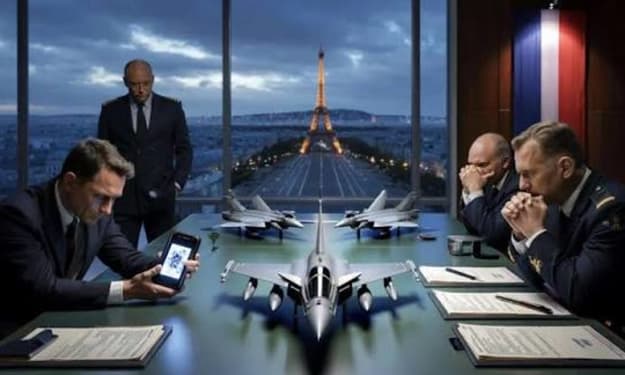
In a stunning turn of events, France has lost a €3.2 billion contract for the supply of Rafale fighter jets after a rival nation secured the deal at the last minute. The unexpected reversal has sent shockwaves through the French defense industry and raised questions about the competitiveness of France’s military exports in the global market. Background The Rafale, manufactured by Dassault Aviation, is a multirole fighter jet that has been exported to countries including India, Egypt, and Qatar. Known for its versatility, advanced avionics, and combat-proven design, the aircraft has long been a flagship of French aerospace exports. The €3.2 billion deal, expected to supply several aircraft along with maintenance support and training, was announced months ago as a near certainty. French defense officials hailed it as a major win for the industry and a testament to the Rafale’s global appeal. Last-Minute Twist However, sources familiar with the negotiations revealed that the prospective buyer abruptly switched allegiance to a competitor, reportedly Germany or another European manufacturer, in the closing hours of the bidding process. The decision was attributed to a combination of favorable financing terms, domestic industrial partnerships, and strategic incentives offered by the rival nation. French officials expressed disappointment but emphasized the need to understand the competitive pressures shaping international defense contracts. “While this is certainly a setback, it underscores the increasingly complex environment in which countries procure military assets,” said one defense ministry official on condition of anonymity. Industry Reactions Analysts warn that losing the contract could have significant repercussions for Dassault Aviation and France’s broader defense sector. “Deals of this magnitude are crucial not only for revenue but also for sustaining domestic aerospace jobs and maintaining technological leadership,” said Jean-Marc Petit, a Paris-based defense expert. The sudden loss highlights the intense competition in the fighter jet market, where nations frequently weigh cost, technology, offset agreements, and geopolitical considerations. Recent years have seen France face stiff competition from F-35 Lightning II and Eurofighter Typhoon, both of which offer attractive industrial participation clauses and integrated defense solutions. Geopolitical Implications Beyond economic concerns, the shift may carry broader geopolitical consequences. Defense deals often reflect strategic partnerships, and losing a major contract to a rival country could affect France’s influence in the buyer’s region. Officials note that while military hardware is sold commercially, such contracts also signal political alignment and long-term cooperation. Experts caution that France will need to engage diplomatically to maintain relationships with prospective clients and ensure that losing one contract does not lead to a broader erosion of trust in its defense exports. Moving Forward In response, Dassault Aviation reportedly plans to review its bidding strategies and enhance its value proposition for future contracts. Proposals include more attractive financing packages, stronger industrial participation for buyer nations, and extended maintenance and training offerings. French officials also stressed that the Rafale remains highly competitive globally, citing recent sales successes and ongoing negotiations with multiple countries in Asia, the Middle East, and Europe. “We remain confident in the Rafale’s appeal and its ability to meet the operational needs of modern air forces,” a ministry spokesperson said. Conclusion The sudden disappearance of the €3.2 billion Rafale deal illustrates the volatile and fiercely competitive nature of the global arms market. While the setback is significant, France’s aerospace sector continues to pursue new opportunities and maintain its position as a leader in fighter jet technology. Analysts agree that swift adaptation, strategic diplomacy, and innovative offers will be critical if France aims to recover lost ground and secure future contracts.
By Fiaz Ahmed a day ago in The Swamp
Why Black History Matters in America?
The United States of America is celebrating their 250th anniversary in 2026. I'm proud to be an American and as someone who was born here, I wouldn't imagine myself living anywhere else. This is a country where opportunities are possible. Where anyone can be successful in anything they desire to do. Equality, community, and togetherness are the backbones of what America is and should be about. However, we have an administration who wants to erase and disregard those who have made positive, meaningful impacts in our country, specifically Black figures, such as Martin Luther King, Jr., Rosa Parks, and Maya Angelou. President Trump and his administration have been constantly complaining and fighting against what they call the "Woke agenda". They use this excuse as a distraction from other issues they refuse to address, such as the high cost of living, climate change, and inflation. That equality is dividing America, when in reality, it's bringing us together. Being woke is not tied to a specific political party. No matter where you stand on the political spectrum, you can still care about other people and their plights. Compassion and empathy for others isn't tied to a political party, either. We were taught as children to treat others the way we want to be treated and not judge others because they're different from us. Caring about others isn't a personal attack on your beliefs. It doesn't make you any less of a person. People who are easily offended over African American figures, past or present, or anything related to it, are grasping at straws. Current and future generations need to know who people like Harriet Tubman and Shirley Chisholm were, especially in the classroom. Black History is part of American History. It should be recognized, not hidden or forgotten. Besides, you can't shield children from everything, just because your feelings are easily hurt.
By Mark Wesley Pritchard 17 days ago in The Swamp
Bridge Owner Lobbied Trump Administration Before President’s Blast at U.S.–Canada Crossing
In early February 2026, a high-profile controversy emerged over the Detroit–Windsor border crossing, drawing attention to both political influence and international trade policy. Reports indicate that the owner of the privately held Ambassador Bridge met with senior Trump administration officials just hours before President Donald Trump publicly criticized and threatened to block the opening of the new Gordie Howe International Bridge, a project jointly managed by the United States and Canada.
By Ayesha Lashari7 days ago in The Swamp



Comments
There are no comments for this story
Be the first to respond and start the conversation.