
US Navy Shoots Down Iranian Drone in Arabian Sea
Tensions Rise in the Middle East as Carrier Strike Group Intercepts Shahed‑139
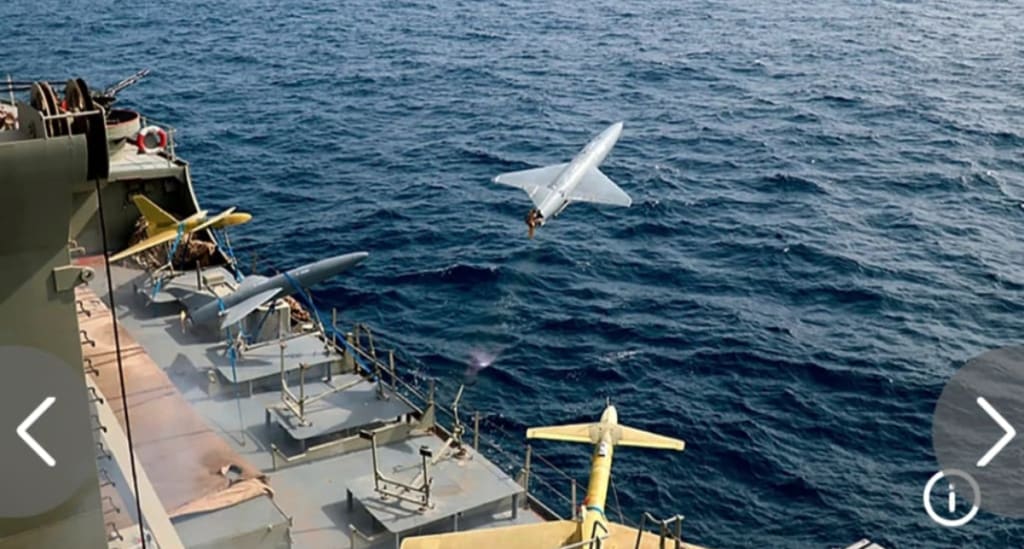
The United States Navy recently shot down an Iranian drone in the Arabian Sea, marking yet another chapter in the complex and often tense relationship between Washington and Tehran. This incident occurred on February 3, 2026, when a Shahed‑139 drone approached the USS Abraham Lincoln, a Nimitz-class aircraft carrier, raising immediate concerns about the safety of personnel and assets in international waters.
What Happened? A Close Encounter at Sea
According to the US Central Command (CENTCOM), the Iranian drone aggressively approached the carrier, triggering defensive measures. The aircraft carrier, which carries thousands of personnel and dozens of aircraft, is considered a high-value strategic asset. The drone was ultimately shot down by an F‑35C fighter jet launched from the carrier to protect both the crew and the ship.
Officials stressed that no U.S. personnel were injured and no equipment was damaged, but the incident underscores the volatile nature of the region. Such encounters are a reminder of how quickly routine operations in the Arabian Sea can escalate into potentially dangerous situations.
The Shahed‑139: A Drone with Capabilities
The Shahed‑139 drone is a medium-altitude, long-endurance UAV, primarily used for surveillance and reconnaissance. However, some versions can carry explosives, giving the drone potential offensive capabilities.
While Iran claims its drones are used for monitoring purposes, the U.S. military considered the approach aggressive enough to justify defensive action. The fact that the drone came close to a floating aircraft carrier base — capable of launching attacks across the region — made the response almost inevitable.
Why This Matters: Regional Tensions Are Rising
This incident did not happen in isolation. Earlier, the Islamic Revolutionary Guard Corps (IRGC) reportedly confronted a merchant vessel in the Strait of Hormuz, a critical chokepoint through which a significant portion of global oil trade passes. The USS McFaul escorted the vessel, showcasing the U.S. commitment to maritime security in the region.
Both events highlight the strategic and economic significance of the Arabian Sea and Strait of Hormuz, where minor confrontations can have global implications, affecting shipping lanes and energy markets.
The Diplomatic Angle: Talks vs. Action
The shootdown comes at a delicate time in U.S.-Iran relations. Negotiations continue in parallel with these military incidents, showing the complex balance between diplomacy and deterrence.
U.S. officials maintain that the drone posed a legitimate threat, while Iranian media described the drone’s mission as routine and lawful, revealing a gap in narratives that complicates diplomatic discussions. Both sides continue to frame incidents strategically to gain domestic and international support.
What Experts Are Saying
Military analysts suggest this is part of a broader pattern where Iran tests U.S. response capabilities without triggering full-scale conflict. The U.S., meanwhile, uses these incidents to demonstrate readiness and assert freedom of navigation in international waters.
The use of advanced fighter jets like the F‑35C shows that the U.S. is prepared to counter threats quickly, combining modern technology with naval power. Experts warn, however, that repeated encounters could inadvertently escalate tensions if miscommunications occur or if either side misreads intentions.
The Bigger Picture: Stability in the Middle East
The Arabian Sea and adjacent regions are geopolitically sensitive, given their proximity to Iran, Pakistan, and the Gulf states. Any confrontation in this area risks regional instability, with potential spillover into global markets.
From a security perspective, the U.S. carrier presence serves as both a deterrent and reassurance. For Iran, however, these actions are often viewed as provocative, creating a cycle of demonstration and counter-demonstration. Both nations are navigating a fine line between showing strength and avoiding direct conflict.
What Comes Next? Watching Closely
Although no casualties or damage occurred, this drone shootdown signals that any movement in the Arabian Sea is under intense scrutiny. Military observers predict that the U.S. will continue to monitor Iranian UAVs closely, while Iran may deploy drones for both surveillance and signaling.
For now, diplomacy continues in the background, but analysts warn that miscalculations or unexpected incidents could escalate tensions quickly. The key question is whether both sides can maintain restraint while asserting strategic interests.
Key Takeaways for Readers
US Navy shot down an Iranian Shahed‑139 drone near the USS Abraham Lincoln in the Arabian Sea.
No casualties or damages occurred, but tensions remain high.
The incident is part of a broader U.S.-Iran standoff in maritime regions critical for global trade.
Diplomacy and military readiness are both at play, showing the delicate balance in international relations.
Future incidents may continue unless clear communication and restraint prevail.
Conclusion: A Delicate Balance
The shootdown underscores the high-stakes environment in the Middle East, where modern drones, advanced aircraft, and strategic naval assets intersect. It’s a reminder of how technological advancements and geopolitical ambitions shape modern conflict zones.
While diplomacy remains the preferred path for resolving tensions, incidents like this show that military readiness cannot be ignored. For citizens and global observers, the Arabian Sea continues to be a region worth watching, where small actions can have far-reaching consequences.
About the Creator
Why Black History Matters in America?
The United States of America is celebrating their 250th anniversary in 2026. I'm proud to be an American and as someone who was born here, I wouldn't imagine myself living anywhere else. This is a country where opportunities are possible. Where anyone can be successful in anything they desire to do. Equality, community, and togetherness are the backbones of what America is and should be about. However, we have an administration who wants to erase and disregard those who have made positive, meaningful impacts in our country, specifically Black figures, such as Martin Luther King, Jr., Rosa Parks, and Maya Angelou. President Trump and his administration have been constantly complaining and fighting against what they call the "Woke agenda". They use this excuse as a distraction from other issues they refuse to address, such as the high cost of living, climate change, and inflation. That equality is dividing America, when in reality, it's bringing us together. Being woke is not tied to a specific political party. No matter where you stand on the political spectrum, you can still care about other people and their plights. Compassion and empathy for others isn't tied to a political party, either. We were taught as children to treat others the way we want to be treated and not judge others because they're different from us. Caring about others isn't a personal attack on your beliefs. It doesn't make you any less of a person. People who are easily offended over African American figures, past or present, or anything related to it, are grasping at straws. Current and future generations need to know who people like Harriet Tubman and Shirley Chisholm were, especially in the classroom. Black History is part of American History. It should be recognized, not hidden or forgotten. Besides, you can't shield children from everything, just because your feelings are easily hurt.
By Mark Wesley Pritchard 15 days ago in The Swamp
Cloudflare Guidance Above Expectations
the digital age, where cyber threats loom large and web performance can make or break a business, Cloudflare has emerged as a game‑changer. What began as a solution for faster load times has evolved into a comprehensive platform for web security, performance optimization, and network reliability. Importantly, Cloudflare’s guidance—its documentation, developer tools, and customer support—regularly exceeds expectations, empowering businesses of all sizes to operate confidently in an increasingly hostile online environment.
By Ayesha Lashari5 days ago in The Swamp
Part 2 Interview With Joe Patterson, Author Of Melanin Memoirs
This is my second interview with Joe Patterson. His 4th anniversary writing on Vocal will be in March 2026. He has one achievement on Vocal, The Other Foot. He has over 17,000 reads on Vocal since he started on Vocal in 2022. Joe Patterson is very creative poet and rapper. Joe is deep thinker and I feel it is reflected in his latest published book, Melanin Memoirs.
By Mariann Carroll3 days ago in Interview



Comments
There are no comments for this story
Be the first to respond and start the conversation.