
What’s It Like to Climb a Skyscraper?
A first-hand look at the thrill, challenge, and breathtaking views of ascending the city’s tallest buildings

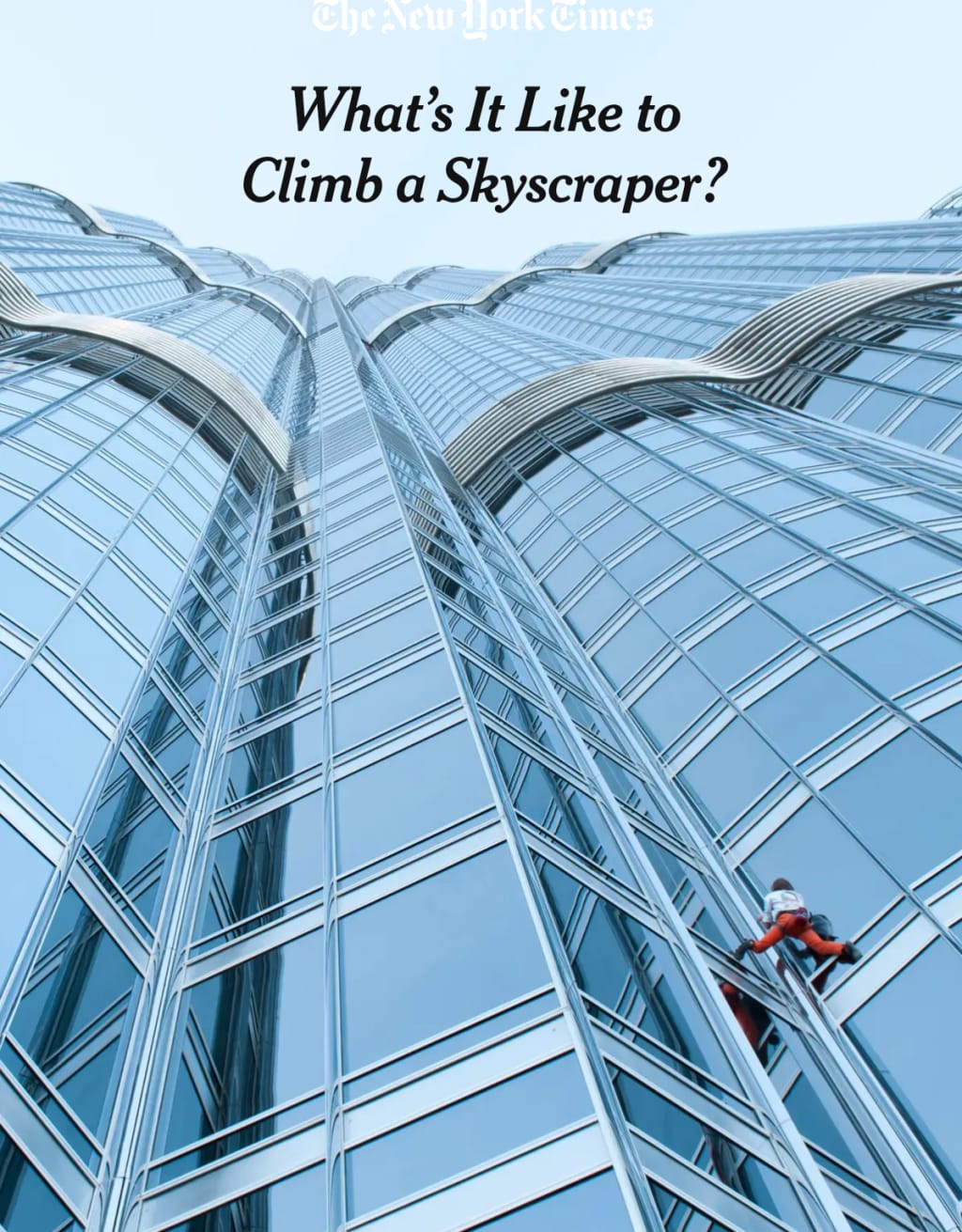
There’s something undeniably magnetic about skyscrapers. Their towering steel frames, glass façades, and dizzying heights make them icons of urban life. For most people, they’re something to admire from the ground — shiny symbols of ambition and modernity. But for a growing number of thrill-seekers, climbing a skyscraper isn’t just a dream: it’s an experience that combines adventure, risk, and awe-inspiring perspective.
Whether you’re imagining scaling the Empire State Building, the Burj Khalifa, or a local office tower, the experience of climbing a skyscraper is unlike anything else. It’s not just a physical challenge — it’s a mental test, an adrenaline rush, and a unique way to see the city from above.
The Allure of Skyscraper Climbing
So why do people climb skyscrapers, often illegally? The reasons are surprisingly diverse:
The thrill of danger: Humans are naturally drawn to challenges that push limits, and skyscraper climbing delivers it in spades.
Perspective: Seeing the city from hundreds of meters above street level gives climbers a unique vantage point and a sense of freedom.
Art and photography: Many climbers document their ascents, creating stunning urban photography and videos that capture angles and views few will ever experience.
Personal achievement: Reaching the top of a towering structure is an intense form of accomplishment, comparable to summiting a mountain — only in a city.
Urban explorers and “builderers” (people who climb buildings) often describe it as the ultimate form of adrenaline-driven meditation, where focus and awareness are heightened, and the world below seems simultaneously vast and distant.
Preparation Is Key
Climbing a skyscraper isn’t as simple as walking up a staircase. Even for legal climbs like observation decks, preparation is crucial. For unauthorized climbs, it becomes even more serious — the risks include injury, arrest, or worse.
Experienced climbers stress that planning is everything:
Scouting the building: Understanding access points, security cameras, and roof layouts can mean the difference between a safe ascent and disaster.
Gear and clothing: Lightweight, flexible clothes are essential. Specialized climbing shoes or gloves may help grip smooth surfaces.
Physical conditioning: Strength, balance, and endurance are critical. Climbing a skyscraper tests your body in ways a normal workout never will.
Mental preparation: Staying calm, focused, and patient is often the most important factor. Heights can trigger fear and vertigo, and panicking can be dangerous.
Even for sanctioned climbs, like tours or stair challenges, knowing what to expect helps make the experience safer and more enjoyable.
The Climb: Step by Step
For legal climbs, like charity stair climbs or guided rooftop access, the physical experience is intense. Thousands of steps wind through stairwells, often cramped and dimly lit, sometimes for hundreds of meters of vertical ascent.
Climbers describe sensations that range from burning legs and lungs to heart-pounding excitement. Every landing, window, or break offers a fleeting glimpse of the city below — a reminder of the height already gained. Some climbers say it feels like moving through the veins of the building itself, each floor a step closer to the sky.
For those climbing illegally or “urban exploring,” the experience is even more extreme. Exposed steel beams, precarious ledges, and glass walls test courage and balance. Every movement requires precision, focus, and confidence, because one misstep can be fatal.
The View from the Top
The most rewarding part of skyscraper climbing is, unsurprisingly, the view. From hundreds of meters above the ground, the city spreads out like a miniature model: traffic streams below, parks look like patches of green felt, and distant landmarks seem both near and impossibly far.
Sunsets and city lights are transformed at this altitude. Photographers often remark that a skyscraper top provides a canvas for capturing the urban landscape in ways ground-level photography can’t. Whether it’s sunrise casting long shadows over the skyline or night lights twinkling like stars, the perspective is unmatched.
The Psychological Effect
Climbing a skyscraper isn’t just physical — it’s mental. Climbers often describe a sense of clarity and calm once they reach the top, despite the danger. The adrenaline fades into awe and reflection. The height, the view, and the effort all combine into a unique mental state — sometimes called “flow” — where fear, focus, and exhilaration merge.
There’s also a profound sense of achievement. Unlike completing a marathon or finishing a mountain hike, skyscraper climbing is unusual, urban, and defies the ordinary patterns of city life. Reaching the top provides a rush of accomplishment few other activities can replicate.
Risks and Considerations
It’s important to acknowledge the risks involved in skyscraper climbing:
Physical injury: Falls or slips can be fatal.
Legal consequences: Unauthorized climbs can result in arrest or fines.
Security hazards: Modern buildings are equipped with cameras, alarms, and personnel to prevent trespassing.
Mental stress: Heights can trigger vertigo, panic attacks, or disorientation.
For safety, climbers are encouraged to pursue legal climbs, organized events, or guided tours whenever possible. Even legal climbs can be physically demanding, so preparation and fitness are critical.
Why People Keep Climbing
Despite the risks, the fascination with skyscraper climbing persists. For many, it’s about breaking boundaries, seeing the world differently, and feeling alive. The combination of challenge, perspective, and achievement creates a compelling allure that few other urban activities can match.
The experience is both personal and shared. Climbers often join communities online to share photos, tips, and stories. These communities celebrate courage, preparation, and the thrill of vertical exploration — while warning newcomers about the dangers of reckless climbing.
Final Thoughts
Climbing a skyscraper — whether legally or as an extreme urban adventure — is about more than just reaching the top. It’s a physical, mental, and emotional journey that offers unparalleled views, insight into urban design, and an unforgettable sense of accomplishment.
The next time you walk past a towering building, think about the people who dare to climb it. For them, each step upward is not just a test of strength, but an opportunity to see the world from an entirely new perspective — high above the streets, where the city becomes something both majestic and intimate.
About the Creator
Muhammad Hassan
Muhammad Hassan | Content writer with 2 years of experience crafting engaging articles on world news, current affairs, and trending topics. I simplify complex stories to keep readers informed and connected.
Keep reading
More stories from Muhammad Hassan and writers in The Swamp and other communities.
Brooklyn Beckham’s Wedding DJ Speaks About the ‘Awkward’ Dance
Celebrity weddings are often portrayed as flawless fairy tales — perfectly choreographed dances, glamorous guests, and unforgettable celebrations. But according to the DJ who performed at Brooklyn Beckham and Nicola Peltz’s lavish wedding, not every moment went exactly as planned. In a recent interview, the wedding DJ opened up about an “awkward” dance moment that surprised guests and quickly became a talking point behind the scenes. While the Beckham–Peltz wedding was one of the most high-profile events of the year, this revelation reminds us that even celebrity celebrations can have uncomfortable or unexpected moments. A Star-Studded Wedding Under the Spotlight Brooklyn Beckham, son of football icon David Beckham and fashion designer Victoria Beckham, married actress and heiress Nicola Peltz in an extravagant ceremony attended by celebrities, family, and close friends. The wedding, held at the Peltz family estate, was widely covered by the media, praised for its luxury, elegance, and star power. From designer outfits to carefully curated music, every detail appeared meticulously planned. However, as the DJ later revealed, not everything unfolded as smoothly as it looked on social media. The DJ’s Perspective: What Went Wrong? Speaking candidly, the wedding DJ described one particular dance moment as “awkward”, explaining that it felt uncomfortable not just for the couple, but also for guests watching. While the DJ avoided naming specific individuals involved in the dance, the moment reportedly stood out because it didn’t match the emotional tone or expectations of the event. According to the DJ, wedding dances are often deeply personal and emotionally charged, especially at high-profile ceremonies where family dynamics are closely observed. When expectations clash with reality, even a carefully planned moment can feel off. Why Wedding Dances Can Be Tricky Wedding dances — whether between newlyweds, parents and children, or other family members — carry symbolic meaning. They are meant to represent love, unity, and celebration. However, they can also expose unspoken tensions, nerves, or emotional discomfort. In celebrity families like the Beckhams, where public scrutiny is constant, even small missteps are magnified. The DJ explained that pressure can make people overthink or feel self-conscious, especially when surrounded by cameras and famous guests. Social Media vs. Reality One reason this moment drew attention is the contrast between the perfect images shared online and the reality described by someone working behind the scenes. On social media, Brooklyn and Nicola’s wedding appeared flawless — elegant dances, smiling guests, and romantic moments frozen in time. The DJ’s comments offer a reminder that social media rarely shows the full picture. Even the most glamorous events can include uncomfortable pauses, emotional tension, or moments that don’t land as intended. Public Fascination With Celebrity Weddings Celebrity weddings captivate audiences because they blend fantasy with familiarity. People enjoy seeing famous figures experience the same emotions as anyone else — excitement, nerves, joy, and occasional awkwardness. This behind-the-scenes story resonated with fans because it humanizes a highly publicized couple. It shows that even when wealth, planning, and professional teams are involved, weddings remain deeply emotional and unpredictable. The DJ’s Role at High-Profile Events For wedding DJs, especially at celebrity events, the role goes beyond playing music. They must read the room, manage transitions, and sometimes navigate emotionally sensitive situations. The DJ noted that moments like the “awkward” dance are part of the job, especially when dealing with families under intense public attention. Despite the discomfort, the DJ emphasized that the overall wedding was beautiful and memorable. One awkward moment, they said, doesn’t define the entire celebration. Reactions From Fans and Media Since the DJ’s comments surfaced, fans have been divided. Some sympathized with the couple, pointing out that weddings are stressful enough without public judgment. Others expressed curiosity, speculating about what exactly happened and why it felt awkward. Media outlets quickly picked up the story, not because it was scandalous, but because it offered a rare, honest glimpse into a private moment at a very public event. What This Says About Modern Celebrity Culture This story highlights how minor moments can become major headlines in today’s celebrity culture. A brief awkward interaction — something that would be forgotten at a private wedding — becomes newsworthy when famous names are involved. It also reflects society’s growing interest in authenticity. Audiences increasingly appreciate stories that reveal imperfection behind polished public images, making celebrities feel more relatable. Final Thoughts Brooklyn Beckham and Nicola Peltz’s wedding will likely be remembered for its elegance, star-studded guest list, and fairytale setting. Yet the DJ’s candid comments about an “awkward” dance moment add a human layer to the narrative. In the end, this story serves as a reminder that no celebration is perfect, no matter how glamorous it appears. Weddings are emotional, unpredictable, and deeply personal — whether you’re a global celebrity or an everyday couple. Sometimes, it’s the imperfect moments that make an event truly memorable.
By Muhammad Hassan11 days ago in The Swamp
Shabana Mahmood: Teething Troubles with One in, One Out Deal.
Keir Starmer did a deal with French President Emmanuel Macron. The agreement is one in, one out. In other words, we send a migrant back to France, and we accept one from France. Or at least that's the basic theory of it. So illegal migrants can be removed from Britain, and an equal number can come to Britain via the legal route. However, some have questioned the logic of this. Surely a sound policy would be stop or at least deter migrants from crossing the English Channel in the first place. The Channel is the busiest or one of the busiest shipping lanes in the world, so dinghies stacked up with people are taking a hell of a risk. There have been no collisions with shipping as far as I know; however, dinghies have capsized with fatalities. Mr. Starmer was also supposed to be cracking down on the gangs exploiting migrants, but how well that has gone, I cannot say.
By Nicholas Bishop6 days ago in The Swamp
“China Matters”: Why Keir Starmer’s Beijing Visit Signals a Shift in UK Global Strategy
When Keir Starmer declares that “China matters,” he is doing more than stating the obvious. As he heads to Beijing accompanied by senior British business leaders, the Labour leader is sending a carefully calibrated signal: the United Kingdom, regardless of political party, cannot afford to ignore China’s economic gravity or its growing influence on the global stage. Starmer’s visit represents a notable moment in UK-China relations, one that blends economic realism with diplomatic caution.
By Ayesha Lashari6 days ago in The Swamp



Comments
There are no comments for this story
Be the first to respond and start the conversation.