
Zelensky Hopes Historic Ukraine-Russia-US Talks Mark First Step Toward Ending the War
As trilateral negotiations begin in Abu Dhabi, Kyiv’s leader calls for genuine commitment to peace and urges global unity against continued aggression
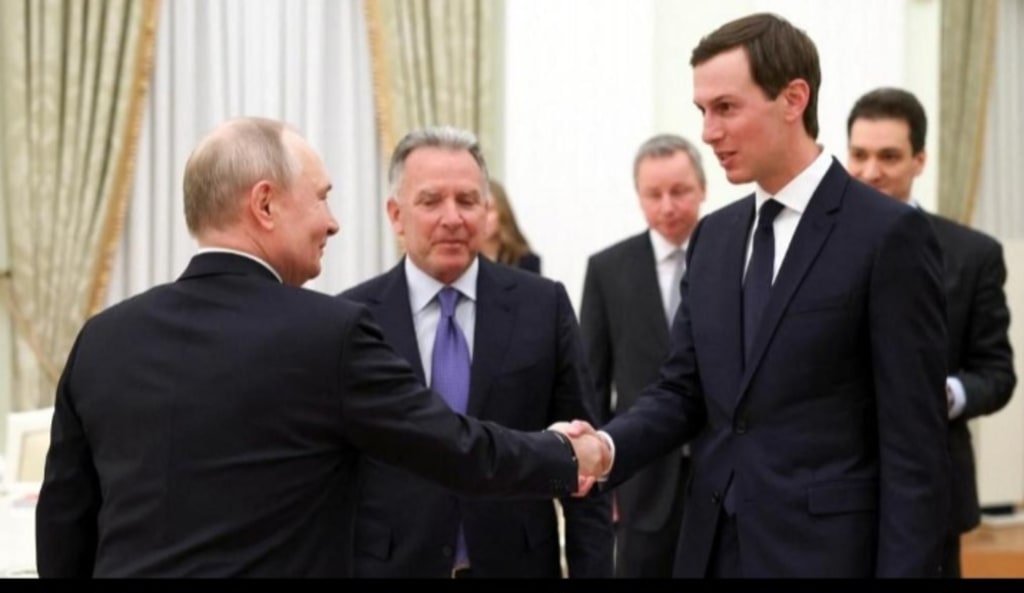
In a remarkable diplomatic moment, Ukrainian President Volodymyr Zelensky has expressed cautious optimism that the first-ever trilateral talks between Ukraine, Russia, and the United States could become a meaningful step toward ending the nearly four-year-long war with Moscow. The ground-breaking negotiations — taking place in Abu Dhabi, United Arab Emirates — mark the first time representatives from all three sides have sat down together in an attempt to chart a path away from relentless conflict and devastation. �
Yahoo News Australia +1
Zelensky publicly framed the talks as potentially historic, highlighting that while much work remains, the very fact that such a dialogue has begun is itself a sign that progress may be possible. Speaking before the opening of the discussions, he said he hoped the meeting would be “a step towards ending the war,” a powerful message reflecting both aspiration and urgency for peace after years of staggering human and material loss. �
Yahoo News Australia
Background: A War Entering Its Fourth Year
The full-scale war began in early 2022, when Russia launched a major invasion of Ukraine, triggering massive displacement, widespread destruction, and global geopolitical tensions. Ukraine has resisted occupation and received sustained support from Western allies, particularly in military aid and economic sanctions against Moscow. Despite intense fighting, the frontlines have shifted only modestly over time, and key contested areas — especially in eastern Ukraine’s Donbas region — remain central to diplomatic disputes. �
The Independent
For months, the United States has been working to facilitate diplomatic engagement. U.S. officials, including special envoy Steve Witkoff, have engaged in shuttle diplomacy with both Kyiv and Moscow, trying to reconcile profound differences, particularly over territorial questions, security guarantees, and post-war reconstruction plans. �
The Sun
Key Issues on the Table
The agenda in Abu Dhabi focuses heavily on some of the most sensitive issues of the conflict:
Territorial Control and the Donbas: Russia continues to insist Ukraine relinquish control over major portions of the eastern Donbas region, which it claims as rightful Russian territory. Ukraine, for its part, rejects this outright, asserting that areas currently under its administration must remain sovereign Ukrainian land. �
Financial Times
Security Guarantees: Ukraine has sought binding security guarantees — potentially backed by international powers — to ensure it cannot again face unprovoked aggression. The U.S. has floated various proposals to secure such assurances, though details remain complex and contentious. �
The Sun
Demilitarized and Economic Zones: One proposal under discussion is transforming contested areas into demilitarized zones with open economic activity, a compromise that faces skepticism from all sides. Russia is reluctant to concede control, while Ukraine worries about how to preserve sovereignty and protect citizens. �
The Sun
These discussion points reflect the core challenge: how to build a peace framework that respects Ukraine’s sovereignty while addressing Moscow’s demands in a way that does not undermine long-term stability. �
AP News
Zelensky’s Message: Cautious Optimism
In his public remarks, Zelensky struck a balanced tone. He acknowledged that no immediate breakthrough was certain and that results would depend on whether Russia genuinely sought an end to hostilities. Nevertheless, he emphasized Ukraine’s willingness to engage constructively in diplomacy while protecting its national interests and territorial integrity. �
The Times
This approach indicates Kyiv’s desire to avoid being sidelined in talks that could shape its future. President Zelensky has consistently called for direct involvement of Ukraine’s leadership in any negotiations about its territory or security. His message to the world — and to Moscow — is that no peace is legitimate unless Ukraine’s voice is at the center of it. �
International Context and Global Stakes
The trilateral talks in Abu Dhabi are unfolding against broader international pressure for resolution. World leaders, including those at forums like the World Economic Forum in Davos, have urged renewed focus on peace efforts. While there is global support for Ukrainian sovereignty, opinions differ on the form and pace of ending the war. �
The Guardian
For the United States, these talks also reflect a shift in diplomatic posture. U.S. President Donald Trump has repeatedly emphasized the importance of negotiating an end to the war, calling the conflict “ongoing” and suggesting that both Kyiv and Moscow must show flexibility. Trump’s approach has been met with mixed reactions from European allies and Ukrainian authorities alike. �
Al Jazeera
Meanwhile, ongoing military pressure persists on the ground. Even as diplomats meet, Russian forces continue attacks in eastern Ukraine, complicating the political environment and underscoring the urgency felt by Kyiv for a ceasefire. �
The Times
What Comes Next
The Abu Dhabi talks are scheduled to continue over two days. Observers caution that any meaningful progress will require sustained follow-up negotiations and trust-building measures among parties long locked in hostility. Zelensky’s hope that this first trilateral dialogue is a “step towards ending the war” reflects both a diplomatic opening and an acknowledgment that the path to peace is long and uncertain. �
Yahoo News Australia
For Ukraine, the priority remains clear: secure a future free from aggression, affirm national sovereignty, and ensure a peace that withstands the test of time. Whether the current talks can unlock that outcome is an open question — but for the first time in years, there is a formal space in which all three crucial parties are talking directly. �
About the Creator
Keep reading
More stories from Ayesha Lashari and writers in The Swamp and other communities.
Vietnam’s Leader Returns With Bold Promises — Can He Deliver
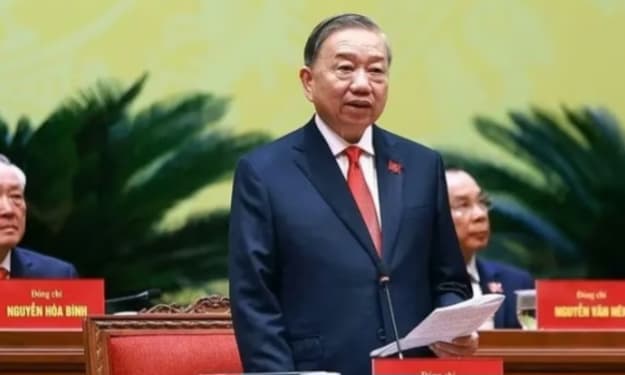
Vietnam’s political landscape has entered a new chapter with the reappointment of General Secretary To Lam as the top leader of the Communist Party of Vietnam, a position that effectively makes him the most powerful figure in the one-party state. On January 23, 2026, Lam was unanimously confirmed by all 180 members of the Communist Party’s Central Committee during the 14th National Party Congress in Hanoi, securing his leadership for the next five years. His return comes with bold promises — from double-digit economic growth targets to sweeping reforms — but observers and analysts are now asking a pressing question: Can he deliver on his ambitious agenda? �
By Ayesha Lashari24 days ago in The Swamp
Why Black History Matters in America?
The United States of America is celebrating their 250th anniversary in 2026. I'm proud to be an American and as someone who was born here, I wouldn't imagine myself living anywhere else. This is a country where opportunities are possible. Where anyone can be successful in anything they desire to do. Equality, community, and togetherness are the backbones of what America is and should be about. However, we have an administration who wants to erase and disregard those who have made positive, meaningful impacts in our country, specifically Black figures, such as Martin Luther King, Jr., Rosa Parks, and Maya Angelou. President Trump and his administration have been constantly complaining and fighting against what they call the "Woke agenda". They use this excuse as a distraction from other issues they refuse to address, such as the high cost of living, climate change, and inflation. That equality is dividing America, when in reality, it's bringing us together. Being woke is not tied to a specific political party. No matter where you stand on the political spectrum, you can still care about other people and their plights. Compassion and empathy for others isn't tied to a political party, either. We were taught as children to treat others the way we want to be treated and not judge others because they're different from us. Caring about others isn't a personal attack on your beliefs. It doesn't make you any less of a person. People who are easily offended over African American figures, past or present, or anything related to it, are grasping at straws. Current and future generations need to know who people like Harriet Tubman and Shirley Chisholm were, especially in the classroom. Black History is part of American History. It should be recognized, not hidden or forgotten. Besides, you can't shield children from everything, just because your feelings are easily hurt.
By Mark Wesley Pritchard 15 days ago in The Swamp
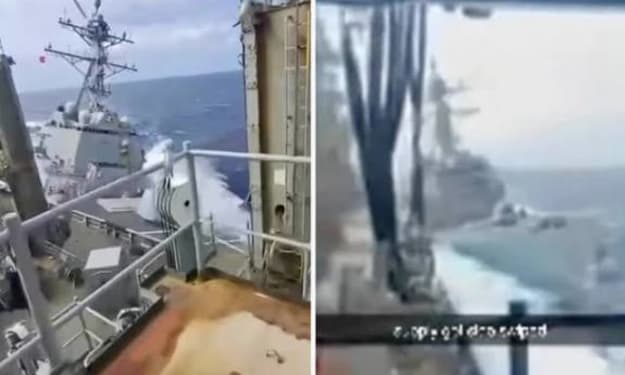
Verified Video Shows Collision Between US Navy Ships in Caribbean Sea
A verified video circulating online has captured a dramatic collision between two vessels belonging to the United States Navy in the Caribbean Sea, raising fresh concerns about maritime safety and operational coordination in busy international waters. The footage, first shared by a civilian ship crew and later confirmed by naval officials as authentic, shows one warship maneuvering at moderate speed before striking the side of another vessel operating nearby. The impact appears sudden but not catastrophic, with visible damage to the hull of at least one ship and crew members rushing to respond in the immediate aftermath. According to preliminary statements from Navy officials, the collision occurred during routine operations. Both vessels were reportedly conducting training and patrol activities when the incident took place. No fatalities were reported, though several sailors sustained minor injuries and were treated aboard ship. The ships were able to remain afloat and move under their own power after the collision. The Navy has launched a formal investigation to determine the precise cause of the accident. Early indications suggest a possible breakdown in communication or misjudgment in navigation, but officials stressed that conclusions would not be drawn until all evidence is reviewed, including radar data, bridge logs, and crew testimony. Maritime experts say that while collisions involving military vessels are rare, they are not unprecedented. The Caribbean Sea is a heavily trafficked region, hosting commercial shipping routes, fishing vessels, and military patrols from multiple nations. Even with advanced navigation systems and trained crews, the risk of accidents increases in congested or complex operational environments. The release of video footage has intensified public scrutiny. In the clip, alarms can be heard sounding shortly before the collision, and sailors appear to react quickly to secure equipment and assess damage. Analysts note that the footage provides valuable insight into the seconds leading up to the impact and will likely play a central role in the investigation. A Navy spokesperson said the service is committed to transparency and safety. “We are reviewing all available information to understand what happened and how similar incidents can be prevented in the future,” the statement read. The spokesperson added that both ships have since returned to port for inspection and repairs. The incident has prompted questions about training standards and operational tempo. In recent years, the Navy has faced challenges related to crew fatigue and increased deployment demands. Defense observers argue that sustained high activity levels can strain personnel and heighten the likelihood of human error, even among experienced crews. This collision also comes amid broader discussions about maritime readiness and modernization. As the Navy upgrades its fleet with more advanced sensors and automated systems, critics emphasize that technology alone cannot replace sound judgment and disciplined command procedures. Safe navigation, they argue, still depends heavily on human decision-making. From a strategic perspective, the Caribbean Sea remains an important region for U.S. naval operations, including counter-narcotics missions, disaster response, and regional security cooperation. Any disruption to fleet readiness, even from non-combat incidents, can affect broader mission objectives. International reaction has been muted, but regional maritime authorities have requested information to ensure that commercial shipping lanes were not affected. So far, no environmental damage has been reported, and there were no signs of fuel leakage or hazardous material release into the sea. The verified nature of the video has also reignited debate about operational security in the digital age. With smartphones and onboard cameras now common, incidents that once might have remained internal quickly become public. Some defense officials worry that such footage, while valuable for accountability, could expose vulnerabilities or be misinterpreted without full context. Legal and procedural reviews are expected to follow the Navy’s internal investigation. Depending on the findings, disciplinary action or changes in navigation protocols could be recommended. Historically, similar incidents have led to revised training programs and stricter enforcement of maritime rules of the road. For sailors involved, the priority remains recovery and readiness. Both crews have reportedly resumed limited duties while repairs are underway. Counseling and medical evaluations have also been offered, recognizing the psychological impact of sudden accidents at sea. As the investigation continues, the collision serves as a reminder of the inherent risks of naval operations, even in peacetime conditions. The oceans may appear vast, but the margins for error can be narrow when large, heavily armed vessels operate in close proximity. The Navy has pledged to release further details once the inquiry is complete. Until then, the verified video stands as a stark visual record of how quickly routine maneuvers can turn into serious incidents—and how crucial vigilance remains in safeguarding lives and ships on the open sea.
By Fiaz Ahmed 3 days ago in The Swamp


Comments
There are no comments for this story
Be the first to respond and start the conversation.