
Zelenskyy Says Ukraine, Not Russia, Is Facing Pressure to Make Concessions to End War
Ukrainian president warns that peace talks risk rewarding aggression as Kyiv struggles against diplomatic and military fatigue

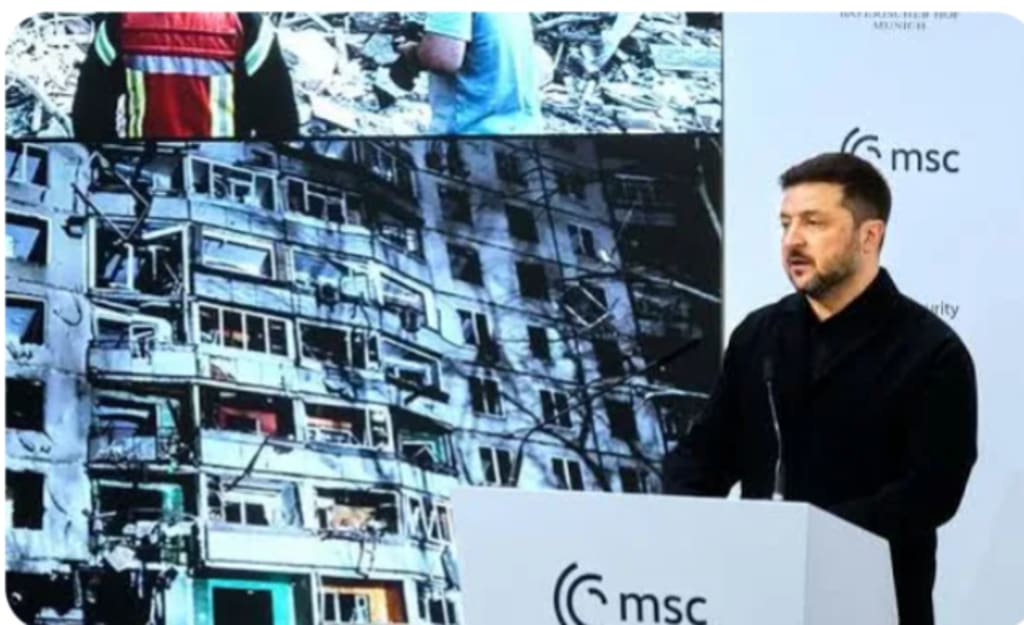
As the war in Ukraine continues into another grueling year, President Volodymyr Zelenskyy has made a stark claim: it is Ukraine — not Russia — that is facing growing pressure to make concessions in order to end the conflict.
Speaking in recent interviews and public statements, Zelenskyy warned that the international community’s push for peace risks shifting the burden onto the victim of aggression rather than the aggressor. While Ukraine continues to fight for its sovereignty, he says diplomatic fatigue and political divisions abroad are creating a narrative that Kyiv must compromise for the sake of stability.
“Everyone wants this war to end,” Zelenskyy said. “But the pressure is being placed on Ukraine to give something up, not on Russia to stop what it started.”
His remarks underscore a growing tension between military reality on the ground and political realities in global capitals.
A War Entering a Critical Phase
The war has reshaped Europe’s security landscape and strained economies worldwide. Ukraine remains locked in intense fighting across eastern and southern regions, while Russia continues missile and drone strikes on Ukrainian infrastructure.
After more than two years of conflict, Ukraine faces enormous challenges: shortages of ammunition, reliance on foreign aid, and a population exhausted by constant air raids and displacement. Meanwhile, Western allies are increasingly divided over how long and how deeply to continue their support.
Zelenskyy’s message is blunt: calls for negotiations may sound reasonable, but they risk legitimizing territorial conquest if they demand compromise only from Ukraine.
From Kyiv’s perspective, a settlement that freezes Russian control over occupied land would not bring peace — it would only delay the next invasion.
The Pressure of Diplomacy
Zelenskyy argues that Ukraine is being quietly encouraged to accept “realistic” outcomes that include territorial losses or security guarantees weaker than full NATO membership.
These proposals, he suggests, are framed as pragmatic solutions rather than moral choices. But to Ukrainians, they represent an erosion of national sovereignty.
“There can be no peace that rewards violence,” Zelenskyy has insisted.
International mediators often emphasize ceasefires and negotiations as humanitarian necessities. Yet Ukraine’s leadership fears that negotiations without firm Russian withdrawal would trap the country in a permanent state of vulnerability — similar to conflicts in Georgia and Moldova.
In Zelenskyy’s view, the war is not just about borders, but about the principle that force cannot be used to rewrite international law.
Western Fatigue and Political Shifts
One reason Ukraine feels mounting pressure is the political climate in Western nations. Economic strain, elections, and shifting public opinion have weakened unity among supporters.
In the United States and parts of Europe, lawmakers question the scale of financial and military aid being sent to Ukraine. Some argue that resources should be redirected toward domestic priorities, while others warn of “endless war.”
This has created a diplomatic environment where compromise is increasingly framed as responsible leadership.
For Zelenskyy, this shift is dangerous. He believes that reducing support now sends a message to authoritarian states that prolonged aggression will eventually be tolerated.
“If Russia is not forced to retreat, then war becomes a model,” he warned.
The Human Cost of Compromise
Beyond geopolitics, Zelenskyy points to the human consequences of concessions. Millions of Ukrainians remain displaced. Thousands of civilians have died. Cities and villages lie in ruins.
Accepting Russian control over occupied regions would leave many Ukrainians under a government they do not recognize — and one accused of widespread human rights abuses.
For families who lost loved ones defending their towns, the idea of territorial compromise feels like betrayal.
Zelenskyy has emphasized that peace must be based on justice, not exhaustion. A settlement that ignores war crimes or legitimizes occupation, he says, would undermine global norms and leave victims without accountability.
Russia’s Role in the Peace Narrative
A major frustration for Ukraine is what it sees as an imbalance in expectations. While Kyiv is urged to show flexibility, Moscow continues military operations with little pressure to alter its stance.
Zelenskyy argues that real peace efforts should focus on compelling Russia to withdraw forces, respect Ukraine’s borders, and engage in negotiations under international law.
Instead, he sees discussions that begin with what Ukraine must surrender rather than what Russia must reverse.
This framing, he warns, risks turning the aggressor into a negotiator and the victim into the obstacle to peace.
A Test for the International Order
The Ukrainian president has repeatedly described the war as a test of the post–World War II global system.
If Ukraine is pressured into concessions simply because the war has gone on too long, he believes it will signal that international law applies only when convenient. Smaller nations, he argues, would learn that their independence depends not on law but on military power.
Zelenskyy’s message is aimed as much at global audiences as at Ukrainian citizens: standing firm is not stubbornness, but a defense of a rules-based world.
What Happens Next?
As discussions of negotiations grow louder, Ukraine faces a narrowing set of options. Continued resistance depends heavily on foreign military aid and economic support. Any weakening of that backing could force Kyiv into difficult decisions.
For now, Zelenskyy remains defiant.
He insists that Ukraine will not accept a peace built on fear or fatigue. Instead, he calls for sustained international pressure on Russia and renewed commitment to Ukrainian defense.
Whether that message resonates will shape not only Ukraine’s future but the credibility of Western alliances and the meaning of peace in a world where wars increasingly test moral resolve.
A War About More Than Territory
At its core, Zelenskyy’s warning reflects a deeper concern: that peace is being redefined as surrender.
To him, the question is not whether the war should end — but how. Ending it through compromise imposed on the invaded country, he argues, sets a precedent that echoes far beyond Ukraine’s borders.
As global leaders debate diplomacy, Zelenskyy’s words serve as a reminder that not all peace agreements are equal. Some heal wounds. Others merely hide them.
And for Ukraine, the difference could determine whether peace becomes a promise — or another battlefield.
About the Creator
Sajida Sikandar
Hi, I’m Sajida Sikandar, a passionate blogger with 3 years of experience in crafting engaging and insightful content. Join me as I share my thoughts, stories, and ideas on a variety of topics that matter to you.
Keep reading
More stories from Sajida Sikandar and writers in The Swamp and other communities.
Starmer Pledges Crackdown on ‘Addictive Elements’ of Social Media
In a bold move that signals a tougher stance on Big Tech, UK Prime Minister Keir Starmer has pledged to take action against what he calls the “addictive elements” of social media platforms. His proposal focuses on curbing features that encourage excessive screen time, particularly among children and teenagers.
By Sajida Sikandar3 days ago in The Swamp
The Saddest Thing - The Billionaires Who Rule America Aren't Even Enjoying Themselves
This single post says more about our ruling class than a thousand policy papers. The saddest thing about today's system is that the men robbing the rest of us - sabotaging our economic prospects, our pensions, our access to affordable healthcare - are not even happy.
By Scott Christenson🌴12 days ago in The Swamp
Scandals Cloud ‘Sinister’ French Ice Dancers Who Beat Americans for Controversial Gold
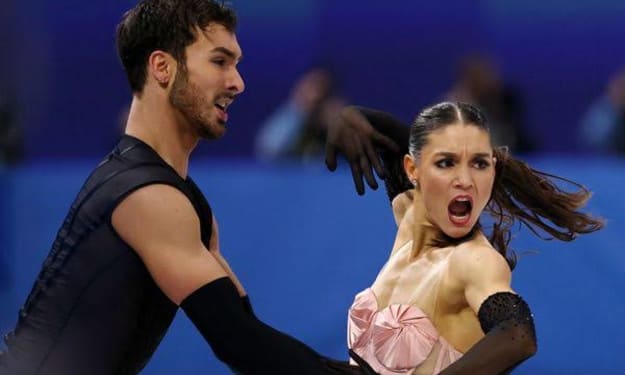
The victory of France’s top ice dancing pair at the Winter Olympics has been overshadowed by controversy, accusations of biased judging, and a series of scandals that critics say tarnish one of the most dramatic moments of the Games. Their gold-medal performance, which edged out the American favorites by a narrow margin, has ignited fierce debate within the figure skating world and among fans watching around the globe. The French duo’s routine — dark, theatrical, and described by commentators as “sinister” in tone — impressed judges with its technical difficulty and emotional intensity. Yet many viewers questioned how it could have outscored the Americans, who delivered a technically clean and widely praised performance. The uproar has quickly grown beyond artistic preference and into deeper concerns about transparency, politics, and past disciplinary issues surrounding the French team. A Victory That Sparked Immediate Doubts When the final scores were announced, the arena reacted with both cheers and audible surprise. Social media erupted within minutes, with fans replaying side-by-side footage of the routines and accusing judges of favoring style over substance. Several former champions and skating analysts publicly expressed confusion over the scoring gap. “It was a matter of fractions, but those fractions decide history,” said one retired Olympic medalist. “People deserve to understand how those numbers were reached.” The Americans’ coaching team filed a formal inquiry, not contesting the result outright but requesting clarification on component scores related to artistry and interpretation — categories often criticized for being subjective. Shadows from the Past Fueling the backlash are previous controversies involving the French skaters and their coaching staff. Years earlier, the pair had been linked to a training camp investigated for alleged emotional abuse of younger athletes. While no formal ban was imposed on the skaters themselves, the incident left lingering questions about the environment in which they trained. In addition, leaked messages from a former federation official suggested behind-the-scenes lobbying ahead of major competitions. Though the authenticity of the messages has not been legally proven, they have resurfaced following the Olympic win and intensified suspicions about political influence within international figure skating. Critics argue that the pair’s victory fits a troubling pattern in which reputations and federation power can outweigh on-ice performance. Judging Under the Microscope The International Skating Union, represented by the International Skating Union, defended the judging panel, stating that all scores were awarded according to established rules and reviewed for consistency. “The panel followed protocol,” the ISU said in a statement. “There is no evidence of irregularity or misconduct.” Still, calls for reform have grown louder. Some experts argue that the current system gives too much weight to artistic components that cannot be objectively measured. “Technical elements can be counted and reviewed,” said a sports ethics researcher. “But interpretation and choreography remain vulnerable to unconscious bias.” A Performance Called “Sinister” Part of the controversy also stems from the routine itself. The French pair skated to music inspired by psychological thrillers, incorporating sharp, unsettling movements and dark facial expressions. While supporters praised its originality, others felt the theme crossed into theatrics at the expense of skating fundamentals. The Americans, by contrast, presented a more traditional program emphasizing precision and harmony. “This became a clash of philosophies,” said one judge who spoke anonymously. “Innovation versus classic ice dance.” Public and Political Reaction French media celebrated the win as a triumph of creativity and courage. Headlines described the skaters as “artists who dared to be different.” Meanwhile, American outlets questioned whether the result reflected fair competition. Politicians in both countries avoided direct criticism but praised their athletes for professionalism under pressure. The controversy has since become a symbol of broader dissatisfaction with judged sports, where outcomes are determined by panels rather than clocks or finish lines. Impact on the Sport The debate arrives at a sensitive time for figure skating, which has struggled with credibility after past judging scandals. Officials fear that public trust could erode further if reforms are not introduced. Some proposals now under discussion include: Reducing the weight of artistic scores Increasing transparency of judges’ identities Publishing detailed breakdowns of scoring decisions Fans, meanwhile, remain divided. Supporters of the French pair argue that bold choreography should be rewarded and that innovation keeps the sport alive. Detractors insist that technical accuracy must remain the primary standard. Looking Ahead As the dust settles from the Games, the French champions are preparing for a world tour of exhibitions, while the American runners-up focus on next season’s competitions. Both teams have said they want to move forward and let their skating speak for itself. Yet the controversy is unlikely to fade quickly. Analysts say the result will be studied for years as an example of how modern ice dancing balances sport and art — and how fragile that balance can be. The gold medal ceremony at the Winter Olympics was meant to be a celebration of excellence. Instead, it has become a flashpoint for debate about fairness, influence, and the future of judged sports. In a discipline where fractions of a point separate triumph from heartbreak, the French victory may ultimately be remembered not only for its choreography but for the questions it raised about what truly defines winning on the ice.
By Fiaz Ahmed 6 days ago in The Swamp
Diaries to Nietzsche
Quotation from Friedrich Nietzsche "He who wrestles long with monsters should beware lest he himself become a monster. And if you gaze long into an abyss, the abyss also gazes into you. Man is not destroyed by suffering, but by the meaning he makes of it."
By LUCCIAN LAYTH7 days ago in Critique


Comments
There are no comments for this story
Be the first to respond and start the conversation.