
Asia Pacific Transdermal Skin Patches Market Size and Forecast 2025–2033
Why painless, smart drug delivery systems are reshaping healthcare across China, India, Japan, and beyond

Asia Pacific Transdermal Skin Patches Market Overview
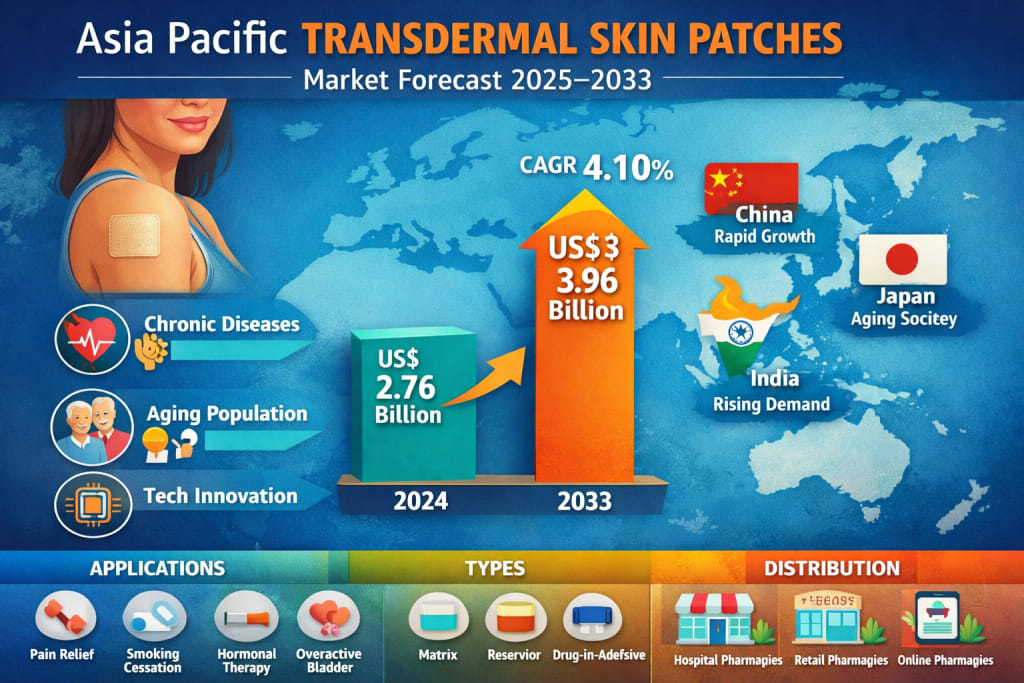
The Asia Pacific Transdermal Skin Patches Market is steadily emerging as a vital segment within the region’s evolving pharmaceutical and healthcare ecosystem. According to Renub Research, the market is expected to reach US$ 3.96 billion by 2033, growing from US$ 2.76 billion in 2024, at a compound annual growth rate (CAGR) of 4.10% from 2025 to 2033.
This growth story is being written at the intersection of rising chronic disease prevalence, an aging population, rapid technological innovation, expanding healthcare infrastructure, and increasing demand for pain-free, self-administered drug delivery systems. As healthcare systems across Asia Pacific seek more patient-friendly and cost-effective treatment methods, transdermal skin patches are gaining serious momentum.
Unlike traditional oral or injectable medications, transdermal patches deliver drugs through the skin directly into the bloodstream at a controlled and steady rate. This approach not only improves patient comfort and compliance but also reduces gastrointestinal side effects and helps maintain consistent drug levels in the body. These advantages are turning transdermal patches into a preferred choice for long-term therapies such as pain management, hormone replacement, smoking cessation, and chronic disease treatment.
With countries like China, India, and Japan facing mounting healthcare pressures due to demographic shifts and lifestyle-related diseases, the role of non-invasive, easy-to-use drug delivery systems is becoming more critical than ever.
What Are Transdermal Skin Patches and Why Do They Matter?
Transdermal skin patches are medicated adhesive patches applied to the skin that allow drugs to pass into the bloodstream over time. Instead of swallowing pills or receiving injections, patients can simply apply a patch that releases medication in a controlled, sustained manner.
These patches are widely used in:
Pain management
Nicotine replacement and smoking cessation
Hormonal therapies
Motion sickness and neurological conditions
Overactive bladder treatment and other chronic disorders
The key benefits include:
Better patient compliance
Reduced dosing frequency
More stable blood drug levels
Fewer side effects related to digestion
Greater convenience for long-term therapy
As healthcare shifts toward patient-centric treatment models, these advantages are pushing transdermal systems from a niche solution into a mainstream therapeutic option across Asia Pacific.
Market Dynamics: What’s Driving Growth in Asia Pacific?
Several powerful trends are working together to fuel the expansion of the transdermal skin patches market in the region.
1. Rising Prevalence of Chronic Diseases
One of the strongest growth drivers is the increasing burden of chronic diseases such as diabetes, cardiovascular disorders, COPD, cancer, and neurological conditions. Urbanization, sedentary lifestyles, environmental factors, and aging populations are all contributing to this rise.
For example, studies have shown that the incidence of chronic obstructive pulmonary disease (COPD) among non-smokers in India ranges widely, highlighting a growing public health challenge. At the same time, India detects over 1.39 million new cancer cases every year, underlining the need for long-term, manageable treatment options.
Chronic conditions often require continuous medication over months or years. Transdermal patches offer a practical solution by providing steady drug delivery without the discomfort and inconvenience of frequent injections or multiple daily pills. As chronic disease prevalence continues to climb, so does the demand for reliable, non-invasive drug delivery technologies.
2. Technological Advancements in Patch Design
Technology is rapidly transforming what transdermal patches can do. Innovations such as:
Microneedle patches
Smart patches with embedded sensors
Improved adhesives and drug carriers
are expanding the range of drugs that can be delivered through the skin and improving both efficacy and patient comfort.
A notable example is the April 2023 launch in Japan by Teikoku Seiyaku Co. Ltd. and Kowa Company Ltd. of ALLYDONE Patches for the treatment of dementia caused by Alzheimer’s disease. This highlights how next-generation patches are now being used even in complex neurological conditions, not just pain relief or nicotine replacement.
As research and development continue, these innovations are expected to:
Increase drug permeability
Improve dosing accuracy
Reduce skin irritation
Broaden clinical applications
All of this makes transdermal systems more attractive to both healthcare providers and patients across Asia Pacific.
3. Rapidly Aging Population
Asia Pacific is home to some of the fastest-aging societies in the world, particularly in countries like Japan and China. Older populations typically face multiple chronic conditions and require long-term, consistent medication.
China’s population, for example, stood at around 1.412 billion in 2021 and is projected to keep growing in the coming years, with a significant portion aged 60 and above. This demographic shift is placing enormous pressure on healthcare systems to adopt simpler, safer, and more convenient treatment methods.
For elderly patients, transdermal patches offer:
Easy self-administration
Reduced risk of missed doses
Less discomfort compared to injections
Lower chances of gastrointestinal complications
As the elderly population expands, so does the need for user-friendly drug delivery solutions, making transdermal patches an increasingly important part of geriatric care.
4. Expanding Healthcare Infrastructure and Awareness
Many Asia Pacific countries are investing heavily in healthcare infrastructure, improving access to hospitals, clinics, and pharmacies. At the same time, patients are becoming more aware of modern, convenient treatment options, including self-administered therapies.
The combination of better access and higher awareness is accelerating the adoption of advanced drug delivery systems, including transdermal patches—especially in urban and semi-urban areas.
Challenges Facing the Market
Despite strong growth prospects, the Asia Pacific transdermal skin patches market is not without hurdles.
Limited Drug Permeability
One of the main technical challenges is that not all drugs can easily penetrate the skin barrier. This limits the range of medications that can be delivered using transdermal systems and restricts their application in certain therapeutic areas.
Although ongoing research is improving skin penetration technologies, this limitation still acts as a constraint on market expansion in the near term.
Skin Irritation and Sensitivity Issues
Another important concern is skin irritation, redness, or allergic reactions caused by prolonged patch use. These side effects can reduce patient compliance and discourage long-term adoption.
Manufacturers are actively working on:
Hypoallergenic materials
Better adhesives
Skin-friendly formulations
However, sensitivity issues remain a challenge, especially for patients with delicate or aging skin.
Country-Level Market Insights
China Transdermal Skin Patches Market
China represents one of the largest growth opportunities in the region. The country’s rapidly aging population and rising incidence of chronic diseases such as diabetes, cardiovascular disorders, and neurological conditions are driving strong demand for non-invasive drug delivery systems.
Transdermal patches are becoming increasingly popular due to their:
Controlled drug release
Improved treatment stability
Better patient compliance
As China’s healthcare system continues to modernize, the adoption of transdermal patches for chronic disease management is expected to accelerate steadily.
India Transdermal Skin Patches Market
India’s market is expanding quickly, supported by the growing burden of lifestyle-related diseases like diabetes, hypertension, and heart disease. Long-term therapy requirements are pushing both doctors and patients to seek convenient and non-invasive alternatives to traditional treatments.
India’s elderly population is also rising rapidly. Estimates suggest that the number of senior citizens is increasing significantly, with the share of people aged 60 and above expected to grow sharply over the coming decades. This demographic shift is creating strong demand for easy-to-use, painless treatment options, further boosting the adoption of transdermal patches.
Improving healthcare access and ongoing technological improvements in patch formulations are adding more fuel to market growth.
Japan Transdermal Skin Patches Market
Japan, one of the world’s most aged societies, is a mature but steadily growing market for transdermal skin patches. The high prevalence of chronic conditions and the need for long-term treatment solutions make transdermal systems especially appealing.
Japan is also a leader in medical technology innovation, and continuous improvements in patch design—such as better adhesion and more precise drug release mechanisms—are strengthening the role of transdermal therapies in routine clinical practice.
With an aging population and strong R&D capabilities, Japan is expected to remain a key contributor to regional market growth.
Market Segmentation Overview
By Type
Matrix
Reservoir
Drug-in-Adhesive
Other Types
By Application
Pain Relief
Smoking Reduction and Cessation Aid
Overactive Bladder
Hormonal Therapy
Others
By Distribution Channel
Hospital Pharmacies
Retail Pharmacies
Online Pharmacies
Country-Wise Coverage
China
Japan
India
South Korea
Thailand
Malaysia
Indonesia
Australia
New Zealand
Rest of Asia Pacific
Competitive Landscape and Key Players
The Asia Pacific transdermal skin patches market features a mix of global pharmaceutical giants and specialized medical technology companies. Leading players are focusing on product innovation, partnerships, and geographic expansion to strengthen their market positions.
Key Companies Include:
Teva Pharmaceutical Industries Ltd
3M Company
Nitto Denko Corporation
Johnson & Johnson
Luye Pharma Group
Bayer AG
Novartis AG
Beiersdorf AG
Viatris Inc.
Abbott Laboratories
Each of these companies is analyzed across:
Company Overview
Key Persons
Recent Developments
Financial Insights
Competition is increasingly centered around innovation, patient comfort, and expanded therapeutic applications, rather than just price.
Future Outlook: Where Is the Market Headed?
Looking ahead to 2033, the Asia Pacific transdermal skin patches market is set to benefit from:
Continued growth in chronic disease prevalence
Rapid aging of the population
Ongoing technological breakthroughs
Rising acceptance of self-administered therapies
Expanding healthcare infrastructure across emerging economies
While challenges like drug permeability and skin sensitivity remain, continuous R&D and material science improvements are expected to gradually overcome these barriers.
As healthcare systems move toward more patient-friendly, long-term treatment solutions, transdermal patches are likely to become an even more integral part of modern therapy in the Asia Pacific region.
Final Thoughts
The Asia Pacific Transdermal Skin Patches Market is on a steady and sustainable growth path, projected to rise from US$ 2.76 billion in 2024 to US$ 3.96 billion by 2033, according to Renub Research. Driven by demographic shifts, technological innovation, and the urgent need for convenient chronic disease management, transdermal patches are no longer just an alternative—they are becoming a core component of future healthcare delivery.
For patients, they offer comfort and simplicity. For healthcare systems, they promise better compliance and efficiency. And for the industry, they represent a powerful growth opportunity in one of the world’s most dynamic healthcare markets.
About the Creator
Personal Loans Explained for First-Time Borrowers in Ireland
Many people across Ireland worry when thinking about their first loan. Your questions about rates and terms are normal for new borrowers. Most money choices become easier with proper facts and smart planning.
By Amara walker5 days ago in Trader



Comments
There are no comments for this story
Be the first to respond and start the conversation.