
Greece Processed Meat Market Size and Forecast 2025–2033: Convenience, Innovation, and Changing Consumer Tastes Drive Growth
With rising urbanization, tourism, and demand for ready-to-eat foods, Greece’s processed meat industry is set to grow steadily through 2033.

Introduction: A Market Shaped by Modern Lifestyles
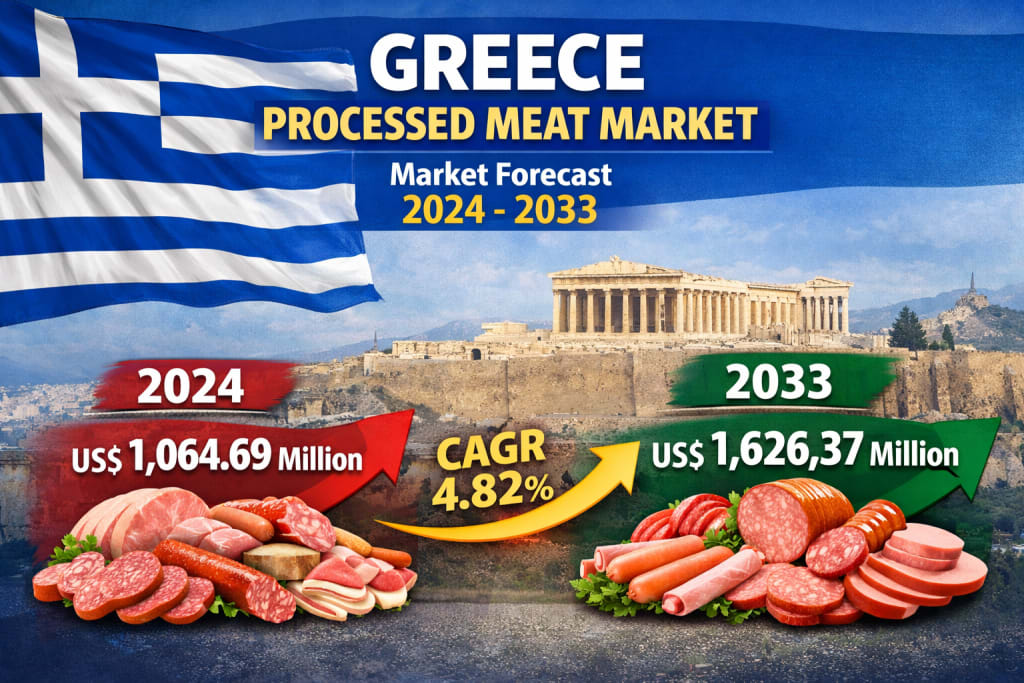
According to Renub Research’s latest publication, “Greece Processed Meat Market by Meat Types, Processed Types, Distribution Channels, and Company Analysis 2025–2033,” the Greece Processed Meat Market is expected to reach US$ 1,626.37 million by 2033, up from US$ 1,064.69 million in 2024, growing at a CAGR of 4.82% from 2025 to 2033. This steady expansion reflects not only changing food consumption habits but also broader economic and social shifts shaping Greek society.
Processed meat—defined as meat preserved or enhanced through methods such as salting, curing, smoking, fermenting, or the addition of preservatives—has long been a staple in many diets worldwide. Products like sausages, ham, bacon, salami, hot dogs, and deli meats offer convenience, longer shelf life, and consistent taste, making them especially attractive in fast-paced urban environments. In Greece, these characteristics are becoming increasingly important as lifestyles evolve, tourism expands, and retail infrastructure modernizes.
While processed meat consumption is often discussed alongside health concerns related to sodium, saturated fat, and additives, the category continues to thrive due to its practicality, affordability, and adaptability to modern eating habits. The Greek market is no exception. From busy professionals in Athens to tourists seeking quick and familiar meals, processed meat products serve a wide range of consumers and use cases.
Market Overview: Why Processed Meat Still Matters
The Greek processed meat market is being shaped by a combination of economic growth, urbanization, and changing consumer expectations. As more people move to cities and adopt faster-paced lifestyles, the demand for foods that are easy to store, prepare, and consume continues to rise. Processed meat fits neatly into this pattern, offering versatility across home cooking, quick-service restaurants, and hospitality settings.
Tourism plays a particularly important role in Greece’s food industry. As one of Europe’s most visited destinations, the country serves millions of international travelers each year. Many of these visitors consume processed meat products in hotels, restaurants, cafés, and quick-service outlets, boosting overall market demand. At the same time, local consumers are increasingly open to trying new product formats, flavors, and healthier alternatives, encouraging manufacturers to innovate.
Technological progress in food processing and packaging has also improved product safety, shelf life, and quality consistency. These improvements not only reduce food waste but also strengthen consumer confidence, supporting long-term market growth. Together, these factors explain why the Greece processed meat market is on a clear upward trajectory through 2033.
Key Growth Drivers
1. Rising Urbanization
Urbanization is one of the most powerful forces shaping food consumption patterns in Greece. As more people live and work in urban centers, daily routines become busier, leaving less time for traditional, time-intensive cooking. This shift naturally increases the appeal of convenient food options, including processed meat products.
Urban consumers tend to prioritize foods that are quick to prepare, easy to store, and widely available. Sausages, deli meats, and other processed products meet these needs perfectly. Moreover, urban areas typically offer better access to supermarkets, convenience stores, and online grocery platforms, making processed meat even more accessible.
Higher disposable incomes in cities also allow consumers to experiment with a wider range of products, including premium or value-added processed meats. As a result, urbanization continues to be a central driver of demand in Greece’s processed meat market, mirroring global consumption trends.
2. The Growing Demand for Convenience
Convenience has become a defining feature of modern food consumption, and Greece is no exception. Ready-to-eat and easy-to-cook foods are increasingly popular among working professionals, students, and families with limited time for meal preparation.
Processed meat products such as sliced ham, sausages, and ready-to-cook frozen items provide quick meal solutions without sacrificing taste or variety. The expansion of modern retail formats—hypermarkets, supermarkets, and online retail platforms—has made these products more visible and easier to purchase than ever before.
Packaging innovations, including vacuum-sealed packs and portion-sized offerings, further enhance convenience by improving storage life and reducing food waste. These developments not only benefit consumers but also help retailers manage inventory more efficiently, reinforcing the market’s growth momentum.
3. Technological Advancements in Food Processing
Technology is playing an increasingly important role in the evolution of Greece’s processed meat industry. Automation and robotics are improving efficiency in cutting, deboning, and packaging processes, helping producers reduce costs and maintain consistent quality.
Artificial intelligence and machine learning technologies are being used to optimize production schedules, enhance quality control, and predict maintenance needs, reducing downtime and operational losses. Meanwhile, the integration of Internet of Things (IoT) systems enables real-time monitoring of production lines, improving traceability and food safety.
Advancements in packaging technologies, such as high-pressure processing and improved vacuum sealing, extend shelf life and reduce spoilage. These innovations not only support sustainability goals but also strengthen consumer trust, making technology a key pillar of long-term market growth.
Challenges Facing the Market
1. Regulatory Compliance
Regulatory compliance remains one of the most significant challenges for Greece’s processed meat industry. The sector must adhere to strict European Union food safety standards, including frameworks such as HACCP and ISO 22000. While these regulations are essential for consumer protection, they also impose substantial operational and financial burdens on manufacturers.
Historically, enforcement actions by authorities such as the Hellenic Food Authority (EFET) have highlighted issues related to labeling, traceability, and hygiene standards. Companies that fail to meet these requirements risk fines, production suspensions, and reputational damage.
To remain competitive, producers must continue investing in compliance systems, staff training, and quality assurance processes. Although these measures increase costs in the short term, they are essential for building long-term credibility and ensuring sustainable growth.
2. Supply Chain Disruptions
Supply chain volatility is another major concern for the Greek processed meat market. Fluctuating energy prices, labor shortages, and changes in raw material costs can all disrupt production and distribution. Greece’s heavy reliance on imported beef—estimated at around 80% of consumption—adds an additional layer of vulnerability to global trade disruptions and geopolitical tensions.
Recent global events have demonstrated how quickly logistics networks can be strained, leading to higher costs and supply uncertainties. To address these risks, industry players are increasingly focusing on diversifying supply sources, strengthening relationships with local suppliers, and investing in more resilient logistics and inventory management systems.
Market Segmentation: Understanding the Structure
The Greece processed meat market can be segmented by meat type, processed type, and distribution channel, each playing a distinct role in shaping overall demand.
By Meat Type
Poultry: Often perceived as a leaner and healthier option, poultry-based processed products are gaining popularity among health-conscious consumers.
Beef: Despite supply chain challenges, beef remains an important segment, particularly in premium and specialty products.
Pork: Traditionally strong in many European cuisines, pork continues to hold a significant share in sausages, ham, and other processed items.
Others: This category includes alternative meats and niche products, catering to evolving tastes and dietary preferences.
By Processed Type
Frozen: Frozen processed meats offer long shelf life and convenience, making them popular for both households and foodservice operators.
Chilled: Chilled products are often associated with freshness and premium quality, appealing to consumers seeking better taste and texture.
Canned: Although a more traditional segment, canned processed meats remain relevant for their durability and ease of storage.
By Distribution Channel
Hypermarkets and Supermarkets: These remain the dominant sales channels, offering wide product variety and strong brand visibility.
Convenience Stores: Ideal for quick purchases, these outlets cater to urban consumers and on-the-go lifestyles.
Online Retail Stores: E-commerce is growing steadily, driven by digital adoption and changing shopping habits.
Others: This includes specialty stores, wholesalers, and foodservice distribution channels.
Competitive Landscape: Key Players in Focus
The Greece processed meat market features a mix of global and regional players competing on quality, innovation, pricing, and distribution reach. Major companies analyzed in the market include:
Hormel Foods
Tyson Foods
Conagra Brands Inc.
General Mills
The Kraft Heinz Company
Cargill, Incorporated
Pilgrim’s Pride Corp.
These companies are evaluated across four key dimensions: company overview, key persons, recent developments and strategies, and sales analysis. Their strategies often focus on product innovation, expansion into new distribution channels, improvements in supply chain efficiency, and the introduction of healthier or premium product lines to meet changing consumer expectations.
Changing Consumer Preferences: Health, Quality, and Transparency
While convenience remains a top priority, Greek consumers are becoming increasingly aware of health and nutrition. This shift is encouraging manufacturers to develop products with reduced fat, lower sodium, and fewer artificial additives. Nitrate-free and cleaner-label products are gaining traction, reflecting a broader global movement toward more transparent and health-oriented food choices.
Packaging and labeling are also playing a bigger role in purchasing decisions. Clear information about ingredients, origin, and nutritional value helps build trust and influences brand loyalty. Companies that can successfully balance convenience with health and transparency are likely to gain a competitive edge in the coming years.
Outlook: A Market Poised for Steady Expansion
Looking ahead to 2033, the Greece processed meat market is set to continue its steady growth, supported by urbanization, tourism, technological innovation, and evolving retail formats. While challenges related to regulation and supply chain stability remain, the industry’s ability to adapt and innovate will be crucial in maintaining momentum.
The projected rise from US$ 1,064.69 million in 2024 to US$ 1,626.37 million by 2033 highlights the sector’s resilience and long-term potential. As consumer preferences continue to shift, the most successful players will be those who can offer products that combine convenience, quality, and health-conscious attributes.
Final Thoughts
The Greece processed meat market stands at an interesting crossroads between tradition and modernity. On one hand, it benefits from long-established consumption habits and strong demand from both local consumers and tourists. On the other, it is being reshaped by technology, health awareness, and changing lifestyles.
With a projected CAGR of 4.82% from 2025 to 2033, the market’s future looks promising but competitive. Companies that invest in innovation, supply chain resilience, regulatory compliance, and consumer trust will be best positioned to thrive in this evolving landscape. In many ways, the story of Greece’s processed meat industry is also the story of a country adapting its food culture to the realities of a faster, more connected, and more convenience-driven world.
About the Creator
Philippines Vending Machine Market 2026: Grows on Urban Convenience & Digital Payments
Philippines Vending Machine Market Overview The Philippines vending machine market size is steadily expanding as urban lifestyles, digital payment adoption, and changing consumer expectations drive demand for automated retail solutions. According to the latest IMARC Group analysis, the market was valued at USD 466.28 million in 2025 and is projected to reach USD 658.90 million by 2034, reflecting a compound annual growth rate (CAGR) of 3.92% during 2026–2034.
By Manisha Dixit4 days ago in Trader
United States Automotive Air Suspension Market Size and Forecast 2025–2033
United States Automotive Air Suspension Market Overview The United States Automotive Air Suspension Market is entering a decisive growth phase as automakers and consumers increasingly prioritize ride comfort, vehicle performance, and intelligent mobility features. According to industry estimates, the market is expected to reach US$ 3.64 billion by 2033, rising from US$ 2.17 billion in 2024, registering a compound annual growth rate (CAGR) of 5.91% from 2025 to 2033.
By Sakshi Sharmaabout 23 hours ago in Trader



Comments
There are no comments for this story
Be the first to respond and start the conversation.