
Mexico Foodservice Market Trends & Opportunities: A Sector on the Fast Track
Urban lifestyles, digital ordering, and tourism are reshaping how Mexico eats out—and why the foodservice market is set for strong growth through 2033.

Introduction: A Market Entering Its Golden Decade
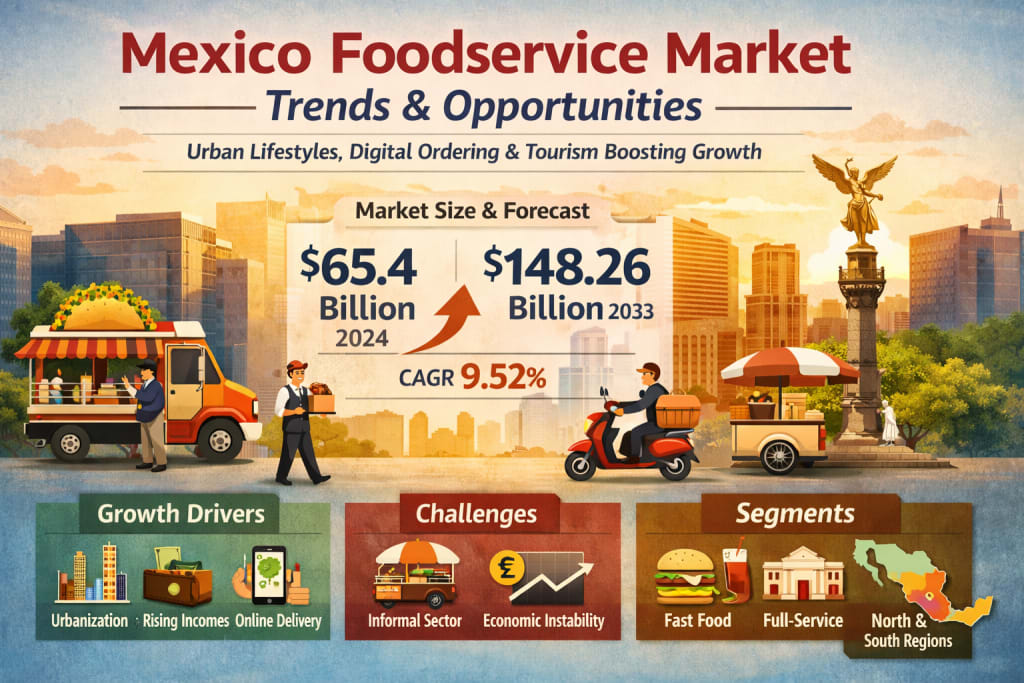
Mexico’s foodservice industry is entering a period of powerful transformation. According to Renub Research, the Mexico foodservice market was valued at USD 65.4 billion in 2024 and is projected to reach USD 148.26 billion by 2033, expanding at a compound annual growth rate (CAGR) of 9.52% over the forecast period. This impressive trajectory is being driven by a combination of rapid urbanization, rising disposable incomes, booming tourism, and shifting consumer lifestyles that increasingly favor convenience, variety, and digitally enabled dining experiences.
Foodservice, by definition, includes all businesses that prepare, serve, and sell food and beverages for consumption outside the home. In Mexico, this covers an enormous spectrum: street food stalls, quick-service restaurants (QSRs), casual and fine dining restaurants, cafés, bars, catering services, hotel kitchens, institutional cafeterias, and online food delivery platforms. Few countries blend tradition and modernity in food culture as seamlessly as Mexico, and this unique mix is now becoming a powerful commercial engine.
From taco stands on busy city corners to premium chef-led restaurants and international chains, Mexico’s foodservice sector reflects the country’s cultural diversity, social habits, and evolving consumer expectations. The next decade will be defined by digitalization, brand expansion, and the formalization of a historically fragmented market.
Mexico Foodservice Market Outlook
Foodservice plays a central role in Mexico’s economy and everyday life. The country’s rich gastronomic heritage, combined with a strong tourism industry and a growing urban population, creates steady demand for diverse dining experiences. Eating out in Mexico is not only about convenience—it is also deeply social and cultural. Family gatherings, business meetings, celebrations, and tourism activities are all closely tied to restaurants and food outlets.
In recent years, digital platforms have added a new layer of growth. Mobile apps and delivery services now make it easy to order meals, reserve tables, and explore new cuisines. This shift has significantly expanded the customer base, including younger consumers and busy professionals who value speed and convenience.
At the same time, rising disposable incomes and the expansion of the middle class are changing spending patterns. More consumers are willing to pay for better ambiance, improved service, and higher-quality food. As a result, both local entrepreneurs and international brands are increasing their investments across major Mexican cities and tourist hubs.
Key Growth Drivers in the Mexico Foodservice Market
Urbanization and Lifestyle Shifts
Mexico’s rapid urbanization is one of the strongest engines of foodservice growth. As more people move to cities and adopt faster-paced lifestyles, time spent cooking at home is declining. Urban consumers increasingly rely on restaurants, takeout, and delivery for daily meals.
This trend is particularly beneficial for fast food, fast-casual, and delivery-focused concepts, which offer speed and consistency. Office workers, students, and young professionals are driving demand for affordable, quick, and reliable meal options. In many cities, eating out is no longer an occasional treat—it is part of everyday life.
Rising Disposable Income and Middle-Class Expansion
Mexico’s growing middle class is reshaping consumption patterns. With higher purchasing power, consumers are dining out more frequently and experimenting with new cuisines, including international and fusion concepts. This has fueled growth in casual dining, café chains, and full-service restaurants.
Customers are no longer focused only on price. They increasingly value quality, atmosphere, brand reputation, and convenience. This shift supports the expansion of branded chains, food courts in malls, and experience-driven restaurant concepts, while also encouraging local players to upgrade their offerings.
The Boom of Online Food Delivery Platforms
The rise of platforms such as Uber Eats, Rappi, and DiDi Food has transformed the way Mexicans interact with foodservice. These apps provide unmatched convenience, wider choice, and access to restaurants that were previously limited by location.
The COVID-19 pandemic accelerated this shift, but the habit has clearly become permanent. With high smartphone penetration, improved digital payments, and growing trust in online ordering, delivery and takeaway are now core revenue channels for many restaurants. For operators, these platforms offer not only sales growth but also valuable customer data and marketing reach.
Major Challenges Facing the Market
A Large Informal Sector and Market Fragmentation
One of the defining features of Mexico’s foodservice industry is its large informal segment, especially street vendors and small independent outlets. While these businesses are culturally important and highly popular, many operate outside formal regulatory frameworks.
This creates challenges for organized players, including price competition, inconsistent quality standards, and uneven food safety enforcement. Market fragmentation also makes it harder for large brands to rapidly capture market share, although gradual formalization and regulation are improving the situation in major cities.
Economic Volatility and Inflation Pressures
Like many emerging markets, Mexico is not immune to economic fluctuations, inflation, and currency volatility. Rising costs for ingredients, labor, rent, and utilities can squeeze profit margins, especially for small and medium-sized operators.
During periods of economic uncertainty, consumers may cut back on discretionary spending, which can reduce footfall in full-service and premium dining segments. Managing costs while maintaining quality and value will remain a key strategic challenge across the industry.
Mexico Commercial Foodservice Market
The commercial foodservice segment includes full-service restaurants, cafés, bars, fast food chains, food trucks, and other profit-oriented dining establishments. This is the most dynamic and competitive part of the market, driven by consumer spending, tourism, and urban growth.
Commercial operators are also the fastest to adapt to new trends such as plant-based menus, fusion cuisines, sustainability practices, and digital ordering systems. As social dining and experiential eating become more important, this segment continues to attract both local entrepreneurs and global brands. Integration with delivery platforms and loyalty apps is now a standard strategy rather than an exception.
Mexico Traditional (Non-Commercial) Foodservice Market
The traditional or non-commercial segment includes foodservice operations in schools, hospitals, corporate cafeterias, prisons, and government institutions. These facilities usually provide meals through in-house kitchens or contracted catering companies.
While this segment is less flexible and trend-driven than commercial dining, it offers stable, long-term demand supported by public and private sector spending. Food safety, nutrition standards, and cost efficiency are critical here. As Mexico continues to invest in education, healthcare, and corporate infrastructure, institutional foodservice will remain a reliable growth area for contract caterers and large-scale operators.
Mexico Fast Food Foodservice Market
Fast food is one of the largest and fastest-growing categories in Mexico’s foodservice sector. Its success is built on affordability, speed, convenience, and strong brand recognition. International giants such as McDonald’s, KFC, and Burger King compete with local chains and traditional taco concepts, creating a highly competitive landscape.
The segment has fully embraced digital ordering and delivery, making it even more accessible to urban consumers. At the same time, operators are localizing menus and introducing healthier or premium options to keep up with changing preferences. Given its scalable business model and broad appeal, fast food will continue to be a cornerstone of market growth, especially in large cities and along major transport corridors.
Mexico Full-Service Foodservice Market
Full-service restaurants, including casual dining, family restaurants, and fine dining, focus on sit-down experiences with table service. This segment benefits from rising consumer spending, tourism, and the desire for social and experiential dining.
International cuisines, chef-led concepts, and themed restaurants are gaining popularity, particularly in major urban centers and tourist destinations. Although full-service operators face higher costs and greater sensitivity to economic cycles, strong branding and unique dining experiences help maintain customer loyalty. The steady rise of casual dining concepts shows how this segment is balancing quality with affordability.
Regional Perspective: North vs. South Mexico
Northern Mexico Foodservice Market
Northern Mexico, especially cities like Monterrey, Tijuana, and Ciudad Juárez, has a vibrant and modern foodservice scene. Proximity to the United States influences consumer tastes, business models, and supply chains. Fast-casual concepts, international cuisines, and franchised chains are particularly strong here.
Higher average incomes, better logistics infrastructure, and strong cross-border trade make the north a strategic entry point for international brands. Many companies test new concepts in this region before expanding nationwide.
Southern Mexico Foodservice Market
Southern Mexico, including Oaxaca, Chiapas, and Yucatán, is deeply rooted in traditional and indigenous cuisines. The market is more fragmented, with a strong presence of local restaurants, markets, and street vendors. Tourism plays a crucial role, especially in destinations like Cancún and Mérida, where hotel restaurants and resort dining are major revenue drivers.
While infrastructure and formalization levels are generally lower than in the north, the region offers strong opportunities in culinary tourism, farm-to-table concepts, and eco-friendly dining. Improving supply chains and digital access could unlock significant long-term growth.
Market Segmentation Overview
By Sector:
Commercial
Non-commercial (Traditional)
By System:
Conventional Foodservice System
Centralized Foodservice System
Ready Prepared Foodservice System
Assembly-Serve Foodservice System
By Type of Restaurant:
Fast Food Restaurants
Full-Service Restaurants
Limited Service Restaurants
Special Food Services Restaurants
By Region:
Northern Mexico
Central Mexico
Southern Mexico
Others
Competitive Landscape and Key Players
The Mexican foodservice market features a mix of global giants and strong regional groups. Companies are typically analyzed across multiple dimensions, including company overview, key management, recent developments, SWOT analysis, and revenue performance.
Some of the notable players include:
Papa John’s International Inc.
Alsea SAB de CV
Yum! Brands Inc.
Arcos Dorados Holdings Inc.
CMR SAB de CV
Seven & I Holdings Co. Ltd
Jack in the Box Inc.
Grupo Gigante SAB de CV
Fomento Económico Mexicano SAB de CV
Competition is intense, with brands focusing on menu innovation, digital engagement, expansion into new cities, and partnerships with delivery platforms to capture market share.
Final Thoughts: A Market Built on Culture, Convenience, and Technology
Mexico’s foodservice industry is entering a defining growth phase. With the market expected to expand from USD 65.4 billion in 2024 to USD 148.26 billion by 2033 at a CAGR of 9.52%, the opportunities are substantial for both local entrepreneurs and international brands.
The future of the sector will be shaped by urban lifestyles, digital ordering, rising incomes, and tourism, while challenges such as informality and cost pressures will require smart strategies and operational efficiency. What makes Mexico unique is its ability to blend deep culinary tradition with modern consumer trends—a combination that ensures foodservice will remain not just a business, but a vital part of everyday life and culture in the years ahead.
About the Creator
Sakshi Sharma
Content Writer with 7+ years of experience crafting SEO-driven blogs, web copy & research reports. Skilled in creating engaging, audience-focused content across diverse industries.
Keep reading
More stories from Sakshi Sharma and writers in Trader and other communities.
Business Software and Services Market Size and Forecast 2025–2033
Business Software and Services Market: A Digital Engine for the Global Economy The global business software and services market is entering a decisive decade, driven by rapid digitalization, cloud adoption, and the deep integration of artificial intelligence across enterprise operations. According to Renub Research, the Business Software and Services Market is expected to reach US$ 1,484.37 billion by 2033, up from US$ 574.66 billion in 2024, expanding at a robust CAGR of 11.12% from 2025 to 2033. This remarkable growth trajectory reflects how essential software and digital services have become to nearly every industry, from banking and manufacturing to healthcare and government.
By Sakshi Sharmaabout 17 hours ago in Trader
Australia Isobutanol Market: Precision Chemicals Fueling Sustainable Growth
The Australia isobutanol market is steadily building momentum as industrial sectors increasingly adopt this versatile chemical intermediate. According to IMARC Group, the market size reached USD 30.00 million in 2024 and is forecast to grow to USD 47.95 million by 2033, representing a compound annual growth rate (CAGR) of 5.35 % between 2025 and 2033. This growth reflects robust demand from automotive and industrial applications, alongside a broader shift toward bio-based and sustainable solvent solutions.
By Rashi Sharma6 days ago in Trader



Comments
There are no comments for this story
Be the first to respond and start the conversation.