
Ophthalmic Eye Dropper Market Size and Forecast: Precision, Aging Eyes, and the Future of Global Eye Care
How innovation, rising eye disorders, and patient-friendly delivery systems are reshaping the global ophthalmic eye dropper industry through 2033

Global Ophthalmic Eye Dropper Market Outlook
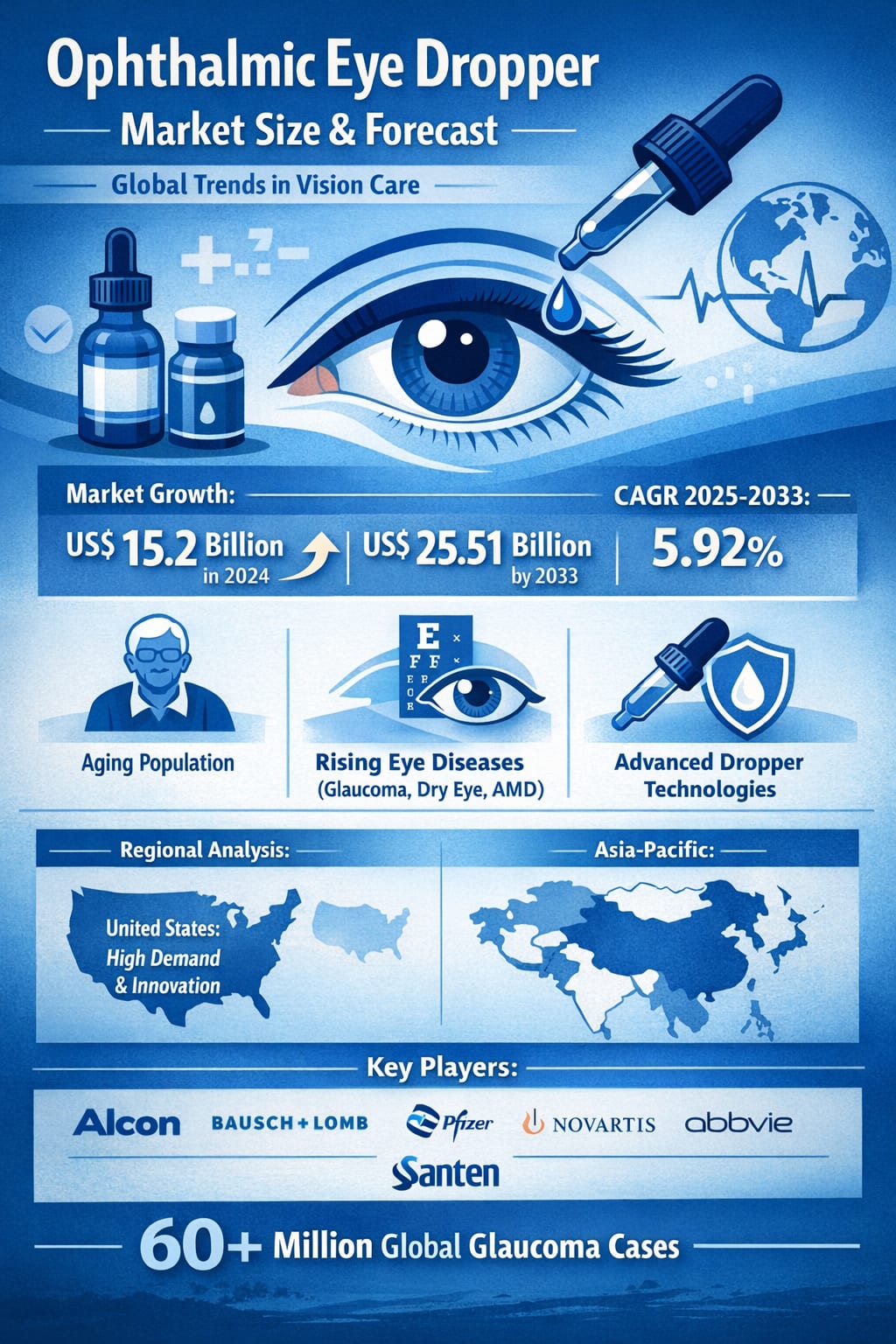
The Global Ophthalmic Eye Dropper Market is expected to reach US$ 25.51 billion by 2033, rising from US$ 15.2 billion in 2024, growing at a CAGR of 5.92% from 2025 to 2033, according to Renub Research. This steady expansion reflects a broader transformation in eye care, where precision drug delivery, patient comfort, and long-term disease management are becoming just as important as the medications themselves.
Ophthalmic eye droppers play a critical role in modern healthcare. They are not simply packaging tools; they are medical delivery systems designed to ensure accurate dosing, reduce contamination risks, and improve patient compliance. As the global population ages and the prevalence of eye conditions such as glaucoma, cataracts, dry eye syndrome, allergic conjunctivitis, and age-related macular degeneration (AMD) continues to rise, the demand for reliable and easy-to-use eye drop delivery systems is accelerating.
In many ways, the growth of this market mirrors the evolution of ophthalmology itself. Treatment is shifting toward long-term management rather than short-term intervention. This change places greater emphasis on daily-use products like eye droppers, which must be safe, consistent, and convenient over months or even years of use.
Global Ophthalmic Eye Dropper Industry Overview
The worldwide ophthalmic eye dropper market is expanding rapidly due to the increasing need for efficient, hygienic, and patient-friendly medication delivery systems for eye conditions. As diseases such as dry eye syndrome, glaucoma, and macular degeneration become more common, especially among older populations, healthcare providers and pharmaceutical companies are placing greater focus on improving how eye medications are administered.
Innovation is a key theme shaping this industry. Modern eye droppers now feature ergonomic designs, preservative-free compatibility, anti-contamination systems, and dose-control mechanisms. These improvements are not only enhancing patient comfort but also boosting treatment outcomes by ensuring that medications are delivered more accurately and consistently.
Another major driver is the global shift toward preventive and long-term eye care. With increased screen time, urban pollution, and lifestyle-related eye strain, even younger populations are experiencing eye dryness and irritation, expanding the consumer base for both prescription and over-the-counter (OTC) eye drops.
At the same time, competition among manufacturers is intensifying. Companies are investing in research and development to create smarter, safer, and more convenient dropper systems that can differentiate their products in a crowded market. This combination of rising demand and technological innovation is expected to keep the ophthalmic eye dropper market on a strong growth trajectory over the next decade.
Rising Burden of Eye Diseases: A Global Health Challenge
The global burden of eye diseases continues to rise at an alarming rate. It is anticipated that novel pathogens, increasing surgical eye procedures, poor eye hygiene habits, and lifestyle factors will all contribute to a higher prevalence of eye infections and chronic eye conditions worldwide.
Common disorders such as glaucoma, cataracts, dry eye, and allergies are becoming more widespread, largely due to the aging global population. According to estimates, glaucoma alone affects tens of millions of people worldwide and remains one of the leading causes of irreversible blindness. The World Health Organization has also highlighted that over 2.2 billion people globally suffer from some form of vision impairment, underlining the massive and growing need for effective ophthalmic treatments.
Eye drops remain one of the most widely prescribed and used treatments for these conditions. As a result, the tools used to deliver these medications—ophthalmic eye droppers—are becoming increasingly important in ensuring treatment effectiveness, safety, and patient adherence.
Key Factors Driving the Ophthalmic Eye Dropper Market Growth
Increasing Prevalence of Eye Disorders
One of the strongest growth drivers for the ophthalmic eye dropper market is the rising prevalence of eye disorders such as glaucoma, dry eye syndrome, conjunctivitis, allergic eye diseases, and age-related macular degeneration. Many of these conditions require frequent and long-term use of eye drops, making reliable and easy-to-use droppers essential.
As awareness and screening programs improve, more people are being diagnosed earlier, which further increases the demand for sustained treatment solutions. Eye droppers help ensure accurate dosing, reduced contamination, and consistent delivery, all of which are crucial for chronic eye conditions that require daily medication.
Environmental factors such as air pollution, extended screen exposure, and changing work habits are also contributing to higher rates of eye strain and dryness. This has expanded the market not only for prescription treatments but also for OTC eye care products, further boosting demand for advanced eye dropper systems.
Technological Advancements in Eye Dropper Design
Technology is transforming the humble eye dropper into a precision medical device. Modern designs now include features such as dose-limiting valves, one-handed operation, anti-backflow systems, and compatibility with preservative-free formulations. These innovations are particularly important for elderly patients and those with limited motor control.
Smart droppers that can track usage, monitor dosing, and improve adherence are also beginning to emerge, appealing to both healthcare providers and tech-savvy patients. These advancements not only improve patient experience but also reduce the risk of under-dosing, overdosing, and contamination.
By making eye drop administration easier and more reliable, these technological improvements are directly contributing to better treatment outcomes and stronger market growth.
Rising Aging Population
The global aging population is another major factor driving demand for ophthalmic eye droppers. Older adults are significantly more likely to suffer from chronic eye conditions such as glaucoma, cataracts, and macular degeneration, many of which require lifelong treatment.
As vision and manual dexterity decline with age, traditional medication delivery methods become more challenging. This has increased the need for ergonomic, easy-to-use, and highly reliable dropper systems designed specifically with elderly patients in mind.
Healthcare systems around the world are also placing greater emphasis on home-based and self-administered care, further boosting the importance of user-friendly ophthalmic delivery devices. This demographic shift ensures a stable and growing long-term demand for ophthalmic eye droppers.
Challenges in the Ophthalmic Eye Dropper Market
Improper Dosage and Patient Non-Compliance
Despite technological improvements, ensuring correct usage and patient compliance remains a significant challenge. Many patients struggle to apply eye drops correctly, often missing the eye or administering more than the required dose. This not only reduces treatment effectiveness but also leads to medication waste and higher healthcare costs.
Elderly patients and those with limited dexterity are particularly affected, which can result in inconsistent treatment and poorer clinical outcomes. Additionally, some patients stop using their medication once symptoms improve, even when long-term treatment is necessary. These behavioral and practical challenges continue to limit the full potential of ophthalmic eye dropper solutions.
Risk of Contamination and Infection
Maintaining sterility is critical in ophthalmic products, yet contamination remains a persistent risk. When the tip of a dropper comes into contact with fingers, eyelashes, or other surfaces, bacteria can be introduced into the solution, potentially leading to eye infections.
This risk is especially high with multi-dose containers, particularly those without preservatives. While preservative-free formulations are increasingly popular due to better tolerance and fewer side effects, they require more advanced packaging solutions or single-use formats, which can increase costs.
Balancing safety, affordability, and ease of use remains a key challenge for manufacturers, especially in markets with lower healthcare awareness.
Ophthalmic Eye Dropper Market Overview by Regions
United States Ophthalmic Eye Dropper Market
The United States represents one of the most mature and technologically advanced markets for ophthalmic eye droppers. High patient awareness, a strong healthcare infrastructure, and widespread prevalence of conditions such as glaucoma, dry eye, and allergic conjunctivitis are driving steady demand.
Innovation in packaging and delivery design is a major focus, particularly to address the needs of aging patients. The presence of leading pharmaceutical and medical device companies further supports product development and market expansion. With millions of Americans affected by vision impairment, the importance of reliable ophthalmic delivery systems continues to grow.
Netherlands Ophthalmic Eye Dropper Market
In the Netherlands, the market is characterized by a well-informed consumer base and a growing preference for OTC and homeopathic eye care products. Increasing screen time and rising allergy-related eye issues are pushing consumers to seek convenient and accessible solutions.
Private label products and e-commerce platforms are gaining traction, offering affordability and convenience. These trends point toward a more personalized and consumer-driven eye care market, where easy-to-use dropper systems play a central role.
China Ophthalmic Eye Dropper Market
China’s ophthalmic eye dropper market is experiencing strong growth due to its large aging population, rising incidence of eye diseases, and expanding pharmaceutical manufacturing sector. Demand for treatments for dry eye, glaucoma, and allergies is increasing rapidly.
Technological advancements, including preservative-free systems and user-friendly designs, are improving patient compliance and treatment outcomes. Ongoing investments in healthcare infrastructure and public awareness campaigns are expected to further support market growth in the coming years.
United Arab Emirates Ophthalmic Eye Dropper Market
The UAE market is growing steadily, driven by increasing awareness of eye health, rising prevalence of digital eye strain, and greater access to OTC products. Retail pharmacies play a key role in distribution, making eye care products widely available to consumers.
Innovations such as ergonomic packaging and preservative-free formulations are improving user experience and boosting compliance, supporting the continued expansion of the market in the region.
Market Segmentation
By Type
Preserved Multi-Dose Eye Droppers
Preservative-Free Multi-Dose Eye Droppers
Unidose Eye Droppers
By Drug Type
Prescription Drugs
Over-the-Counter (OTC) Drugs
By Treatment Type
Dry Eye
Glaucoma
Allergies
Conjunctivitis
Others
By Region
North America: United States, Canada
Europe: France, Germany, Italy, Spain, United Kingdom, Belgium, Netherlands, Turkey
Asia Pacific: China, Japan, India, Australia, South Korea, Thailand, Malaysia, Indonesia, New Zealand
Latin America: Brazil, Mexico, Argentina
Middle East & Africa: South Africa, Saudi Arabia, United Arab Emirates
Competitive Landscape: Key Companies
The global ophthalmic eye dropper market is highly competitive, with major players focusing on innovation, partnerships, and product differentiation. Key companies include:
AptarGroup, Inc.
Alcon plc
Pfizer Inc.
Bausch & Lomb Incorporated
Novartis AG
AbbVie Inc.
Santen Pharmaceutical Co., Ltd.
Similasan Corporation
These companies are investing in R&D, advanced packaging technologies, and patient-centric designs to strengthen their market positions and meet evolving healthcare needs.
Final Thoughts
The global ophthalmic eye dropper market is no longer just about packaging—it is about precision, safety, and patient experience. With the market expected to grow from US$ 15.2 billion in 2024 to US$ 25.51 billion by 2033, the industry stands at the intersection of rising healthcare demand and rapid technological innovation.
As populations age, screen time increases, and chronic eye conditions become more common, the importance of reliable, easy-to-use, and hygienic eye drop delivery systems will only continue to grow. Companies that focus on innovation, usability, and patient compliance will be best positioned to succeed in this evolving landscape.
About the Creator
Image-guided Therapy Systems Market Trends & Summary (2025–2033)
Introduction: The Rise of Precision-Guided Medicine Modern medicine is undergoing a quiet but powerful transformation. Surgeons and interventional specialists today are no longer guided only by experience and anatomical knowledge—they are increasingly supported by real-time, high-resolution imaging systems that show exactly where to operate, how to navigate complex anatomy, and how to minimize risk to patients. This shift has placed image-guided therapy (IGT) systems at the center of the next wave of medical innovation.
By Sakshi Sharmaabout 13 hours ago in Trader
Nucleic Acid Methylation Market Size and Forecast 2025–2033
Global Nucleic Acid Methylation Market Overview The Global Nucleic Acid Methylation Market is entering a powerful growth phase, driven by rapid advances in epigenetics, sequencing technologies, and precision medicine. According to Renub Research, the market is expected to reach US$ 9.19 billion by 2033, up from US$ 3.01 billion in 2024, expanding at a robust CAGR of 13.2% from 2025 to 2033.
By shibansh kumarabout 12 hours ago in Trader



Comments
There are no comments for this story
Be the first to respond and start the conversation.