Holianyk Ihor
Bio
Stories (440)
Filter by community
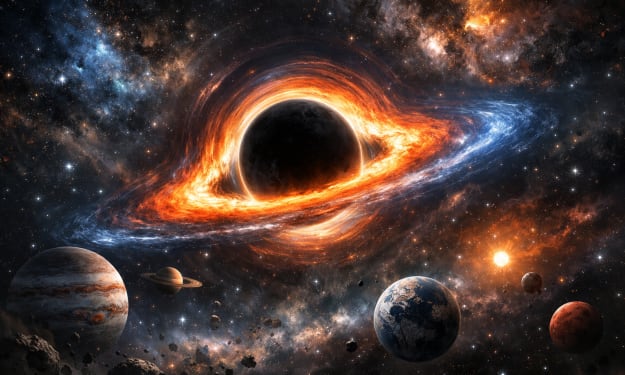
What Happens If a Black Hole Enters Our Solar System
The universe is full of cosmic horrors that make even the most imaginative science fiction seem tame, and black holes rank among the most terrifying. These gravitational monsters, regions of spacetime where gravity is so intense that not even light can escape, have captured human imagination for decades. But what would actually happen if one of these cosmic predators wandered into our neighborhood?
By Holianyk Ihora day ago in Futurism
Planet Nine: The Ghost of the Solar System Nobody Can Find
We Lost a Planet. Then We Found a Bigger Mystery. In 2006, astronomers took something away from us. Pluto — that tiny, beloved frozen world at the edge of the solar system — was officially stripped of its planetary status by the International Astronomical Union. Too small. Too far. Too irregular. Just like that, our solar system shrank from nine planets to eight, and most of us shrugged and moved on.
By Holianyk Ihor2 days ago in Futurism
How Much Does It Cost to Launch a Person Into Space — and Why Is It Getting Cheaper?
Picture this: you hand over a check large enough to buy dozens of apartments in a major city. In return, you get a nine-minute ride. That's it. Nine minutes of sheer, stomach-dropping wonder before you're back on the ground. Sounds absurd? It was the reality of space travel not so long ago — and right now, the entire equation is being rewritten.
By Holianyk Ihor2 days ago in Futurism
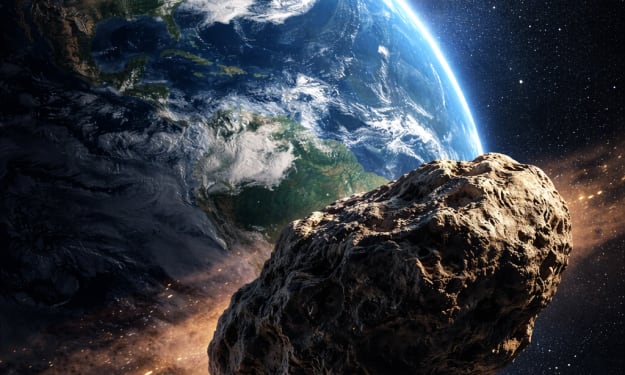
Killer Asteroid: How Humanity Is Preparing for the Inevitable Impact
Sixty-six million years ago, a cosmic rock roughly 10 kilometers in diameter ended the age of dinosaurs in a catastrophic instant. Today, humanity stands as the first species on Earth capable not only of predicting such a disaster but also of preventing it. The only question is: will we be ready in time?
By Holianyk Ihor3 days ago in Futurism
Space Tech in Your Pocket: The Cosmic Origins of Everyday Life
You wake up to your smartphone alarm, check the weather forecast, brew your morning coffee, and head to work guided by GPS navigation. Sounds like an ordinary day, right? Actually, you've just used at least five technologies born from space exploration programs. And it's not even 9 AM yet.
By Holianyk Ihor3 days ago in Futurism
Exoplanet Atmospheres: Unexpected Discoveries That Are Changing Astronomy
For most of human history, planets beyond our Solar System were the stuff of speculation. Even after the first exoplanets were confirmed in the 1990s, they remained distant abstractions—numbers in databases, shadows in starlight, or subtle gravitational wobbles. Today, however, astronomers are doing something that once seemed impossible: directly probing the atmospheres of worlds orbiting other stars. And what they are finding is far stranger and more diverse than anyone expected.
By Holianyk Ihor5 days ago in Futurism
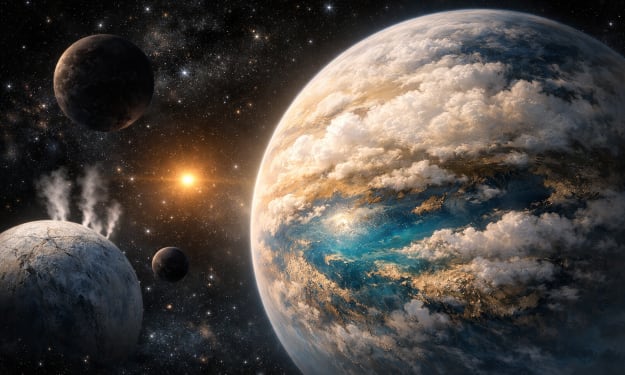
Why Most Potentially Habitable Planets Do Not Look Like Earth
When scientists and science fiction writers imagine habitable planets, they often picture something very similar to Earth: blue oceans, green continents, a breathable atmosphere, and a familiar sky. For decades, the search for life beyond our planet has been guided by this image of a “second Earth.” Yet modern astronomy is steadily revealing a surprising truth: most potentially habitable planets in the universe look nothing like Earth at all.
By Holianyk Ihor5 days ago in Futurism
Could the Universe Be Closed Rather Than Infinite?
For most people, the idea of the Universe is inseparable from infinity. We imagine space stretching endlessly in every direction, with no limits, no edge, and no final destination. Infinity feels natural, almost inevitable. Yet modern cosmology poses a far more unsettling and fascinating question: what if the Universe is not infinite at all? What if it is closed—finite in size, but without any boundaries?
By Holianyk Ihor6 days ago in Futurism
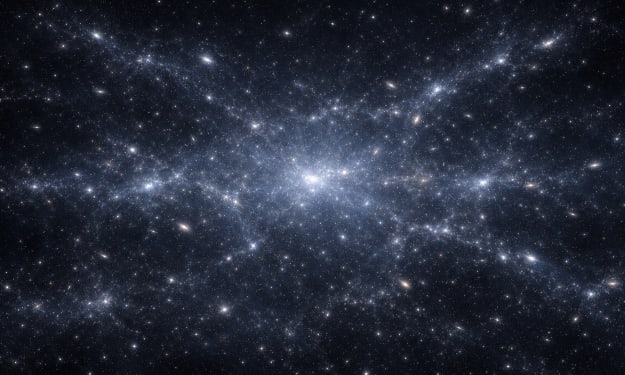
Why the Universe Looks Too Smooth to Be Born by Chance
When we imagine the birth of the Universe, we often picture something violent and chaotic: a sudden explosion of energy, matter flying in all directions, randomness ruling everything. Intuitively, such a beginning should leave behind a messy, uneven cosmos. Yet when astronomers observe the Universe on the largest possible scales, they see something very different. The Universe looks remarkably smooth, balanced, and orderly — almost too orderly for a purely random origin.
By Holianyk Ihor6 days ago in Futurism
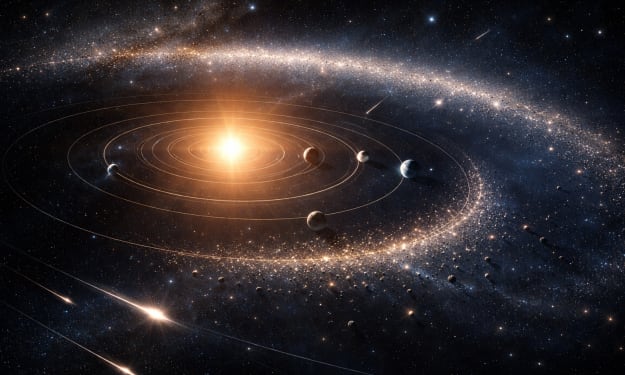
What Do We Really Know About the Boundaries of the Solar System?
When most people picture the Solar System, they imagine a neat diagram: the Sun at the center, planets orbiting in tidy circles, Pluto somewhere at the edge, and then—nothing. Empty space. The truth, however, is far more complex, fascinating, and mysterious. The Solar System does not end at a clear line, nor does it have a physical “wall.” Instead, it fades gradually into interstellar space through a series of overlapping and poorly understood regions. Even today, scientists cannot agree on a single answer to a deceptively simple question: where does the Solar System actually end?
By Holianyk Ihor7 days ago in Futurism
Why Scientists Are Rethinking What Makes a Planet “Habitable”
For much of modern scientific history, the idea of a “habitable planet” seemed relatively straightforward. If astronomers wanted to find life beyond Earth, they needed to look for worlds that closely resembled our own: rocky planets, orbiting at just the right distance from their stars, with mild temperatures and liquid water on the surface. This concept shaped decades of research, telescope design, and space missions.
By Holianyk Ihor7 days ago in Futurism
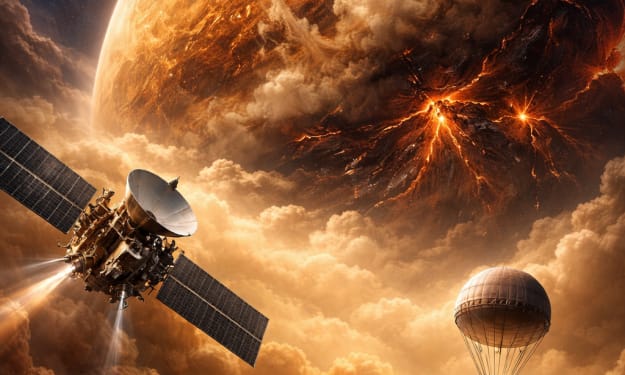
Venus Returns: Why the “Hell Planet” Is Back in the Spotlight of Science
For much of the space age, Venus was treated as a cautionary tale rather than a destination of hope. Nearly identical to Earth in size and composition, it once seemed like our planet’s twin. Instead, it turned out to be one of the most hostile worlds in the Solar System. Surface temperatures hot enough to melt lead, crushing atmospheric pressure, clouds of sulfuric acid, and a landscape shaped by catastrophic forces earned Venus its grim nickname: the hell planet.
By Holianyk Ihor10 days ago in Futurism