Online earning
Bio
Stories (9)
Filter by community
China’s C919 Aircraft: A New Competitor in the Asia-Pacific Aviation Market
This scene is from the Singapore Airshow, where exhibition halls are filled with aircraft models, mock cockpit structures, and interactive displays. Everything from modern commercial airplanes to the latest aviation technology is on display.
By Online earning 8 days ago in Chapters
Why Does the United States Want Greenland? Trump, Resources and the New Arctic Power Struggle
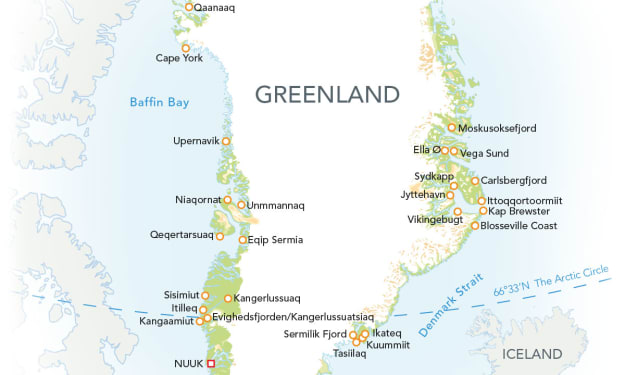
The desire to seize control of the world is not new. Throughout history, various adventurers and conquerors have attempted this, yet none succeeded in conquering the entire globe. Several figures did manage to capture large parts of the world, including Alexander the Great, Genghis Khan, and Sultan Mehmed the Conqueror. In recent history, a similar attempt was made by Adolf Hitler. However, Hitler’s primary objective was not to conquer the whole world; rather, his main goal was to occupy Eastern Europe and Russian territories in order to create “living space” for the German race. These days, comparable ambitions seem to be stirring in the heart of President Donald Trump. The real-estate investor within him appears eager to take control of vast territories. After Venezuela, his eyes are now fixed on Greenland—indeed, it would be more accurate to say that his covetous gaze has fallen upon Greenland, the world’s largest island, though not a continent. The name Greenland was introduced by Scandinavian settlers. It is a Danish word meaning “land of people.” This autonomous country is part of the Kingdom of Denmark and lies between the Arctic Ocean and the Atlantic Ocean. Its area is 2,166,000 square kilometers, of which 1,755,000 square kilometers—about 81 percent—is covered by ice. Its population is roughly 57,000. The history of Greenland dates back to 2500 BC, evidence of which still exists in the form of archaeological remains. Over the centuries, beginning in 986 AD, the western coast of Greenland was settled by people from Iceland and Norway. Some of these settlements survived for centuries, while others disappeared in the fifteenth century, possibly due to famine or conflict. In 1721, a major expedition was launched in which Norwegian missionaries and others traveled to Greenland. In July 1931, Norway declared eastern Greenland an uninhabited region and occupied it. Denmark took the case to the International Court in 1933, which ruled against Norway. During the Second World War, Greenland’s connection with Denmark was severed when Germany occupied Denmark. The United States then assumed responsibility for Greenland’s defense, returning control to Denmark after the war. During the Cold War, the U.S. established military bases in northern Greenland, turning the island into a strategic front between global powers. The minerals hidden beneath the ice, the opening Arctic sea routes, and geopolitical rivalry transformed Greenland from merely a geographic entity into a center of politics and power. In 1979 Denmark granted Greenland limited autonomy but retained control over defense, foreign affairs, currency, and economic matters. By the late twentieth and early twenty-first centuries, Greenland gained greater self-rule and established a local government, yet it remains part of the Danish realm. This raises the question: what is it about Greenland that makes the United States want to seize it? First, Donald Trump is not the first U.S. president to show interest in Greenland, though he is arguably the first to speak of capturing it by force. The United States considered purchasing Greenland in 1867 and again in 1946, but these plans never materialized. Even afterward, efforts did not cease, and successive presidents continued attempts to bring Greenland under American control. From a national security perspective, acquiring Greenland is crucial for the U.S. because growing Russian and Chinese activity in the Arctic could pose a threat. Experts believe that Trump’s interest is also driven by the island’s vast size and symbolic power. Moreover, Greenland holds extraordinary importance in terms of natural resources. It contains uranium, gold, oil, gas, and large deposits of rare earth minerals. According to the Geological Survey of Denmark and Greenland, the country is rich in rare metals, including seventeen elements used in drones, electric vehicles, and fighter jets—vital for modern technology and defense industries. Greenland also possesses graphite, lithium, and copper reserves amounting to about 0.75 percent of global deposits. Lithium, a key component of batteries, is expected to see its demand increase eightfold by 2040. At present, China dominates the global minerals market, and these reserves could be critical for countries seeking to reduce dependence on China—something the U.S. is already striving to achieve. By now, the answer should be clear as to why America wants control over Greenland. This is a war over resources and dominance. In earlier eras, grain, livestock, and even women were considered resources; today, the resources are different. Denmark and Europe will not easily allow Greenland to fall into American hands. Denmark is increasing its military presence there, while Germany, France, Sweden, Finland, Norway, Britain, and the Netherlands have sent troops for Denmark’s “Arctic Resilience” military exercises. Under such conditions, the risk of confrontation is growing, and for the first time since World War II, Europe and the U.S. appear to be drifting apart. Retreat on issues like Iran will be hard for Trump, and now Greenland and Denmark are showing resistance. In the future, the world may be composed of large empires and their client states. What will be our place in such a world? Our elite will need to decide wisely. The United States has historically opposed adventurism, yet this time it seems to have chosen that role itself. Many Americans consider this their right, and those familiar with the concept of “Manifest Destiny” know that this narrative has long been used as propaganda to justify American imperial dominance. Like earlier adventures, this American gamble will also end no differently—the adventurer will face defeat, and future generations will read about it in the pages of history. But this path is drenched in blood and will undoubtedly reshape the world’s geography. May God protect us all. Is this conversation helpful so far?
By Online earning 8 days ago in History
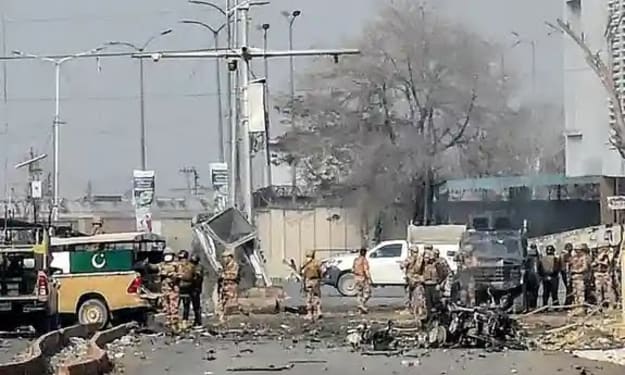
32 killed in blast at Islamabad Imambargah: A powerful explosion occurred as worshippers went into prostration after praying the first rak'ah.
The worshippers had completed the first rak‘at and gone into prostration when the explosion occurred. The blast was so intense that screams erupted everywhere and the entire area was filled with smoke.” Zahid Ali, who was injured in the suicide attack at an Imambargah in the Tarlai area of Islamabad, said that the prayer had begun at one o’clock. He said, “I was standing in a corner in the last rows. I lost consciousness and have only just regained my senses.” Fortunately, Zahid Ali did not suffer serious injuries. His cousin Javed Khan, who was with him, said that they had gone together to offer prayers but were delayed because of performing ablution. “When I returned after ablution, the worshippers had already gone into prostration. At that moment I saw the suicide bomber open fire on the guard at the gate, enter the premises and blow himself up.” Javed Khan added that more firing also took place at that time. So far, 32 people have been killed and 168 injured in the suicide bombing that occurred during Friday prayers at the Imambargah in Tarlai, Islamabad, the federal capital of Pakistan. Immediately after the blast, an emergency was declared in Islamabad and the injured were shifted to PIMS, Polyclinic and other hospitals. According to police officials and eyewitnesses, the incident in Tarlai Kalan, a suburb of Islamabad, was a suicide attack.
By Online earning 9 days ago in Journal
Phone hacking and London attack: Saudi government ordered to pay £3 million to YouTuber who mocked Mohammed bin Salman
Ghanem Al-Masarir, a YouTuber with millions of followers, seemed to have everything in life and was fully enjoying his fame. Living in a flat in Wembley, London, the comedian is well known for creating satirical videos and reels. He is also considered one of the prominent critics of Saudi Crown Prince Mohammed bin Salman. Because of his work, he has many admirers, but due to his strong criticism of the Saudi government, many people also dislike him. One day Al-Masarir felt that his mobile phone was behaving strangely. The phone had become very slow and its battery was draining unusually fast. He then noticed that certain people kept appearing in different parts of London wherever he went. These individuals—apparently supporters of the Saudi government—began blocking his way, harassing him, and some even started filming him. What puzzled Al-Masarir most was how these people knew his exact location. He suspected that his phone was being used to spy on him. Cyber experts later confirmed that he was among the victims targeted through the notorious Pegasus hacking tool. Al-Masarir said, “It was something I couldn’t understand. They can see your location. They can turn on your camera. They can activate the microphone and listen to you. They got hold of your data—your photos, everything. You feel deeply wronged.” On Monday, after a six-year legal battle, the London High Court ruled that Saudi Arabia was responsible for what happened to Al-Masarir and ordered the Saudi government to pay him more than £3 million in compensation. In 2018, the Saudi-born YouTuber’s iPhones were hacked after he clicked on links contained in three suspicious messages. These messages appeared to be special membership offers from well-known news organizations. Following the hacking, Al-Masarir was continuously harassed, followed, and in August he was even physically attacked in central London. The court was told that two strangers approached him, shouted at him, and asked who he was to speak about the Saudi royal family. They then punched him in the face and continued beating him for some time. The attackers backed off only after passers-by intervened, but while leaving they called him a “slave of Qatar” and threatened, “We will teach you a lesson.” The High Court judge described the incident as a planned attack. In his written judgment, Justice Saini stated that there were reasonable grounds to believe the assault and hacking were carried out at the behest of Saudi Arabia or its agents. The judge added that Saudi Arabia had a clear interest in suppressing public criticism of its government. Even after the assault, the harassment continued. In 2019, at a café in Kensington, London, a child approached Al-Masarir and began singing a song praising Saudi King Salman. The incident was recorded and posted on social media, quickly trending with a hashtag and even broadcast on Saudi state television. On the same day, outside a restaurant in west London, a man told him, “Your days are numbered,” and walked away. Al-Masarir was born in Saudi Arabia but has lived in Britain for the past twenty years. He originally came to Portsmouth for education and is now a British citizen living in Wembley. However, visiting central London remains a frightening experience for him. The 45-year-old became famous across the Arab world for his satirical YouTube videos in which he criticized Saudi rulers—especially Crown Prince Mohammed bin Salman. His videos often went viral and have been viewed more than 345 million times. His most-watched video, with 16 million views, criticized authorities for their anger over a viral clip of girls dancing in Saudi Arabia. Strangely, the audio of that video later disappeared from YouTube, and he still does not know how or when it was edited. Since the hacking and the London attack, Al-Masarir has lost confidence. He became depressed and fearful. Once known for his cheerful and bold personality, he agreed to speak to the BBC but remained cautious and avoided showing his face fully. He has not uploaded any video for the past three years. He says that despite winning the legal battle, the Saudi government has succeeded in silencing him. “The damage done to me cannot be repaired,” he said. “The hacking truly changed me. I am no longer the same Al-Masarir.” Experts from the University of Toronto’s Citizen Lab confirmed that he had been hacked using Pegasus spyware. An analyst was sent to London, concluding that the operation was likely organized by Saudi Arabia. Pegasus is a powerful and controversial hacking tool developed by the Israeli company NSO Group, which claims it sells the software only to governments to track terrorists and criminals. However, Citizen Lab has found it on the phones of politicians, journalists, and dissidents—including Al-Masarir. When he first filed a lawsuit against Saudi Arabia, the state argued that it was protected under the State Immunity Act 1978. But in 2022 the court ruled that Saudi Arabia did not have immunity in this case. Since then, the Saudi government has not participated in any proceedings. The High Court judge wrote that Saudi Arabia had failed to present a defense or respond to the claim and had violated several court orders, indicating it did not intend to engage in the case. The court ordered the Saudi government to pay Al-Masarir more than £3 million in damages, though it remains unclear whether Saudi Arabia will comply. Al-Masarir says he is determined to enforce the judgment and, if necessary, will approach international courts. However, he believes no amount of money can compensate for the harm caused to his life. With a sorrowful voice he said, “What hurts most is that they did all this in Britain and still escaped punishment.”
By Online earning 11 days ago in Chapters
Who is Bashir Zeb, the head of the banned organization BLA?
Before the attacks carried out on several cities including Quetta, the capital of Balochistan, the banned separatist organization Baloch Liberation Army (BLA) had released a video. In this picture , armed men can be seen riding three motorcycles at an unidentified deserted location. Only one of the six individuals’ face is visible. According to the banned organization, this person was the head of the BLA, Bashir Zeb, and it was also claimed that Bashir Zeb personally took part in these attacks. The BLA did not clarify where the video was recorded; however, Balochistan Chief Minister Mir Sarfraz Bugti claimed that the video was filmed in Afghanistan. It should be noted that last Saturday armed militants targeted various installations in Quetta, Mastung, Kalat, Nushki, Kharan, Dalbandin, Turbat, Tump, Gwadar, Pasni and several other areas. According to the provincial chief minister, a total of 31 civilians and 17 security personnel were killed in these attacks, while the government claimed that 145 militants were also killed. The banned BLA has been active in Balochistan for more than a decade, but in recent years the scope and intensity of attacks by the organization and its subsidiary group Majeed Brigade have increased. The BLA has been declared a banned organization by both Pakistan and the United States. It is worth recalling that since the attack on the Chinese Consulate in Karachi in November 2018, Bashir Zeb has been wanted by the Government of Pakistan in numerous cases involving attacks carried out by the BLA. These include the planning of the 2020 attack on the Karachi Stock Exchange, the planning of the female suicide bombing targeting Chinese teachers at Karachi University, and the attack on a convoy of Chinese engineers near Karachi Airport. In the airport attack case, a court has already declared him an absconder. However, there was a time when Bashir Zeb was active in student politics on the streets of Quetta. We spoke to journalists and former and current security officials, and also reviewed Bashir Zeb’s own writings and interviews given as chairman of BSO Azad, in order to understand who Bashir Zeb is and how he became part of this organization.
By Online earning 12 days ago in History