Zahid Hussain
Stories (114)
Filter by community
The Dawn of the Intelligence Revolution: Can Humanity Coexist with the Singularity. AI-Generated.
The Threshold of Change For decades, science fiction writers like Gene Roddenberry (the creator of Star Trek) and Isaac Asimov envisioned a world where machines could think, feel, and interact with humans. Today, we are no longer looking at a distant future. We are living in it. As we stand on the precipice of what scientists call the "Technological Singularity"—a point where AI exceeds human intelligence—the world is gripped by both wonder and fear.
By Zahid Hussain22 days ago in Humans
The Ninth Hour of Malachi. AI-Generated.
The Weight of the Ninth Hour There is something unsettling about the ninth hour. It is not dawn, when hope is easy. It is not midnight, when despair is expected. The ninth hour sits in between—when the day has been lived, strength is fading, and certainty begins to crack. In ancient tradition, the ninth hour marked a moment of reckoning. A pause in time when heaven felt close enough to hear prayers, yet distant enough to remain silent. It was the hour of sacrifice, of unanswered questions, of last chances spoken under breath. For Malachi, the prophet whose voice closed the Old Testament, the ninth hour was not merely a time of day. It was a state of the soul. II. Malachi: The Last Voice Before the Silence Malachi stands at the edge of something terrifying: divine silence. After him, there would be no new prophetic voice for centuries. No visions. No warnings. No promises freshly spoken. Just echoes. His name means “My messenger.” But what happens when the messenger delivers the final message? Malachi’s world was spiritually exhausted. The temple stood, rituals continued, prayers were recited—but belief had become mechanical. Faith was still present, but reverence was gone. The people asked dangerous questions: Where is the God of justice? What is the point of obedience? Why remain faithful when the wicked prosper? Malachi did not comfort them. He confronted them. III. The Ninth Hour as a Spiritual Threshold The ninth hour represents the moment when faith is no longer theoretical. It is easy to believe when prayers are answered quickly. It is easy to trust when obedience is rewarded. But the ninth hour arrives when: You have done everything right You have waited long enough You have sacrificed without recognition And heaven remains silent. This is the hour when belief becomes existential. Not “Do I believe?” But “Can I continue believing?” IV. Ritual Without Reverence Malachi accused the people of offering blind sacrifices—rituals without heart. They obeyed outwardly while withholding inward devotion. They honored God with words but not with integrity. This wasn’t rebellion. It was worse. It was spiritual boredom. The ninth hour exposes this condition. When faith becomes habit instead of hunger, silence feels unbearable. Without emotional reward, obedience feels pointless. Malachi’s message was brutal: God does not reject imperfect people. He rejects indifferent ones. V. Silence as Judgment One of the most misunderstood ideas in spirituality is silence. We assume silence means absence. Malachi suggests it may mean judgment. When warnings are ignored long enough, explanation stops. Not out of cruelty—but finality. Silence forces self-examination. In the ninth hour, there is no new revelation. Only memory. Only conscience. Only the uncomfortable echo of past truths we postponed obeying. VI. The Refining Fire Malachi famously speaks of fire—not destruction, but refinement. “He will sit as a refiner and purifier of silver.” Refinement is slow. Intentional. Painful. Fire does not destroy silver. It exposes impurity. The ninth hour is the fire moment. The stage where: Excuses melt Performative faith collapses Motives surface What remains is what was real. VII. The Modern Ninth Hour We like to believe prophecy belongs to the ancient world. But the ninth hour is not historical—it is recurring. It appears: In personal crises In spiritual burnout In moral confusion In societies where values erode quietly We live in an age of noise, yet many experience spiritual silence. Infinite content, minimal meaning. Infinite opinions, fragile conviction. The ninth hour today looks like: Faith reduced to aesthetics Morality replaced by convenience Truth softened to avoid discomfort Malachi would not recognize our technology—but he would recognize our exhaustion. VIII. Doubt Is Not the Enemy Malachi did not condemn doubt. He confronted dishonesty. There is a difference between: Questioning God Performing belief The ninth hour allows doubt to surface honestly. It strips away borrowed faith and inherited answers. Only one question matters here: If no one is watching, will I still be faithful? IX. The Cost of Being the Remnant Malachi speaks of a “remnant”—those who feared the Lord when others drifted. They were not louder. They were not powerful. They were simply faithful in obscurity. The ninth hour is lonely. Those who endure it often feel: Misunderstood Uncelebrated Outdated But endurance shapes identity. The remnant is not defined by numbers, but by resilience. X. Waiting Without Assurance Perhaps the most painful aspect of the ninth hour is uncertainty. Malachi promises justice—but not immediacy. Restoration—but not a date. Waiting without assurance transforms faith from transaction to trust. Not: “I obey because I will be rewarded.” But: “I obey because truth remains true, even in silence.” This is mature faith. This is costly faith. XI. When Hope Feels Delayed Hope delayed is dangerous. Proverbs calls it “a sick heart.” Malachi understood this tension. He did not offer emotional relief. He offered perspective. History, he implied, is longer than individual suffering. Justice moves slower than impatience—but never forgets. The ninth hour asks: Can you trust a timeline larger than your lifetime? XII. The Promise After the Silence Malachi ends not with despair, but anticipation. A messenger will come again. A refining will occur. Healing will rise like the sun. But only after the long quiet. The ninth hour does not last forever—but it must be endured fully. XIII. Faith After Performance What remains after the ninth hour is stripped-down belief. No spectacle. No emotional highs. No constant reassurance. Just conviction. This faith is quieter—but stronger. Less visible—but unshakeable. XIV. The Question That Remains The ninth hour leaves us with one haunting question: When faith stops rewarding you—will you still carry it? Not because it benefits you. Not because it elevates you. But because it is true. Conclusion: Living Past the Ninth Hour The Ninth Hour of Malachi is not about time. It is about testing depth. It is the space between promise and fulfillment. Between belief and proof. Between silence and revelation. Most abandon faith here. Some redefine it. A few are refined by it. And those few carry forward something rare in every age: A faith that does not depend on noise.
By Zahid Hussain22 days ago in The Swamp
The Architecture of the Unstoppable Mind: Why 99% of People Fail and How to Be the 1%. AI-Generated.
Failure Is Not Random Most people believe failure happens because of bad luck, lack of talent, or unfair circumstances. That belief alone guarantees they will remain stuck. Failure is not accidental. It is architectural. The way your mind is built—your habits, thought loops, emotional responses, and tolerance for discomfort—determines whether you rise or collapse when pressure arrives. The difference between the 99% and the 1% is not intelligence. It is not privilege. It is not motivation. It is mental design. This article explores the architecture of an unstoppable mind: why most people fail repeatedly, and how the top 1% construct an internal system that makes quitting nearly impossible. The Comfort Trap: Where the 99% Disappear The human brain evolved to seek comfort, not greatness. Comfort feels safe. Comfort feels logical. Comfort feels justified. But comfort is where ambition goes to die. The 99%: Avoid discomfort Delay hard decisions Choose short-term relief over long-term growth Confuse being busy with being effective They wait to “feel ready.” They wait for confidence. They wait for perfect conditions. The 1% understands a brutal truth: Readiness is built after action, not before it. The Unstoppable Mind Is Built, Not Born No one is born mentally unstoppable. The 1% constructs their mindset intentionally, brick by brick. They design: How they respond to stress How they interpret failure How they speak to themselves How they handle boredom, rejection, and delay Most people let their environment design their mind. The 1% designs their environment around their mind. Why Motivation Is a Lie Motivation is emotional. Emotion is unreliable. The 99% waits for motivation and collapses when it disappears. The 1% builds systems that function without motivation. They rely on: Discipline over desire Structure over emotion Identity over willpower They don’t ask, “Do I feel like it?” They ask, “Is this who I am?” When action becomes identity, resistance weakens. Failure Is Feedback—But Only If You’re Listening The 99% takes failure personally. The 1% takes failure informationally. Most people see failure as: Proof they are not good enough A reason to stop A confirmation of fear The unstoppable mind sees failure as: A diagnostic tool A training signal A data point They adjust, not retreat. Failure does not damage them—it sharpens them. The Discipline Gap Discipline is not punishment. It is self-respect in action. The 99% treats discipline like suffering. The 1% treats discipline like freedom. Why? Because discipline removes decision fatigue. It removes chaos. It removes negotiation with weakness. The unstoppable mind does not debate with itself every morning. It follows pre-decided rules. Rules beat willpower every time. Emotional Control: The Hidden Divider Most people are ruled by their emotions. Anger controls action. Fear controls silence. Comfort controls consistency. The 1% feels emotions—but does not obey them. They understand: Emotions are signals, not commands Feelings pass; standards remain Reactivity destroys momentum The unstoppable mind delays reaction and chooses response. That pause is power. Why Most People Quit at the Boring Stage Everyone is excited at the beginning. Almost no one survives the middle. The middle is where: Results are invisible Progress is slow Praise disappears Doubt becomes loud The 99% quits here. The 1% understands something critical: Boredom is the entry price of mastery. They continue when nothing feels rewarding. That is where separation happens. Identity Engineering: Becoming the 1% The unstoppable mind is identity-driven. Instead of saying: “I’m trying to be disciplined” They say: “I am disciplined” Instead of: “I want success” They say: “I operate like successful people” Behavior follows identity—not goals. If your identity is weak, your habits will be fragile. Mental Toughness Is Trained, Not Imagined Mental toughness is not shouting affirmations. It is built through: Consistent discomfort Delayed gratification Repetition under resistance Showing up without applause The unstoppable mind trains under conditions where quitting is tempting. That training compounds quietly. Focus Is the New Superpower The 99% is distracted. The 1% is deliberate. Constant notifications, endless scrolling, shallow consumption—these fracture attention. The unstoppable mind protects focus aggressively. They understand: Focus multiplies effort Distraction dissolves potential Attention is finite and valuable What you give attention to builds you—or breaks you. Why the 1% Is Comfortable Being Misunderstood The 99% needs approval. The 1% needs alignment. They are willing to: Look obsessive Appear boring Be called extreme Because they are not building a popular life. They are building a meaningful one. The unstoppable mind values results over recognition. Pain, Pressure, and Psychological Growth Avoiding pain creates fragility. The 1% leans into controlled pressure. They understand: Pressure reveals weakness Weakness guides improvement Comfort creates stagnation They do not seek suffering—but they do not run from it. They use it. Consistency Beats Intensity The 99% operates in bursts. The 1% operates in rhythms. Small actions repeated daily outperform dramatic effort done rarely. The unstoppable mind respects consistency more than enthusiasm. Intensity impresses. Consistency transforms. How to Start Building an Unstoppable Mind You don’t need a complete overhaul. Start with: One non-negotiable daily habit One discomfort you stop avoiding One excuse you eliminate One standard you refuse to lower Momentum follows clarity. Conclusion: Becoming the 1% Is a Decision, Not a Destiny The gap between the 99% and the 1% is not talent. It is tolerance—for discomfort, boredom, discipline, and delayed reward. An unstoppable mind is not loud. It is not dramatic. It is quiet, structured, and relentless. You don’t rise to your goals. You fall to your systems. Build the architecture wisely.
By Zahid Hussain22 days ago in Motivation
Encrypted Memory. AI-Generated.
The Things We Bury Don’t Stay Silent Memory is not a clean archive. It is not a library with labeled shelves or a hard drive that stores facts without bias. Memory leaks. It corrodes. It reshapes itself every time we touch it. Now imagine a world where memory can be encrypted—locked away, digitized, protected by algorithms stronger than emotion. A world where pain can be sealed, love preserved, trauma compressed into unreadable code. We like to believe that forgetting is a failure of the mind. But what if forgetting is a survival mechanism? In an age of artificial intelligence, neural networks, and digital permanence, we are approaching a terrifying and fascinating possibility: memory that can no longer fade. This is the story of encrypted memory—not just as technology, but as a mirror to what it means to be human. The Fragile Architecture of Human Memory Human memory was never designed to be permanent. It bends to emotion. It fractures under trauma. It edits itself for comfort. We misremember not because we are weak, but because the mind protects itself. Painful memories dull over time. Joyful ones glow brighter. Entire moments disappear—not erased, but quietly buried. Yet modern culture treats memory as data. Something to be stored, retrieved, verified. Photos timestamp our joy. Messages archive our heartbreak. Cloud servers remember what we wish we could forget. In trying to preserve everything, we may be losing something essential: the mercy of forgetting. Encrypted Memory: A Technological Dream The idea of encrypted memory emerges at the intersection of neuroscience and artificial intelligence. Researchers are already exploring: Brain-computer interfaces Memory mapping Neural data storage AI-assisted recall The goal sounds noble: To help patients with Alzheimer’s. To restore memory after trauma. To preserve identity beyond physical decline. But encryption adds a darker layer. Encryption means restricted access. It means memory can be locked—not just from others, but from ourselves. Who decides which memories are encrypted? And who holds the key? When Forgetting Becomes a Luxury For some, forgetting is not a choice—it is a curse. Survivors of trauma often relive memories they desperately want to escape. War veterans, abuse survivors, cancer patients—memory does not fade for them. It sharpens. Encrypted memory promises relief: Seal the moment of impact Isolate emotional overload Contain psychological damage But relief comes with risk. Pain shapes identity. Loss teaches depth. Suffering rewrites perspective. If we encrypt pain, do we also encrypt growth? Cancer, Survival, and the Weight of Remembering For those who survive life-threatening illness, memory becomes complicated. Cancer survivors often describe memory in fragments: Hospital smells White ceilings The sound of machines The look in loved ones’ eyes These memories do not fade easily. They return uninvited, encrypted into the nervous system itself. Survival brings gratitude—but also guilt. Hope—but also fear. What if encrypted memory could soften the sharpest edges of survival? What if positivity could be engineered? And what would be lost in the process? AI as the Archivist of the Self Artificial intelligence does not forget unless programmed to. It remembers patterns, not pain. Data, not meaning. If AI becomes the keeper of memory, memory stops being emotional—it becomes informational. A heartbreak becomes a dataset. A childhood becomes a timeline. A person becomes a profile. Encrypted memory, managed by AI, could outlive the human who created it. Imagine dying—and leaving behind a perfectly preserved version of your memories. Not stories. Not feelings. But records. Would that still be you? Love, Loss, and the Desire to Preserve Love is where encrypted memory becomes most dangerous. We already preserve love digitally: Photos of people we lost Voice notes we replay Conversations we never delete But love was never meant to be permanent. It was meant to be felt, not archived. If we encrypt memories of love—lock them away untouched—do we honor them, or freeze them unnaturally? Grief requires movement. Healing requires distortion. Love needs time to change shape. Encryption stops time. Privacy, Power, and Ownership of Memory Encrypted memory raises one terrifying question: Who owns your memories? If memory becomes data: Can it be hacked? Can it be sold? Can it be altered? If corporations manage memory encryption, identity becomes a subscription. Access becomes conditional. Your past could be: Restricted Monetized Rewritten The most intimate thing you own—your inner life—would no longer be fully yours. The Ethical Paradox of Perfect Recall Perfect memory sounds powerful. In reality, it is unbearable. Studies show that people with hyperthymesia—those who remember everything—often suffer deeply. They cannot escape regret. They cannot soften trauma. They cannot forget mistakes. Encryption promises control—but control over memory may cost emotional freedom. We need forgetting the way forests need fire: Destructive, yes—but necessary. Encrypted Memory as Metaphor Beyond technology, encrypted memory already exists inside us. We all encrypt parts of ourselves: Childhood wounds Unspoken grief Unreturned love Shame we never name We lock these memories away, protecting ourselves from their power. But encryption is not healing. It is postponement. What we do not process eventually demands attention. The Future: Choice or Illusion? As technology advances, encrypted memory may become optional—or mandatory. We may be offered: Memory backups Trauma filters Emotional firewalls Marketed as wellness. Sold as empowerment. But choice is only real when consequences are understood. The future will not ask whether we can encrypt memory. It will ask whether we should. Conclusion: The Courage to Remember Imperfectly Memory is not meant to be secure. It is meant to be alive. It fades, reshapes, and sometimes breaks us open. But in that imperfection lies meaning. Encrypted memory may protect us from pain—but it may also protect us from becoming fully human. To remember imperfectly is to live honestly. To forget partially is to survive gently. To feel deeply—even when it hurts—is to remain human in an age of machines. Perhaps the bravest act is not encrypting memory— —but trusting ourselves to carry it.
By Zahid Hussain22 days ago in Trader
Achilles & Patroclus. AI-Generated.
A Love That Refused to Be Named—Yet Never Died Some stories survive because they are retold. Others survive because they refuse to disappear. The bond between Achilles and Patroclus belongs to the second kind. For over two thousand years, scholars, poets, soldiers, lovers, and rebels have returned to their story—not because it is simple, but because it is dangerously human. It lives in the space between friendship and love, duty and desire, mortality and myth. It is a relationship so intense that ancient writers argued over it, modern readers debate it, and history itself seems unwilling to define it neatly. Was it friendship? Was it love? Was it something that transcended both? Perhaps the enduring power of Achilles and Patroclus lies not in what they were called, but in what they were willing to lose for one another. The World of Heroes and Gods To understand Achilles and Patroclus, we must first understand the world that shaped them. Ancient Greek mythology was not a place of gentle heroes and moral clarity. It was a brutal landscape ruled by honor, reputation, and fate. Glory mattered more than life. Men were remembered not for kindness, but for courage in death. Achilles was born into this world already half-divine. The son of Thetis, a sea nymph, and Peleus, a mortal king, he was destined for greatness—and an early death. Prophecy declared it clearly: Achilles could live a long, unremarkable life, or a short life crowned with eternal glory. He chose glory. Patroclus, by contrast, was fully human. Exiled from his homeland after a tragic childhood accident, he found refuge in the court of Peleus—and there, he met Achilles. From that moment, their lives intertwined. Achilles: The Hero Who Burned Too Bright Achilles was unmatched on the battlefield. Faster, stronger, more skilled than any warrior of his time, he was almost invincible. Yet his greatest strength was also his deepest flaw: his pride. He was sensitive to insult, fiercely protective of his honor, and quick to withdraw when slighted. When King Agamemnon dishonored him during the Trojan War, Achilles refused to fight—knowing full well that his absence would doom countless Greek soldiers. Achilles did not fear death. He feared disrespect. And yet, despite his arrogance, Achilles was not heartless. He loved deeply—when he allowed himself to. That is where Patroclus enters the story. Patroclus: The Quiet Center of Achilles’ World Patroclus lacked Achilles’ divine lineage and legendary strength, but he possessed something arguably more powerful: empathy. Ancient texts describe him as gentle, kind, and emotionally perceptive. He soothed Achilles’ rage, tended to wounded soldiers, and acted as a bridge between Achilles and the rest of humanity. Where Achilles burned, Patroclus steadied. Where Achilles isolated himself in pride, Patroclus reached outward in compassion. Their bond was not based on equality of power—but on emotional necessity. A Relationship Beyond Simple Labels Ancient Greek writers themselves disagreed on the nature of Achilles and Patroclus’ relationship. Homer, in The Iliad, never explicitly labels them as lovers—but portrays a bond so intense that it surpasses all others. Plato, in The Symposium, argued passionately that they were lovers, placing their relationship among the highest forms of love. Other writers debated who was the lover and who was the beloved—revealing more about Greek social norms than about the relationship itself. Modern readers often search for labels: friends, lovers, soulmates. But ancient Greece did not categorize relationships the way we do today. What mattered was not the label—but the depth of devotion. And by that measure, Achilles and Patroclus shared something extraordinary. The War That Tested Their Bond The Trojan War dragged on for years. Blood soaked the sand. Heroes fell. Still, Achilles refused to fight, nursing his wounded pride. Patroclus watched as Greek soldiers died—men he knew, men he cared for. He pleaded with Achilles to return to battle. Achilles refused. Finally, Patroclus made a desperate request: If Achilles would not fight, could he at least wear Achilles’ armor and lead the Myrmidons into battle? Achilles agreed—but with a warning. Patroclus was to drive the Trojans back, not pursue them to the gates of Troy. It was a tragic compromise. Patroclus’ Death: The Moment Everything Shattered Wearing Achilles’ armor, Patroclus entered the battlefield like a living symbol of hope. The Trojans fled, believing Achilles had returned. But hope turned to hubris. Patroclus pushed forward—too far. He was struck down by Hector, the greatest warrior of Troy. When news reached Achilles, the world stopped. Ancient texts describe his grief as animalistic, uncontrollable, and absolute. He covered himself in ash. He screamed until the sea heard him. He refused food, sleep, and comfort. This was not the reaction of a man mourning a casual friend. This was the grief of someone who had lost his other half. Grief That Transformed a Hero into a Force of Destruction Patroclus’ death changed Achilles. Honor no longer mattered. Prophecy no longer mattered. Life itself no longer mattered. Achilles returned to battle—not for glory, but for vengeance. He slaughtered Trojans without mercy. He hunted Hector with a singular obsession, eventually killing him and dragging his body behind his chariot—a shocking act, even by ancient standards. Achilles knew this would seal his own fate. He accepted it willingly. A life without Patroclus was not a life he wished to prolong. Love Stronger Than Immortality In one of the most haunting details of the myth, Achilles demanded that his ashes be mixed with Patroclus’ after death—so they would remain together forever. This request speaks volumes. Achilles, half-divine and destined for immortality through legend, chose shared rest over eternal separation. Love, in this story, is not soft or gentle. It is consuming. It is destructive. It is worth dying for. Why Their Story Still Resonates Today Achilles and Patroclus endure because they represent something universal: The fear of loving deeply in a violent world The vulnerability hidden beneath strength The devastating cost of emotional repression The truth that some bonds define us more than destiny In a modern age still uncomfortable with emotional intimacy—especially between men—their story feels radical. They loved without apology. They grieved without restraint. They chose devotion over survival. Modern Reinterpretations and Cultural Revival From Madeline Miller’s The Song of Achilles to contemporary art, poetry, and film, Achilles and Patroclus have been reclaimed as icons of queer love, emotional vulnerability, and defiance of rigid norms. These reinterpretations do not distort the myth—they amplify what was always there. Their story invites each generation to ask: What does love look like when stripped of labels? What are we willing to sacrifice for those we love? And who are we without them? Fate, Choice, and the Human Cost of Glory Greek mythology often portrays fate as unavoidable. Yet Achilles’ story suggests something subtler. He could not escape death. But he could choose why he died. In choosing Patroclus over longevity, Achilles redefined heroism—not as conquest, but as devotion. Perhaps that is why his story survives. Not because he was invincible. But because he was human enough to love, and brave enough to let that love destroy him. Conclusion: A Flame That Never Went Out Achilles and Patroclus are not relics of an ancient past. They live on in every story about love that defies expectation. In every bond that feels deeper than language. In every grief that reshapes a life. Their story reminds us that some connections are not meant to be explained—only honored. And in a world obsessed with power, legacy, and survival, they whisper a dangerous truth: To love fully is the bravest act of all.
By Zahid Hussain22 days ago in The Swamp
The Last Flame Challenge Winners. AI-Generated.
Holding the Flame When Everything Else Goes Dark Every challenge promises a winner, but not every challenge creates survivors. The Last Flame Challenge was never about speed, applause, or spectacle. It was about endurance—about who could protect a single, fragile flame when the world around them tested every limit of body, mind, and spirit. The winners of the Last Flame Challenge were not simply the strongest or the loudest. They were the ones who understood something ancient: that survival is not always about domination, but about preservation. About guarding what matters when exhaustion whispers surrender. This is not just a story of victory. It is a story of restraint, resilience, and quiet courage. What the Last Flame Challenge Really Represented At its surface, the Last Flame Challenge appeared simple: participants were tasked with protecting a flame under increasingly difficult conditions—cold, wind, fatigue, isolation, and time. But beneath the rules lived symbolism. The flame represented: Hope when resources disappear Discipline when comfort fades Focus when chaos grows louder Purpose when motivation collapses To keep the flame alive was to prove mastery over panic. It required patience instead of force, awareness instead of aggression. In a world obsessed with conquering, this challenge asked participants to protect instead. The Psychology of Endurance Endurance challenges expose something brutal and honest: the mind fails long before the body does. Participants reported moments where: Hands trembled, not from cold, but doubt Silence became heavier than noise Time stretched until minutes felt endless The winners were not immune to fear or fatigue. They simply learned not to negotiate with them. They understood that endurance is not about eliminating discomfort—it is about refusing to let discomfort make decisions for you. Why Most People Failed Many entered the challenge confident. Strong. Prepared. Most failed. Why? Because they underestimated subtle exhaustion. The flame did not extinguish itself dramatically. It flickered quietly. Participants looked away for a moment too long. Hands moved too fast. Breath became careless. Failure came not from collapse, but from small neglect. This is the lesson the challenge taught mercilessly: Most defeats are not loud. They are quiet. The Winners’ Mindset What separated the winners from everyone else was not talent, strength, or preparation alone. It was mindset. They shared common traits: An acceptance of discomfort An ability to slow down under pressure Emotional regulation under stress Respect for limits without surrendering to them They did not rush. They did not panic. They treated the flame as something alive—not an object, but a responsibility. Silence as a Weapon One of the most unexpected elements of the Last Flame Challenge was silence. No cheering. No guidance. No reassurance. The winners learned to sit inside silence without filling it with fear. They used quiet as a tool—listening to breath, movement, and instinct. Silence stripped away performance. What remained was truth. The Ritual of Repetition Victory did not come from dramatic moments. It came from repetition. Adjust. Shield. Breathe. Wait. Over and over again. The winners respected routine. They turned care into ritual. Each movement was intentional. Each breath controlled. In this way, the challenge became meditative. Almost sacred. Physical Limits vs Mental Collapse Observers often assume endurance challenges are physical tests. The Last Flame Challenge proved otherwise. Participants who were physically strong but mentally scattered failed early. Those who conserved energy, controlled emotion, and stayed present endured. The flame did not care about muscle. It responded to attention. The Final Hours: When Identity Is Tested As time passed, the challenge became less about winning and more about identity. Participants began asking themselves: Why am I still here? What happens if I fail now? Who am I without this flame? The winners did not answer these questions directly. They returned to the moment. To the flame. To the next breath. They understood that survival happens now, not in imagined futures. Victory Without Applause When the challenge ended, there was no eruption. No celebration. No spectacle. The winners stood quietly, flame still burning. Their victory was internal. They had proven something not just to others—but to themselves: That they could stay present under pressure. That they could protect something fragile despite exhaustion. That they could endure without becoming rigid. Why the Last Flame Challenge Resonates Today In a modern world driven by speed, noise, and performance, the Last Flame Challenge feels almost radical. It rewards: Stillness over speed Awareness over force Care over conquest It mirrors modern life more than we admit. We are all protecting something fragile—mental health, relationships, purpose, hope—while external pressures threaten to extinguish it. The winners remind us that survival today is not about burning brighter—but about burning longer. Lessons Beyond the Challenge The Last Flame Challenge leaves behind lessons that extend far beyond competition: Attention is power Calm is a skill Patience outlasts intensity Care is strength, not weakness In an age of burnout, these lessons feel urgent. The Flame as a Metaphor for Life Every person carries a flame. For some, it is ambition. For others, love. For many, simply the will to keep going. The world will test it—through pressure, distraction, exhaustion, and doubt. The winners of the Last Flame Challenge did not conquer the world. They protected what mattered. Conclusion: Why the True Winners Were Changed Forever Long after the flame was extinguished, the winners carried something permanent. They learned: How to remain calm when things shake How to care when energy fades How to endure without hardening They did not leave with trophies alone. They left with proof of inner mastery. And perhaps that is the greatest victory of all.
By Zahid Hussain23 days ago in Humans
Bless Me, Father. AI-Generated.
A Sentence That Has Never Grown Old “Bless me, Father” is one of the most emotionally charged phrases in human history. Though deeply rooted in religious tradition, its power transcends belief systems, cultures, and time. These words do not belong solely to churches or confessionals; they belong to every human heart that has ever carried regret, guilt, fear, or longing for forgiveness. In a world that constantly demands perfection, strength, and moral clarity, Bless me, Father feels almost revolutionary. It is an admission of weakness in an age that rewards invincibility. It is a plea for mercy in a society that often confuses accountability with cruelty. This article explores the spiritual, psychological, and cultural meaning of Bless Me, Father—why it continues to resonate, why humans cannot escape the need for forgiveness, and why grace remains one of our deepest necessities. The Origin of the Confession Historically, Bless me, Father originates from Christian confession, a ritual where believers openly acknowledge sins before seeking absolution. Yet confession itself is far older than organized religion. Ancient civilizations practiced public admissions of wrongdoing, purification rituals, and symbolic acts of repentance. Confession emerged not as punishment, but as release. Early societies understood something modern culture often forgets: guilt, when left unspoken, poisons the soul. To confess was to cleanse—not just spiritually, but psychologically. Why Humans Need to Confess Confession is a human instinct. Long before laws, courts, or therapy, people needed a way to unload the weight of moral failure. Psychologically, guilt activates stress responses in the brain. Suppressed guilt increases anxiety, depression, and emotional numbness. Confession interrupts this cycle. Speaking the truth—especially about our worst moments—restores internal balance. This is why people confess to: Priests Therapists Loved ones Journals Anonymous strangers online The structure changes, but the need remains constant. The Emotional Weight of Guilt Guilt itself is not evil. Healthy guilt signals moral awareness and empathy. It tells us when we have violated our values. But when guilt is denied or prolonged, it transforms into shame—the belief that I am bad, not I did something wrong. Bless me, Father represents the turning point where guilt is confronted before it becomes shame. It is the moment a person chooses truth over denial. The Father Figure: Authority, Fear, and Comfort The word Father carries profound symbolic meaning. It represents authority, discipline, protection, judgment, and love—all at once. For some, the father figure is nurturing. For others, it is intimidating or absent. Addressing a “Father” is therefore deeply psychological. It means confronting the internal voice that measures our worth. When someone says Bless me, Father, they are not just speaking to religion—they are speaking to authority itself, asking whether failure leads to rejection or mercy. Forgiveness: The Most Misunderstood Virtue Forgiveness is often mistaken for weakness. In reality, it is one of the most demanding human acts. Forgiveness does not mean: Forgetting harm Denying responsibility Canceling consequences Forgiveness does mean: Choosing healing over endless punishment Allowing growth after failure Separating identity from mistakes A blessing does not erase the past—it loosens its grip on the future. Grace in a World Without Mercy Modern culture often celebrates accountability but resists grace. Social media amplifies mistakes, freezes people in their worst moments, and offers little room for redemption. Public confession today often leads to humiliation rather than healing. This is why private confession—spoken or internal—has become more important than ever. Bless me, Father quietly resists a culture of permanent condemnation. It insists that people are more than their failures. Modern Confession: Therapy, Silence, and Screens As religious participation declines in many societies, confession has not disappeared—it has migrated. Therapy rooms have become modern confessionals Social media posts serve as public admissions Anonymous forums act as judgment-free spaces Private journaling replaces spoken ritual Each form reflects the same desire: to be known without being destroyed. Self-Forgiveness: The Final and Hardest Confession Many people can accept forgiveness from others yet remain trapped in self-punishment. Self-forgiveness requires humility, honesty, and compassion. To forgive oneself is not to excuse wrongdoing, but to accept humanity. It means learning without self-destruction. When spoken inwardly, Bless me becomes a radical act of self-mercy. Why “Bless Me, Father” Still Matters This phrase survives because it names a truth modern language often avoids: humans fail, and they need grace to continue. In an era obsessed with productivity, moral superiority, and public judgment, Bless Me, Father reminds us that dignity is not earned by perfection—but preserved by forgiveness. Spirituality Beyond Religion Even for those without religious belief, the emotional structure of confession remains essential. People still seek absolution—if not from God, then from conscience, community, or self. Grace is not owned by religion. It is a human requirement. The Quiet Power of Mercy Mercy does not make headlines. It does not trend. It operates quietly—in conversations, apologies, reconciliations, and silent decisions to move forward. Yet mercy changes lives more permanently than punishment ever could. Conclusion: A Prayer Hidden in Plain Sight Bless me, Father is not a declaration of holiness. It is an admission of humanity. It is spoken by those who stumble yet refuse to surrender to despair. It is carried by people who believe that failure does not cancel worth. In a noisy world that punishes mistakes loudly, this ancient phrase survives as a quiet truth: We do not need perfection to be worthy of grace. We need honesty. We need courage. And sometimes, we simply need to ask for forgiveness.
By Zahid Hussain23 days ago in Filthy
Bone Carvings. AI-Generated.
Long before marble statues, bronze sculptures, or digital art, humans carved meaning into what they had closest at hand—stone, wood, and bone. Among these, bone carvings stand as one of the most intimate and haunting art forms ever created. Made from the remains of animals hunted for survival, bone carvings blur the boundary between necessity and creativity, life and death, utility and beauty. Bone carving is not merely an ancient craft; it is a universal language that spans continents, cultures, and centuries. From prehistoric tools etched with symbolic patterns to sacred amulets and intricate modern artworks, bone carvings reveal how humans have always sought to transform mortality into meaning. The Origins of Bone Carving Bone carving dates back tens of thousands of years. Archaeological discoveries show that early humans carved bones to create tools, ornaments, and ritual objects. Unlike stone, bone was easier to shape and carried symbolic value—it came from living beings that sustained human life. Some of the earliest bone carvings include needles, fishhooks, flutes, and figurines found in Ice Age settlements. These objects prove that even in harsh survival conditions, humans made time for art. The act of carving itself became a quiet rebellion against impermanence. Bone was not chosen randomly. It represented strength, continuity, and the transfer of life from one being to another. In many cultures, carving bone was an act of respect rather than destruction. Bone as a Medium: Fragile Yet Powerful Bone is both fragile and resilient. It can crack under pressure, yet it can last thousands of years when preserved. This paradox makes bone a compelling artistic medium. Artists working with bone must understand its natural curves, density, and grain. Unlike wood or stone, bone demands patience and precision. Every mistake is permanent. This difficulty is part of the art’s appeal. Bone carving forces the artist to collaborate with nature rather than dominate it. The result is often intimate, organic, and deeply personal. Cultural Significance Across the World Bone carvings appear in nearly every ancient civilization, each with unique meanings and styles. Indigenous Arctic cultures carved bone and ivory into tools, masks, and spiritual figures, often depicting animals that guided their survival. African societies used bone carvings in ritual objects, symbolizing ancestry, protection, and communication with spirits. Asian traditions, particularly in Tibet and China, carved bone into prayer beads, amulets, and symbolic ornaments associated with impermanence and enlightenment. Polynesian and Maori cultures created intricate bone pendants that represented identity, lineage, and spiritual power. In many societies, bone carvings were never considered “decorative.” They were sacred objects, carrying energy, memory, and purpose. Symbolism: Life, Death, and Transformation At the heart of bone carving lies symbolism. Bone represents what remains after life has passed, making it a powerful metaphor for endurance and transformation. Carving bone is often interpreted as: Turning death into beauty Honoring the spirit of an animal Preserving memory beyond mortality Accepting impermanence while creating permanence Many spiritual traditions view bone carvings as reminders that life and death are not opposites, but parts of the same cycle. Bone Carvings as Functional Art Historically, bone carvings were not displayed in galleries. They were worn, held, used, and trusted. Combs, buttons, weapon handles, musical instruments, and tools were often decorated with carvings. This fusion of function and art challenges modern ideas about creativity. Bone carvings prove that art does not need a frame or a pedestal—it can live in the hands of everyday people. The Ethics of Bone Carving In the modern world, bone carving raises ethical questions. Conservation laws and animal rights concerns have reshaped how artists source materials. Today, responsible bone carving relies on: Naturally deceased animals Recycled or archaeological bone (where legal) Agricultural byproducts Many contemporary artists emphasize respect and sustainability, ensuring that the craft does not exploit wildlife. This ethical shift has given bone carving a renewed moral dimension, aligning ancient traditions with modern values. Modern Bone Carving: A Revival Despite being ancient, bone carving has not disappeared. In fact, it is experiencing a quiet revival. Contemporary artists use bone to explore themes such as: Identity and ancestry Environmental loss Mortality and memory Human connection to nature Modern bone carvings often combine traditional techniques with abstract forms, transforming the medium into a bridge between past and present. Social media and independent art platforms have also helped bring this hidden art form into public view, allowing global audiences to appreciate its depth. Bone Carvings in Museums and Galleries Major museums around the world preserve bone carvings as historical treasures. These artifacts offer rare insight into how early humans thought, believed, and expressed themselves. However, bone carvings still exist on the margins of the art world. They challenge conventional ideas of beauty and comfort, forcing viewers to confront mortality and material truth. This discomfort is precisely what gives bone carvings their power. Why Bone Carvings Still Matter In an age dominated by digital art and mass production, bone carvings remind us of something essential: art is born from touch, time, and intention. They tell stories without words. They connect us to ancestors we will never meet. They remind us that creativity existed long before comfort. Bone carvings are not relics of the past—they are mirrors reflecting humanity’s oldest questions. Conclusion: Art That Refuses to Fade Bone carvings stand at the intersection of survival and spirituality, art and memory. They are carved from what remains, yet they endure. In every groove and pattern lies a silent message: humans have always created meaning, even from loss. Bone carvings are not just art. They are proof that creativity survives—even after life has passed.
By Zahid Hussain23 days ago in Art
Ukrainians to Face a Bitter Winter Amid Widespread Power Outages. AI-Generated.
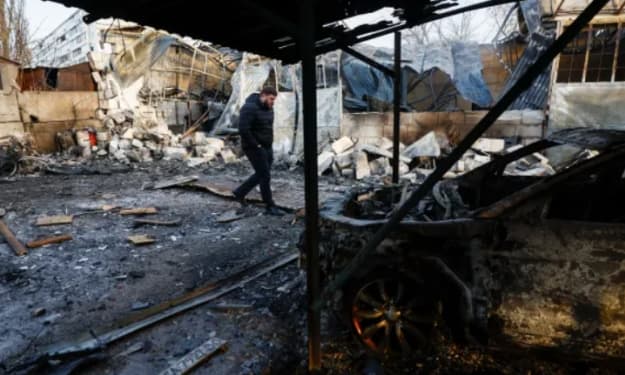
Winter Arrives Without Warmth As winter tightens its grip across Ukraine, millions of citizens are preparing to face freezing temperatures without a basic necessity of modern life: electricity. Power outages caused by sustained attacks on energy infrastructure have transformed winter from a seasonal challenge into a humanitarian emergency. For Ukrainians, the cold is no longer just about weather—it is about survival. With temperatures dropping below freezing and daylight hours shrinking, homes that once provided warmth and safety now struggle to shield families from the elements. The bitter winter ahead threatens not only comfort, but health, dignity, and life itself. A Nation in the Dark Ukraine’s power grid has been repeatedly targeted, leaving cities, towns, and villages in rolling blackouts or complete darkness. Energy facilities, transmission lines, and substations have sustained extensive damage, forcing authorities to ration electricity to keep the system from total collapse. In major cities, residents face scheduled power cuts lasting hours or even days. In rural areas, outages are often longer and harder to repair. Elevators stop working, water pumps fail, and heating systems shut down—turning everyday tasks into exhausting struggles. Electricity, once taken for granted, has become a precious resource carefully measured and shared. The Human Cost of Cold The most vulnerable groups—children, the elderly, and the sick—are bearing the heaviest burden. Without reliable heating, hypothermia becomes a real risk, even indoors. Hospitals and clinics operate on backup generators, but fuel shortages add another layer of uncertainty. Parents bundle children in layers of clothing inside their own homes. Families sleep in the same room to conserve warmth. Candles, gas burners, and improvised heaters are used despite safety risks, increasing the danger of fires and carbon monoxide poisoning. Winter exposes inequality in survival—those with resources cope, while others endure. Cities Adapt, Communities Unite Despite the hardship, Ukrainians are responding with resilience and innovation. Authorities have established “warming centers” where people can charge devices, access heat, and receive hot meals. Public buildings, schools, and metro stations are repurposed as shelters against the cold. Neighbors share generators, blankets, and food. Volunteers distribute firewood and thermal clothing. In darkness, community bonds grow stronger, proving that solidarity can provide warmth when electricity cannot. This collective effort reflects a society determined not to freeze—physically or emotionally. Infrastructure as a Battlefield Energy infrastructure has become a strategic target in modern warfare. Disabling power systems weakens economies, disrupts daily life, and pressures governments without direct confrontation on the battlefield. For Ukraine, the attacks on power facilities are not random—they are systematic. Each damaged transformer or power station increases civilian suffering, turning winter itself into a weapon. Experts warn that rebuilding under constant threat is a slow and dangerous process, requiring international support, technical expertise, and time—luxuries scarce in wartime. Economic and Psychological Impact Beyond physical cold, power outages bring economic paralysis. Businesses shut down or operate at limited capacity. Remote work becomes impossible. Small enterprises—already struggling—face collapse. Psychologically, the darkness weighs heavily. Long nights without light amplify fear, anxiety, and exhaustion. The uncertainty of when power will return creates chronic stress, particularly for families already traumatized by war. Winter, once a season of rest and reflection, has become a test of mental endurance. International Aid and Limitations International partners have pledged support, sending generators, fuel, and repair equipment. Aid organizations work tirelessly to deliver winterization kits, thermal supplies, and emergency assistance. Yet logistics remain challenging. Repair crews work under threat, supplies move slowly, and demand far exceeds availability. While global solidarity is visible, it cannot fully replace a functioning national grid. Aid helps Ukrainians endure—but survival still depends largely on internal resilience. Lessons in Endurance History has shown that wars are not only fought with weapons, but with endurance. Ukraine’s struggle through winter reflects a deeper truth: resilience is built not only by infrastructure, but by people. Each lit candle, shared heater, and warm meal represents defiance against despair. Ukrainians are not merely surviving the winter—they are resisting the idea that hardship can break their spirit. Looking Ahead: A Winter of Uncertainty As winter progresses, the situation remains unpredictable. Weather conditions may worsen, attacks may continue, and resources may stretch thinner. Yet Ukrainians continue to adapt, plan, and hope. The coming months will test not just physical endurance, but national resolve. Whether in darkness or light, Ukraine’s people face winter with courage forged by necessity
By Zahid Hussain23 days ago in Men
Russia-Ukraine War Live: Kyiv and Kharkiv Under Fire as Peace Talks Struggle to Survive. AI-Generated.
Peace Talks in the Shadow of Missiles As diplomats gather around tables and microphones, missiles continue to fall from the sky. The Russia-Ukraine war once again revealed its cruel paradox when Kyiv and Kharkiv came under renewed attack amid ongoing peace talks. For Ukrainians, the timing of these strikes is not just alarming—it is symbolic. It reflects a conflict where dialogue and destruction move side by side, each undermining the other. The latest attacks have reignited fears that peace negotiations are little more than formalities, overshadowed by military aggression and strategic posturing. While officials speak of ceasefires and compromises, ordinary citizens rush to shelters, listening for sirens instead of speeches. Kyiv Under Attack: A Capital City on Edge Kyiv, the heart of Ukraine’s political and cultural identity, has endured repeated assaults since the beginning of the war. The recent strikes targeted key areas near residential zones, sending shockwaves across the city. Explosions echoed through neighborhoods that, only hours earlier, were clinging to cautious hope sparked by news of peace talks. For residents of Kyiv, war has become a routine of uncertainty. Nights are restless, mornings begin with damage assessments, and daily life is shaped by the possibility of sudden violence. The attacks during negotiations felt particularly unsettling, reinforcing the belief that no moment—even those dedicated to peace—is sacred. Ukrainian officials described the strikes as deliberate intimidation, aimed at pressuring negotiators and signaling dominance rather than cooperation. Kharkiv: A City That Refuses to Break Kharkiv, Ukraine’s second-largest city, has long been a frontline symbol of resilience. Its proximity to the Russian border has made it especially vulnerable, and the latest attacks added to a long list of scars. Homes, public buildings, and infrastructure were damaged as residents once again sought refuge underground. Despite the destruction, the spirit of Kharkiv remains defiant. Local authorities and volunteers continue emergency response efforts, proving that while buildings can be damaged, community resolve is harder to destroy. Yet the question lingers: how long can resilience withstand relentless pressure? Why Attacks During Peace Talks Matter Attacks amid peace negotiations carry a weight beyond their immediate military impact. They raise serious doubts about sincerity and intentions. In diplomatic terms, such actions erode trust—the most essential ingredient for successful talks. Historically, peace processes require at least a temporary reduction in violence to allow dialogue to breathe. When attacks intensify instead, they send a clear message: military leverage still matters more than compromise. For Ukraine, these strikes confirm fears that negotiations are being used tactically rather than genuinely, as a way to gain time, international legitimacy, or strategic advantage. Civilian Lives Caught in Between The real tragedy of the Russia-Ukraine war is measured not in territorial shifts but in civilian suffering. Every missile launched during peace talks deepens the humanitarian crisis. Families are displaced, children are traumatized, and essential services remain under constant threat. Hospitals operate under emergency conditions, energy networks struggle to stay functional, and winter only amplifies the pain for millions. For civilians, peace talks are not abstract political events—they represent hope for survival. When that hope is shattered by explosions, despair grows stronger. International Reaction: Condemnation Without Consequence? Global leaders were quick to express concern over the attacks on Kyiv and Kharkiv. Statements condemning violence and urging restraint flooded diplomatic channels. Allies reaffirmed support for Ukraine, emphasizing the need for a genuine commitment to peace. However, critics argue that words alone have failed to alter the course of the conflict. Repeated condemnations, without decisive action, risk becoming background noise in a war that has learned to ignore moral appeals. The international community faces a difficult dilemma: how to encourage dialogue without appearing to tolerate aggression. The Strategy Behind the Strikes Military analysts suggest several strategic reasons behind launching attacks during negotiations: Pressure Tactics: Demonstrating strength to influence outcomes at the table Psychological Warfare: Undermining civilian morale and political confidence Narrative Control: Shaping perceptions at home and abroad Testing Limits: Measuring how far aggression can go without triggering stronger responses While these tactics may offer short-term leverage, they often sabotage long-term peace prospects. Media, Messaging, and the War Narrative Live coverage of the war plays a critical role in shaping global understanding. Headlines announcing attacks during peace talks highlight the contradiction at the heart of the conflict. For Ukraine, publicizing these events is essential—not only to maintain international attention but also to document violations and preserve historical truth. In modern warfare, the battle for narrative is nearly as important as the battle on the ground. Yet constant exposure to violence risks fatigue. The challenge for media is to keep the human story alive without turning tragedy into routine. Can Diplomacy Still Succeed? Despite the grim circumstances, abandoning diplomacy entirely would mean accepting endless war. History shows that even the most brutal conflicts can eventually move toward resolution—but only when violence ceases to dominate strategy. For peace talks to succeed, several conditions must be met: A verifiable ceasefire Protection of civilians as a priority Accountability for violations International mediation with real influence Without these elements, negotiations risk becoming symbolic gestures rather than pathways to peace. Conclusion: A War at a Crossroads The attacks on Kyiv and Kharkiv amid peace talks underline a painful truth: the Russia-Ukraine war is still driven more by force than by faith in diplomacy. Each missile fired during negotiations weakens trust and prolongs suffering. Yet the continued pursuit of talks, even under fire, also reflects humanity’s refusal to give up on peace. The path forward remains uncertain, fragile, and dangerous—but it is the only alternative to perpetual destruction. As the world watches events unfold live, one question remains unanswered: will the voices calling for peace grow louder than the weapons that silence them?
By Zahid Hussain23 days ago in Filthy
Brutality Before Peace: Ukraine Condemns Russian Strikes Amid Fragile Negotiations. AI-Generated.
When Peace Is Shadowed by Violence Peace talks are meant to signal hope. They are supposed to mark a pause in bloodshed, a willingness to listen, and a fragile step toward ending human suffering. Yet, in the ongoing Russia-Ukraine war, peace has once again been overshadowed by violence. Ukraine has strongly condemned what it describes as “brutal” Russian strikes launched just ahead of the second day of peace negotiations, casting a dark cloud over diplomatic efforts that were already hanging by a thread. These attacks did not merely damage infrastructure or military positions; they struck at the heart of trust itself. When bombs fall before dialogue begins, the message sent is louder than any words spoken at a negotiating table. This contradiction—talking peace while waging war—has become a recurring and deeply troubling pattern in modern conflicts. Background: A War That Refuses to Pause Since the outbreak of the Russia-Ukraine conflict, cycles of escalation and diplomacy have repeated themselves with painful predictability. Every announcement of talks is met with cautious optimism, only to be followed by renewed offensives, accusations, and shattered expectations. For Ukraine, these latest strikes represent more than a tactical move. Officials argue they are a deliberate attempt to weaken morale, pressure negotiators, and gain leverage before discussions even begin. The timing—just hours before a critical day of peace talks—has intensified suspicions about Russia’s true intentions. From Ukraine’s perspective, peace cannot be negotiated under fire. Diplomacy, they insist, requires at least a temporary respect for civilian life and international norms. The Meaning of “Brutal”: Beyond a Political Statement The word “brutal” is not used lightly in international diplomacy. When Ukraine labeled the strikes as such, it was acknowledging not only the physical destruction but also the psychological and humanitarian impact. Reports from affected regions described explosions near residential areas, damaged energy infrastructure, and terrified civilians seeking shelter. Winter conditions in parts of Ukraine have made these strikes especially devastating, cutting off heat, electricity, and essential services for vulnerable populations. In war, numbers often dominate headlines—casualty counts, missile totals, square kilometers gained or lost. But brutality is felt most deeply in moments unseen by cameras: a family huddled in darkness, hospitals running on emergency generators, children learning the sound of sirens before lullabies. Peace Talks Under Pressure The second day of peace talks was expected to focus on humanitarian corridors, ceasefire possibilities, and confidence-building measures. Instead, the renewed violence shifted attention back to survival and damage control. Negotiations conducted in the shadow of active strikes are inherently compromised. Trust erodes, positions harden, and compromise becomes politically dangerous. Ukrainian negotiators now face the impossible task of advocating dialogue while their nation absorbs fresh wounds. Historically, peace processes that begin under active military pressure rarely succeed. Violence before or during talks often signals that one party views diplomacy not as a path to resolution, but as a strategic tool to legitimize gains or stall for time. International Reactions: Condemnation and Concern The global response to Ukraine’s condemnation was swift but familiar. Western allies expressed deep concern, reiterating calls for restraint and respect for international law. Statements emphasized the need for genuine commitment to peace rather than symbolic negotiations. However, critics argue that repeated condemnations without decisive consequences have lost their deterrent effect. Strong words, they say, cannot compete with missiles unless backed by meaningful action. At the same time, some nations urged continued dialogue, fearing that abandoning talks altogether would lead to further escalation. This delicate balance—condemning violence while clinging to diplomacy—highlights the international community’s limited options in influencing a conflict driven by power, security fears, and national identity. Civilian Cost: The True Measure of Failure While diplomats debate language and leverage, civilians pay the price. Each strike ahead of peace talks undermines the very purpose of negotiation: to protect lives. In affected Ukrainian cities and towns, residents have grown weary of promises. For many, peace talks feel distant and abstract compared to the immediate reality of explosions, displacement, and loss. Trust in international processes weakens when violence appears unchecked. Children miss school, families are separated, and communities fracture under prolonged stress. Mental health experts warn of long-term trauma that will persist long after the last shot is fired. These invisible scars may ultimately prove harder to heal than destroyed buildings. Strategic Calculations: Why Strike Before Talks? Analysts suggest several reasons why such strikes occur before negotiations: Leverage Building – Demonstrating military capability to strengthen negotiating positions. Psychological Pressure – Undermining morale and confidence on the opposing side. Domestic Messaging – Appearing strong to internal audiences. Testing Limits – Gauging international reaction and tolerance. Yet these short-term gains often come at the expense of long-term peace. Violence hardens narratives, fuels resentment, and makes reconciliation more difficult. A Pattern Repeated Across History The Ukraine-Russia conflict is not unique in this pattern. History is filled with examples where peace talks were preceded—or accompanied—by intensified fighting. From the Balkans to the Middle East, such strategies have repeatedly delayed resolution and deepened suffering. What history also teaches is that sustainable peace rarely emerges from fear. It requires mutual recognition of humanity, security guarantees, and accountability. Strikes before talks may alter maps, but they rarely heal nations. The Role of Media and Public Perception Media coverage plays a critical role in shaping how such moments are understood. Headlines about “brutal strikes” influence public opinion, political pressure, and diplomatic tone. For Ukraine, speaking out forcefully is not only about international advocacy but also about maintaining domestic unity. Silence could be interpreted as weakness or acceptance. Condemnation becomes a necessary act of resistance in the information battlefield. However, constant exposure to violence also risks desensitization. The world watches, reacts briefly, and moves on—while the war continues. Is Peace Still Possible? Despite the grim timing of these strikes, abandoning hope entirely would mean surrendering to endless war. Peace remains possible, but it demands more than talks scheduled on calendars. It requires: Genuine ceasefires, not symbolic pauses Protection of civilians as a non-negotiable principle Accountability for violations International mediation with real leverage Without these elements, negotiations risk becoming rituals devoid of meaning. Conclusion: A Test of Intentions Ukraine’s condemnation of the “brutal” Russian strikes ahead of peace talks is more than a diplomatic statement—it is a test of intentions. It asks a simple but profound question: can peace be pursued honestly while violence continues? Every strike before dialogue answers that question, at least temporarily, with destruction rather than dialogue. Yet history reminds us that even the darkest conflicts can change course when courage replaces coercion. Until then, peace talks held under fire will remain what they are now—fragile, painful reminders of how far the world still has to go.
By Zahid Hussain23 days ago in 01
The Ritual of Winter: Challenge Winners and the Power of Endurance. AI-Generated.
Winter has always been more than just a season. It is a ritual—silent, demanding, and unforgiving. When the air turns sharp and the days grow shorter, life itself seems to whisper a challenge: can you endure? Across cultures, generations, and personal journeys, winter has symbolized hardship, reflection, and transformation. Those who survive it with strength do not merely pass through winter—they win it.
By Zahid Hussain23 days ago in Viva