Zahid Hussain
Stories (114)
Filter by community
Mystical Manifestation Mantra in Search of Soul Mates and Twin Flames. AI-Generated.
Love is one of the most profound human desires. Many seek a soul mate, a companion who resonates deeply with their heart and soul, while others are drawn to a twin flame, a unique spiritual counterpart whose energy mirrors their own. These connections are not merely random—they require conscious alignment of the mind, heart, and universe. Mystical manifestation mantras have emerged as powerful tools for attracting these deep, transformative connections into one’s life.
By Zahid Hussain22 days ago in FYI
UniversityGPT: In Defence of Gen-Z in the Age of Artificial Intelligence. AI-Generated.
Every generation is shaped—and judged—by the tools it adopts. From the printing press to the calculator, from the internet to smartphones, technological change has always been met with suspicion. Today, that suspicion has a new name: UniversityGPT. As AI-powered tools become increasingly common in academic spaces, Gen-Z finds itself under fire. Critics argue that students are “outsourcing thinking,” undermining academic integrity, and becoming intellectually dependent. Yet these arguments reveal more about the fear of change than about the realities of modern learning. Defending Gen-Z is not about excusing laziness—it is about recognizing evolution. Understanding Gen-Z: A Generation Born into Complexity Gen-Z, generally defined as those born between the mid-1990s and early 2010s, is the first generation to grow up in a fully digital, globally connected world. Unlike Millennials, who witnessed the rise of the internet, Gen-Z was born into it. But technology is only one part of their story. This generation came of age during: Global financial instability Climate change emergencies Political polarization A worldwide pandemic Rising tuition fees and student debt An unpredictable job market They inherited a world that is faster, harsher, and more demanding than ever before. To expect them to navigate this reality using outdated educational models is unrealistic. Gen-Z is not disengaged. They are overloaded. The Rise of UniversityGPT and Academic Anxiety UniversityGPT has become a lightning rod in debates about AI in education. For many educators and commentators, it represents everything that feels out of control: automation, speed, and the erosion of traditional authority. But history shows us a pattern. When calculators were introduced, students were accused of “forgetting math.” When Google became common, students were accused of “not researching properly.” When spell-checkers appeared, writing was said to be “dead.” None of these fears came true. Instead, expectations shifted. UniversityGPT is not the enemy of learning—it is the next phase of it. AI Does Not Replace Thinking—It Changes Where Thinking Happens One of the most persistent myths about AI tools is that they eliminate critical thinking. In reality, they reposition it. When students use UniversityGPT responsibly, they still must: Frame intelligent questions Assess the accuracy of responses Compare multiple viewpoints Edit, refine, and personalize ideas Apply concepts to real-world contexts AI generates information. Humans generate meaning. In fact, effective AI use requires higher-order thinking skills such as evaluation, synthesis, and judgment—skills that traditional rote learning rarely develops. Knowledge Is No Longer Scarce—Insight Is Previous generations learned in a world where access to information was limited. Libraries, textbooks, and lectures were gatekeepers of knowledge. Gen-Z lives in a different reality. Information is abundant. What is scarce is: Context Interpretation Ethical judgment Creativity UniversityGPT helps students move past mechanical tasks and focus on deeper understanding. This is not intellectual laziness—it is strategic efficiency. In a world driven by speed and complexity, efficiency is not a shortcut. It is survival. Outdated Education Systems Are the Real Crisis Much of the criticism aimed at Gen-Z ignores a fundamental truth: education systems have not evolved at the same pace as the world. Many universities still rely on: Memorization-based exams Rigid curricula One-size-fits-all assessments Minimal mental health support Underpaid and overworked faculty Students are expected to perform at elite levels within systems designed for a pre-digital era. Gen-Z did not create these contradictions—they exposed them. UniversityGPT gained popularity because it fills gaps left by institutional stagnation. Academic Integrity in the Age of AI The conversation around AI often centers on cheating. But cheating is not new—technology did not invent dishonesty. What AI does demand is new definitions of integrity. Instead of banning AI outright, institutions should be teaching: Ethical AI use Citation and transparency Critical evaluation of AI-generated content Responsible collaboration between human and machine Punishment-based approaches ignore reality. Education-based approaches prepare students for the future. Gen-Z understands that AI is not going away. They want guidance, not fear. Gen-Z and the Courage to Question Authority One reason Gen-Z unsettles traditional systems is simple: they ask uncomfortable questions. They question: Why education is increasingly expensive Why unpaid internships are normalized Why productivity is prioritized over wellbeing Why outdated traditions are protected without evidence UniversityGPT empowers this questioning by giving students faster access to knowledge and alternative perspectives. This is not rebellion—it is intellectual independence. Mental Health Awareness Is Not Weakness Another common criticism is that Gen-Z is “too sensitive.” In reality, they are simply more honest. They speak openly about: Anxiety Burnout Depression Emotional exhaustion Previous generations were taught to endure silently. Gen-Z chooses to address problems openly. UniversityGPT can reduce academic stress by: Helping organize thoughts Clarifying complex material Reducing time pressure Supporting non-native English speakers Using AI to manage cognitive load is not weakness—it is self-care. A healthy mind is essential for meaningful learning. Adaptation Is the Highest Form of Intelligence Human history favors those who adapt. Gen-Z is preparing for a future where: AI is embedded in every profession Jobs evolve constantly Lifelong learning is essential Collaboration with machines is normal Learning how to work with AI is not optional—it is foundational. UniversityGPT is not a threat to intelligence. It is a training ground for the future. The Real Question About AI in Education Instead of asking: “Why are students using AI tools like UniversityGPT?” We should be asking: “Why hasn’t education evolved to teach ethical, effective AI collaboration?” Blaming students for adapting faster than institutions is misplaced frustration. Gen-Z is not the problem. They are the preview. In Defence of Gen-Z Gen-Z is not lazy. They are overwhelmed—but resilient. Not entitled—but informed. Not disengaged—but redefining engagement. UniversityGPT does not weaken their minds. It reflects a world where intelligence is distributed, tools are powerful, and adaptability determines success. History is rarely kind to pioneers in the moment. But it is always shaped by them. When the future finally arrives, it will look remarkably like the world Gen-Z is already navigating—and mastering.
By Zahid Hussain22 days ago in Education
My Sweet-Thang: Loving You in the Quiet Spaces
Love is often described through grand gestures—flowers, promises, and dramatic declarations. But real love, the kind that settles deep into the bones, rarely announces itself loudly. It arrives softly. It stays quietly. And somehow, it changes everything. That is what you are to me, my sweet-thang. You are not the noise in my life. You are the calm that follows it. In a world that constantly demands attention, speed, and perfection, you exist like a pause—a breath I didn’t know I was holding until you showed me how to release it. Loving you does not feel rushed or forced. It feels natural, like something my heart always knew how to do, even before it knew you. What makes you special isn’t something that can be easily explained. It’s in the way you listen—not just to my words, but to the silences between them. It’s in how you notice the small shifts in my mood before I even understand them myself. It’s in the comfort you offer without being asked, and the patience you show without keeping score. You love me in ways that don’t need proof. With you, I’ve learned that love doesn’t have to be loud to be powerful. It can exist in shared glances, late-night conversations, and the simple reassurance of knowing someone is there. Even when nothing extraordinary is happening, being with you feels enough. That’s a rare thing. There are days when the world feels heavy—when responsibilities pile up, when doubts creep in, when exhaustion settles deeper than sleep can fix. On those days, you don’t try to fix me. You don’t rush me toward positivity or pretend everything is fine. You sit with me in the discomfort, and somehow, that makes it lighter. That’s love in its truest form. I don’t love you because you complete me. I love you because you understand me. You allow me to be myself—unpolished, uncertain, and still worthy of care. With you, I don’t feel the need to perform or pretend. I can simply exist, and that existence is met with warmth instead of judgment. You’ve shown me that love is not about possession, but presence. Being with you has changed the way I see affection. It’s no longer about constant excitement or dramatic highs. It’s about stability. About choosing each other, again and again, even on ordinary days. Especially on ordinary days. Because ordinary days are where life truly happens. My sweet-thang, you are the kind of love that doesn’t fade when the excitement settles. You are the kind that deepens. The kind that grows roots. The kind that feels safe enough to last. I don’t know what the future holds. I don’t pretend love guarantees certainty or perfection. But I do know this: loving you feels honest. It feels real. And in a world full of temporary things, that reality is rare and precious. You are not just someone I love. You are someone I choose. Every day. In quiet ways. With a steady heart. And that, my sweet-thang, is everything.
By Zahid Hussain22 days ago in Art
When One Star Trek Episode Beats Tarantino: Why Thoughtful Science Fiction Still Wins. AI-Generated.
In the vast silence of space, a starship glides beneath the pale glow of the Moon. Earth curves gently below, fragile and blue. The image feels familiar, almost comforting—yet it carries a deeper meaning. It represents not just a television franchise, but a philosophy. A way of thinking about humanity, power, ethics, and the future. This is Star Trek, and more than half a century after its birth, it still manages to do something extraordinary: sometimes, a single episode says more than an entire blockbuster film.
By Zahid Hussainabout a month ago in History
7 Things You Should Get Rid of in Your Bathroom for a Healthier, Cleaner Life. AI-Generated.
Your bathroom may be one of the smallest rooms in your home, but it plays a huge role in your daily routine. From brushing your teeth in the morning to unwinding with a shower at night, this space is deeply connected to your health and hygiene. However, many people unknowingly turn their bathrooms into storage zones filled with unnecessary, expired, or even harmful items.
By Zahid Hussainabout a month ago in The Swamp
The Polleras of Rebellion: Skateboarders, Science, and the 90-Year Legacy of Jane Goodall. AI-Generated.
The world is changing, but perhaps not in the ways we expected. In the high-altitude streets of Cochabamba, Bolivia, the sound of polyurethane wheels hitting sun-baked pavement creates a rhythmic clatter. But the figures riding these skateboards aren't the stereotypical teenage boys in baggy hoodies. Instead, they are women dressed in pollera skirts, many-layered petticoats, and felt bowler hats. These are the ImillaSkate collective. "Imilla" means "young girl" in Aymara and Quechua, and their mission is as steep as the Andes: to reclaim their indigenous identity through a sport once deemed "un-ladylike." Simultaneously, across the globe, the scientific and environmental community celebrates a monumental milestone: 90 years of Jane Goodall. At first glance, a British primatologist and a group of Bolivian skateboarders might seem worlds apart. However, they are bound by a singular, powerful thread—Hope. This article explores how the spirit of Jane Goodall’s nine decades of activism mirrors the grassroots rebellion of the ImillaSkate, proving that conservation, identity, and hope are the most radical acts of the 21st century. Section 1: Jane Goodall—90 Years of Redefining Humanity To understand the "90 Years of Hope" mentioned in the image, one must understand the woman who defied every glass ceiling in science. In 1960, Jane Goodall entered the Gombe Stream National Park in Tanzania. She didn’t have a PhD; she had a notebook, binoculars, and an open heart. Her discovery—that chimpanzees make and use tools—shook the foundations of anthropology. It forced humanity to redefine itself. But Jane’s legacy isn’t just about chimps. It is about the interconnectedness of all living things. As she reached her 90th year, her message shifted from "observing nature" to "saving it." Through her Roots & Shoots program and the Jane Goodall Institute, she has spent decades empowering local communities to become guardians of their own land. Section 2: The ImillaSkate—Indigenous Pride on Wheels Now, look back at the image of the two women. Their gaze is steady, their posture proud. They wear the pollera, a garment that was once a symbol of colonial oppression and later, a source of discrimination against indigenous women in Bolivia. For decades, women in polleras (often called Cholitas) were banned from certain public squares and restaurants. Today, the ImillaSkate collective uses these skirts as a uniform of power. The Skateboard as a Tool: For these women, the skateboard is more than sports equipment; it is a vehicle for visibility. Cultural Preservation: By skating in traditional attire, they are saying, "We do not need to give up our heritage to participate in the modern world." Section 3: Why This Image Matters for "Vital Impacts" The caption in your image mentions "Vital Impacts" and "Nature of Hope." This refers to a global initiative where world-class photographers sell their prints to fund conservation efforts. The inclusion of the ImillaSkate in a Jane Goodall tribute is intentional. It represents "Intersectionality." 1. Environmentalism is Social: You cannot save the forest if you do not empower the people who live near it. 2. Representation: Seeing indigenous women as the "face" of hope reminds us that the climate movement must be diverse to succeed. Section 4: The Core Message—Hope as a Discipline Jane Goodall often says, "Hope is not a passive state. It is an action." The women in the photo embody this. Skating in a pollera is difficult. It is heavy. It catches the wind. It is an "inconvenient" way to skate. Similarly, conservation is "inconvenient." Protecting the planet requires us to go against the grain of easy consumption. The Four Pillars of Modern Hope: The Human Intellect: Our ability to solve problems like Jane did. The Resilience of Nature: Nature’s ability to bounce back if given a chance. The Power of Youth: Groups like ImillaSkate leading the charge. The Indomitable Human Spirit: The refusal to stay down after a fall—whether off a skateboard or in the face of a climate crisis. Conclusion: A Call to Action As we look at the 90-year journey of Jane Goodall and the courageous strides of the ImillaSkate, the message is clear: Identity is your strength. Whether you are a scientist in the jungle or a skater in the city, your "Hope" is the most valuable asset you own. The image of these two women isn't just a portrait; it is a blueprint for the future. It tells us to carry our heritage with us as we move forward, to challenge stereotypes, and to never stop rolling toward a better world. Jane Goodall’s 90 years aren't just a celebration of the past—they are a torch passed to us. ---
By Zahid Hussainabout a month ago in History
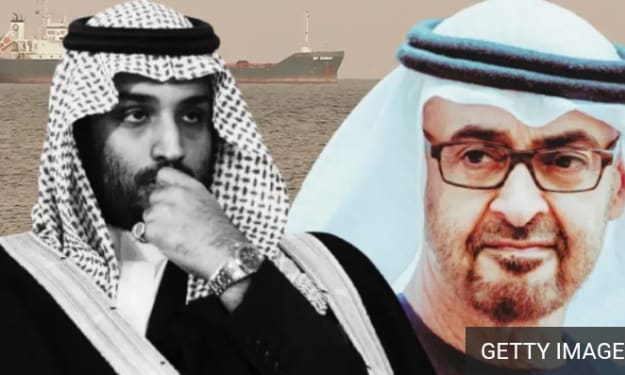
UAE Rejects Saudi Allegations and Announces End to Military Operations in Yemen: A Turning Point in the Conflict. AI-Generated.
The United Arab Emirates’ recent decision to reject Saudi allegations of arming factions in Yemen while simultaneously announcing the end of its military operations marks a significant moment in Middle Eastern geopolitics. This development not only reshapes the dynamics of the Yemen conflict but also raises broader questions about regional alliances, shifting strategies, and the future of one of the world’s most devastating humanitarian crises. For years, Yemen has been the center of a complex proxy war involving regional powers, local factions, and international interests. The UAE’s announcement signals a strategic recalibration that could alter the trajectory of the conflict—or expose deeper fractures within the Saudi-led coalition. Background: The Yemen War and the Saudi-Led Coalition The war in Yemen began in earnest in 2014 when Houthi rebels seized control of the capital, Sana’a, forcing the internationally recognized government into exile. In response, Saudi Arabia formed a coalition in 2015 to restore the Yemeni government, citing national security concerns and Iran’s alleged backing of the Houthis. The UAE quickly emerged as a key member of this coalition, contributing troops, air power, and logistical support. While Saudi Arabia focused primarily on confronting the Houthis, the UAE concentrated on southern Yemen, targeting extremist groups such as Al-Qaeda in the Arabian Peninsula (AQAP) and supporting local forces. Over time, however, differences in priorities and methods between Saudi Arabia and the UAE became increasingly visible. Saudi Allegations and UAE’s Firm Rejection Tensions escalated when Saudi-linked sources alleged that the UAE was indirectly supporting armed groups in Yemen, including factions that did not align with Riyadh’s objectives. Some claims suggested that Emirati-backed militias were undermining the unity of Yemen and complicating the coalition’s mission. The UAE responded forcefully, dismissing the allegations as unfounded and misleading. Emirati officials emphasized that their involvement in Yemen had always been focused on counterterrorism, regional stability, and humanitarian support—not fueling further conflict. According to the UAE, such accusations ignore the reality of its contributions, including securing key ports, combating extremist networks, and delivering large-scale humanitarian aid to Yemeni civilians. Announcement to End Military Operations Alongside rejecting Saudi allegations, the UAE announced that it was ending its direct military operations in Yemen. Officials described the move not as a withdrawal under pressure, but as a strategic transition from military engagement to diplomacy and stabilization. The UAE clarified that: It would reduce its military footprint significantly Local Yemeni forces would take greater responsibility for security Efforts would shift toward political dialogue and humanitarian assistance This announcement came amid growing international pressure to end the war and mounting criticism over civilian casualties and infrastructure destruction. Strategic Recalculation or Diplomatic Rift? Analysts are divided on what the UAE’s decision truly represents. Some view it as a pragmatic recalculation—recognizing that military intervention has failed to produce a decisive victory and has instead deepened the humanitarian catastrophe. Others see the move as evidence of a widening rift between Riyadh and Abu Dhabi. While the two countries remain strategic partners, their visions for Yemen’s future appear increasingly divergent. The UAE has shown support for southern Yemeni groups seeking autonomy, while Saudi Arabia continues to emphasize Yemen’s territorial unity under a central government. This divergence complicates coalition cohesion and raises questions about how long Saudi Arabia can sustain the conflict without full Emirati backing. Humanitarian Implications Yemen’s humanitarian crisis is among the worst in the world. Millions face food insecurity, disease outbreaks, and displacement. Years of fighting have destroyed hospitals, schools, and vital infrastructure. From a humanitarian perspective, the UAE’s decision to end military operations could reduce violence in certain regions, creating space for aid delivery and reconstruction. Emirati officials have highlighted their continued commitment to humanitarian programs, including food aid, medical assistance, and rebuilding efforts. However, critics caution that unless all major parties commit to de-escalation, one actor’s withdrawal may not be enough to bring meaningful relief to civilians. International and Regional Reactions The announcement has drawn mixed reactions globally. The United Nations and several humanitarian organizations welcomed the move as a positive step toward de-escalation. Some Western diplomats described it as an opportunity to reinvigorate peace talks. At the same time, regional observers warn that power vacuums left by withdrawing forces could be exploited by militias or extremist groups. The success of the UAE’s strategy will depend heavily on whether political solutions replace military ones. Iran, often accused of backing the Houthis, has so far responded cautiously, while other Gulf states are watching closely to see how the balance of power shifts. Saudi Arabia’s Position Going Forward For Saudi Arabia, the UAE’s announcement creates both challenges and opportunities. On one hand, it may increase pressure on Riyadh to reassess its own military strategy and seek a negotiated settlement. On the other hand, Saudi Arabia could face greater operational burdens if it continues the conflict largely on its own. The Saudi leadership has recently signaled openness to diplomacy, engaging in indirect talks and supporting ceasefire initiatives. The UAE’s move may accelerate this trend—or expose disagreements over the terms of peace. Yemen’s Fragmented Political Landscape Beyond regional politics, Yemen itself remains deeply divided. The Houthis control large parts of the north, while various factions dominate the south. Years of war have weakened central authority and empowered local actors. The UAE’s reduced military role may strengthen some southern groups it previously supported, potentially reshaping internal power dynamics. Whether this leads to stability or further fragmentation remains uncertain. Without an inclusive political process involving all major Yemeni stakeholders, military withdrawals alone are unlikely to secure lasting peace. A Shift from War to Diplomacy? The UAE insists that its decision reflects a belief that Yemen’s conflict cannot be solved through force alone. This sentiment echoes growing international consensus that diplomacy, not warfare, offers the only viable path forward. Ending military operations does not automatically mean peace—but it does signal recognition that the costs of continued fighting outweigh the benefits. If followed by meaningful negotiations, confidence-building measures, and reconstruction efforts, this shift could mark the beginning of a new phase. Conclusion: A Defining Moment for the Region The UAE’s rejection of Saudi allegations and its announcement to end military operations in Yemen represent a defining moment in the long-running conflict. Whether this move becomes a catalyst for peace or merely another chapter in a complex war depends on the actions of all parties involved. For Yemen’s suffering population, the hope is simple: that regional powers choose compromise over confrontation, diplomacy over destruction, and humanity over strategy. The world will be watching closely to see whether this decision leads to genuine progress—or whether the conflict continues under a different form. In a war that has already taken too much, the opportunity for peace must not be squandered.
By Zahid Hussain2 months ago in The Swamp
New Year, Fresh Start. AI-Generated.
Every year, the calendar turns a page, and with it comes a quiet but powerful illusion: that life can begin again. The phrase “New Year, Fresh Start” may sound like a cliché, yet it continues to hold an emotional weight that few ideas can rival. Even for those who claim not to believe in resolutions or symbolic beginnings, the arrival of a new year stirs something deep inside—a subtle hope, a fragile optimism, a whisper that says, this time could be different.
By Zahid Hussain2 months ago in Confessions
The Unnumbered Trump. AI-Generated.
Donald Trump has always resisted easy classification. He is often counted, ranked, numbered—45th president, one-term leader, billionaire businessman, reality TV star—but none of these labels fully capture what he represents. In many ways, Trump is unnumbered. Not because he lacks definition, but because he exists outside traditional political measurement. To understand Trump only through statistics, elections, or timelines is to miss the deeper phenomenon he embodies. Beyond Presidential Numbers History prefers order. Presidents are numbered, terms are counted, legacies are ranked. Trump disrupts this system. Whether admired or criticized, he refuses to remain confined to a single chapter in political history. Unlike most former presidents who fade into ceremonial relevance, Trump continues to dominate political conversation. His influence is not tied to office alone—it exists in rhetoric, identity, and cultural division. Trump is not merely a former president. He is a movement, a symbol, and for some, a grievance made flesh. A Figure Born of Discontent Trump did not emerge from political tradition. He rose from dissatisfaction. Millions of Americans felt unheard long before 2016. Economic displacement, cultural anxiety, distrust of institutions, and resentment toward political elites created fertile ground. Trump did not invent these emotions—he voiced them. What made him unnumbered was not his policies, but his language. He spoke in absolutes, in insults, in defiance of decorum. To supporters, this was honesty. To critics, recklessness. Either way, it broke the rules of political engagement. The Unmeasurable Power of Narrative Traditional politics relies on facts, platforms, and performance metrics. Trump relied on narrative. He framed himself as an outsider fighting a corrupt system. Every criticism became proof of conspiracy. Every controversy reinforced loyalty among followers who believed he was being targeted for speaking uncomfortable truths. This narrative power is difficult to quantify. Polls struggle to capture emotional allegiance. Election results fail to measure cultural impact. Trump’s influence is not linear. It spreads through identity, grievance, and belonging. A Presidency That Didn’t End For most leaders, leaving office marks a transition into reflection or retreat. For Trump, it marked escalation. Post-presidency, he became more visible, more polarizing, and more central to political debate. His presence continues to shape elections, media cycles, and party dynamics. This is why Trump remains unnumbered. His relevance cannot be confined to years served or bills passed. His presidency functions less as a term and more as a state of political tension that persists. Why Trump Defies Traditional Legacy Legacies are usually written in hindsight. Trump’s is still unfolding. Supporters credit him with reshaping conservatism, challenging globalism, and disrupting entrenched power structures. Critics see democratic erosion, institutional damage, and normalization of hostility. Both views coexist—and neither fully explains him. Trump is not remembered for consensus. He is remembered for conflict. His legacy is not agreement, but division so deep it redefined political identity. That makes him historically difficult to place. The Cultural Trump, Not Just the Political One Trump exists beyond ballots and courtrooms. He exists in culture. He changed how people talk about politics—less politely, more personally. He normalized confrontation as authenticity. He blurred the line between politics and entertainment. In this sense, Trump is not just a politician. He is a cultural artifact of a fractured era. You don’t measure such figures by numbers alone. You measure them by impact, and impact resists neat calculation. Why “Unnumbered” Matters To call Trump unnumbered is not praise or condemnation. It is recognition. Recognition that modern politics is no longer governed solely by institutions, but by emotion. Recognition that leadership is no longer defined only by office, but by influence. Recognition that history is no longer written quietly after events conclude—it unfolds publicly, chaotically, and in real time. Trump represents a turning point where personality overpowered policy and identity overtook ideology. The Future of an Unnumbered Figure What happens next remains uncertain. Trump may return to office, fade into legal battles, or continue shaping politics from the margins. Regardless, his imprint will remain. Future leaders will imitate or reject his style—but they cannot ignore it. Political language, voter expectations, and media dynamics have permanently shifted. Trump is unnumbered because he altered the rules of the game itself.
By Zahid Hussain2 months ago in 01
Where My Mind Wanders. AI-Generated.
My mind rarely stays where my body is. It wanders—quietly, stubbornly—slipping through moments, memories, and imagined futures while the world expects me to remain present. Sometimes it drifts without permission, and other times I send it away on purpose, just to breathe. Where my mind wanders is not always a peaceful place. But it is always honest. Between What Was and What Could Have Been Often, my mind wanders backward. It revisits conversations that ended too soon, words I never said, choices that seemed small at the time but turned out to be defining. It pauses at crossroads I barely noticed when I stood there, wondering who I might have been if I had chosen differently. There is a strange comfort in the past. Even painful memories carry familiarity. They remind me that I survived, that I learned, that I changed—even if the change came with scars. My mind doesn’t return to the past to torture me. It goes there to understand. To make sense of how I became who I am. The Quiet Spaces No One Sees Sometimes my mind wanders into silence. Not the peaceful kind found in nature or empty rooms, but the internal silence that appears when words fail. This is where emotions sit without names, where feelings exist without explanations. In these moments, I realize how much of life happens internally—unnoticed, unshared. We move through the world smiling, working, speaking, while entire emotional landscapes remain hidden inside us. My mind wanders there when I am tired of pretending that everything is simple. Imagined Futures and Unlived Lives There are days when my mind runs ahead of me. It imagines futures that may never arrive—versions of life where things turned out differently, where courage came sooner, where timing was kinder. These imagined futures are not always hopeful. Sometimes they are warnings. Sometimes they are wishes. I think about who I might become if I let go of fear. I wonder what kind of peace I could find if I stopped carrying what no longer belongs to me. My mind wanders forward not because I’m dissatisfied with the present, but because hope is a form of survival. Why the Mind Refuses to Stay Still People often treat wandering thoughts as a flaw. A lack of focus. A weakness. But I’ve come to believe the opposite. A wandering mind is searching. It is processing, healing, questioning. It refuses to accept life at surface level. It digs beneath routine, beneath habit, beneath expectation. My mind wanders because it wants meaning—not just motion. Where Pain Quietly Lives There are places my mind avoids until it can’t anymore. That’s where pain lives. Unresolved grief. Disappointments I never allowed myself to mourn. Relationships that ended without closure. Moments where I felt invisible, unheard, or misunderstood. My mind wanders there slowly, carefully, like stepping into cold water. But when it finally arrives, something important happens: I feel. And feeling, even when it hurts, is better than numbness. Creativity Is a Form of Wandering Some of my best ideas arrive when my mind wanders freely. When I stop forcing productivity, when I allow myself to drift, creativity appears. Thoughts connect in unexpected ways. Emotions turn into words. Chaos finds a shape. Writing, for me, is not about control. It’s about letting my mind wander and trusting that it will bring something back worth keeping. Loneliness and the Inner World There are moments when my mind wanders because I feel alone—even in a crowded room. In those moments, the inner world becomes louder than the outer one. Thoughts replace conversations. Reflections replace noise. Loneliness doesn’t always mean lacking people. Sometimes it means lacking understanding. My mind wanders then, searching for connection—not always with others, but with myself. Learning to Let the Mind Wander Without Getting Lost I used to fight my wandering thoughts. I thought discipline meant silence. Control. Stillness. Now I know better. The goal is not to stop the mind from wandering, but to return when it matters. To observe without drowning. To wander without disappearing. There is wisdom in knowing when to drift—and when to come back. Where My Mind Wanders, I Find Myself In the end, my mind wanders to teach me something. About who I am. About what I fear. About what I still hope for. It wanders through darkness and light, past and future, doubt and possibility. And every time it returns, it brings pieces of understanding with it. Where my mind wanders, I don’t lose myself. I find myself.
By Zahid Hussain2 months ago in Poets
Achilles & Patroclus: A Sapphic Epitaph. AI-Generated.
The story of Achilles and Patroclus remains one of the most compelling and tragic narratives of Greek mythology. Immortalized in Homer’s Iliad, their bond transcends mere friendship or camaraderie on the battlefield. It is a story of devotion, love, loss, and remembrance—a story that resonates with readers across cultures and centuries. By exploring their relationship through the lens of a Sapphic epitaph, we uncover layers of intimacy, grief, and the human desire to memorialize love in the face of mortality. The Friendship and Beyond Achilles, the greatest Greek warrior of the Trojan War, and Patroclus, his steadfast companion, were inseparable. While many have debated the exact nature of their bond, classical sources portray a connection that blends loyalty, affection, and profound emotional intimacy. In Homer, Patroclus’ death becomes the catalyst for Achilles’ ultimate transformation. The grief that consumes Achilles is not merely the sorrow of losing a comrade—it is the anguish of losing someone irreplaceable, someone whose presence defined his life both on and off the battlefield. A Sapphic epitaph, traditionally a poetic tribute to the dead, often explores love, devotion, and the fragility of life. Applying this framework to Achilles and Patroclus highlights the depth of their relationship: it is love memorialized in poetic and elegiac form. Sapphic Poetry and Mourning Sappho, the ancient Greek poetess, was celebrated for her ability to capture passion, tenderness, and melancholy within the constraints of her lyrical form. Her epitaphs often focused on the enduring power of memory and the impossibility of fully expressing the loss of someone beloved. By framing Patroclus’ death in a Sapphic lens, we recognize the silent lamentations of Achilles. Every act of mourning—be it in tearing his garments, refusing sustenance, or venturing into battle with unparalleled fury—can be seen as part of a poetic elegy in motion. Achilles’ grief is simultaneously private and performative, blending heroism with heartbreak, a duality mirrored in Sappho’s verses. Immortality Through Memory One of the striking themes in using a Sapphic perspective is the pursuit of immortality through remembrance. While humans are mortal, the act of memorializing someone in poetry or in ritual creates a form of eternal life. Patroclus, though killed in battle, lives on through Achilles’ actions. His name is invoked in oaths, in mourning rituals, and in the relentless pursuit of vengeance against Hector. In Sapphic tradition, love and grief are intertwined with memory—the dead are kept alive not through flesh but through devotion and remembrance. Thus, the Sapphic epitaph for Patroclus might not merely recount his death; it would celebrate his virtues, his gentleness, his courage, and the immeasurable impact he had on Achilles’ life. The Intersection of Heroism and Love Achilles’ rage following Patroclus’ death is legendary. It underscores the interplay of heroism and emotional vulnerability. In the Greek heroic code, warriors are defined by physical strength, courage, and honor. Yet the loss of Patroclus reveals Achilles’ emotional core—a profound capacity for love and grief that complicates the archetype of the stoic hero. In writing a Sapphic epitaph for Patroclus, one does not merely mourn the fallen hero; one honors the intertwining of martial prowess with emotional depth. It is a reminder that even the mightiest warriors are capable of tender devotion. Literary Legacy Throughout centuries, scholars, poets, and writers have revisited Achilles and Patroclus’ relationship. From medieval retellings to modern interpretations, their story has been viewed through various lenses: romantic, platonic, and even homoerotic. A Sapphic approach emphasizes the intimate, elegiac dimension of their bond. It invites readers to consider how grief and love coexist in the aftermath of loss, and how human relationships are immortalized through words, ritual, and remembrance. The beauty of the Sapphic lens lies in its subtlety. Unlike grand epics or heroic eulogies, it dwells in the quiet spaces—the unspoken words, the shared glances, the tender memories that survive beyond death. Conclusion: Love, Loss, and Eternal Memory In examining Achilles and Patroclus through a Sapphic epitaph, we see a narrative that is timeless, universal, and profoundly human. Their story reminds us that love is not always loud or performative. Sometimes, it is quiet, enduring, and immortalized in grief. Through the loss of Patroclus, Achilles embodies the duality of human existence: strength and vulnerability, rage and tenderness, mortality and the desire for remembrance. A Sapphic epitaph does not merely mourn; it immortalizes, giving voice to the eternal bond that transcends death itself. In the end, Achilles and Patroclus remain emblematic not only of heroic valor but of love’s enduring power—a power that survives through memory, poetry, and the quiet eternity of the heart.
By Zahid Hussain2 months ago in History
President Asif Ali Zardari Meets Iraq’s Caretaker Prime Minister Mohammed Shia Al-Sudani at Government Palace. AI-Generated.
The meeting between President Asif Ali Zardari of Pakistan and Mr. Mohammed Shia Al-Sudani, the Caretaker Prime Minister of Iraq, held at the Government Palace, marks a significant moment in the evolving diplomatic relationship between Pakistan and Iraq. This high-level interaction reflects both nations’ commitment to strengthening bilateral ties, fostering regional cooperation, and addressing shared challenges in an increasingly complex geopolitical landscape. Such meetings are more than ceremonial gestures; they represent a convergence of political vision, strategic dialogue, and mutual respect between two important Muslim-majority countries with deep historical, cultural, and diplomatic roots. A Meeting of Diplomatic Significance President Asif Ali Zardari, known for his experience in statecraft and diplomacy, arrived at the Government Palace amid official protocols and warm reception. His meeting with Prime Minister Mohammed Shia Al-Sudani was characterized by cordiality and constructive dialogue, symbolizing the mutual desire to enhance cooperation between Pakistan and Iraq. Both leaders acknowledged the importance of maintaining regular high-level engagements, especially at a time when the Middle East and South Asia face evolving political, economic, and security challenges. Strengthening Pakistan–Iraq Relations Pakistan and Iraq share longstanding ties rooted in shared religious, cultural, and historical connections. Over the years, both countries have supported each other at various international forums, including the Organization of Islamic Cooperation (OIC) and the United Nations. During the meeting, discussions reportedly focused on: Enhancing bilateral trade and economic cooperation Expanding energy collaboration Strengthening people-to-people exchanges Cooperation in education, health, and cultural sectors President Zardari emphasized Pakistan’s willingness to support Iraq’s reconstruction and development efforts, particularly in areas where Pakistan has expertise, such as infrastructure development, healthcare services, and skilled manpower. Regional Stability and Shared Concerns One of the key themes of the discussion was regional stability. Both leaders expressed concern over ongoing conflicts, political uncertainty, and security challenges affecting the broader region. President Zardari reaffirmed Pakistan’s stance in favor of dialogue, peaceful coexistence, and respect for sovereignty as guiding principles in international relations. Prime Minister Mohammed Shia Al-Sudani highlighted Iraq’s efforts to stabilize its internal political landscape and rebuild institutions after years of conflict. He acknowledged Pakistan’s constructive role in promoting peace and moderation in the Muslim world. Economic Cooperation and Trade Opportunities Economic collaboration featured prominently in the talks. Both sides recognized that bilateral trade between Pakistan and Iraq remains below its true potential. The leaders discussed ways to encourage private-sector engagement, ease trade regulations, and explore joint ventures. Key sectors identified for cooperation included: Energy and petroleum Agriculture and food security Pharmaceuticals Construction and engineering services President Zardari noted that Pakistan’s growing industrial base and skilled workforce could contribute positively to Iraq’s economic revival. Cultural and Religious Ties Cultural and religious connections between Pakistan and Iraq hold deep significance, particularly due to religious tourism. Every year, thousands of Pakistani pilgrims travel to Iraq to visit holy sites. Both leaders discussed measures to improve facilities, security, and coordination for pilgrims, ensuring a smoother and safer experience. Strengthening cultural exchanges, academic cooperation, and media collaboration were also highlighted as ways to bring the people of both nations closer together. Pakistan’s Vision for Diplomatic Engagement President Asif Ali Zardari reiterated Pakistan’s broader diplomatic vision—one rooted in peaceful coexistence, economic diplomacy, and regional connectivity. He stressed that Pakistan seeks to build partnerships based on mutual respect and shared interests, rather than short-term political gains. His engagement with Iraq’s caretaker leadership underscores Pakistan’s intent to remain actively involved in Middle Eastern affairs while maintaining balanced relations with all regional stakeholders. A Message of Unity and Cooperation The meeting concluded on a positive note, with both leaders expressing optimism about the future of Pakistan–Iraq relations. The exchange of views at the Government Palace served as a reminder that diplomacy remains a powerful tool for addressing challenges, building trust, and shaping a cooperative future. In an era marked by uncertainty and rapid geopolitical shifts, such high-level engagements reinforce the importance of dialogue, understanding, and collaboration among nations. Conclusion The meeting between President Asif Ali Zardari and Caretaker Prime Minister Mohammed Shia Al-Sudani was not merely a diplomatic formality—it was a reaffirmation of shared values, mutual respect, and a collective vision for peace and development. As Pakistan and Iraq continue to navigate regional and global challenges, such interactions pave the way for stronger partnerships, deeper cooperation, and a more connected Muslim world built on dialogue and diplomacy.
By Zahid Hussain2 months ago in The Swamp