
Possible Accomplice and Getaway Driver in Nancy Guthrie Disappearance
Day 20: Flowers, Silence, and the Growing Fear That More Than One Person Is Responsible

Twenty days have now passed since Nancy Guthrie vanished, and the atmosphere outside her home has changed in a way that feels impossible to ignore. What was once a quiet residential street has slowly transformed into something closer to a vigil. Flowers line the sidewalk. Handwritten messages flutter in the desert air. Candles, religious icons, and letters addressed to Nancy—or even to her kidnappers—have appeared, placed there by neighbors who can no longer remain distant observers.
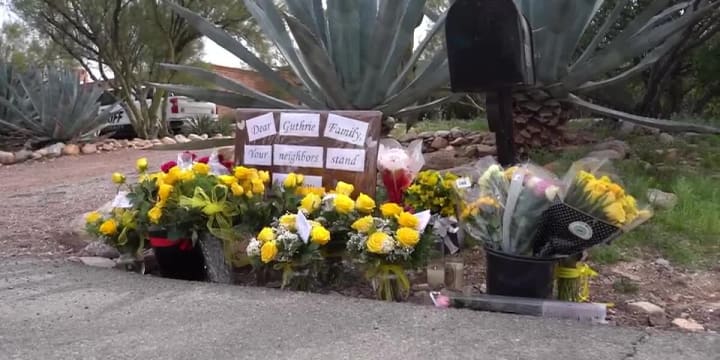
One message reads simply, “Nancy, may this light guide you home.” Another pleads, “Bring Nancy home.” Others are directed at her family, offering prayers and solidarity. The volume of these offerings has grown noticeably in just the last few days, signaling a shift in the emotional landscape of the community. At first, neighbors seemed hesitant, keeping their distance out of respect. Now, they’re stepping forward, leaving behind tangible reminders that Nancy is not forgotten.
One of the more striking additions is an open letter addressed directly to whoever may be responsible. It invokes religious imagery and warns of moral consequences, referencing Our Lady of Guadalupe and urging repentance. It’s both haunting and deeply human—an expression of helplessness and hope combined.
What’s forming outside Nancy Guthrie’s home is no longer just a collection of flowers. It’s becoming a symbol of uncertainty, fear, and a desperate desire for resolution.
The Sheriff’s Statement Raises New Questions
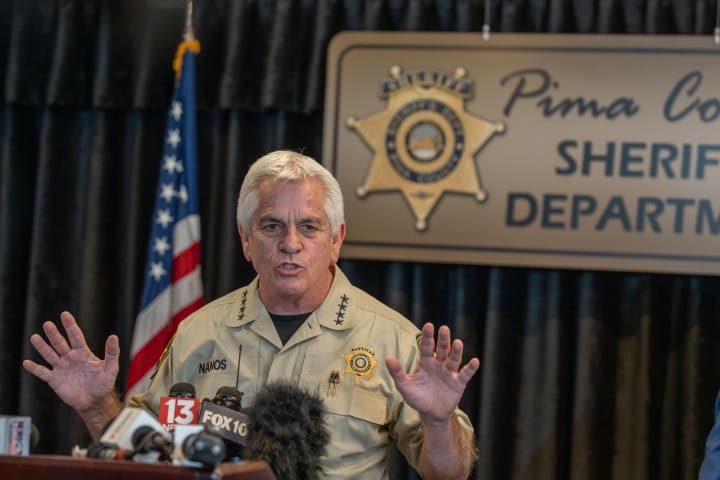
On the twentieth day of the investigation, the Pima County Sheriff’s Office released its latest update. On the surface, it followed a familiar pattern: investigators are continuing to follow leads, DNA analysis is underway, and surveillance footage from neighbors is still being collected and reviewed. But one line stood out above all others.
Investigators are not ruling out the possibility that more than one person may be involved.
That statement alone represents a critical shift in how this case may be unfolding.
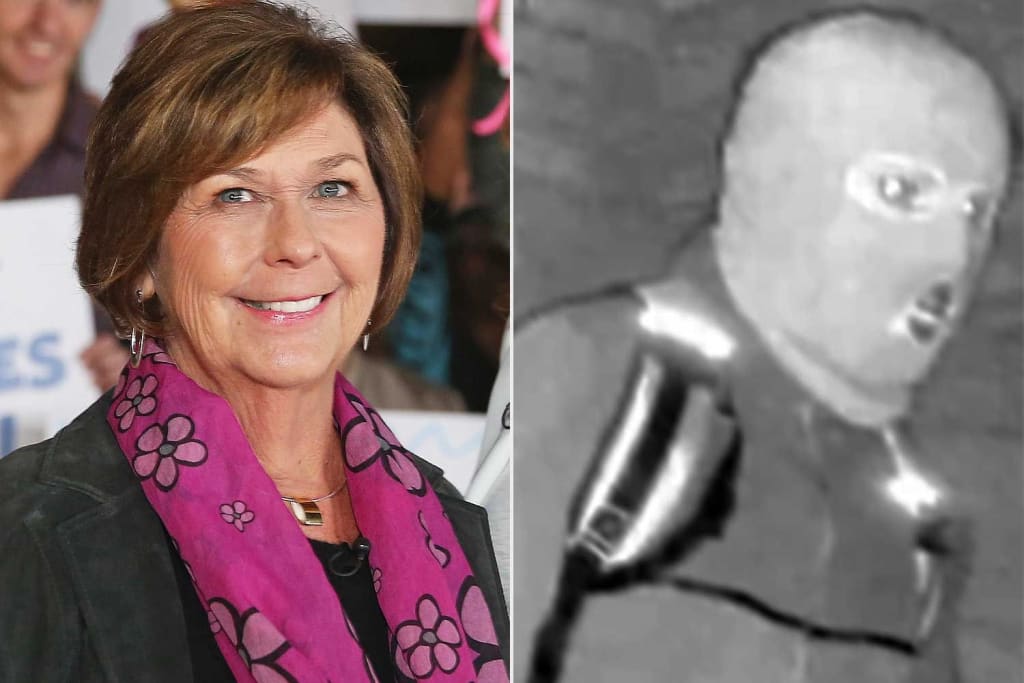
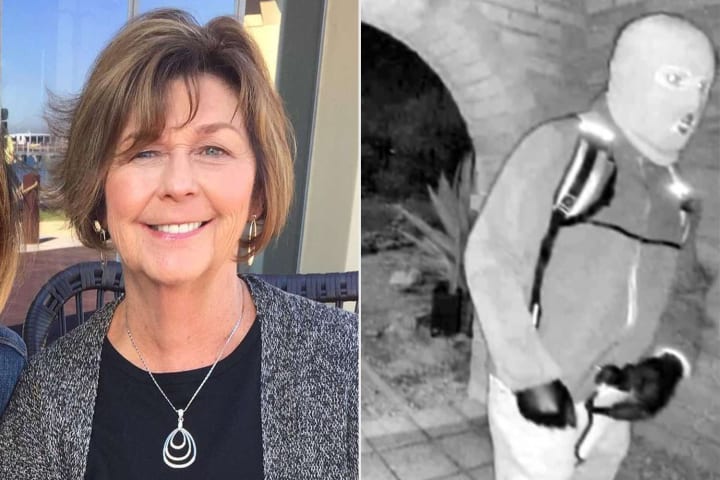
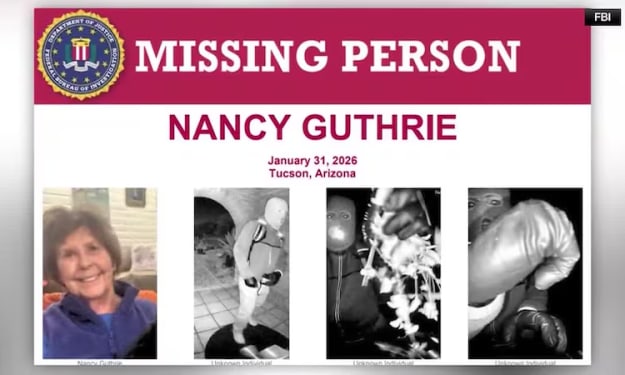
Until now, much of the public’s focus has been on the single individual captured on doorbell camera footage—the masked figure who approached Nancy’s home. But that image may not tell the full story. Law enforcement experts have long suspected that an abduction of this nature would be extraordinarily difficult for one person to execute alone.
Kidnapping someone against their will requires coordination. Someone may have been waiting nearby in a vehicle. Someone may have served as a lookout. Someone may have helped plan the operation.
The sheriff’s office putting this possibility into writing signals that investigators are seriously considering a broader conspiracy.
And that realization complicates everything.
The DNA Evidence Could Be the Key
Investigators have confirmed that DNA recovered from Nancy Guthrie’s home does not belong to her or anyone in her immediate circle. That alone suggests the presence of an unknown individual inside the residence.
But identifying that person is not a simple process.
Rather than relying solely on direct database matches, investigators may be using a method known as investigative genetic genealogy. This process involves comparing DNA to public genealogy databases, searching for distant relatives—third cousins, fourth cousins—and slowly building a family tree until a suspect emerges.
It’s the same technique that helped identify Bryan Kohberger in the Idaho student murders.
But genetic genealogy takes time.
For those watching from the outside, twenty days feels like an eternity. Yet in investigative terms, it’s still relatively early. Kohberger wasn’t arrested until forty-seven days after the murders. In Gabby Petito’s case, her remains weren’t discovered for thirty-nine days.
Cases like this rarely unfold on a predictable timeline.
The DNA could still provide the breakthrough investigators need.
Surveillance Footage and the Hunt for Clues
Law enforcement continues to collect surveillance footage from homes throughout the neighborhood. Detectives have been seen canvassing houses, reviewing Ring cameras, floodlight cameras, and any available video that might reveal movement before or after the abduction.
This kind of digital canvassing is painstaking work.
Every second of footage must be reviewed. Every vehicle that passes through the area must be examined. Investigators must determine which cars belong to residents and which ones don’t. They must look for patterns—vehicles that appeared repeatedly, unfamiliar figures walking through the neighborhood, anything out of place.
If a vehicle can be identified, it could change everything.
Vehicles provide leads. They can be traced. They can connect suspects to locations. They can establish timelines.
Right now, the absence of a confirmed vehicle remains one of the biggest missing pieces in the investigation.
The Possibility of a Cross-Border Connection
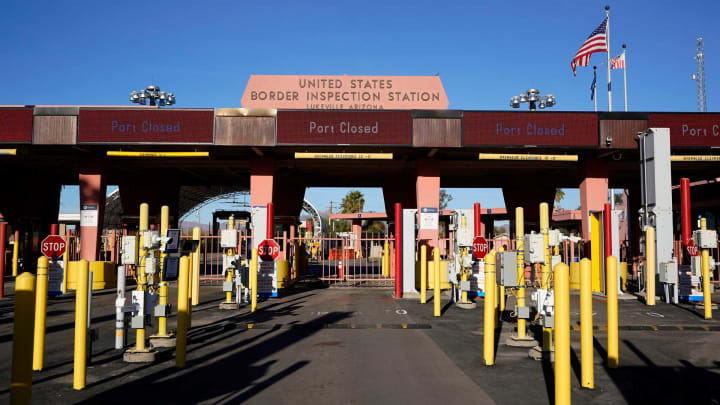
Nancy Guthrie’s home is located relatively close to the U.S.-Mexico border, and investigators have acknowledged that they cannot rule out the possibility that she was taken across it.
Crossing into Mexico, particularly from certain points, can be far easier than many people realize. Millions of people cross the border every year. While entry into the United States is tightly controlled, crossing southbound often involves far fewer checks.
If Nancy was transported across the border, it would complicate the investigation dramatically.
However, Mexican law enforcement has stated they have no credible evidence that she is in Mexico. That doesn’t mean investigators aren’t exploring the possibility. It simply means there is no confirmed proof—yet.
International cooperation between the FBI and Mexican authorities is routine in cases like this. Both sides share intelligence, analyze leads, and coordinate investigative efforts when necessary.
Still, without concrete evidence pointing to Mexico, the focus remains broad.
The Most Troubling Detail: Silence
Perhaps the most concerning aspect of this case is what hasn’t happened.
There has been no ransom demand.
There has been no communication.
There has been no proof of life.
In traditional kidnappings, perpetrators often make contact quickly, issuing demands or attempting to negotiate. The absence of any communication raises difficult and unsettling questions.
Was this truly a kidnapping in the traditional sense?
Or was it something else entirely?
Without communication, investigators cannot confirm motive. Without motive, the path forward becomes less clear.
A Case Balanced Between Hope and Uncertainty
Twenty days in, the investigation remains active, complex, and unresolved. Hundreds of officers continue their work behind the scenes. Surveillance footage is still being reviewed. DNA is still being analyzed. Leads are still being pursued.
But outside Nancy Guthrie’s home, the flowers continue to multiply.
Each one represents hope. Each one represents someone refusing to accept silence as the final answer.
For now, the truth remains just out of reach.
And somewhere, investigators are still searching for the one piece of evidence that could finally bring Nancy home.
About the Creator
Lawrence Lease
Alaska born and bred, Washington DC is my home. I'm also a freelance writer. Love politics and history.
Keep reading
More stories from Lawrence Lease and writers in Criminal and other communities.
From DNA to Cell Phone Pings to Witnesses - ALL the Unknowns in the Nancy Guthrie Kidnapping Case
When investigators confront a disappearance like Nancy Guthrie’s, the truth rarely reveals itself through dramatic breakthroughs. Instead, it emerges slowly, pieced together through patterns—tiny, often invisible clues that form a digital and physical trail. Two of the most powerful tools in that process are neighborhood surveillance footage and cellular data. Together, they can reconstruct movements, identify anomalies, and ultimately expose the presence of someone who didn’t belong.
By Lawrence Leasea day ago in Criminal
The Story of Tameka Drummer
At 34 years old, Tameka Drummer was a mother of four simply trying to make her way home when a routine traffic stop in Alcorn County, Mississippi, altered the trajectory of her life forever. It was 2006 when police pulled her over for an expired license plate — a tag that was later found sitting in plain sight in the backseat. What happened next set off a chain of events that would leave her serving life in prison without the possibility of parole for less than two ounces of marijuana.
By Organic Products a day ago in Criminal



Comments
There are no comments for this story
Be the first to respond and start the conversation.