
Hurricane Melissa: The Caribbean’s Test of Resilience in a Changing Climate
News on Hurricane Melissa

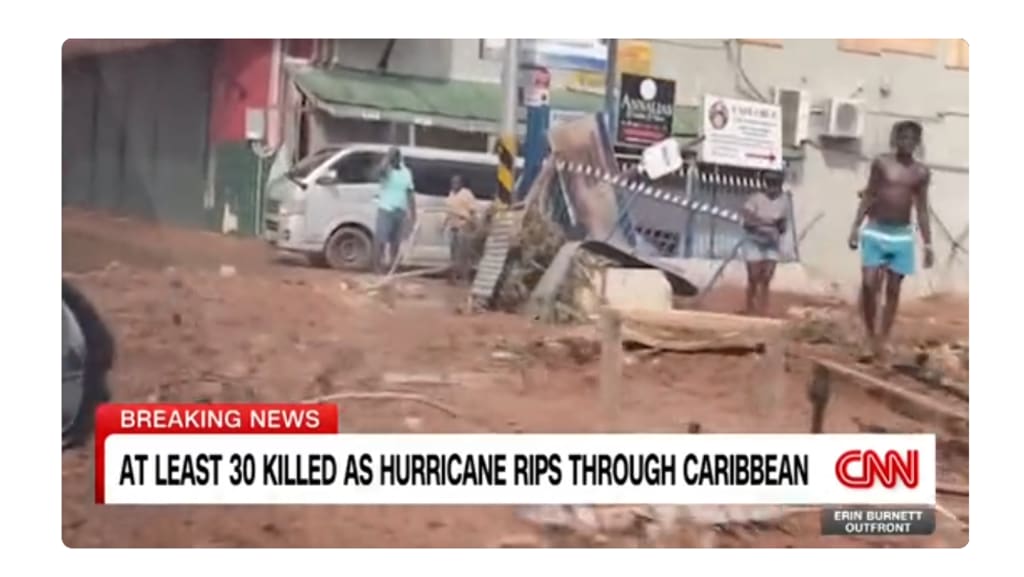
In the early hours of October 29, 2025, the Caribbean awoke to a familiar fear — the low, relentless howl of the wind, the rising ocean spray, and the whisper that another monster storm was coming. Its name was Hurricane Melissa, and by the time its eye brushed past Jamaica’s northern coast, it had grown into one of the most powerful systems of the Atlantic hurricane season — a Category 4 beast with sustained winds of 145 miles per hour.
But this was not just another storm. For many across Jamaica, Haiti, and eastern Cuba, Melissa felt like a test — a brutal measure of how much more the Caribbean could endure in an age of warming seas and shifting skies.
The Eye of the Storm
Meteorologists at the National Oceanic and Atmospheric Administration (NOAA) had been tracking Melissa since its early formation east of the Lesser Antilles. What began as a cluster of thunderstorms quickly spiraled into a tropical depression, feeding on record-warm ocean temperatures — nearly 2°C higher than the long-term average.
By October 27, Melissa had intensified explosively, climbing from a Category 2 to a Category 4 system in less than 24 hours — a phenomenon scientists call rapid intensification. It’s a growing trend in recent hurricane seasons, often linked to climate change.
“Melissa’s growth pattern is textbook rapid intensification,” said Dr. Elena Torres, a climate scientist with NOAA’s Hurricane Research Division. “We’re seeing these storms draw energy from unusually warm waters and maintain strength for longer — something that would’ve been rare twenty years ago.”
At 3:00 a.m. local time on October 29, Melissa’s outer bands slammed into Jamaica’s northern parishes — Portland, St. Mary, and St. Ann — bringing torrential rainfall, winds above 120 mph, and storm surges that swallowed parts of coastal highways.
A Nation in the Dark
By dawn, much of Jamaica had gone dark. Power lines dangled like ribbons from poles; cell towers were silent; and major roads connecting Kingston to Montego Bay were impassable. The Office of Disaster Preparedness and Emergency Management (ODPEM) reported that more than 600,000 residents were without electricity, while flooding displaced over 40,000 families.
In Annotto Bay, fisherman David Sinclair stood on the remains of what was once his boatyard. “Every year we say, maybe this time it won’t be so bad,” he told a local reporter. “But Melissa didn’t come like a storm — she came like a memory we can’t forget.”
Jamaica’s Prime Minister, Andrew Holness, declared a national emergency by midday, calling for international assistance and mobilizing the Jamaica Defence Force for coastal rescue operations. Relief shelters in schools and churches filled quickly, many of them already housing families from flood-prone areas evacuated the night before.
Haiti’s Fragile Ground
For Haiti, still recovering from a series of earthquakes and flash floods earlier in the year, Melissa’s arrival was another cruel blow. The storm’s outer bands reached the southern peninsula by evening, dumping torrential rain that triggered mudslides and washed away fragile hillside homes.
In the town of Les Cayes, residents climbed onto rooftops as floodwaters rose chest-high. “We thought it would pass by,” said Mireille Augustin, a mother of three. “Then the river started to move like it was alive. We ran, but the water was faster.”
The Haitian Civil Protection Agency estimated that at least 70,000 people were displaced within 48 hours. Bridges along National Route 2 collapsed, cutting off access to key towns. With many communities still rebuilding from previous disasters, humanitarian groups warned of severe shortages in food and medical supplies.
“We’re facing a compounding crisis,” said Jean-Baptiste Clerveau, a coordinator for the International Red Cross in Port-au-Prince. “Each new disaster sets us back years. Haiti doesn’t just rebuild structures — it has to rebuild hope.”
Cuba Braces and Responds
By October 30, Melissa had curved north-northwest, brushing the eastern tip of Cuba. Santiago de Cuba and Guantánamo bore the brunt of 120 mph winds. The Cuban government, known for its rigorous disaster preparedness system, had already evacuated more than 200,000 residents from coastal zones before the storm made landfall.
Despite the heavy winds and flooding, early reports indicated fewer casualties compared to neighboring nations. “Preparation saves lives,” said Dr. María Pérez, director of Cuba’s National Meteorological Institute (INSMET). “But the intensity of Melissa reminds us that even the best systems must adapt to a changing climate.”
Power grids sustained significant damage, and key infrastructure — particularly in agricultural zones — was heavily impacted. Thousands of hectares of sugarcane and coffee crops were flattened, raising concerns about food security in the coming months.
The Global Response
Within days, aid began flowing in. The United Nations Office for the Coordination of Humanitarian Affairs (OCHA) declared an emergency response level for the Caribbean, deploying teams to assist with logistics, sanitation, and medical care.
The U.S. Agency for International Development (USAID) pledged $25 million in immediate relief, while the European Union Civil Protection Mechanism activated funding to assist both Jamaica and Haiti. The Caribbean Disaster Emergency Management Agency (CDEMA) coordinated regional support, sending engineering teams to restore communication lines.
But beyond the aid convoys and press conferences, the real story lay in the resilience of ordinary people — neighbors sharing food, fishermen salvaging boats, and nurses setting up makeshift clinics in church basements.
In Kingston, volunteers from the Jamaica Red Cross cooked over open fires for families taking shelter in St. Mary’s Anglican School. “We’ve learned that after every storm, there’s a second wave — the wave of kindness,” said volunteer Rochelle Bryan.
The Climate Connection
Hurricane Melissa wasn’t an isolated event — it was a symptom of a broader climate pattern sweeping across the tropics. Scientists say rising sea surface temperatures and shifting jet streams are fueling more powerful and unpredictable storms.
According to NOAA’s 2025 Atlantic Hurricane Season Report, Melissa was the seventh major hurricane (Category 3 or higher) that year — an unprecedented number in modern record-keeping.
“The Atlantic basin is running hotter, and with that comes more moisture and instability,” said Dr. Robert Hale, a climatologist at the University of Miami. “It’s like loading the dice — storms like Melissa are no longer outliers. They’re previews.”
The Caribbean, though small in landmass, sits at the crossroads of global warming’s most immediate impacts. Rising sea levels threaten to erase coastal communities. Coral reefs — natural storm barriers — are dying from heat stress. And economic vulnerabilities make adaptation more difficult.
Counting the Cost
Preliminary estimates from the Caribbean Development Bank (CDB) put Hurricane Melissa’s damages at $9.8 billion USD — covering destroyed homes, lost agricultural output, and infrastructure collapse. Jamaica accounted for roughly half that total, while Haiti’s unquantified losses are expected to soar due to poor data collection capacity.
Insurance claims across the region surged, with several reinsurers labeling Melissa a “multi-nation catastrophic event.” Tourism, a lifeline for much of the Caribbean, suffered another blow as resorts shuttered and cruise itineraries were suspended.
In a joint statement, Caribbean leaders called on wealthier nations to expand funding under the Loss and Damage Mechanism established at the COP climate conferences. “We contribute the least to global emissions,” said Barbadian Prime Minister Mia Mottley, “yet we bear the heaviest storms. That imbalance cannot continue.”
A Region Rebuilding — Again
Weeks after the storm, cleanup operations revealed a mosaic of ruin and recovery. In Kingston’s downtown district, businesses reopened with sandbags still stacked at their doors. In Haiti, families sifted through debris, searching for schoolbooks and memories. And in Santiago de Cuba, bands of volunteers cleared roads with machetes and wheelbarrows, singing as they worked.
Despite the destruction, a quiet determination hummed through the region. “The Caribbean doesn’t just rebuild structures,” said Jamaican historian Dr. Paul Sinclair. “It rebuilds spirit. Every hurricane carves scars, yes, but also stories — of survival, of community, of faith.”
Looking Ahead
Meteorologists warn that storms like Melissa could become more common in the decades ahead. The combination of warmer oceans, higher humidity, and urban expansion creates conditions ripe for extreme weather. But there is also growing momentum toward resilience — both technological and social.
Across the Caribbean, governments are investing in climate-smart housing, coastal mangrove restoration, and early warning systems. Jamaica recently launched a National Climate Resilience Fund, while Haiti, with UN support, is piloting community-based disaster education programs.
“Adaptation isn’t optional anymore,” said Dr. Torres of NOAA. “It’s the new frontier of survival.”
The Human Horizon
When Hurricane Melissa finally dissipated over the open Atlantic, it left more than debris in its wake. It left a mirror — reflecting the fragility and the strength of island nations standing at the edge of climate reality.
On a calm morning in early November, fisherman David Sinclair returned to the sea. His new boat, built from salvaged wood and the memory of storms past, rocked gently on the rebuilt dock. “The sea gives and takes,” he said quietly. “But we still go back. Because it’s home.”
In the Caribbean, that spirit — the will to return, rebuild, and rise again — may be the strongest force of all.
About the Creator
Omasanjuwa Ogharandukun
I'm a passionate writer & blogger crafting inspiring stories from everyday life. Through vivid words and thoughtful insights, I spark conversations and ignite change—one post at a time.
Keep reading
More stories from Omasanjuwa Ogharandukun and writers in Earth and other communities.
When the Fed Pulls the Brake and Steps on the Gas at Once
The financial world held its breath this week — and then exhaled, confused. The U.S. Federal Reserve, under the steady yet increasingly scrutinized hand of Chair Jerome Powell, announced its second consecutive interest rate cut. But even as the markets celebrated, Powell’s tone at the press conference turned the cheers into cautious whispers.
By Omasanjuwa Ogharandukun4 months ago in Journal
Members of the Board of Peace linked to Trump have announced a pledge of $7 billion in humanitarian assistance for Gaza, aiming to support relief efforts and address the growing crisis in the region.
Donald Trumps Board of Peace has gotten money from countries. These countries have given than $7 billion to help people in Gaza. The US president said this when the Board of Peace had its meeting.
By The Academy Awardsabout 22 hours ago in Earth


Comments
There are no comments for this story
Be the first to respond and start the conversation.