
The future of Antarctica depends on the emissions decisions taken today.
Antarctica is changing due to emissions.

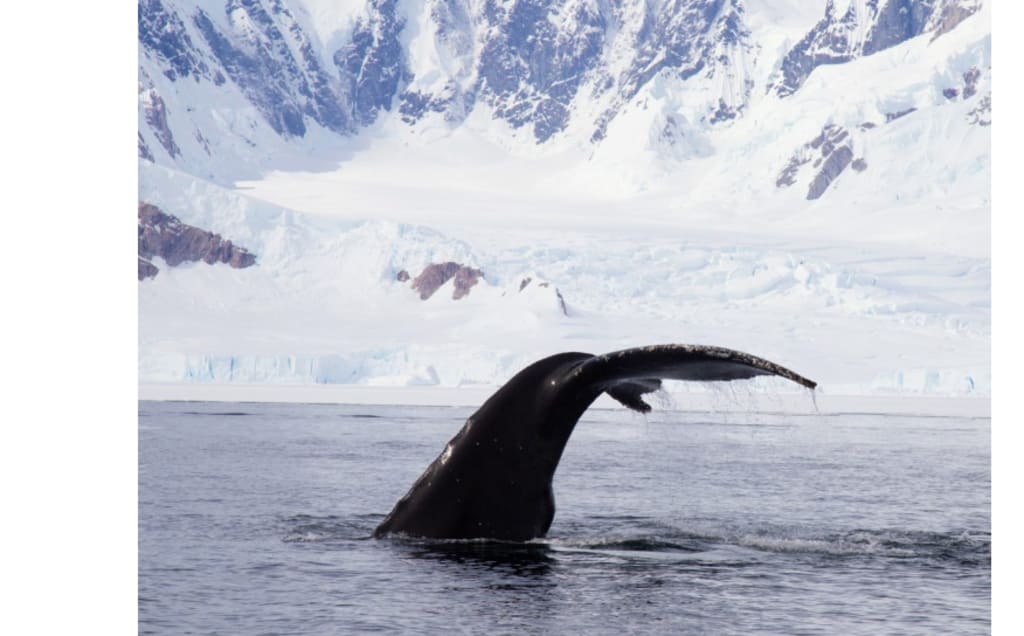
On a map, Antarctica appears indestructible, a huge white shield at the earth's base. It seems removed, cut off from the world. However, the ice at Earth's edge is not isolated from the outside world.
The decisions being taken now on greenhouse gas emissions have a direct impact on what occurs there, and the effects will extend beyond the South Pole. One of the Earth's fastest-warming places, the Antarctic Peninsula, is the subject of a new modelling study that looks at three distinct climatic futures. The variations are contingent upon the rate and degree of global warming.
Antarctica is changing due to emissions.
They differ greatly from one another. Antarctica still heats with reduced emissions, but the harm is much less severe. Scientists warn that increased emissions will cause sea ice to diminish, ice shelves to collapse, glaciers to retreat, and significant stress for iconic Antarctic animals like penguins.
According to Newcastle University lead author Bethan Davies, "the Antarctic Peninsula is a special place." "The decisions we make today will determine its future."
We are able to prevent the most significant and harmful effects in a low emissions future. But in the event of increased emissions, we run the risk of losing glaciers, sea ice, ice shelves, and famous animals like penguins.
Antarctica doesn't function in a vacuum. Sea levels rise due to meltwater. Changes in the ocean have an impact outside. Patterns of the weather change.
Watching Antarctica for decades
One of the most researched and rapidly warming places on the planet is the Antarctic Peninsula. This provides scientists with decades of firsthand observation, which is uncommon in climate science.
According to co-author Peter Convey of the British Antarctic Survey, "I first spent my period in Antarctica as a 'winterer' on the Signy Station in the South Orkney Islands, from November 1989 to April 1991."
"A casual visitor's initial impression of the area is still invariably that it is dominated by ice. But for those of us who have had the opportunity to revisit several times, the changes throughout time are evident.
That is, the ice still appears to be enormous. However, you can see what's vanishing if you've been coming back for decades.
Growing disparity in climate futures
By 2100, the researchers projected three different scenarios: a medium-high scenario with global temperatures rising 3.6°C (6.5°F); a very high scenario with temperatures rising 4.4°C (7.9°F); and a lower-emissions pathway with global temperatures rising roughly 1.8°C (3.2°F) over preindustrial levels.
They looked at how each route will impact ecosystems, extreme weather, sea ice, glaciers, ice shelves, and ocean warming. "We showed how the 1.5°C climate scenario would impact the Antarctic Peninsula in 2019," stated Martin Siegert of the University of Exeter. "Now, in 2026, we share what it looks like for the Antarctic Peninsula to experience temperatures above 1.5°C, which is a terrifying prospect."
The Southern Ocean warms more quickly when emissions are higher. Ice shelves are eroded by warmer water from below. Land-based glaciers are held back by ice shelves, which function as braces. Sea levels can rise globally as a result of glaciers accelerating toward the ocean when those braces deteriorate or collapse.
A 20 percent reduction in winter sea ice cover is possible under the highest emissions scenario. The entire food chain is supported by sea ice, which may sound abstract. Krill relies on it. Whales, seals, and penguins rely on krill. When the ice is removed, the ripple rises.
The impact on animals in the Antarctic
It is difficult to predict exactly how a species will react. To stay in colder areas, some animals may move southward. However, because ecosystems are interconnected, changes seldom remain contained.
For a while, warm-blooded predators may be able to withstand rising temperatures. However, survival becomes considerably more difficult if their prey is unable to adapt or if their food supplies disappear. Because Antarctica's systems are so delicately regulated, even minor disturbances can have a big impact.
Furthermore, it is difficult to undo the harm if specific ice systems break or glaciers retreat past critical thresholds.
The window for emissions is closing.
As of right now, the world is headed toward a future with medium to medium-high emissions, according to Davies. While ice loss and extreme events will still occur in Antarctica under a lower-emissions scenario, they would be much less pronounced than they would be on a higher route.
Sea ice would only be marginally less than it is now in the winter. The Antarctic Peninsula would only contribute a few millimetres to the rise in sea level. The supporting ice shelves would mostly continue to exist, and the majority of glaciers would still be identifiable.
The scenario with increased emissions is much more concerning. The most worrying part, according to Davies, is how long-lasting the alterations might end up becoming.
On any human timescale, many of these losses would be irrevocable. It would be extremely challenging to create glaciers again and restore the biodiversity that makes Antarctica unique. That's the unsettling truth. This kind of ice loss can have long-lasting effects that last for centuries or more. It will not return after a few decades.
Research is getting harder.
Another twist is that research is becoming more challenging due to climate change. Fieldwork may become hazardous due to thawing, uneven terrain, and infrastructural damage. Furthermore, it becomes more difficult to forecast future change in the absence of ongoing data.
However, uncertainty is not the study's main takeaway. Antarctica will evolve. That is already taking place. How far it goes is the true question.
There is more to the difference between 1.8°C (3.2°F) and 4.4°C (7.9°F) than just a graph value. It makes the difference between an Antarctic Peninsula that is strained but still identifiable and one where ecosystems break down, ice shelves fail, and sea level rise quickens. The future has not yet been decided. However, it is getting smaller.
About the Creator
Keep reading
More stories from Francis Dami and writers in Earth and other communities.
The most severe ice melt episodes in Greenland are becoming significantly worse.
The ice sheet in Greenland has always somewhat melted throughout the summer. That is typical. The frequency of the most severe melt events and the amount of water they produce are no longer typical.
By Francis Damiabout 4 hours ago in Earth
Winterthorne
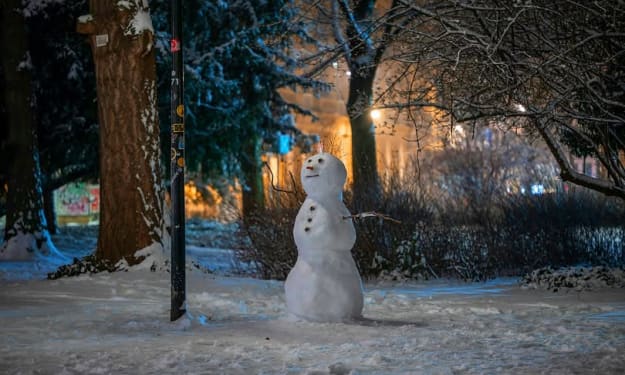
Winterthorne stood alone at the edge of the park. The beautiful snow that had surrounded him was all trampled now, from the feet of all of the children who had built him. He missed the sparkly clean snow blanket, but he was happy that so many children had come out to make him.
By Laura DePace3 days ago in Fiction

Comments
There are no comments for this story
Be the first to respond and start the conversation.